
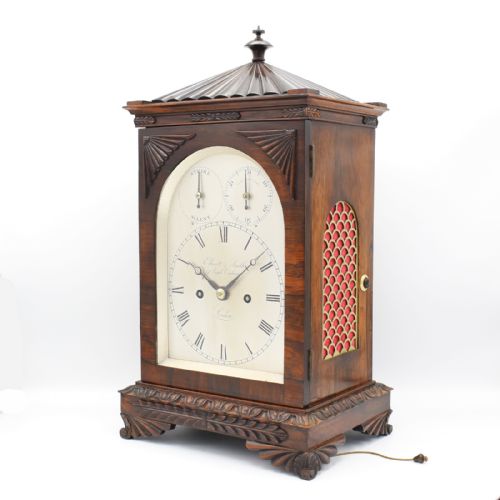
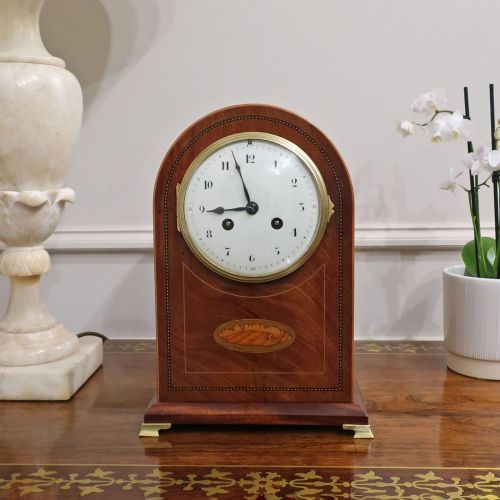
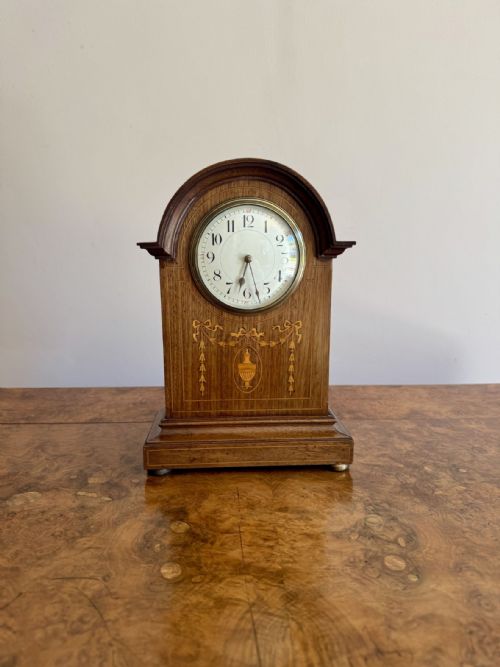
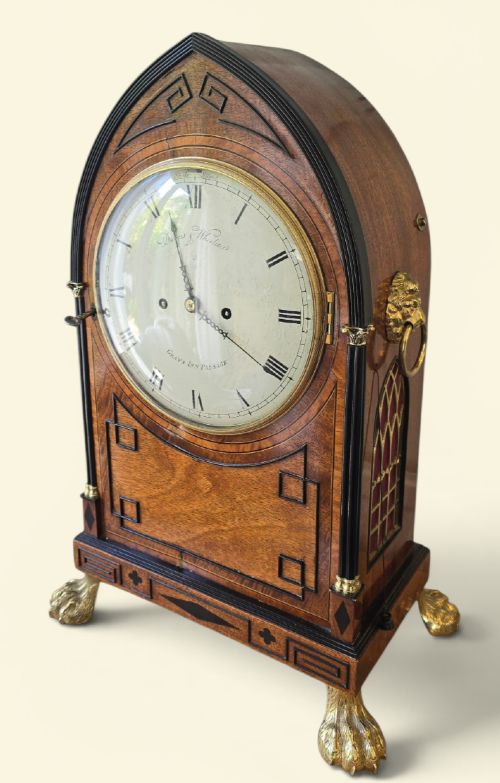

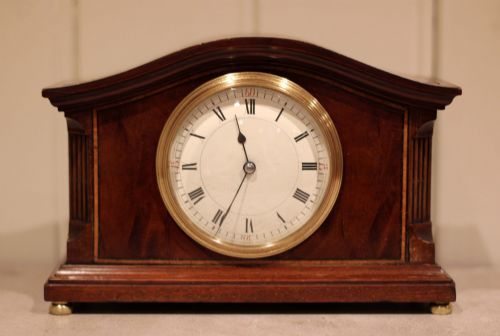
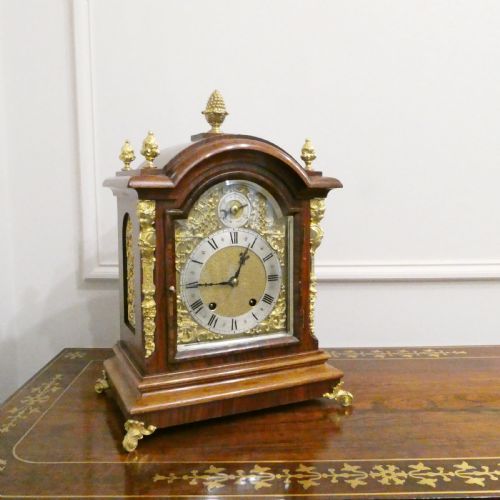
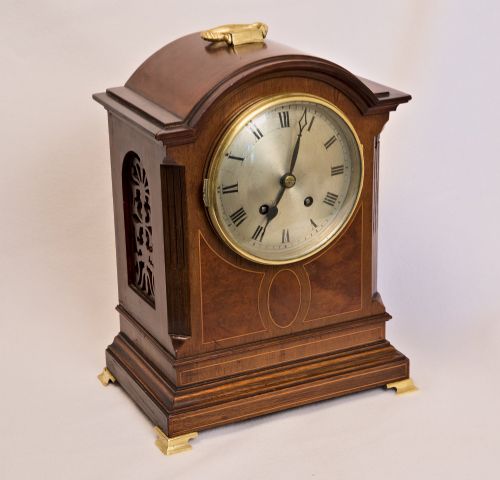


Arched Top Mantel Clock
An arched top mantel clock is a domestic timekeeper shaped with a curved crown, offering functional design and period timber to a room.
Arched Top Mantel Clock
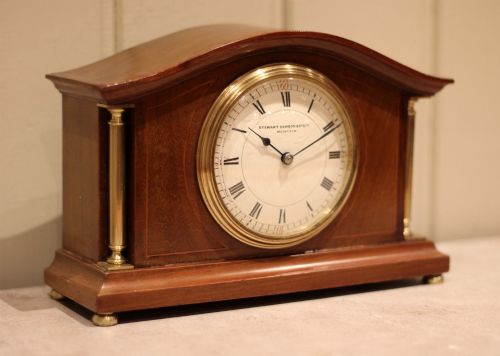
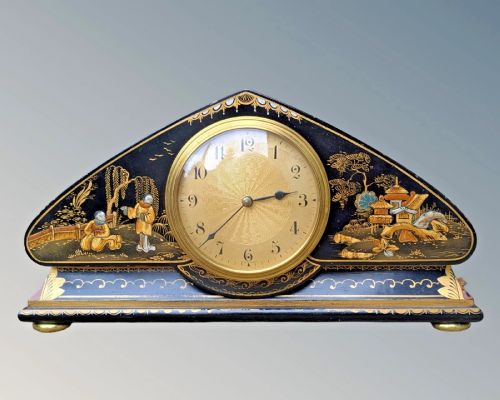
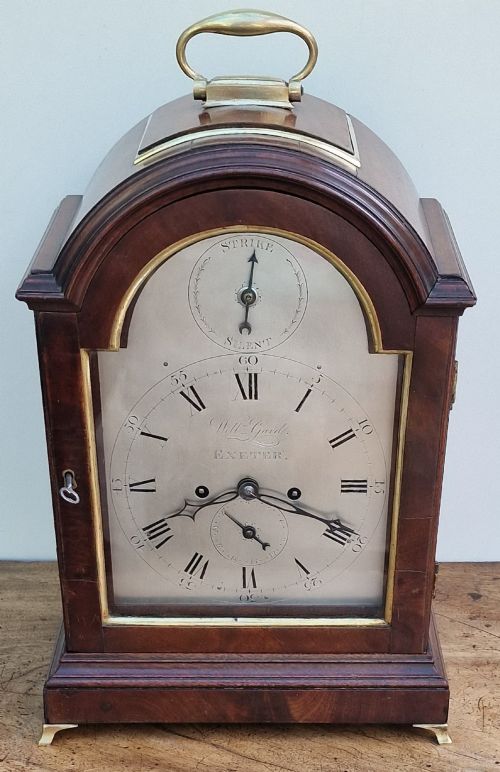
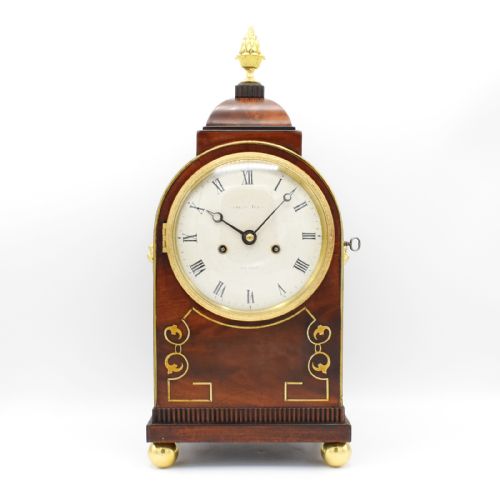
The arched top mantel clock is a tabletop or bracket timepiece designed to sit on a mantelpiece, shelf, or table. Pieces matching this search phrase span from the Georgian and Regency periods through to the Edwardian era and the early 20th century. Forms range from simple mahogany timepieces to complex bracket clocks with striking movements housed in architectural timber cases.
Makers and regional makers from London, provincial towns, and continental workshops produced these clocks in various woods such as mahogany, walnut, oak, and ebony. Surviving examples demonstrate the shift from traditional 18th-century bracket clock designs to lighter Edwardian inlaid mantel clocks.
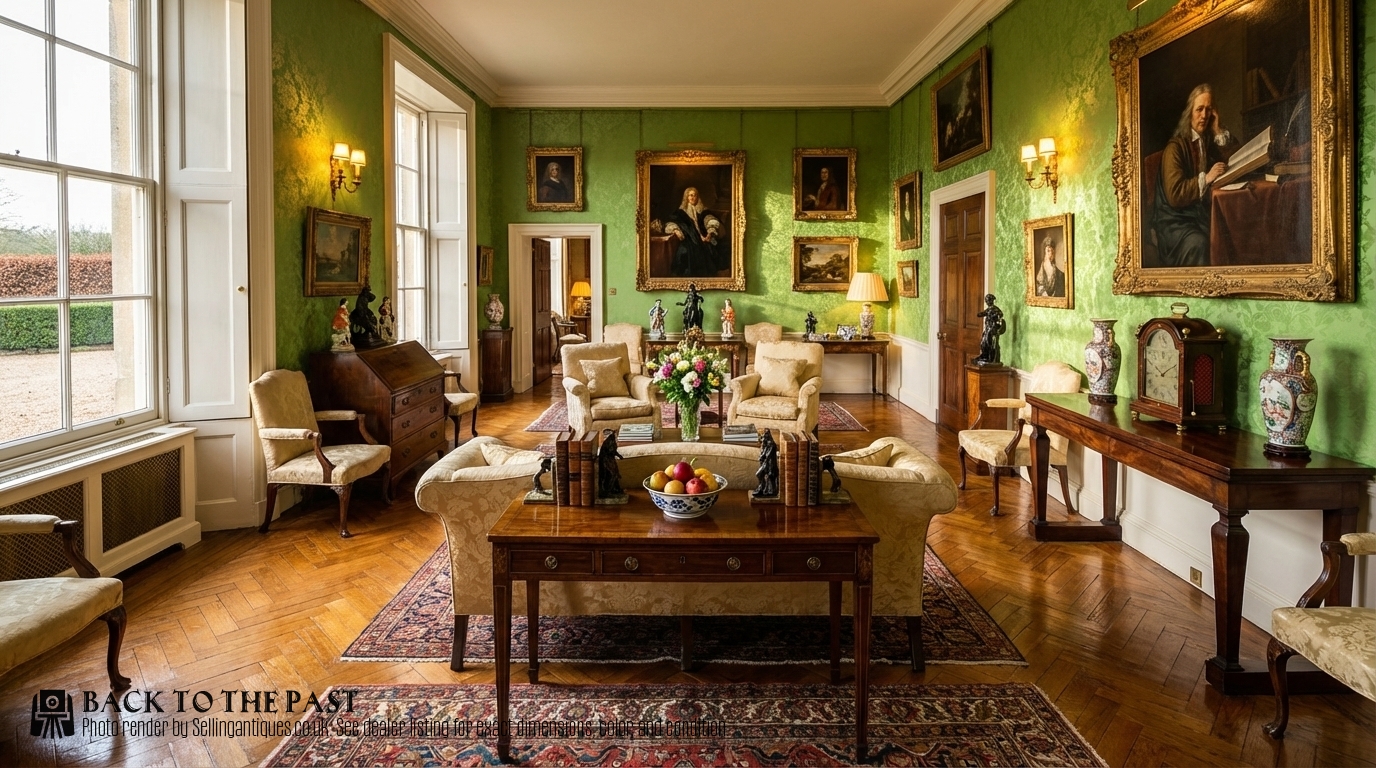
How They Were Made
Cases rely heavily on mahogany, oak, walnut, and ebony veneers, frequently enhanced with brass mounts, glass panels, and satinwood inlay. Dials are constructed from silvered metal or white enamel, protecting the internal mechanical movements.
Movements utilise fusee driven or spring-driven mechanisms, incorporating verge escapements, twin fusee systems, and ting-tang striking trains produced by specialised clockmakers.
Arched Top Mantel Clock Retail Price Guide 2026
Typical asking prices for arched top mantel clock among the pieces listed under this phrase on Sellingantiques today, from the lower quarter to the upper quarter. They describe what is for sale here now, not the wider market.
Several clocks arrive complete with their original winding keys, sparing owners the hunt for a vintage replacement that fits the square arbor.
What Varies in Quality
Quality rests in the crispness of the timber case, the precision of brass inlay and mounts, and the originality of the silvered or enamelled dial. Master clockmakers of London and established continental firms delivered movements with superior finishing and detailed engraving.
Proportion and restraint separate standard production pieces from finer examples, particularly where delicate stringing or figural wood grain enhances the curved arch of the case.
William Gard·Barwise London·Charles Pratt London·Ellicott And Smith·Desbois And Wheeler·Schneckenburger·S Simpson·Cording Of London·Phillips Brothers·Wilkinson Leicester·Winterhalder And Hofmeier·Hyde Of Salisbury·Louis Recordon·Perigal Of London·Lenzkirch·John McGregor·Perigal And Duterrau
The Arched Top Mantel Clock Glossary
- Bracket clock
- A portable table clock historically designed to sit upon a wall bracket. They commonly feature a brass carrying handle on top.
- Fusee
- A conical pulley used in spring-driven clocks to equalize the decreasing power of the mainspring as it unwinds. This mechanism improves timekeeping accuracy.
- Ting-tang
- A striking mechanism that sounds two different notes on quarters or half-hours. It uses two hammers and two bells or gongs.
- Verge escapement
- An early type of escapement mechanism controlling the release of power in a clock. It is identifiable by its crown wheel and oscillating foliot or pendulum.
- Silvered dial
- A brass or metal clock face treated with a silver solution to create a matte metallic finish. Numbers and markers are typically engraved and filled with dark wax.
Arched Top Mantel Clock: Frequently Asked Questions
How do I wind an arched top mantel clock?
Most mechanical clocks require a key inserted into the winding holes on the dial face. Turn the key gently until resistance shows that the mainspring is fully tensioned.
Take care not to overwind the movement, as this can damage the internal spring mechanism. Check whether your piece uses a single fusee or twin fusee system before setting the time.
What is the difference between a timepiece and a clock?
In horological terms, a timepiece is a clock that measures hours and minutes without a striking mechanism. It only requires a single train of gears to drive the hands.
A clock includes a striking or chiming train that sounds the hours or quarters. Both forms appear frequently in arched wooden cases across the Georgian and Edwardian periods.
Where should I place a mantel clock?
Position your clock on a stable, level surface away from direct sunlight, dampness, and extreme temperature fluctuations. Wooden cases and mechanical movements respond poorly to environmental shifts.
Fire mantels are traditional, but any sturdy sideboard, desk, or shelf will support the weight of a timber and brass clock safely.
How do I identify a Regency period clock?
Regency pieces often display rich mahogany veneers, restrained brass inlay, and geometric architectural forms. Dials tend to feature clean silvered plates with traditional black numerals.
Compare the casework against known Georgian and Victorian styles to spot the cleaner lines typical of the early 19th century.