


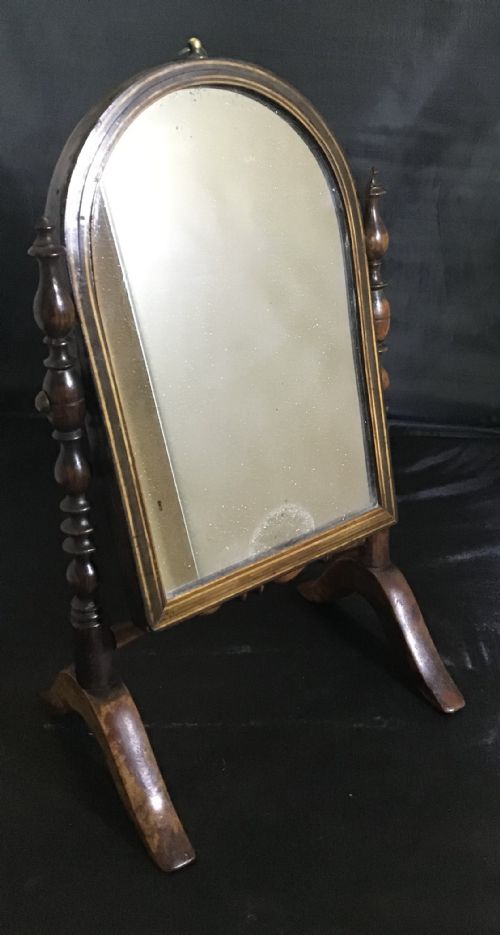

Arched Mahogany Mirror
An arched mahogany mirror brings warmth and architectural line to a room, grounding the space with rich timber grain and a classic curved top.
Arched Mahogany Mirror
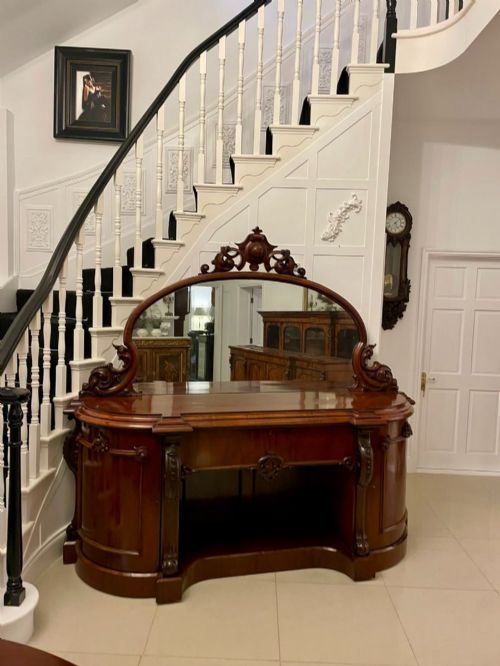
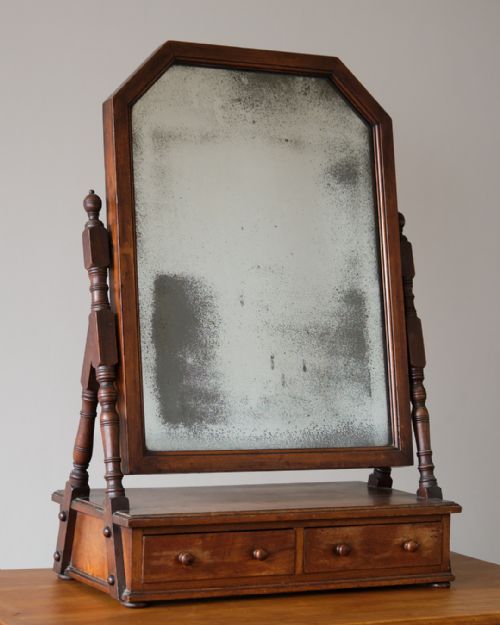
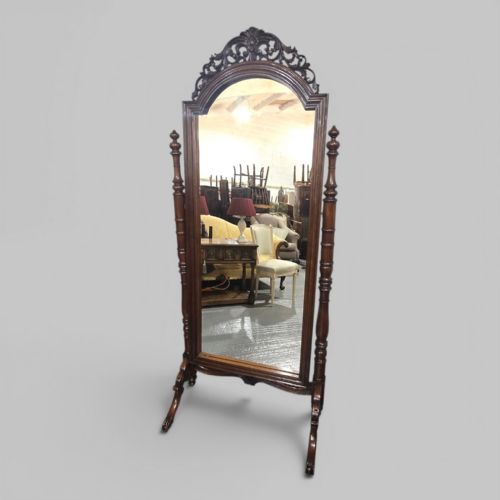
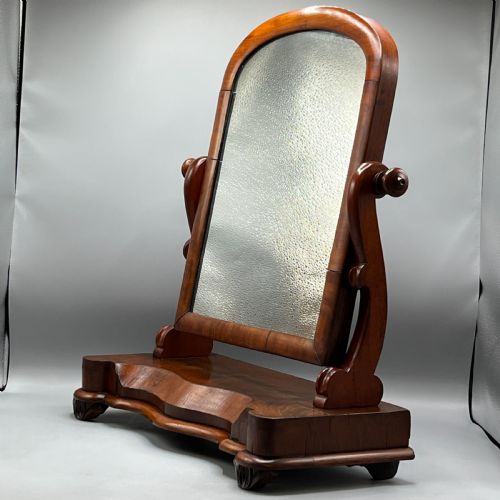
When you search for an arched mahogany mirror, you encounter pieces spanning the nineteenth century, the Victorian era, the Regency period and the early twentieth century. The selection ranges from compact dressing table and swing mirrors to large cheval mirrors, overmantel mirrors and wall-hanging examples.
The architectural shape of the arch defines these mirrors, whether framed by simple timber mouldings or enriched with carved details, parcel gilding and brass mounts. Many examples appear in domestic bedroom settings as part of dressing furniture, while others function as grand architectural wall pieces.
Materials and construction
Makers utilised solid mahogany and flame mahogany veneers over secondary timbers, framing glass plates that often feature bevelled edges. Brass fixtures such as articulated candle holders, hinges and adjustable screws appear frequently on cheval and swing mirrors to allow movement.
Inlay work in satinwood and walnut complements the deep red-brown tones of the mahogany, while parcel gilt accents highlight carved architectural mouldings on larger wall and overmantel formats.
Some nineteenth-century dressing mirrors included ingenious hidden compartments for travelling toilet requisites, keeping small valuables secure behind the swing glass.
Distinguishing quality
The calibre of a piece rests in the depth of the mahogany grain and the precision of the joinery around the curved arch. Flame mahogany veneers display striking figure movement that elevates the visual weight of the frame.
Subtlety in carved ornamentation and the integration of original brass hardware distinguish finer workshops from standard production. The preservation of the silvering on the mirror plate also contributes to the integrity of the piece.
Heal & Sons
The Arched Mahogany Mirror Glossary
- Cheval mirror
- A freestanding full-length mirror hung in a frame that allows it to tilt. These pieces often stand on four legs with brass castors.
- Overmantel mirror
- A large mirror designed to hang above a fireplace mantel. They frequently feature wide frames shaped to command the wall space.
- Flame mahogany
- A veneer cut from the fork of the mahogany tree where the branch meets the trunk. This creates a distinctive flickering flame pattern in the wood grain.
- Parcel gilt
- Woodwork partially decorated with gold leaf or gold paint. This technique highlights specific carved details against the dark mahogany timber.
- Swing mirror
- A tabletop or dressing glass mounted on vertical pivots between two upright supports. This allows the user to adjust the viewing angle.
Arched Mahogany Mirror: Frequently Asked Questions
How do I clean an antique mahogany frame?
Dust the timber gently with a soft, dry cloth to prevent a buildup of particles in the carved details. Avoid modern silicone sprays and harsh chemical cleaners that can damage the antique polish.
Feed the wood periodically with a traditional beeswax polish to maintain the lustre of the mahogany. Apply sparingly and buff well to a soft sheen.
Can I hang a heavy mahogany overmantel mirror?
Large overmantel mirrors carry significant weight due to the dense timber frame and thick glass plates. Secure wall fixings into solid masonry or studwork rather than relying on standard plasterboard anchors.
Consult a professional installer to assess the wall structure and ensure the weight distributes safely. Use heavy-duty brackets designed to support substantial hanging loads.
What is flame mahogany?
Flame mahogany is a decorative wood veneer sourced from the fork of the tree where a branch diverges from the main trunk. The grain swirls in a dramatic, flame-like pattern that catches the light.
Cabinet makers reserved this striking veneer for the most prominent surfaces of high-end furniture. It provides a rich, patterned contrast to simpler straight-grained mahogany framing.
How do I date an arched mahogany mirror?
Examine the construction methods, backboards, and secondary timbers used in the frame. Hand-cut screws, pegged joints and subtle shifts in moulding styles point toward specific decades in the nineteenth century.
Look at the glass plate itself for slight imperfections, waviness or bevels characteristic of older manufacturing techniques. Maker stamps or labels on the reverse also offer definitive chronological clues.