


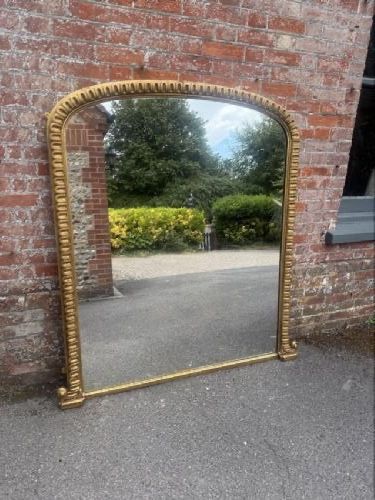
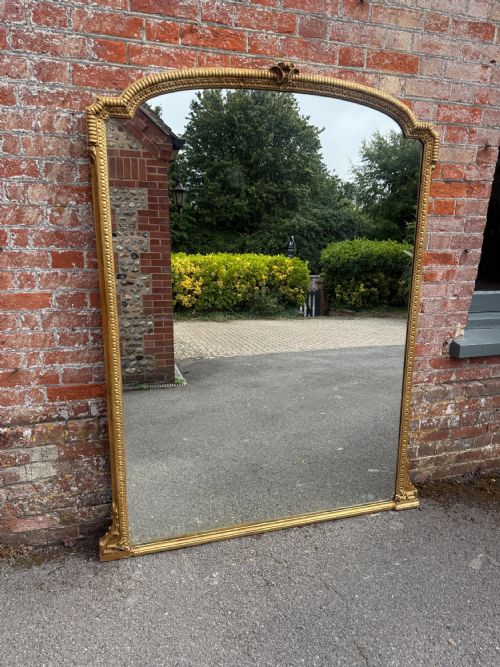
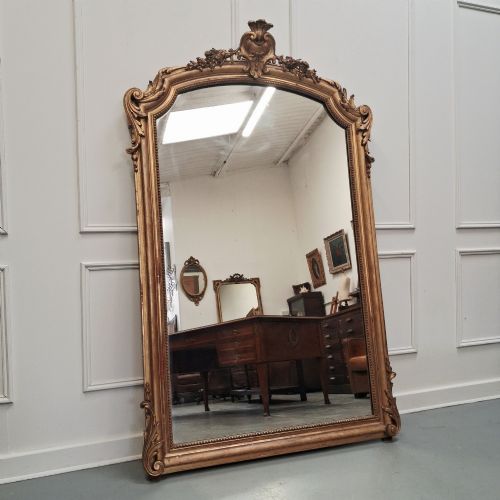
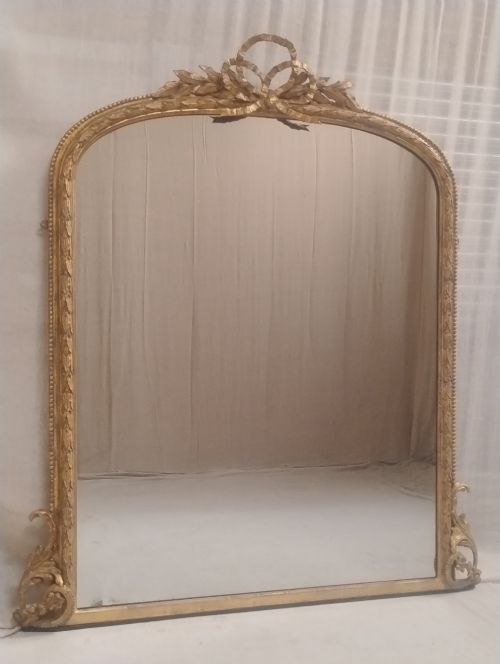
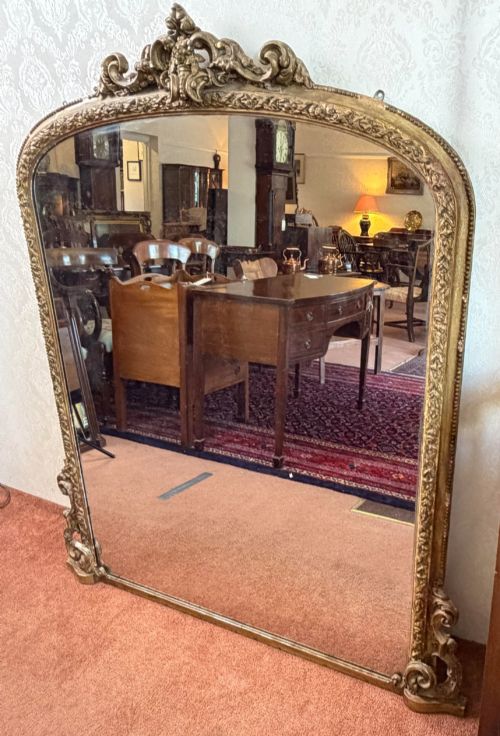
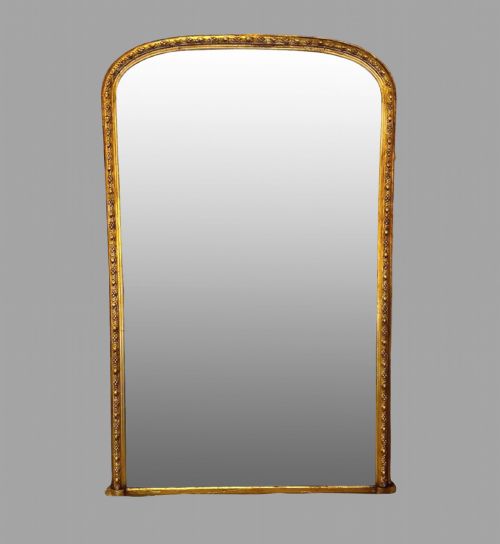
Arched French Overmantel Mirror
An arched french overmantel mirror brings architectural height and reflected light to a room, drawing the eye naturally above a fireplace.
Arched French Overmantel Mirror
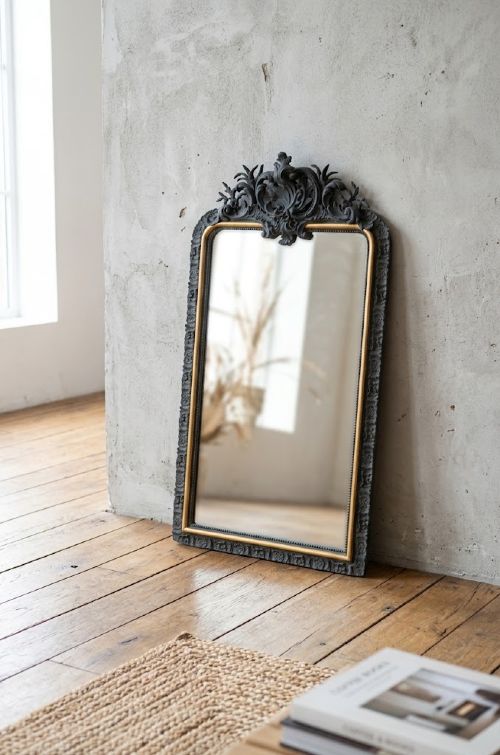
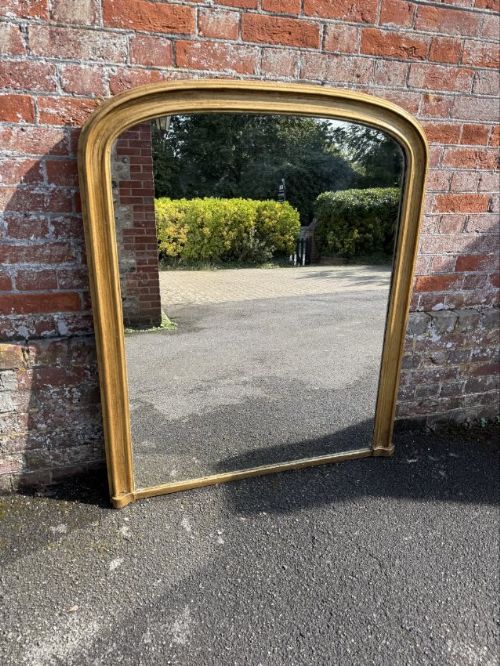
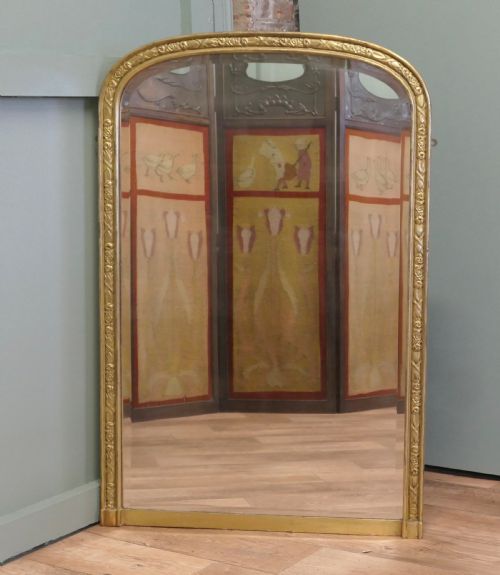
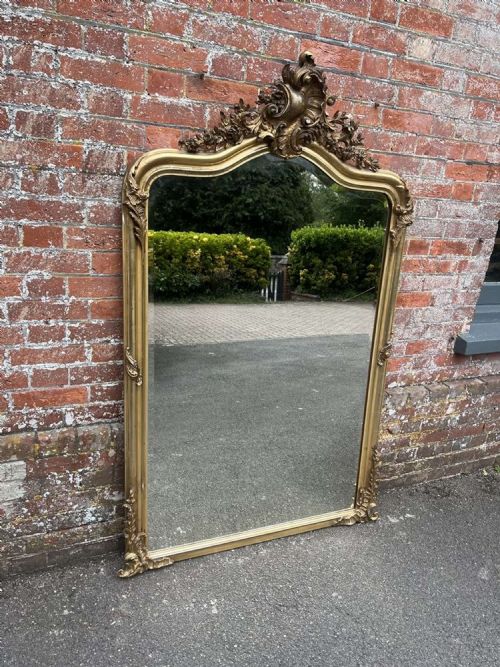
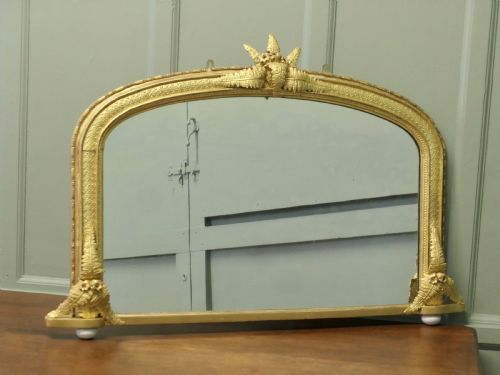
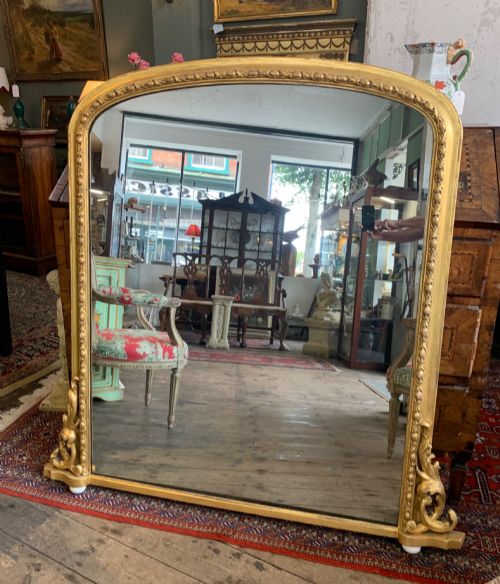
When you search for an arched french overmantel mirror, you encounter large wall-hanging glasses designed historically to sit upon the mantelpiece shelf in grand reception rooms. These pieces combine the sweeping curves of the Louis Philippe and Rococo Revival styles with the vertical proportions typical of nineteenth-century domestic architecture.
The version most commonly met on this page is a nineteenth-century giltwood or painted wood frame featuring an arched top and substantial proportions. They span English interpretations of French taste alongside imports originating directly from France.
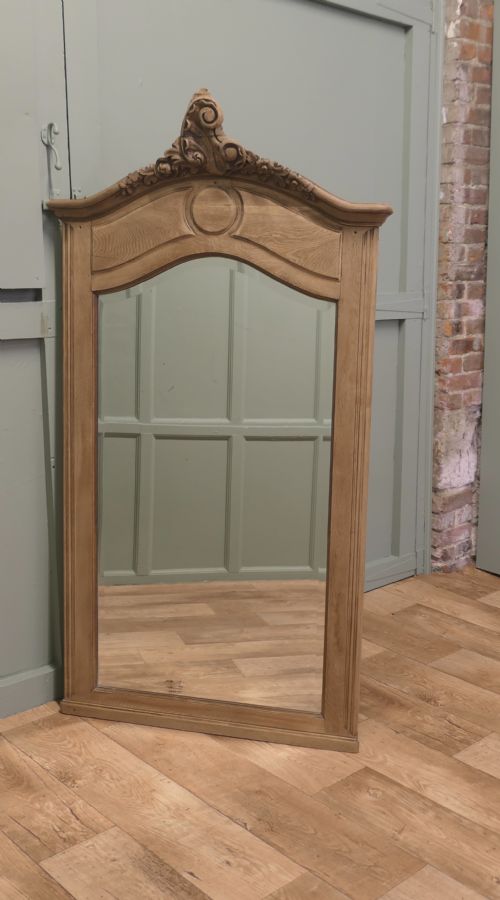
Beyond the standard gilt finish, variants appear in bleached oak and layered colour palettes such as lilac and ink blue. Their scale ranges from compact boudoir sizes to monumental statement pieces exceeding one hundred and sixty centimetres in height.
How they were made
Carved wooden frames form the structural core, utilising timber such as oak or softwoods built to support heavy glass plates. Craftsmen applied layers of gesso over the wood substrate to build up decorative mouldings and relief details.
Giltwood finishes were achieved by laying gold leaf onto the prepared gesso surfaces, whilst alternative examples received painted coats in single tones or distemper. Original mirror glass was frequently silvered using mercury techniques before later modern silvering methods became standard.
Materials recorded across the inventory include giltwood, painted wood, gesso, bleached oak, and original mirror glass.
What varies in quality
The crispness of the carved wood and gesso ornamentation dictates visual success, where hand-tooled depth outperforms shallow, machine-moulded relief. Deeply incised rope twists, floral motifs, and clean architectural arches denote superior craftsmanship.
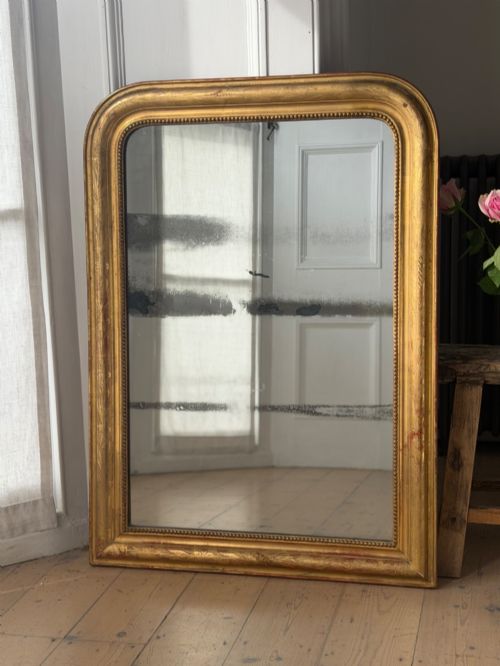
Originality of the components plays a defining role in distinction, particularly the retention of original mercury glass with natural foxing and the original wooden backboards. The harmony of the proportions between the curved apex and the rectangular base elevates certain examples above standard utilitarian alternatives.
The Arched French Overmantel Mirror Glossary
- Overmantel mirror
- A large wall mirror specifically proportioned to hang on the wall directly above a fireplace mantelpiece. They often feature horizontal bases designed to sit near or upon the shelf itself.
- Gesso
- A plaster-like mixture applied to wooden frames as a smooth base for gilding or painting. It accepts deep carving and crisp relief work.
- Louis Philippe
- A French nineteenth-century aesthetic characterised by plain, elegant surfaces, rounded top corners, and restrained classical lines. It avoids excessive ornamentation in favour of graceful proportions.
- Pier mirror
- A tall, narrow mirror traditionally hung on the pier wall between two windows. Their vertical format shares similarities with overmantel designs.
- Foxing
- The natural degradation and spotting of mirror glass over time due to chemical changes in the backing. Collectors prize authentic foxing as an indicator of genuine age.
Arched French Overmantel Mirror: Frequently Asked Questions
Where should an overmantel mirror hang?
Traditionally, these mirrors sit directly above a fireplace mantelpiece to reflect light around the room and create a sense of expanded space. They also function successfully mounted on principal walls as standalone vertical feature pieces.
When hanging one, ensure the wall fixings match the substantial weight of the timber, gesso, and glass construction. Positioning them opposite a window maximises the natural daylight they project into the interior.
How do I identify a Louis Philippe mirror?
Louis Philippe mirrors typically feature a subtly arched top corner profile combined with clean, unadorned framing. They possess a quieter elegance compared to highly ornate Rococo Revival pieces.
Look for refined proportions and a lack of heavy surface carving, relying instead on simple architectural geometry.
What is mercury glass?
Mercury glass refers to older mirror plates silvered using a liquid mercury amalgam method before nineteenth-century chemical processes took over. This technique produces a characteristic mottled reflectivity.
Over decades, this backing develops dark spots and soft foxing, which visually distinguishes antique glass from modern replacements.
Can these mirrors stand on the floor?
Taller examples categorized as leaner or pier mirrors are frequently placed directly on the floor and rested against a wall. This method accommodates substantial heights without requiring high wall fixings.
Ensure the base remains stable and protected against movement when adopting this floor-standing arrangement.