
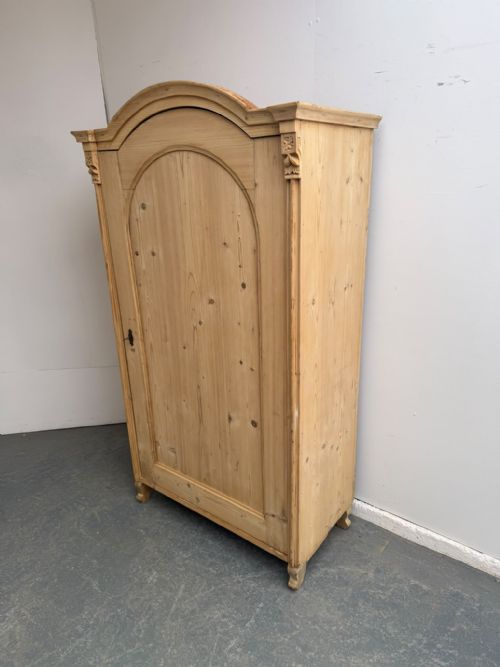
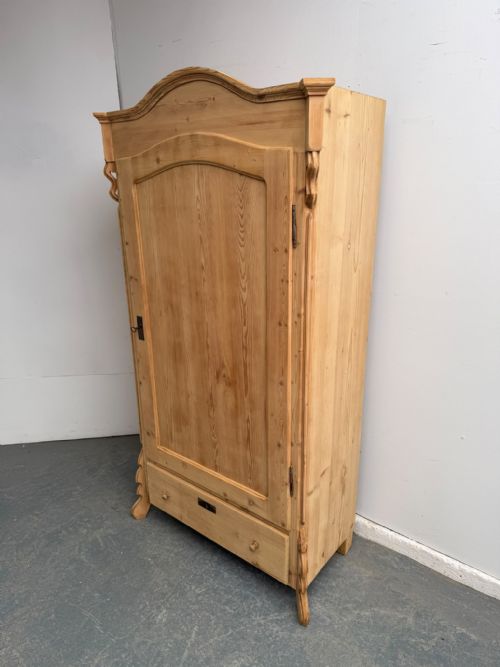
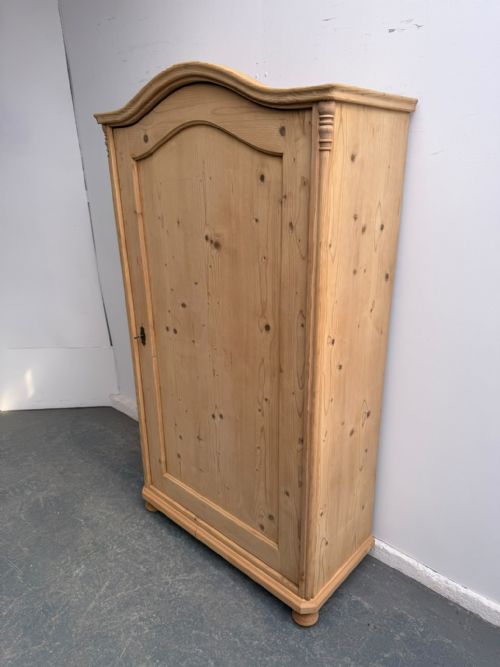
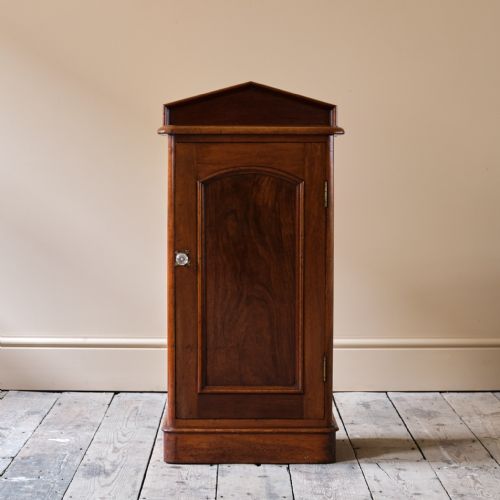
Arched Door Cabinet
An arched door cabinet brings architectural rhythm to a room, offering practical storage disguised by curved upper panels.
Arched Door Cabinet
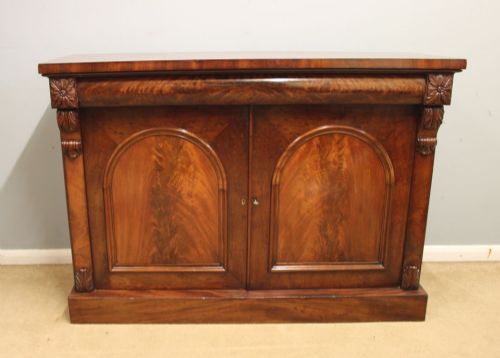
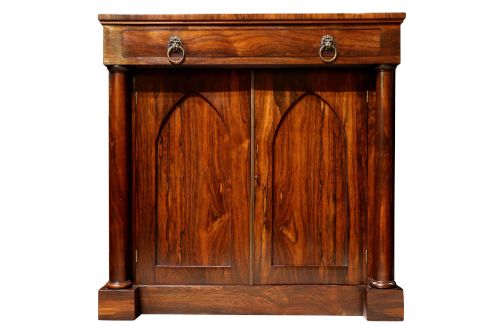
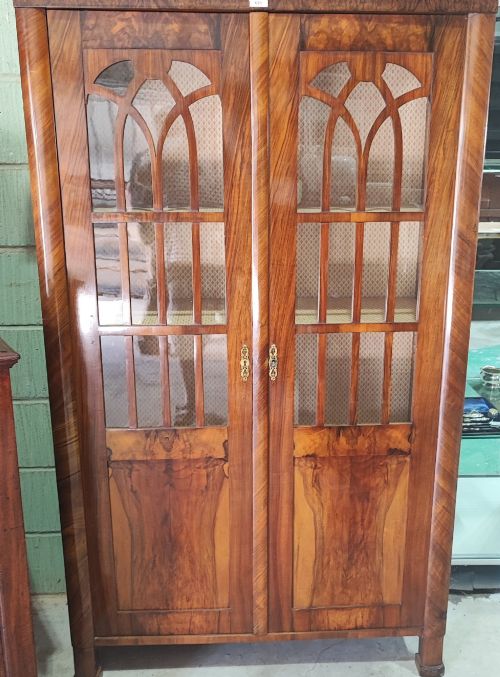
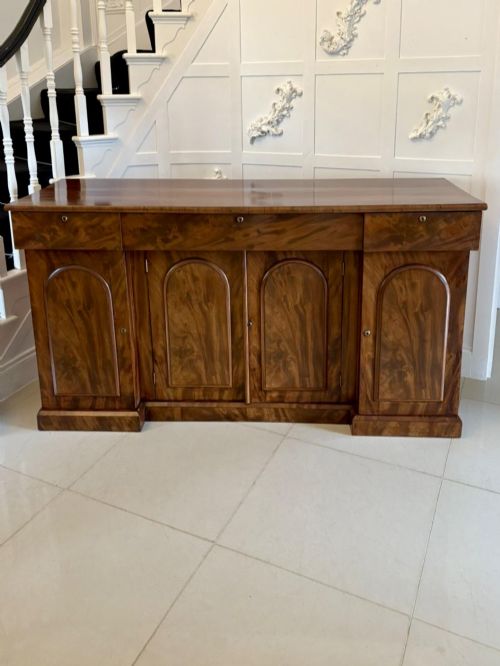
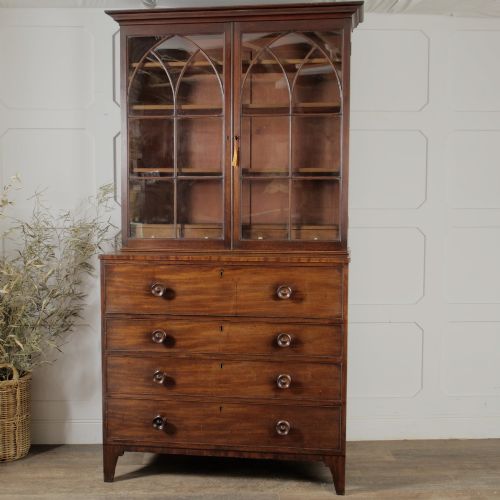
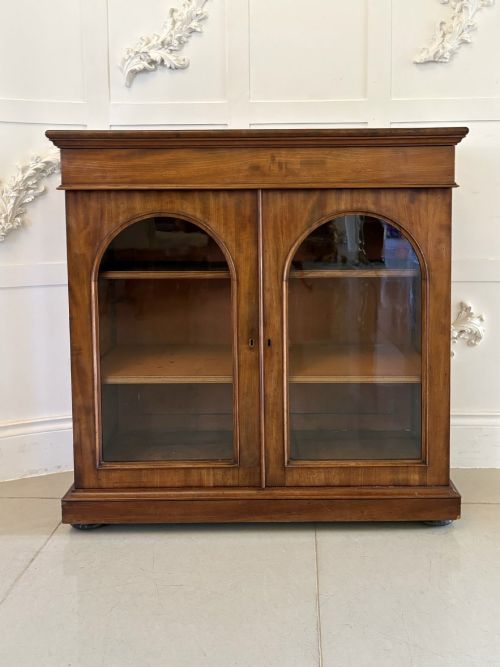
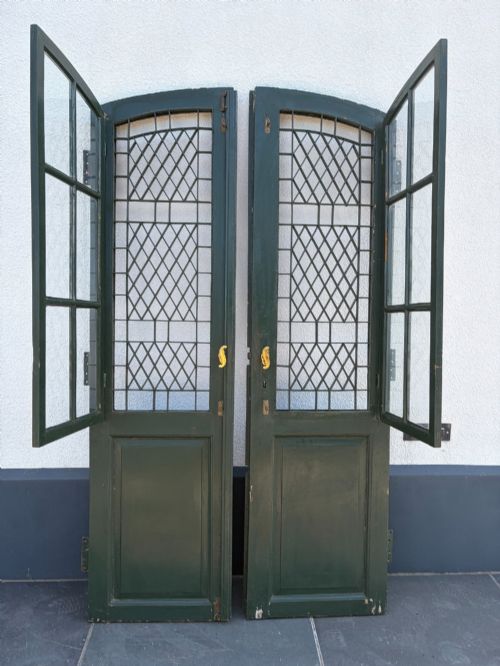
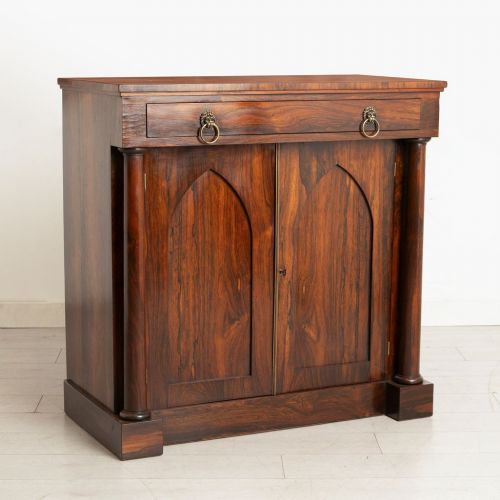
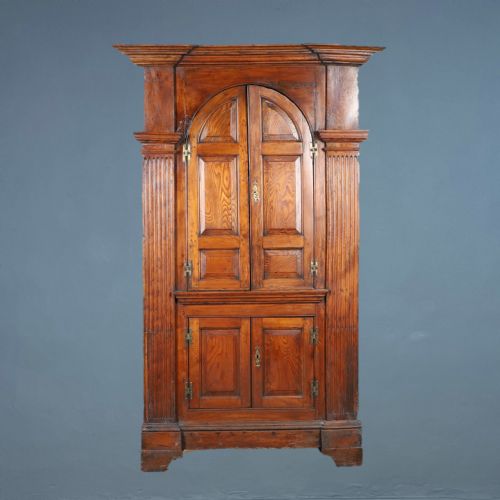
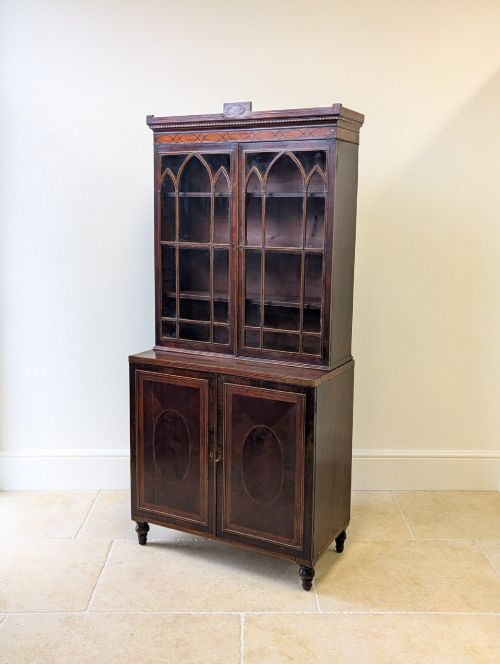
An arched door cabinet serves primarily as a storage piece or a display format, taking forms such as bookcases, corner cupboards, and side cabinets. These items appear across Georgian, Regency, and Victorian periods, reflecting shifting domestic needs for enclosed display and shelved storage.
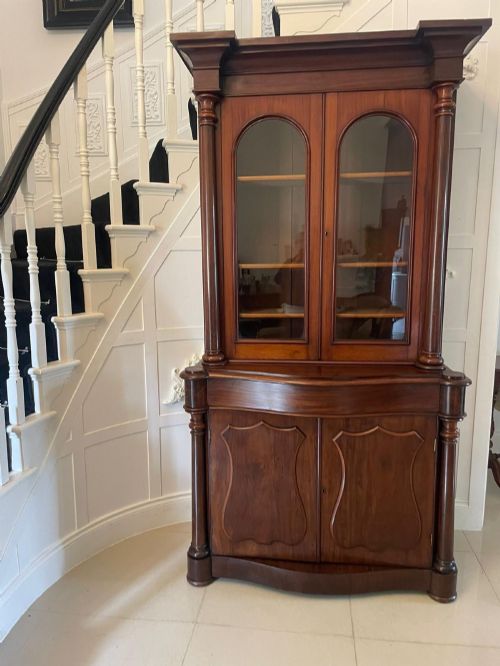
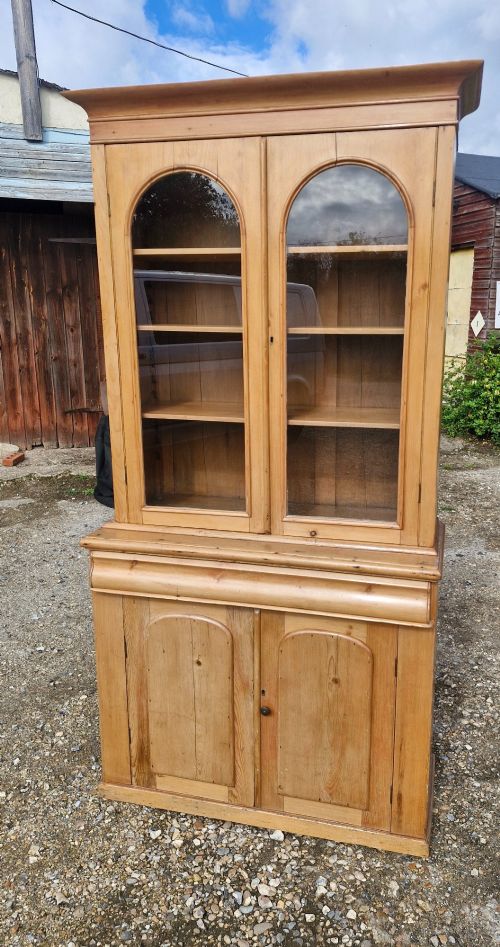
The version most commonly met on this page is the Victorian pine storage cupboard or the mahogany bookcase, often featuring glazed or panelled upper doors. Walnut, oak, and rosewood examples also surface, originating from English workshops as well as Continental makers.
Makers adapted the arched profile for various scales, ranging from tall standing bookcases and armoires down to low bedside cabinets and hanging corner cupboards. This variety means a buyer finds both grand architectural statements and modest country furniture sharing the form.
Materials and construction
Cabinet makers relied heavily on timber selections like mahogany, walnut, and oak for formal pieces, while domestic storage cupboards utilised durable pine and elm. Grain figures on mahogany and walnut veneers received careful bookmatching to enhance the visual pull of the arched panels.
Constructing the curved arch required precise joinery, often employing steam bending or segmental timber pieces shaped by hand to form the summit of the door frame. Brass hardware, glass panes, and occasionally iron hinges completed the structure, securing doors that had to hang true beneath the curve.
Pine cupboards marked to wax or paint invite future domestic transformations, having already survived multiple generations of changing interior tastes.
Defining factors of quality
Quality rests upon the architectural harmony of the arch and the integrity of the timber selection. Finer examples display carefully chosen figured veneers or dense, stable primary woods with minimal distortion in the door frames over time.
The refinement of internal fitting, original glass, and subtle decorative details such as Gothic tracery or Tunbridgeware inlay elevate a piece. Lesser examples rely on plain utility timber and straightforward construction intended purely for functional storage.
The Arched Door Cabinet Glossary
- Breakfront
- A cabinet design where the central section projects forward from the flanking wings, creating a layered facade. This layout adds considerable depth to large bookcases.
- Chiffonier
- A low sideboard or cabinet developed during the Regency and Victorian eras, typically featuring enclosed cupboards below. They often stood in dining rooms or parlours for serving.
- Secretaire
- A desk form incorporated into a cabinet, featuring a pull-down writing flap that conceals small drawers and pigeonholes. It merges writing furniture with bookcase storage.
- Tracery
- Ornamental stonework-style framing within glass doors, commonly found in Gothic Revival pieces. It divides the glass into distinct pointed or arched segments.
- Tunbridgeware
- Woodworking decoration utilising tiny mosaic tiles of various coloured timbers to form geometric or pictorial patterns. It appears as delicate inlay on Victorian surfaces.
Arched Door Cabinet: Frequently Asked Questions
Where should I place an arched door cabinet?
These cabinets suit dining rooms, living spaces, or hallways where their vertical lines can break up flat walls. Corner versions fit neatly into unused angles to maximise floor space.
Ensure the room has sufficient ceiling height to let the curved top breathe without looking cramped by low pendants or cornices.
How do I care for antique mahogany and pine?
Keep wooden cabinets away from direct heat sources and strong sunlight to prevent the timber from splitting or the polish from fading. Regular dusting with a dry, soft cloth maintains the surface sheen.
Pine items intended to be waxed benefit from occasional nourishing applications to keep the grain hydrated and protected against marks.
How do I distinguish Georgian from Victorian styles?
Georgian pieces from the 18th century tend to display restrained proportions, classical architectural cornices, and solid timber construction without excessive ornamentation. Their arches often follow strict Palladian proportions.
Victorian pieces from the mid-to-late 19th century frequently embrace heavier mouldings, darker polished mahogany, or revival aesthetics like Gothic tracery and bolder figured veneers.
Can these cabinets hold heavy books?
Most bookcases and cabinet carcases from the 18th and 19th centuries use sturdy hardwood or thick pine shelving designed to bear substantial weight. Adjustable wooden brackets allow you to customise shelf heights.
Check the thickness and support of individual shelves if you plan to store dense rows of heavy volumes over long periods.