
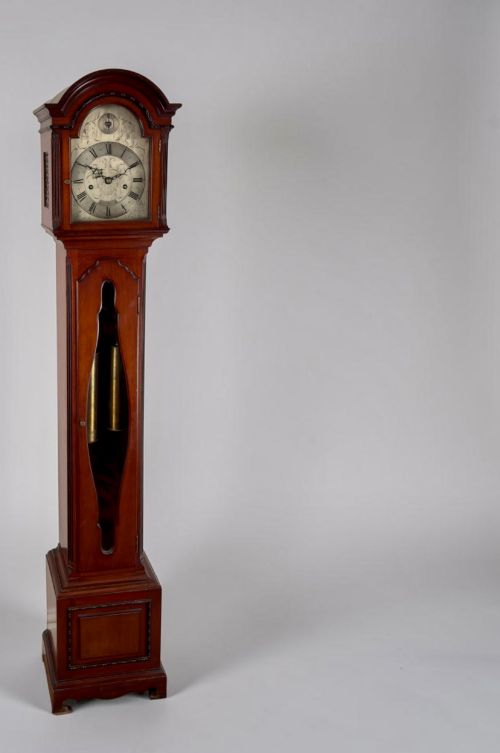

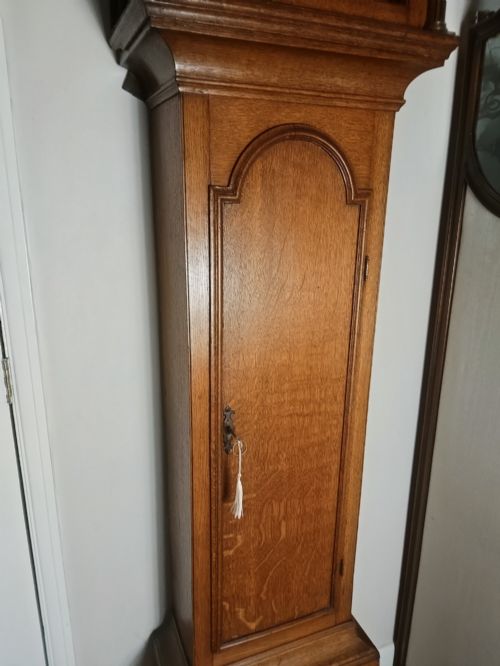
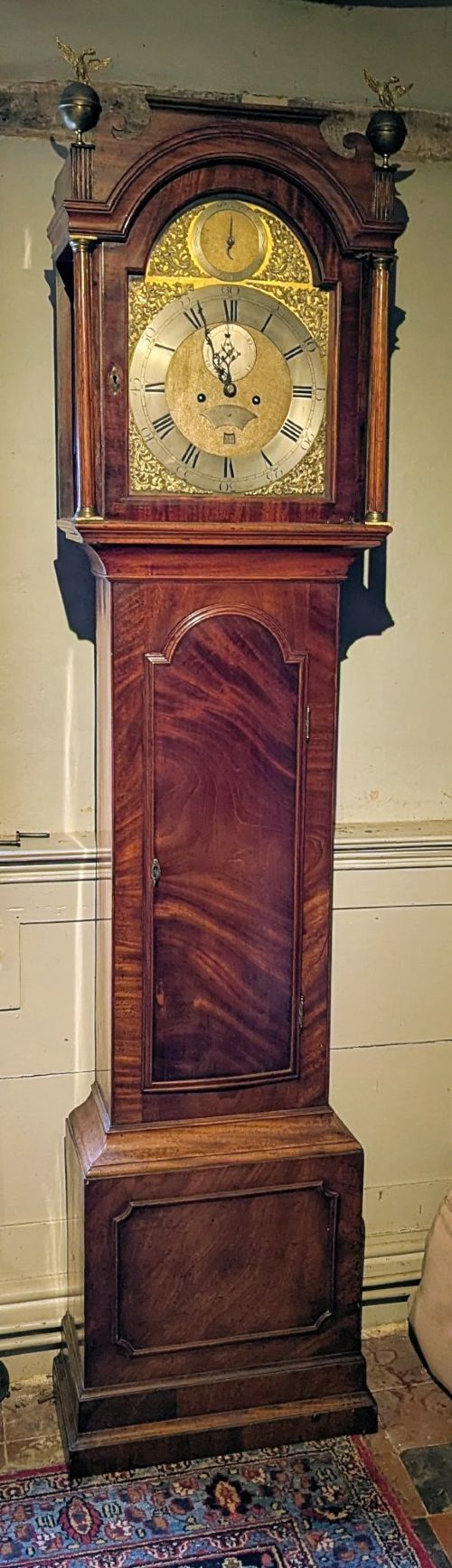
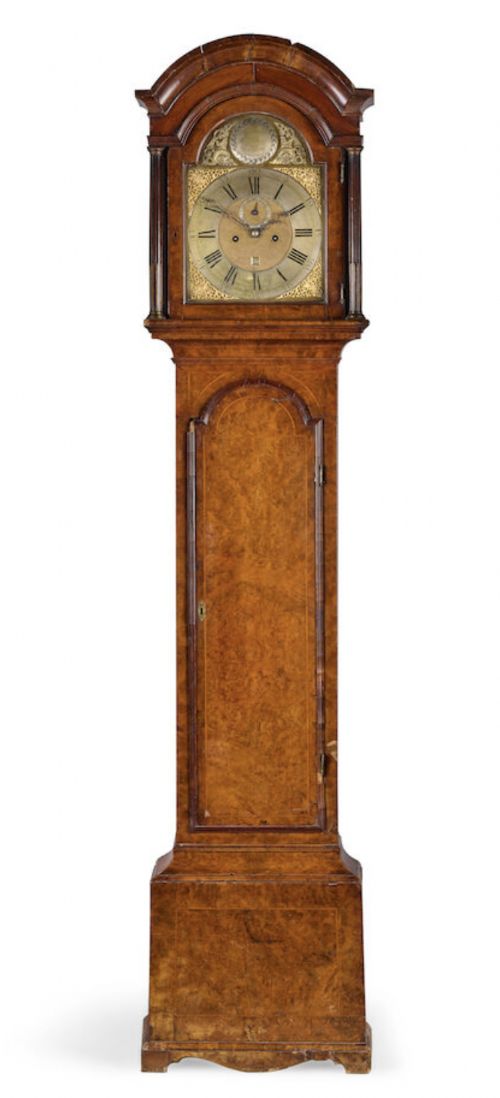
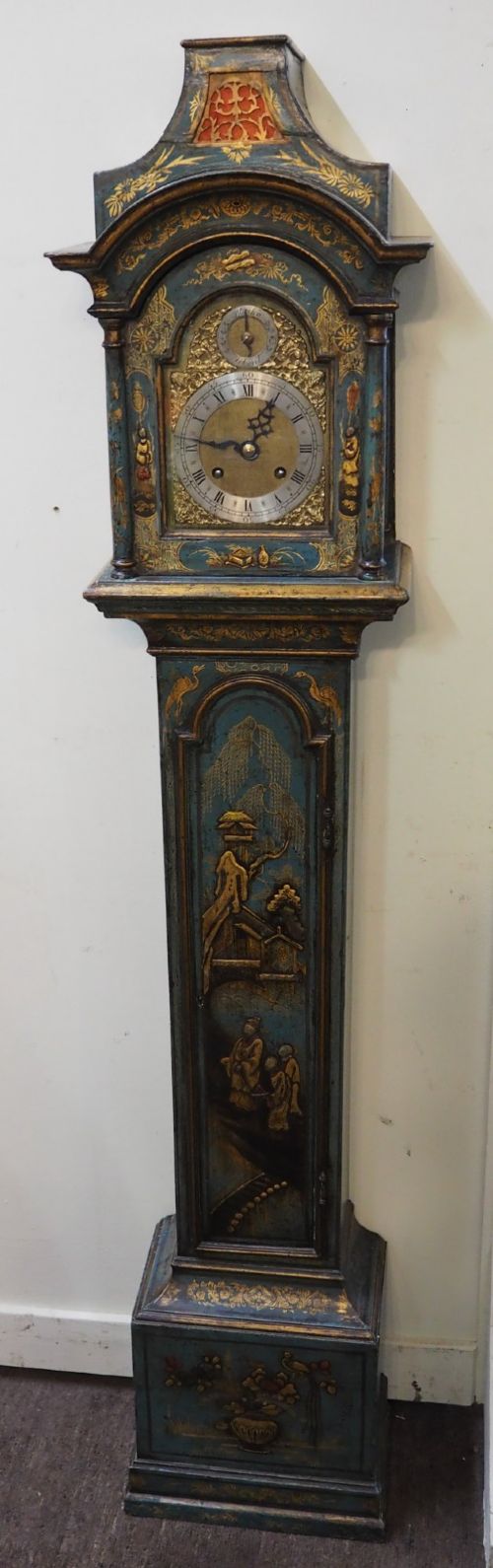
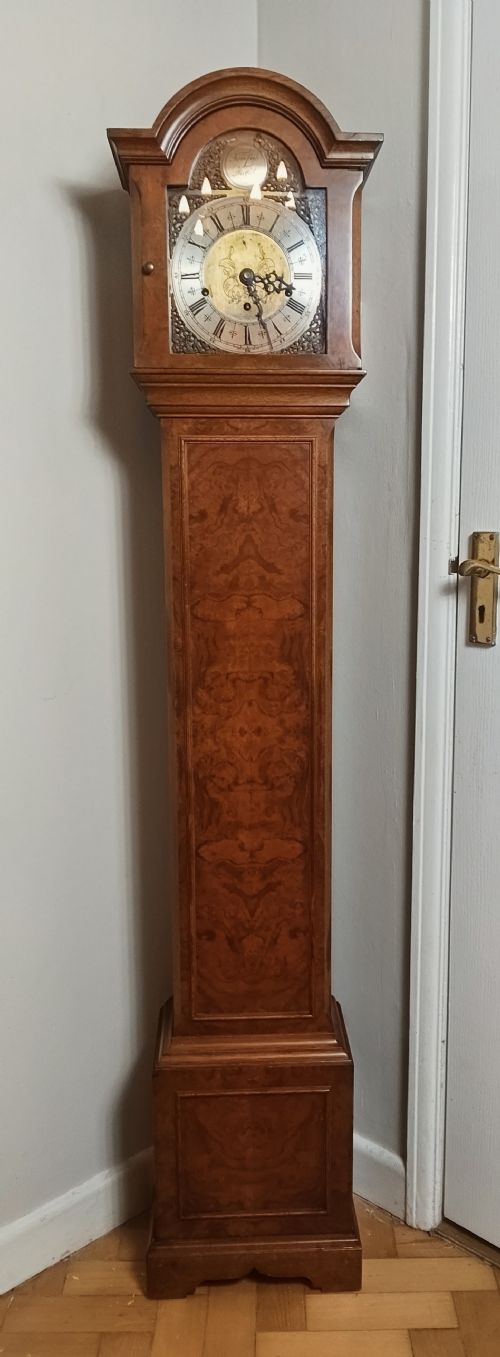

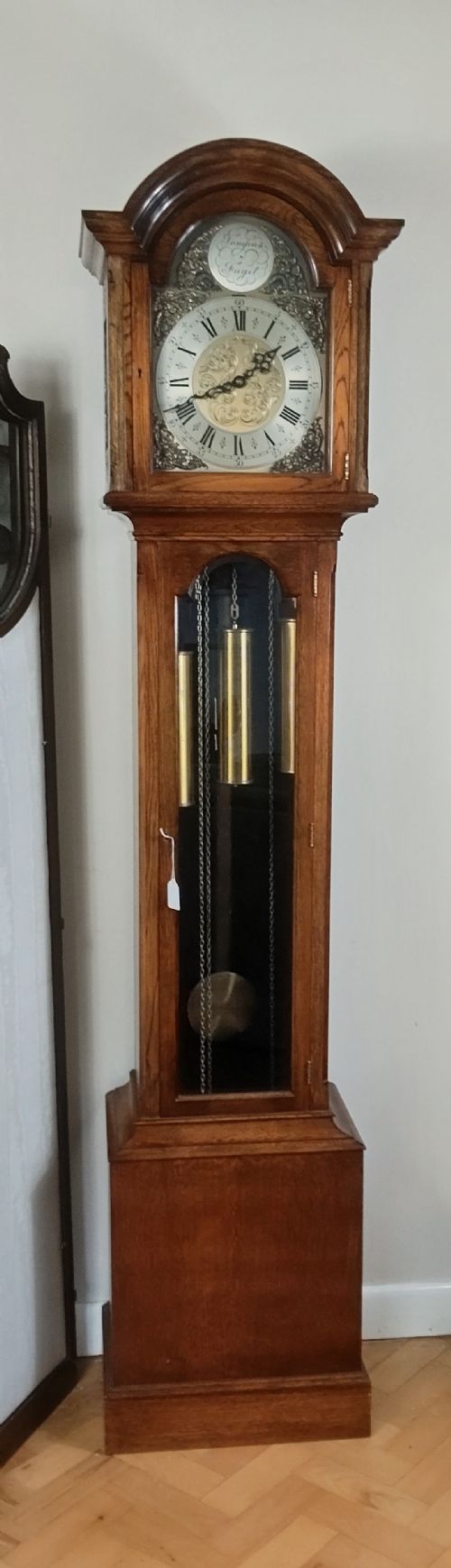
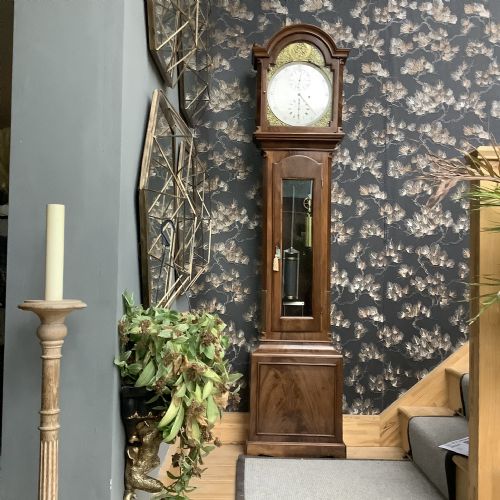

Arched Dial Longcase Clock
An arched dial longcase clock brings the steady tick of the eighteenth century into a room, combining brass work with tall wooden cases.
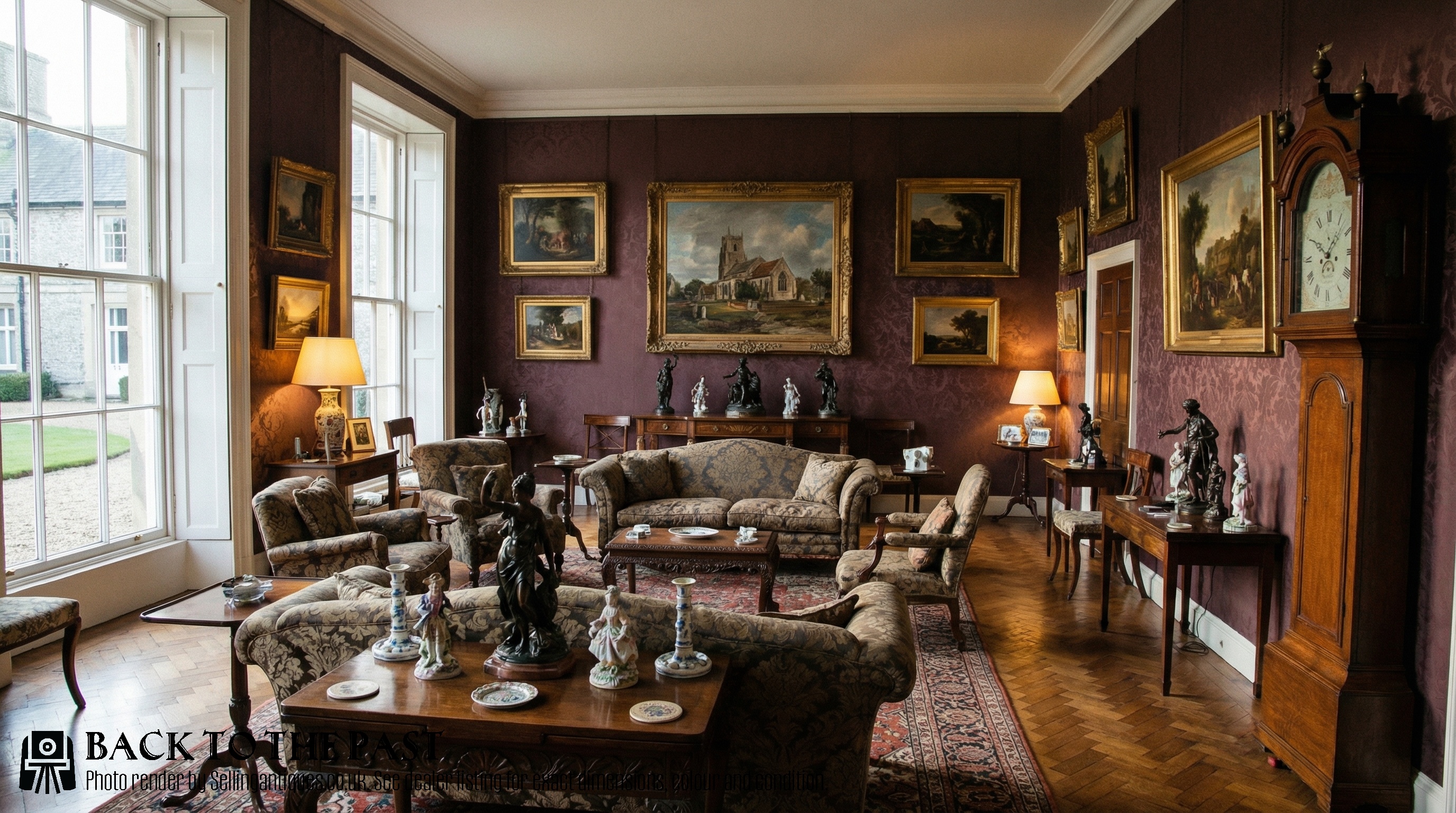
Arched Dial Longcase Clock
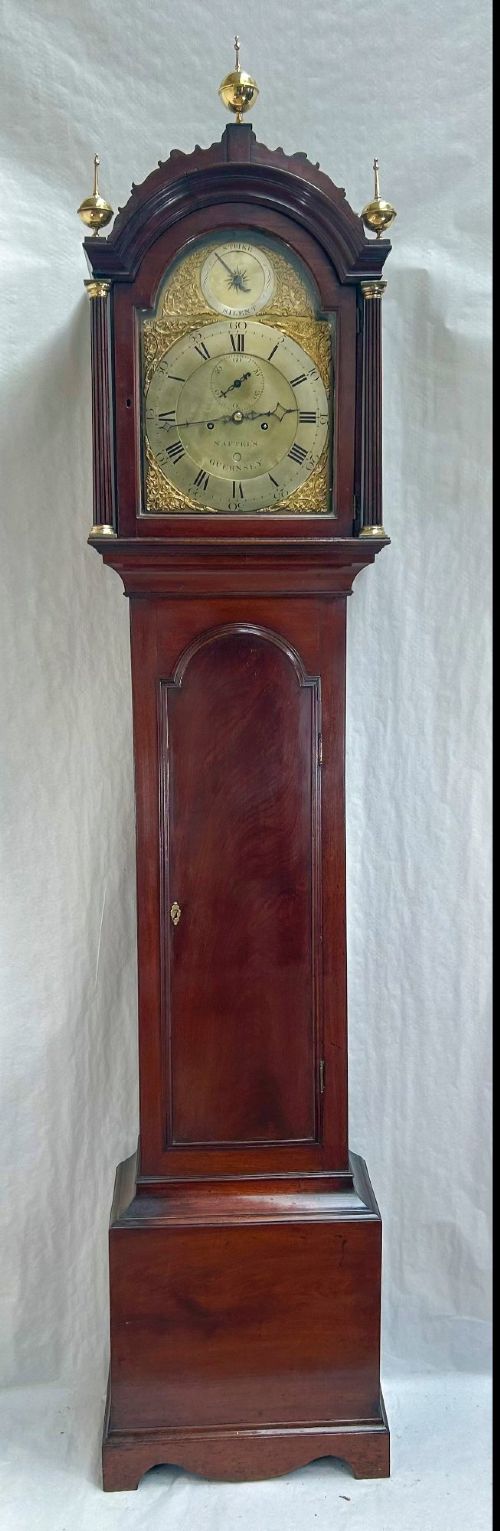
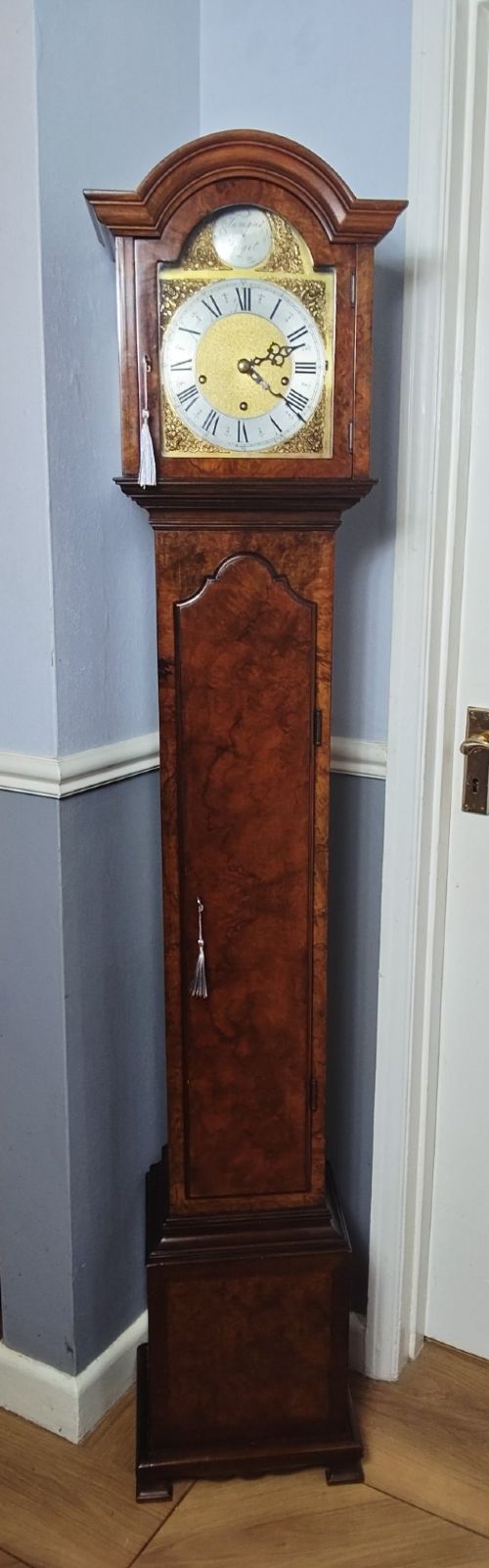
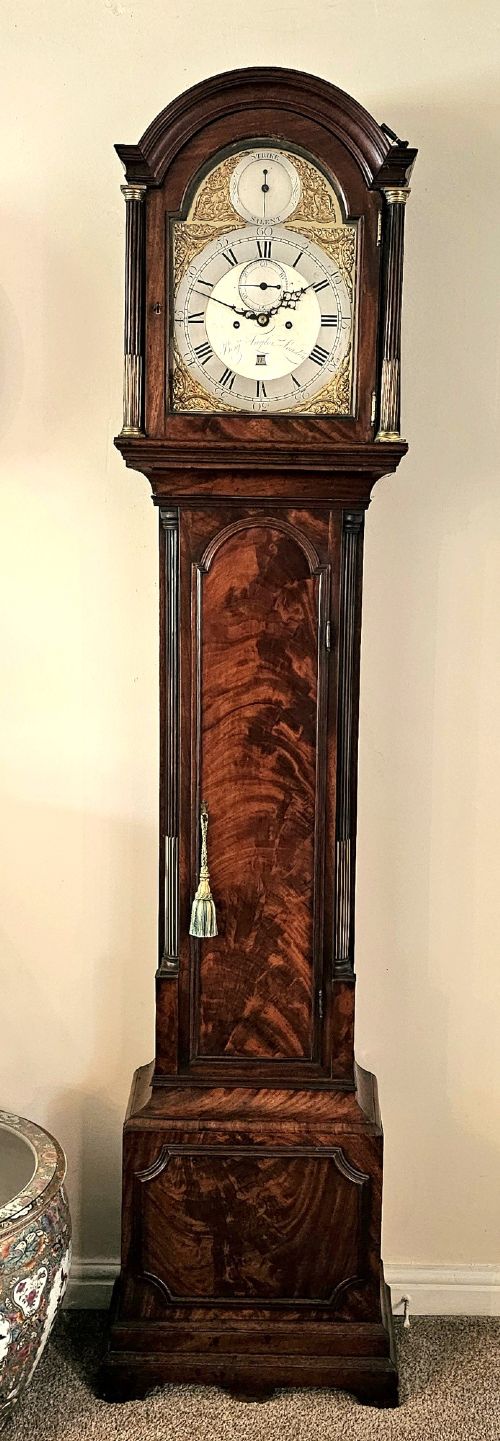
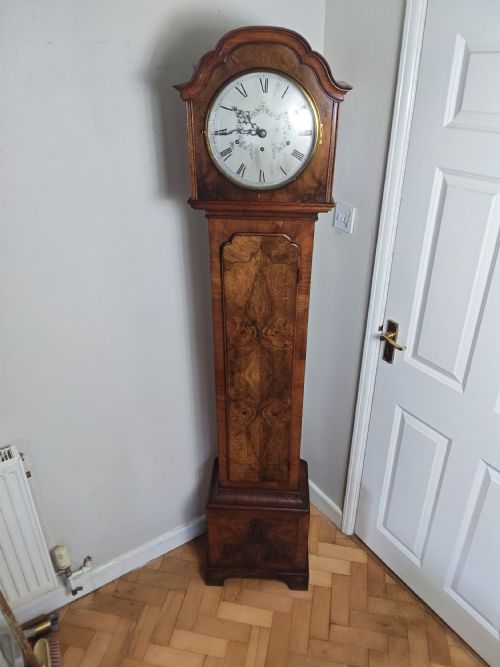
An arched dial longcase clock is a tall floor-standing timekeeper featuring a curved upper section on its metal face, housing mechanisms driven by weights. These pieces date from the eighteenth century through to the twentieth century, appearing in forms such as grandfathers and smaller grandmother clocks.
The selection includes examples in mahogany, oak, and walnut, ranging from early Georgian London pieces to later Edwardian and 1930s revivals. Buyers encounter both full-size eight-day movements and smaller musical or quarter-chiming variants housed in fitted wooden trunks.

How They Were Made
Cabinetmakers constructed the tall wooden cases using timbers such as oak, mahogany, and walnut, often applying burl veneers or flame mahogany panels to the trunk doors. Brass and steel formed the intricate gear trains, dials, and moon roller mechanisms housed inside the arched hoods.
Dial faces combined engraved brass work, silvered chapter rings, and subsidiary arches for strike/silent or lunar phases. Movements relied on brass plates, wheels, and hanging weights suspended by lines or chains to drive the timekeeping and chiming functions.
Arched Dial Longcase Clock Retail Price Guide 2026
Typical asking prices for arched dial longcase clock among the pieces listed under this phrase on Sellingantiques today, from the lower quarter to the upper quarter. They describe what is for sale here now, not the wider market.
Listings span the eighteenth century to the twentieth century, combining early oak and mahogany pieces with later burr walnut revivals.
What Varies in Quality
Quality rests in the crispness of the brass engraving on the arched dial and the sophistication of the movement, such as quarter-chiming or musical capability. London makers and known workshops often produced more complex wheel trains and refined case proportions.
The choice of timber and veneer work separates standard pieces from finer examples, with burr walnut and figured mahogany showing deliberate grain matching. Case preservation, including original hood columns and mouldings, dictates the integrity of the surviving piece.
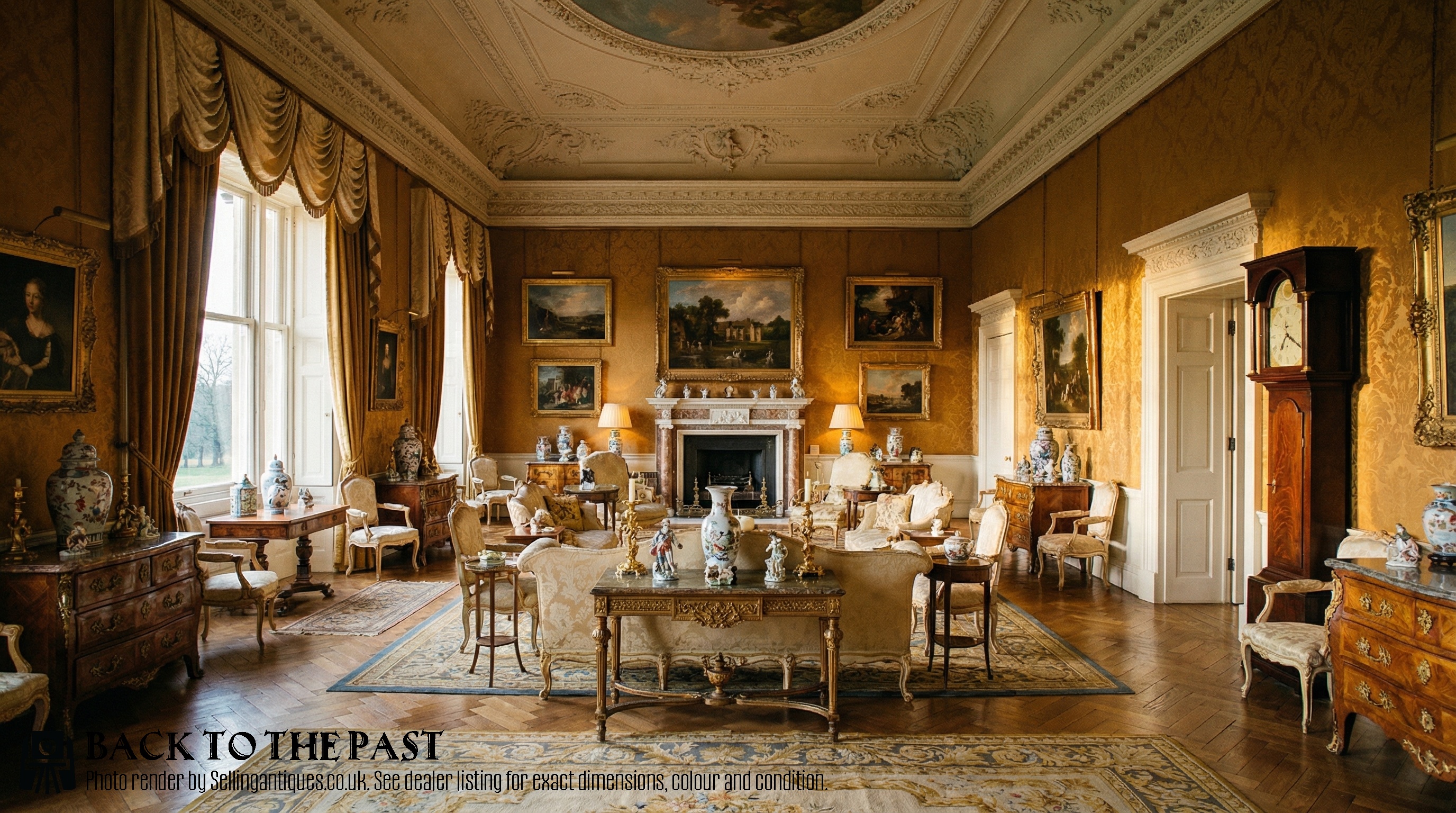
Gillett & Johnston of Croydon·James Field of Hempstead·Benjamin Taylor·Windmills and Wightman·Elliott·Priory of Dundee Scotland·Bravingtons·Handley & Moore Of London·William Allam·James Tregent of London·Edward Upjohn·Francis Perigal of Bond Street·William Wady of Twickenham
The Arched Dial Longcase Clock Glossary
- Longcase clock
- A tall weight-driven pendulum clock housed in a wooden floor-standing case, commonly called a grandfather clock. These instruments measure time through falling weights suspended within the trunk.
- Arched dial
- A clock face featuring a curved top section above the main circular chapter ring. This upper curve often displays a moon phase or strike/silent selector.
- Moon roller
- A rotating cylinder behind an aperture in the dial arch that tracks the phases of the moon. It turns once every lunar month to show the cycle.
- Grandmother clock
- A smaller version of the standard longcase clock, typically produced during the twentieth century. These shorter alternatives fit lower ceiling heights while retaining weight-driven or spring-driven movements.
- Chapter ring
- The metal ring on the dial that bears the hour numerals. It is frequently silvered and mounted onto the brass dial plate.
Arched Dial Longcase Clock: Frequently Asked Questions
What is a grandmother clock?
A grandmother clock is a scaled-down version of the traditional longcase clock, built shorter and narrower to suit domestic spaces with lower ceilings. They appear frequently in twentieth-century Edwardian and 1930s styles.
Despite their smaller stature, many house quarter-chiming or musical movements driven by weights, offering the mechanical complexity of their larger predecessors without the imposing height.
How do you wind an 8 day clock?
An eight-day longcase clock requires winding once a week using a crank key inserted into holes on the brass dial face. Turning the key lifts the internal weights back to the top of the trunk.
Careful winding ensures the brass train maintains tension without over-winding the gut lines or chains that suspend the driving weights.
How do I date an antique clock?
Dating relies on examining the style of the arched dial, the cabinet timber, and the maker's signature engraved on the brass face. Early Georgian pieces often feature square dials before arches became dominant around the middle of the eighteenth century.
Secondary woods, veneer patterns, and the evolution of strike/silent mechanisms provide further clues to whether a piece originates from the 1770s or a later twentieth-century revival.