

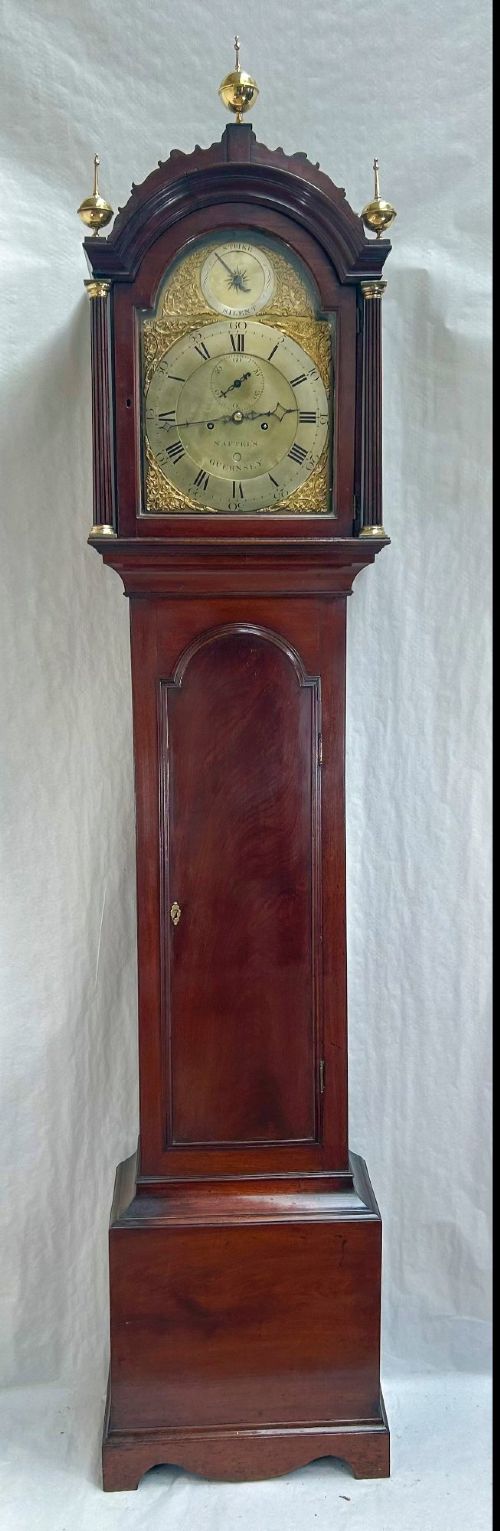
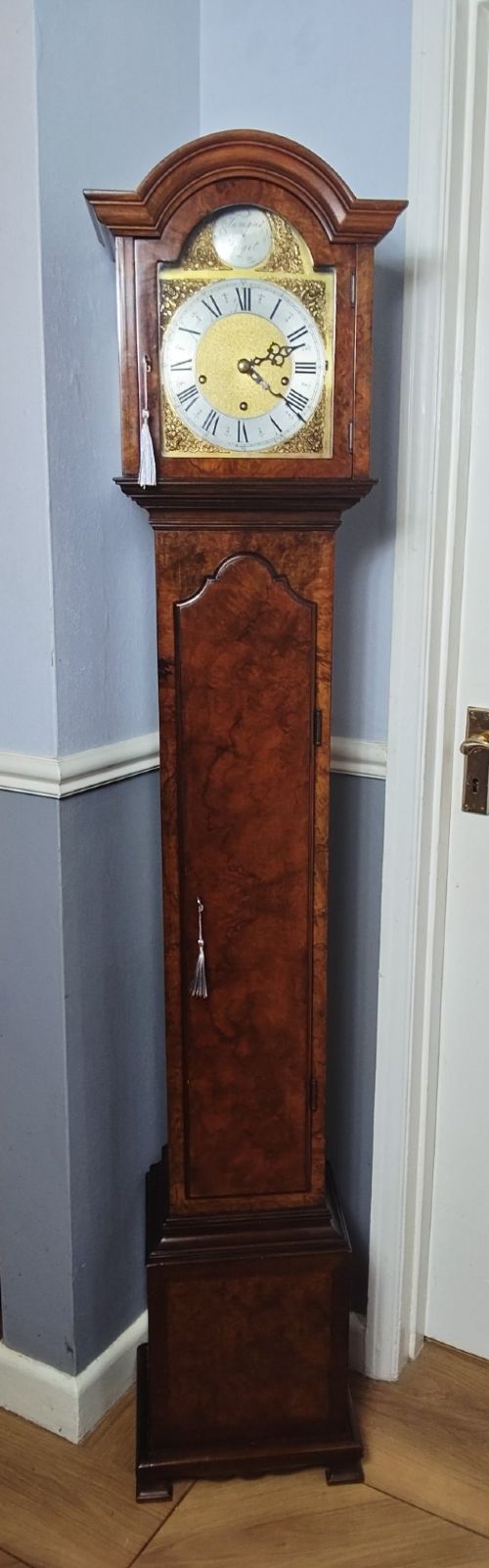
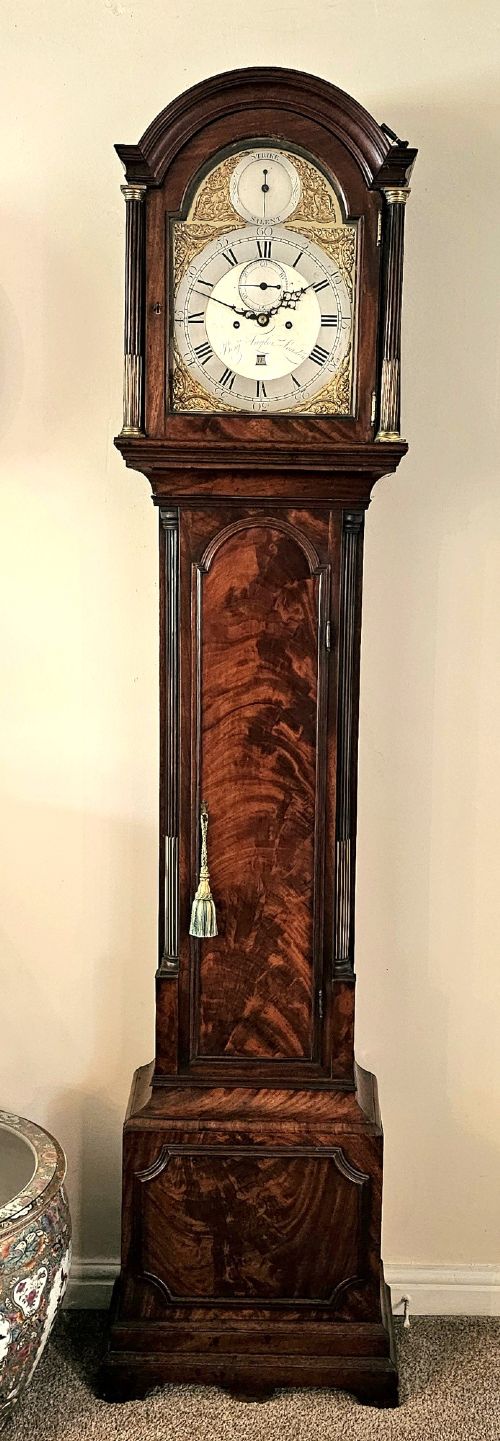
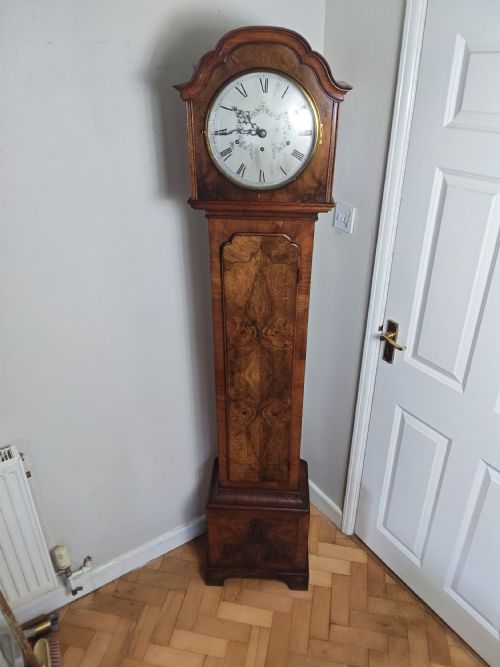
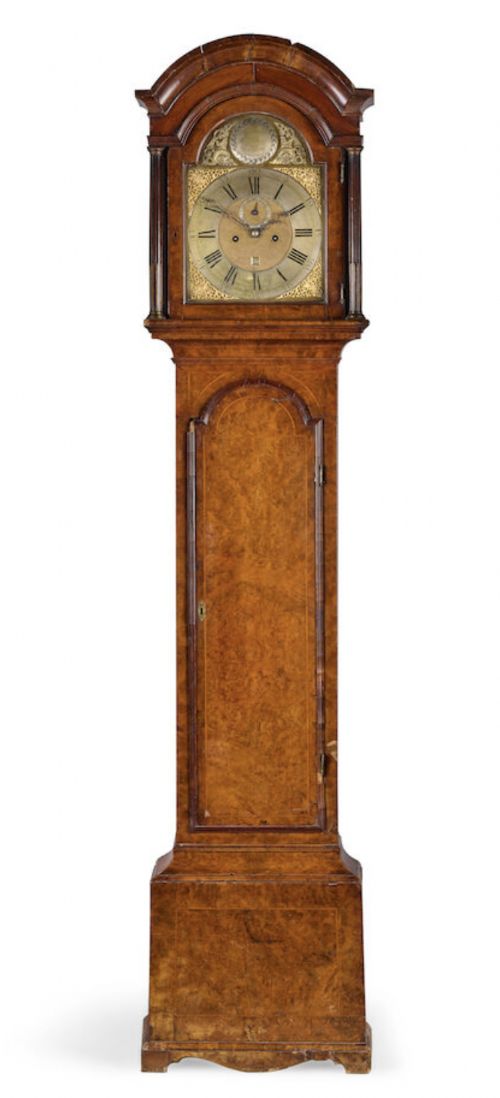
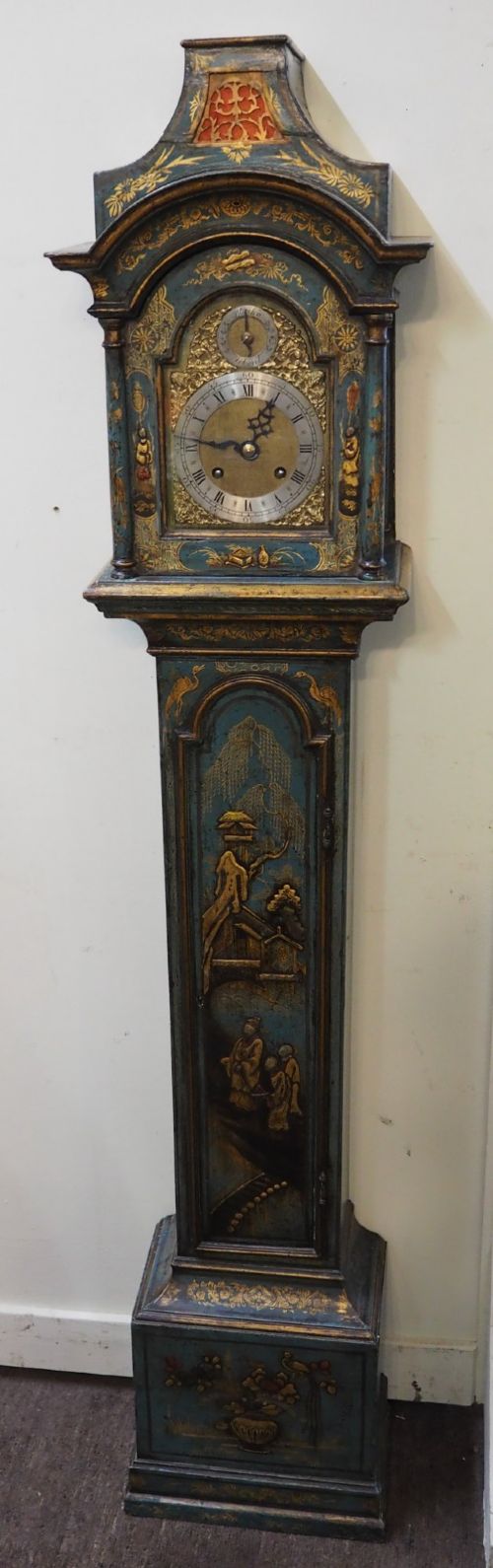

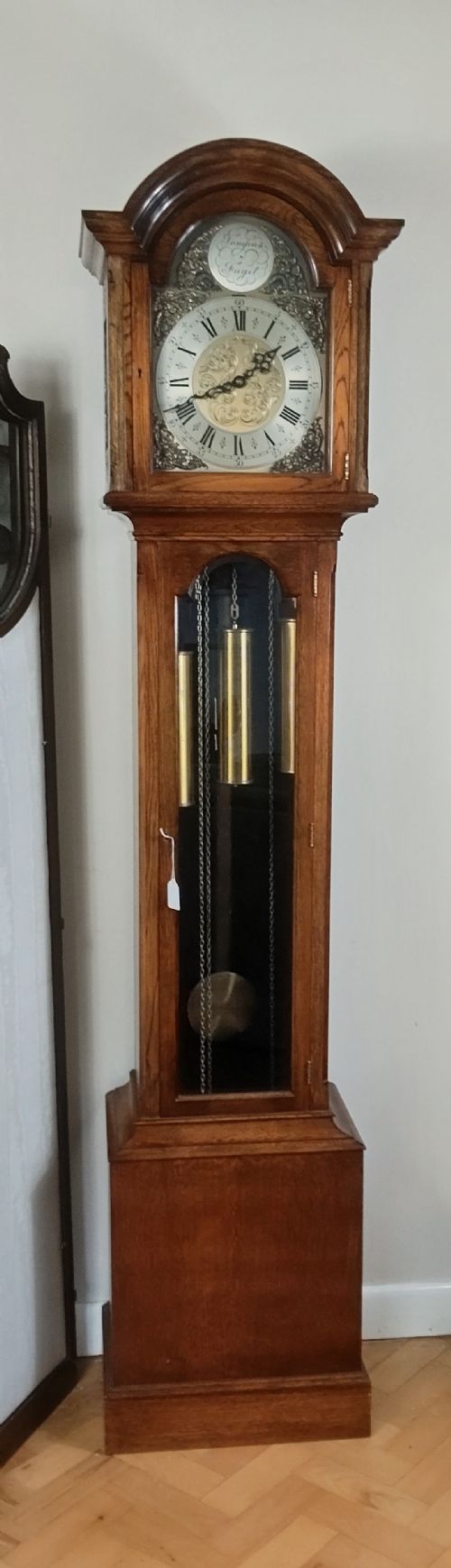
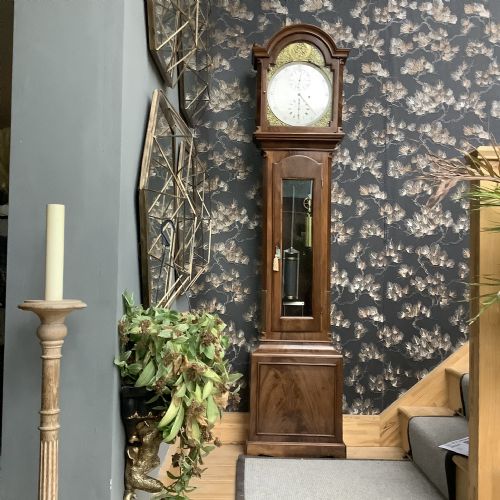


Arch Dial Grandfather Clock
An arch dial grandfather clock brings towering presence and precise movement into a room, combining architectural timber cases with arched brass or painted faces.
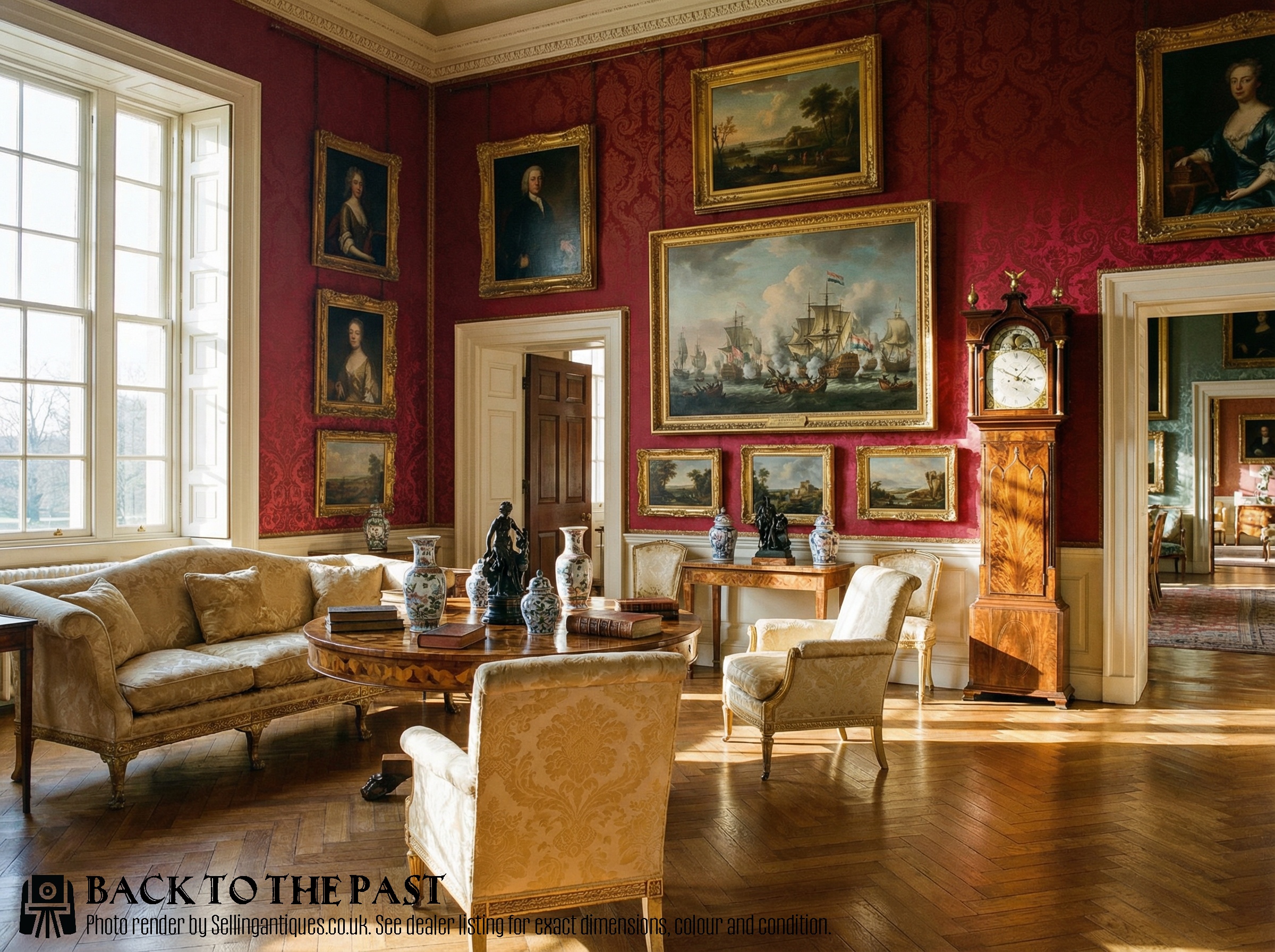
Arch Dial Grandfather Clock
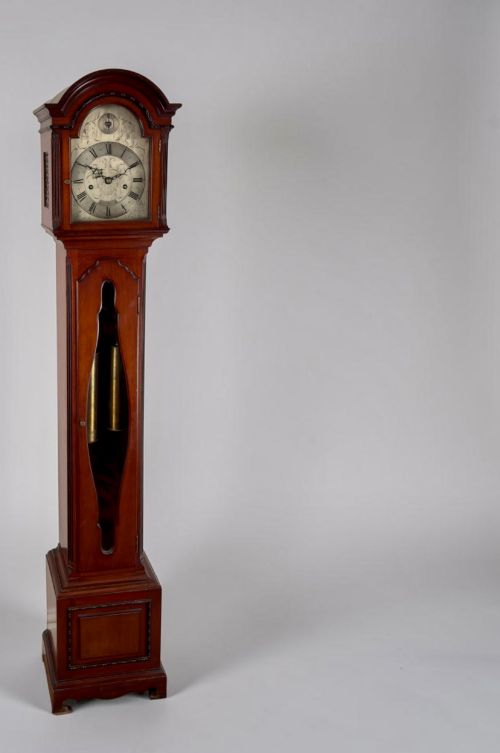
An arch dial grandfather clock stands as a substantial tall-case timepiece designed to measure time across eight-day or shorter durations. Buyers encounter these pieces primarily in Georgian, 18th century, and Victorian incarnations, alongside smaller twentieth-century grandmother clock variants.
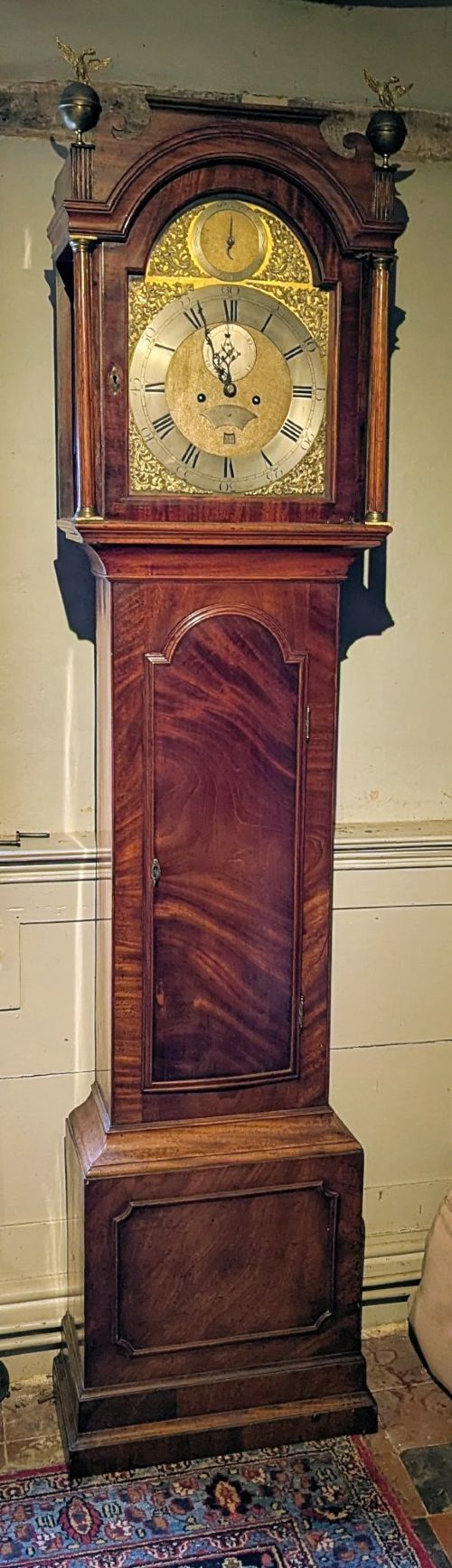
The form spans straightforward oak village timepieces to elaborate London mahogany and walnut longcase clocks featuring musical chimes or moon rollers. The defining characteristic is the curved upper section of the dial, which accommodates extra complications such as lunar phases or silent strikes.
Originating predominantly from English workshops, these clocks range from early Georgian architectural statements to Edwardian and later revivals. The selection on offer encompasses both grand proportions and scaled-down formats suitable for modern domestic spaces.

Materials and construction
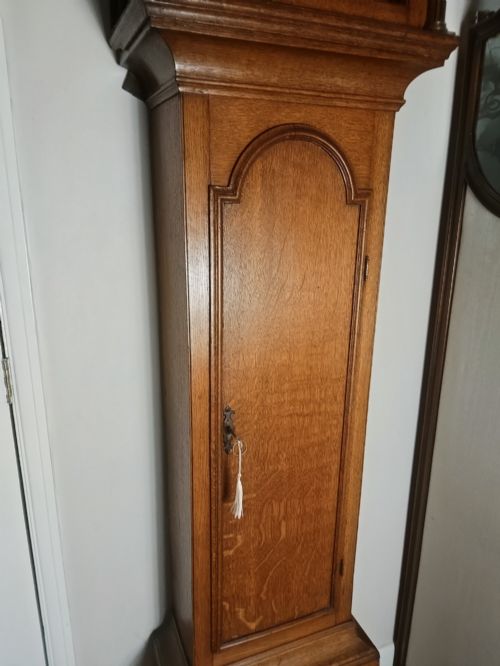
Cabinetmakers utilised dense hardwoods including mahogany, oak, and walnut, frequently selecting flame mahogany or burr walnut veneers to create figured grain patterns across the trunk and hood. Glass panels protect the dial and pendulum bob, while brass and steel form the intricate gear trains and striking mechanisms within.
Movements were laboriously hand-cut and assembled by skilled horologists, paired with brass chapter rings or painted iron dial plates. Cases involved traditional joinery techniques, combining solid carcases with decorative mouldings and arched glazed doors on the hood.
Arch Dial Grandfather Clock Retail Price Guide 2026
Typical asking prices for arch dial grandfather clock among the pieces listed under this phrase on Sellingantiques today, from the lower quarter to the upper quarter. They describe what is for sale here now, not the wider market.
Several makers operated out of London districts like Bond Street, crafting timepieces that kept pace with the expanding British Empire.
Distinguishing quality in longcase clocks
The distinction between ordinary and exceptional examples lies in the crispness of the movement engraving, the complexity of the chime or moon phase work, and the fidelity of the cabinet timber. Master clockmakers signed their brass arches and dial plates, indicating superior workshop standards.
Case proportion and timber selection heavily influence the standing of a piece; figured burr walnut and rich flame mahogany veneers demand superior cabinetmaking skill compared to plain secondary woods. Original matching movements and unblemished dial painting preserve the integrity and heritage of the clock.
Gillett & Johnston of Croydon·James Field of Hempstead·Benjamin Taylor·Windmills and Wightman·Priory of Dundee Scotland·Bravingtons·Handley & Moore·William Allam·James Tregent of London·Edward Upjohn·Francis Perigal of Bond Street·William Wady of Twickenham·Anthony Binks
The Arch Dial Grandfather Clock Glossary
- Arch dial
- A clock face featuring a curved semi-circular section at the top above the main chapter ring. This space often contains a moon roller, subsidiary dials, or decorative brass spandrels.
- Longcase clock
- The formal term for a tall pendulum clock housed in a wooden case, commonly known as a grandfather clock. These cases protect the hanging weights and pendulum while providing structural stability.
- Grandmother clock
- A scaled-down version of the traditional longcase clock, typically produced during the early twentieth century. They occupy less floor space while retaining similar mechanical complexity.
- Moon roller
- A rotating cylinder behind the dial arch that tracks the lunar cycle. It displays the phases of the moon through a shaped aperture.
- Spandrel
- An ornamental corner piece fitted to the dial surrounding the chapter ring. Early examples are cast brass, while later dials often feature painted spandrels.
Arch Dial Grandfather Clock: Frequently Asked Questions
How do I wind an eight day clock?
An eight-day movement requires winding every week using a matching crank key inserted into the winding holes on the dial face. Care must be taken not to over-wind the barrels or weights.
Ensure the weights are allowed to descend fully without catching on the interior trunk walls. Smooth, steady rotation preserves the gut lines and internal arbors.
Where should I place a longcase clock?
Position the clock against an interior structural wall away from direct sunlight, heating vents, and draughts. Stable ambient conditions prevent timber warping and movement gumming.
Secure the case to the wall using the internal bracket if provided to prevent tipping. A level floor is essential for the pendulum to beat evenly.
How do I tell an 18th century clock from a later revival?
Examine the timber construction methods inside the hood and trunk, looking for hand-cut dovetails and pegged joints. Eighteenth-century movements show distinct hand-finished file marks on the brass plates.
Revival pieces from the Edwardian or interwar periods often utilise more uniform machine-sawn components and standardised screw threads. Maker signatures and dial styling also provide firm chronological clues.