


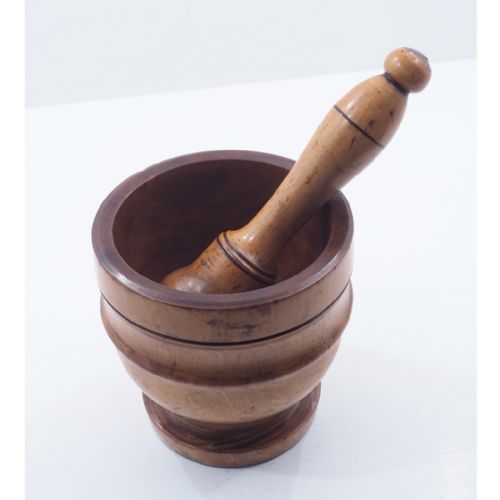


Apothecary Mortar Pestle
These apothecary mortar pestle pieces are heavy utility vessels forged to crush and grind ingredients, satisfying a collector's taste for historic metalware and treen.
Apothecary Mortar Pestle
An apothecary mortar pestle is a heavy kitchen or medical vessel designed for grinding materials, appearing in forms ranging from small chemist tools to large kitchen aids. When searching for an apothecary mortar pestle, buyers encounter items spanning from the seventeenth century through the Victorian and Edwardian periods.
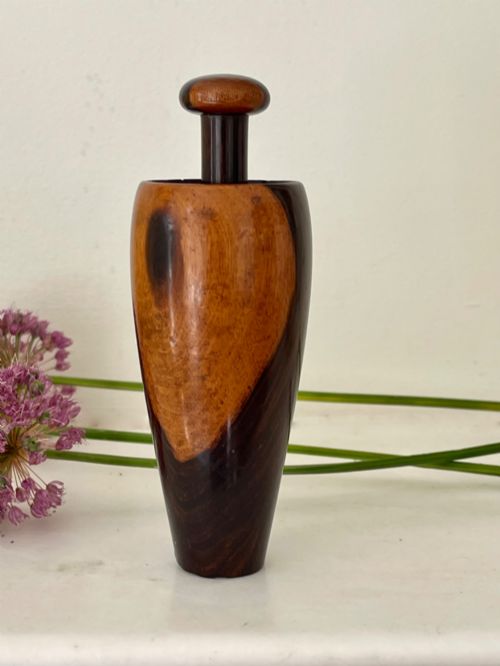
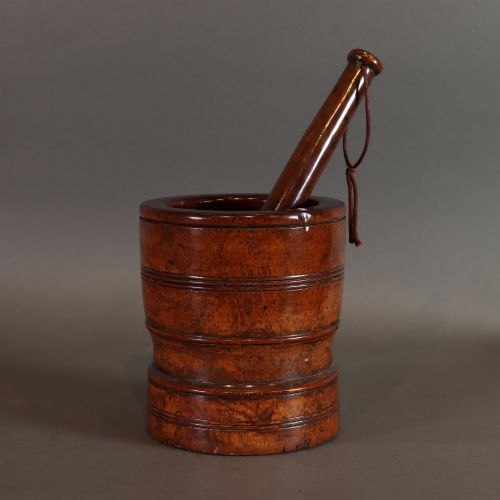
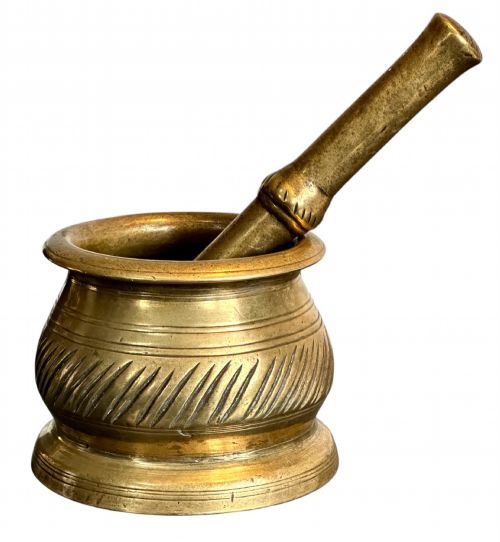
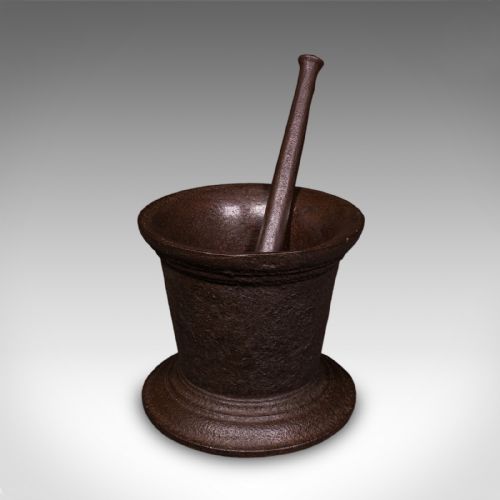
The selection includes metalware vessels alongside wooden treen pieces, reflecting utilitarian origins in domestic and apothecary settings. Examples appear in bronze, brass, bell metal, ceramic, oak, beech, walnut, lignum, and wrought iron.
Styles range across seventeenth century country primitive, Georgian, and Renaissance Revival designs. Pieces often show simple proportions built entirely for heavy physical work.
How They Were Made
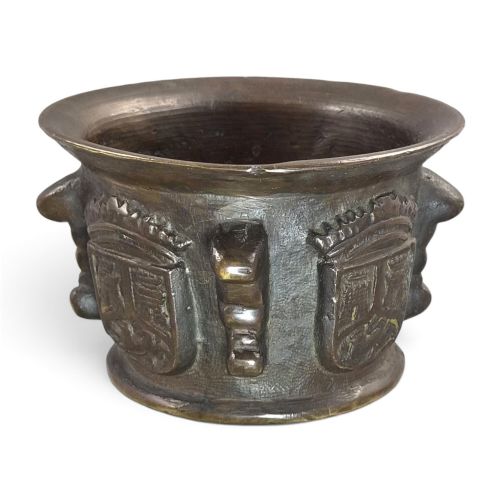
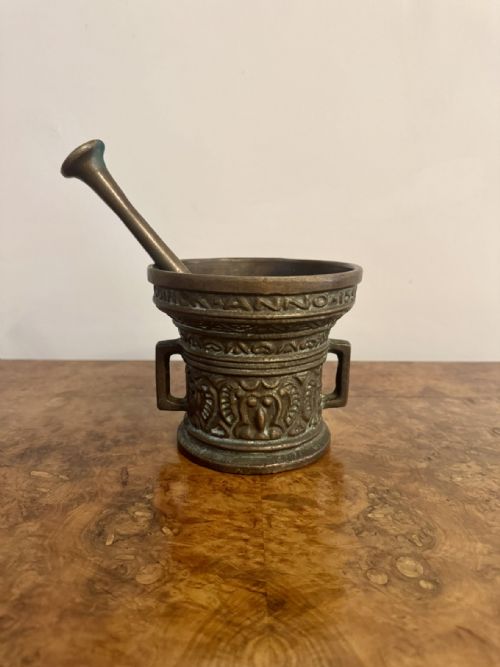
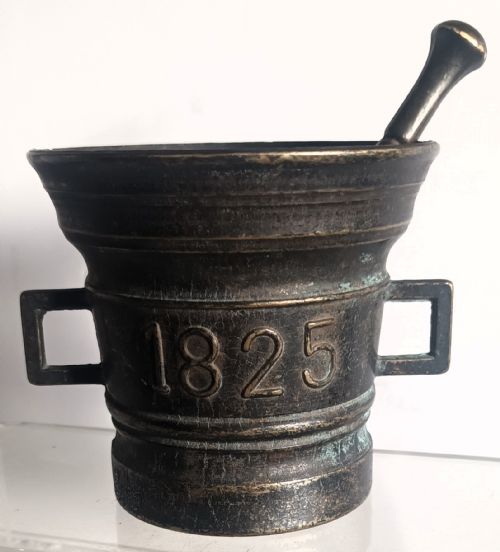
Metal vessels such as bronze, brass, and bell metal mortars are cast in moulds, often displaying textured surfaces from the casting process and heavy walls designed to withstand repeated impact. Some metal pieces incorporate cast armorial cartouches.
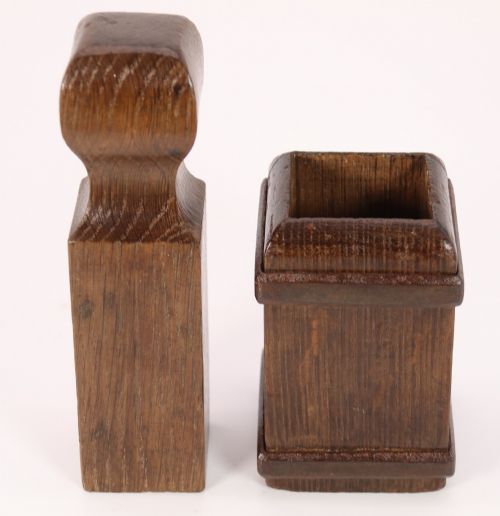
Wooden treen versions utilise dense timbers like oak, beech, walnut, and lignum, turned on a lathe or hand-carved. Wrought iron mounts and fittings are hammered and fastened directly to wooden bodies to reinforce the structure.
Apothecary Mortar Pestle Retail Price Guide 2026
Typical asking prices for apothecary mortar pestle among the pieces listed under this phrase on Sellingantiques today, from the lower quarter to the upper quarter. They describe what is for sale here now, not the wider market.
Available pieces span the seventeenth century, the eighteenth century, the Victorian period, and the Edwardian era.
What Varies in Quality
Quality rests in the weight of the metal and the density of the timber, separating thin utility items from substantial heavy castings and dense turned woods. Material composition dictates durability, with bell metal and bronze offering superior resonance and mass.
Surface finish and decorative elements elevate certain pieces above standard workshop output. Cast armorial cartouches, unusual pestle shapes, and wrought iron mounts indicate greater ambition in design and execution.
The Apothecary Mortar Pestle Glossary
- Mortar
- The heavy bowl or vessel used to hold substances while they are ground or crushed. It requires a matching pestle to perform the work.
- Pestle
- The club-shaped hand tool used with a mortar for pounding and grinding materials. Its weight and balance determine its effectiveness in the vessel.
- Bell Metal
- An alloy of copper and tin specifically formulated for casting bells, valued here for its density and resonant tone. It yields a particularly crisp surface when cast.
- Treen
- Small handmade wooden domestic objects turned on a lathe or carved by hand. Examples include mortars fashioned from oak, beech, walnut, and lignum.
- Cartouche
- An ornamental tablet or oval frame design, sometimes cast onto the exterior of bronze and bell metal mortars. It often displays armorial bearings.
Apothecary Mortar Pestle: Frequently Asked Questions
What were apothecary mortars used for?
These vessels were employed by apothecaries and in domestic kitchens to grind, crush, and pulverize dry ingredients, herbs, and medicines.
The heavy walls and matching pestles allowed users to break down tough botanical and chemical components into fine powders.
How do I date an old mortar?
Dating relies on material composition, casting characteristics, and stylistic traits typical of periods like the seventeenth century or the Victorian era.
Early examples often feature bell metal or heavy bronze with simple rims, whereas later Victorian and Edwardian pieces frequently introduce ceramic or varied wood constructions.
Are wooden mortars durable?
Wooden treen mortars utilise dense timbers such as lignum, oak, beech, and walnut designed to endure heavy physical pressure.
Over centuries, the timber adapts to dry environments, though these pieces remain susceptible to moisture if not properly maintained.
Why do some mortars have iron mounts?
Wrought iron mounts were added to wooden vessels to reinforce the body against the intense forces generated during prolonged crushing and grinding.
This ironwork provides structural stability while adding a distinct utilitarian aesthetic to pieces like seventeenth century oak crushers.
How do I display a mortar and pestle?
Their substantial weight and sculptural forms make these vessels suitable for display on kitchen counters, shelves, or sideboards.
Keeping the mortar and pestle together as a paired set preserves their historical function and visual balance.