
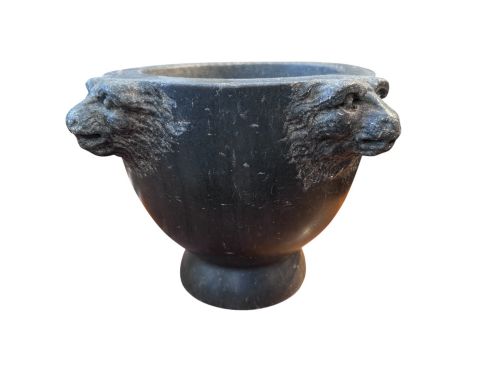
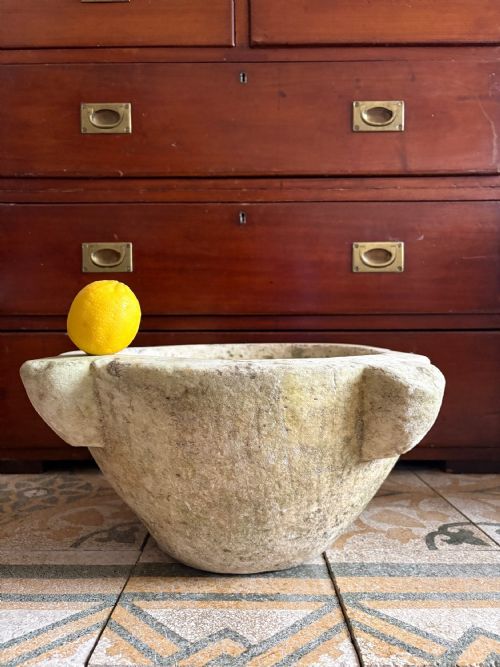


Apothecary Grinding Bowl
An apothecary grinding bowl is a heavy vessel built to crush and mix ingredients, prized for its tactile weight and industrial history.
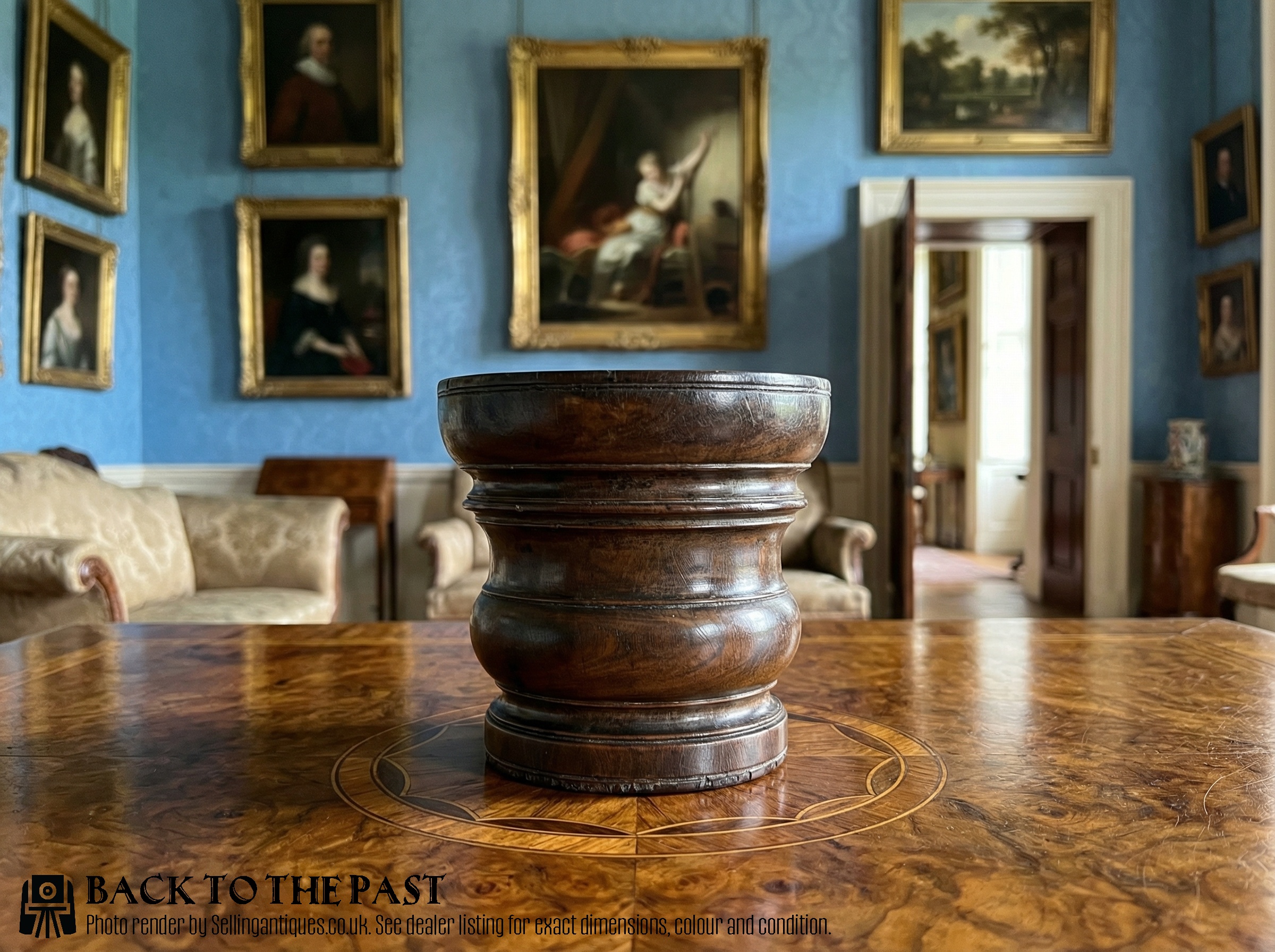
Apothecary Grinding Bowl
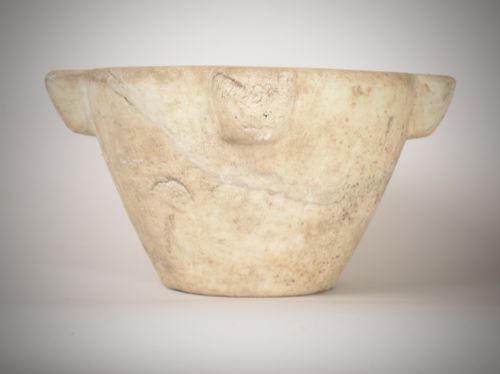
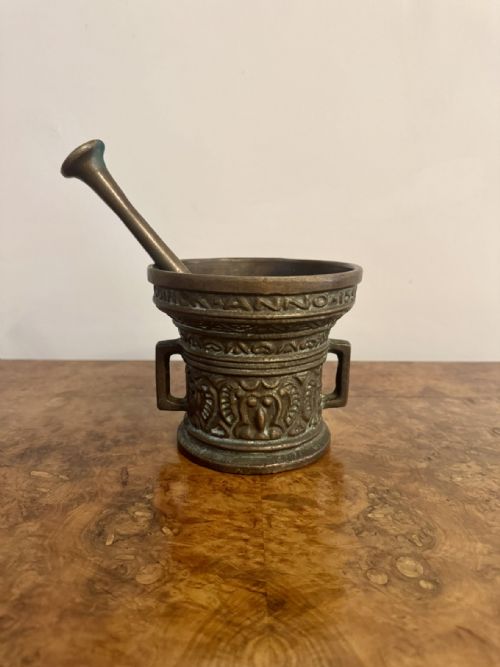
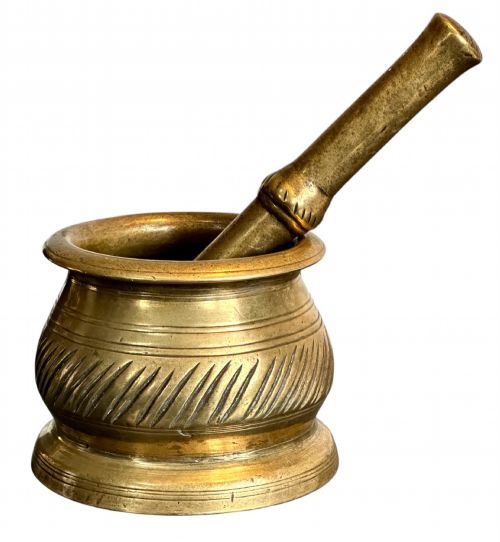
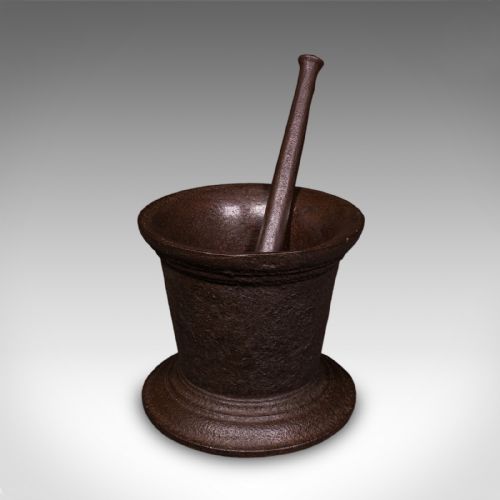
When you search for an apothecary grinding bowl, you are looking at functional vessels designed for compounding substances, ranging from domestic kitchenware to heavy industrial dye maker pieces. These objects appear in various formats, including standalone mortars, complete mortar and pestle sets, and larger troughs originating from the seventeenth century through to the Edwardian era.
The most common examples you will encounter on this page span the eighteenth and nineteenth centuries, often formed from solid metals or dense stone. Many pieces reflect regional characteristics, with English, French, and Italian examples appearing frequently in both rustic country styles and more formal revival periods.
What varies in quality
The standard of a grinding bowl depends upon the density and integrity of its material, with heavy cast bronzes and pristine white marbles sitting at the higher end of the scale. Superior pieces display crisp casting marks, balanced proportions, and minimal structural wear from centuries of friction.
Quality also relates to the completeness of the set, as finding a matching original pestle alongside the mortar elevates the piece significantly. Finer examples often feature decorative surface details, such as Tudor rose motifs or Gothic revival styling, which separate utilitarian kitchenware from accomplished workshop output.
The selection includes monumental industrial pieces, such as a heavy dye maker's first stage mortar alongside domestic brass and ceramic kitchenware.
The Apothecary Grinding Bowl Glossary
- Mortar
- The heavy bowl or vessel in which substances are crushed or ground. It provides a stable, thick-walled base for compounding ingredients.
- Pestle
- The club-shaped tool used with a mortar for pounding and grinding materials. Its weight and shape match the interior contour of the bowl.
- Lignum-vitae
- An extremely dense and heavy wood derived from trees in the genus Guaiacum, often used for turned wooden mortars. It resists splitting under heavy impact.
- Basalt
- A dense volcanic rock utilised for dark, heavy-duty grinding bowls. Its hard texture makes it suitable for industrial and apothecary use.
- Jardiniere
- A decorative pot or vessel for holding plants, a secondary function often given to large antique mortars in domestic settings.
Apothecary Grinding Bowl: Frequently Asked Questions
What were apothecary grinding bowls used for?
These vessels were employed primarily by apothecaries, chemists, and dye makers to crush, pulverise, and mix raw ingredients into fine powders or pastes. The thick walls and heavy bases prevented the bowls from cracking or sliding during intense manual pounding.
Over time, many of these heavy utilitarian items transitioned into domestic spaces and decorative displays, serving as kitchenware or plant holders once their active compounding days ended.
How do I date a stone mortar?
Dating stone grinding bowls relies heavily on tool marks, stone type, and overall form rather than maker marks, which are rarely found on stone pieces. Earlier examples from the sixteenth and seventeenth centuries tend to show hand-chiselled surfaces and simpler, thicker proportions.
Later pieces from the eighteenth and nineteenth centuries often display more refined turning or smoother exterior finishes influenced by classical revival styles. Comparing the interior wear patterns to known period examples helps narrow down the century of manufacture.
Are bronze and brass mortars different?
Bronze and brass mortars differ mainly in their alloy composition, with bronze containing copper and tin, while brass consists of copper and zinc. Bronze is generally harder, heavier, and yields a deeper resonant tone when struck, making it preferable for heavy industrial or apothecary work.
Brass versions often appeared slightly later and tended to be utilised for domestic kitchens or lighter pharmacy tasks, exhibiting a brighter golden hue compared to the darker patination of older bronze.
How do I live with a heavy stone mortar?
Living with these heavy vessels requires acknowledging their substantial weight, which often demands dedicated display surfaces like sturdy tables, stone countertops, or low shelving units. Their durable nature means they require very little active maintenance beyond occasional dusting or gentle cleaning appropriate for stone or metal.
Many people use them as standalone decorative objects or repurpose them to hold items in the kitchen, allowing their historical utility to integrate into a modern room.