


Turned Lignum Vitae
Turned lignum vitae encompasses dense hardwood objects shaped on a lathe, prized for their weight and lustrous grain.
Turned Lignum Vitae
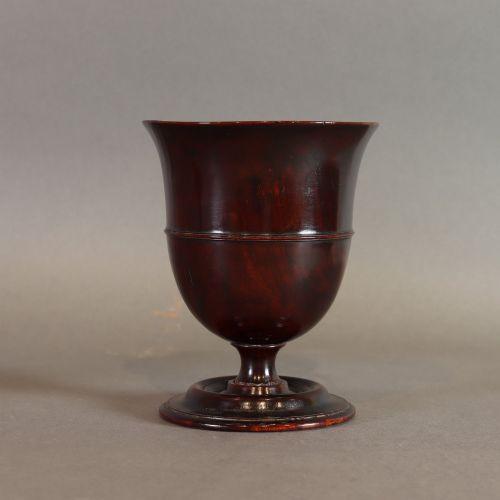
When you search for turned lignum vitae, you find objects shaped on a lathe from a dense, resinous tropical timber that sinks in water. The pieces span domestic treen, utility items and lighting from the seventeenth century onwards, featuring rich brown and greenish hues.
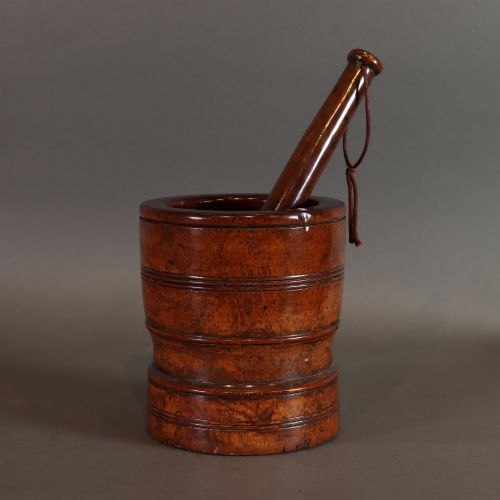
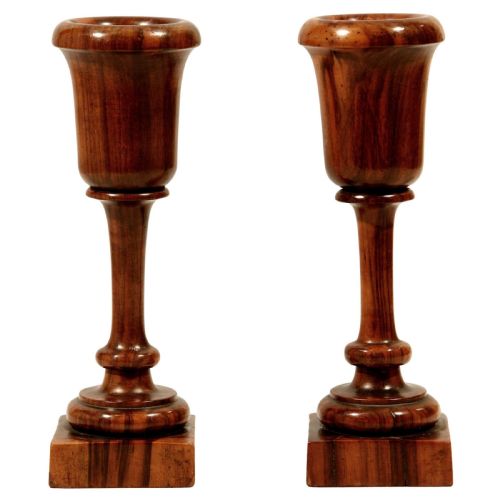
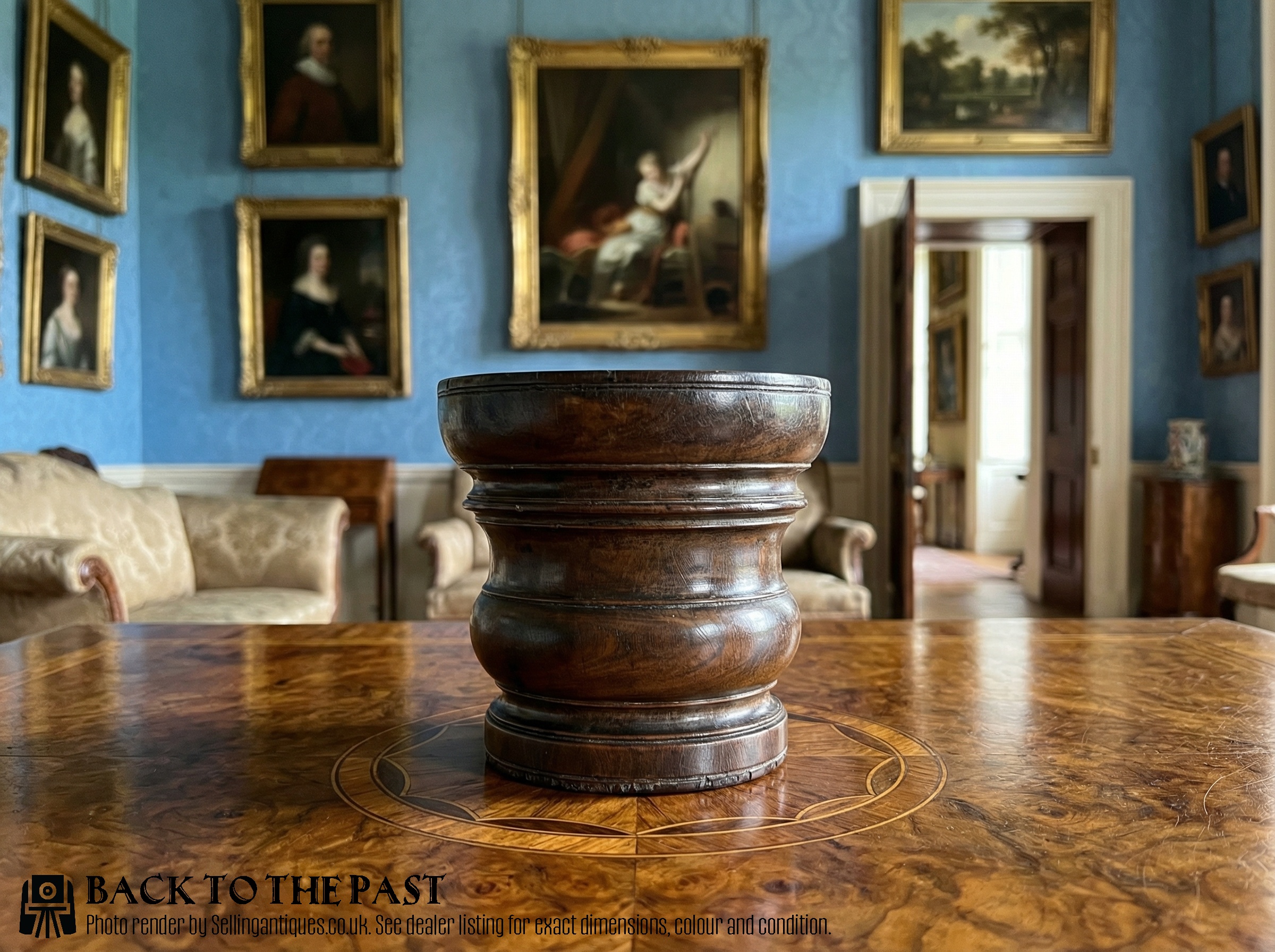
You meet nineteenth century examples most frequently on this page, particularly utilitarian kitchenalia, mortars and desktop containers. These range from heavy apothecary mortars and pestles to string barrels and candlesticks made by British turners.
Earlier pieces from the seventeenth and eighteenth centuries appear as pedestalled goblets and robust mortars. Later Victorian interpretations include table lamps, fruit bowls and wool bowls that display the dense grain and substantial heft characteristic of the timber.
What varies in quality
The degree of crispness in the ring-turned decoration separates standard utility items from finer examples. Sharp, deep profiling and balanced proportions indicate a skilled turner working with superior timber blocks.
The condition of the dense surface finish dictates desirability, alongside the presence of original matching components like pestles with mortars or lids with medicinal cases. Rich natural patination acquired through handling adds to the visual depth of the timber.
Lignum vitae is so dense it sinks straight to the bottom of the washing-up bowl like a stone.
The Turned Lignum Vitae Glossary
- Lignum vitae
- A dense, heavy tropical hardwood containing natural oils, utilised for utilitarian objects requiring durability and weight.
- Treen
- Small handmade wooden domestic objects, encompassing kitchenalia, boxes and small containers.
- Mortar and pestle
- A bowl and grinding tool used historically in apothecaries and kitchens for crushing substances, turned from a single block.
- String barrel
- A hollow cylindrical container with a central aperture designed to dispense cord or twine.
- Ring-turned
- A decorative technique on a lathe producing parallel raised ridges and hollows along the profile of an object.
Turned Lignum Vitae: Frequently Asked Questions
What is turned lignum vitae?
Turned lignum vitae comprises objects shaped on a lathe from a heavy, resinous hardwood known for its density and dark grain.
These items range from utilitarian mortars and mallets to decorative table lamps and small treen vessels.
How do I care for turned lignum vitae?
Keep these items away from direct heat sources and sudden humidity changes to prevent timber splitting.
Apply occasional neutral wax polish if the surface appears dry, buffing gently with a soft cloth.
How old are these objects?
The pieces span from the seventeenth century through the Georgian and Victorian eras up to the late nineteenth century.
Nineteenth century utilitarian treen and apothecary items form the majority of surviving examples.
Why is the wood so heavy?
Lignum vitae translates as tree of life and is among the densest timbers known, possessing natural resins that make it heavier than water.
This extreme density made it suitable for heavy-duty items like mallets, mortars and pulleys.