


Antique Yellow Area Rug
An antique yellow area rug brings warmth to a floor through saturated wool and cotton weaves originating from Turkey, the Caucasus, Persia, and India.
Antique Yellow Area Rug
When searching for an antique yellow area rug, you encounter hand-knotted and flatwoven floor coverings spanning the middle decades of the nineteenth century through the early decades of the twentieth century. These textiles originate primarily from traditional weaving centres across Turkey, the Caucasus, Persia, India, China, and Eastern Europe, produced in formats ranging from compact seating mats and prayer rugs to large room-sized carpets.
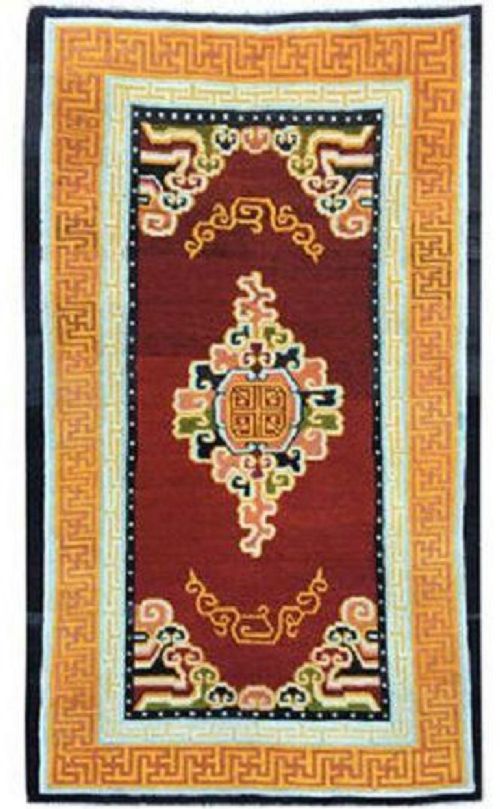
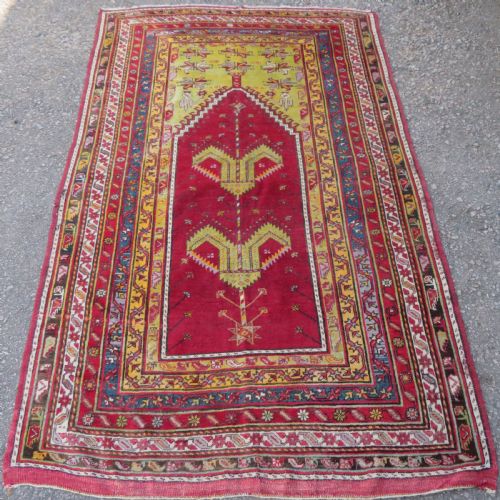
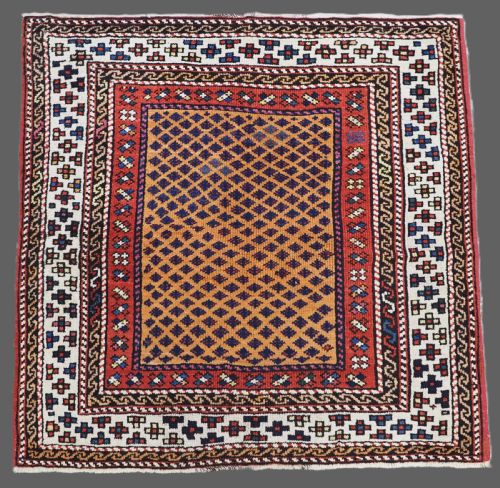
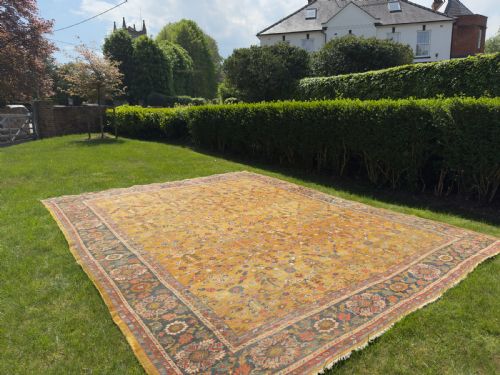
The prevailing examples on this page showcase regional design traditions, including lattice motifs, prayer arches, medallions, and shrub patterns set against grounds of varied yellow hues, from golden tones to lemon shades. These pieces function historically as practical floor coverings and nomadic furnishings, bearing the structural characteristics of their specific regional workshops and tribal groups.
Materials and construction methods
The foundational materials recorded across these listings consist chiefly of wool pile knotted onto wool or cotton foundations, alongside flatwoven kilim constructions and cotton dhurries. Weavers utilised natural dye sources to achieve the characteristic yellow ground colours, paired with contrasting wool yarns for intricate geometric and floral details.
Carpets and rugs of this scale involve hand-tied knots or flatweave techniques executed on vertical or horizontal looms. Structural integrity relies on densely packed wool wefts and warps that sustain centuries of floor use while retaining the flexibility of the textile.
Listings feature wool and cotton materials from periods spanning the mid nineteenth century to the early twentieth century.
Distinctions in quality and execution
Quality in these floor coverings rests upon the fineness of the knot density, the precision of the geometric or floral draughtsmanship, and the stability of the foundation. Pieces originating from established weaving traditions exhibit greater control over line symmetry and structural balance across the field.
The preservation of the original pile depth, side cord bindings, and end finishes dictates the structural grade of each textile. Variations in the complexity of the border systems and the depth of the dye saturation further separate standard regional output from exceptional workshop productions.
Gavin Morton
The Antique Yellow Area Rug Glossary
- Ground
- The background field colour of a rug upon which medallions, lattice work, or motifs are displayed. In this selection, yellow grounds dominate the visual field.
- Pile
- The upright yarn loops that form the soft surface of a knotted rug, typically spun from sheep wool. The depth of this layer changes through decades of friction and usage.
- Kilim
- A flatwoven textile produced without a pile by tightly interweaving warp and weft strands. These pieces function as lightweight rugs or covers.
- Prayer rug
- A small format textile featuring a mihrab or niche design historically oriented toward Mecca during daily devotions. These pieces often display specific regional iconography.
- Soumak
- A flatweave technique employing wrapping threads over the warp to create a textured, durable surface with a braided appearance on the reverse.
Antique Yellow Area Rug: Frequently Asked Questions
How do I clean an antique rug?
Maintenance requires gentle vacuuming without a beater bar to protect fragile wool pile and ancient foundation threads. Professional specialist cleaning remains essential for removing embedded dirt safely.
Harsh chemical detergents and excessive moisture damage natural dyes and weaken cotton or wool fibres. Regular rotation prevents uneven wear patterns in high-traffic interior spaces.
Where were these rugs made?
The pieces originate from historic weaving regions including Anatolia, the Caucasus, Persia, India, China, and Eastern Europe. Each district developed distinct wool preparation methods and colour palettes.
Local tribal groups and urban workshops passed down specific geometric vocabularies and floral motifs across generations. This regional heritage defines the structural layout of every carpet.
What causes the yellow colour?
Weavers achieved yellow ground tones using historical plant-based and natural dye materials extracted from local flora. Over decades of exposure to light and air, these organic colours mellow significantly.
Variations in water mineral content and mordants used during dyeing create distinct shades ranging from pale lemon to deep gold. This chemical ageing process produces the unique patina seen today.
Can I place furniture on them?
Placing furniture on these textiles is acceptable provided the weight is distributed evenly across wooden legs or protective cups. Heavy items should rest partially off the edges to minimise localized crush marks on the pile.
Using a quality rug underlay prevents slipping and cushions the foundation against hard flooring surfaces. Regular shifting helps distribute pressure evenly across the wool fibres.