


Antique Writing Secretary
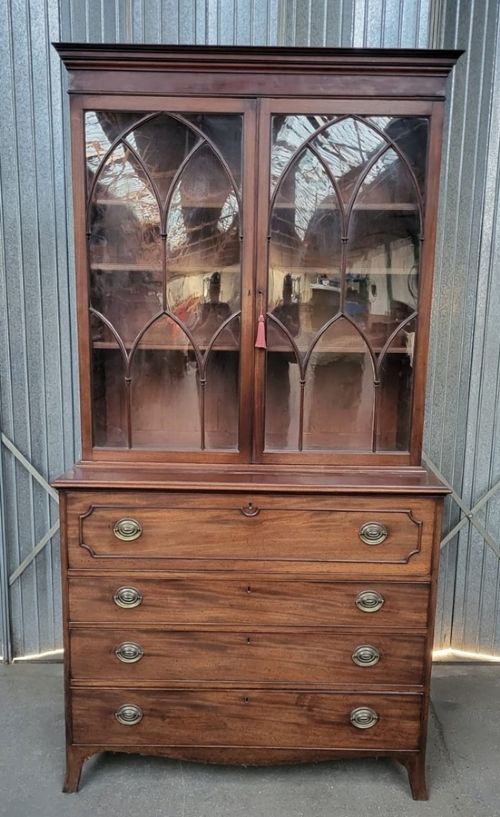
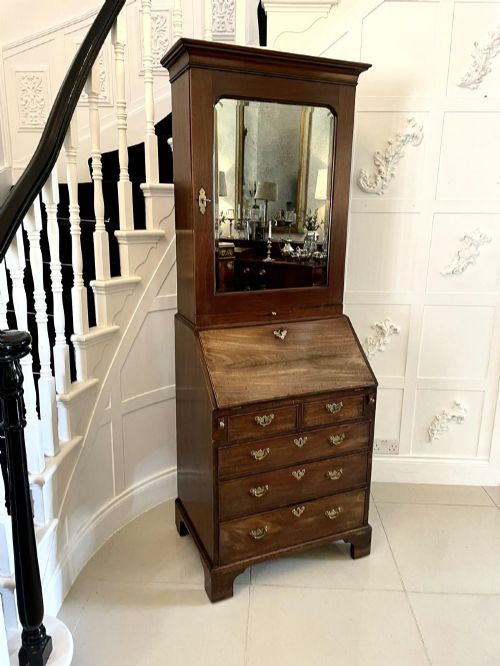
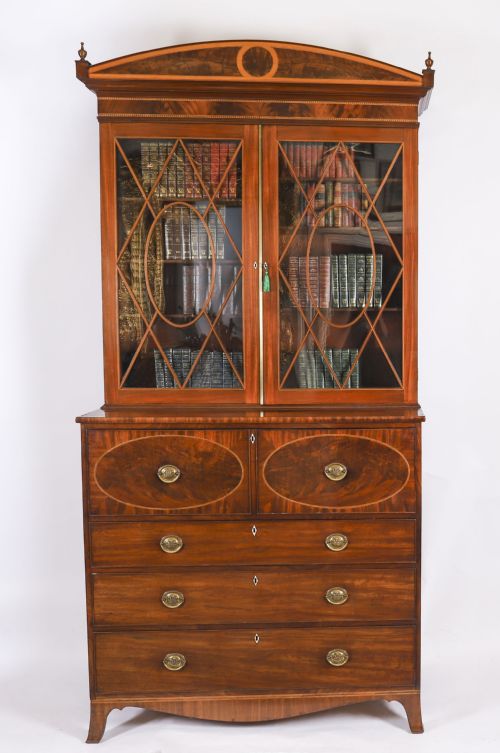
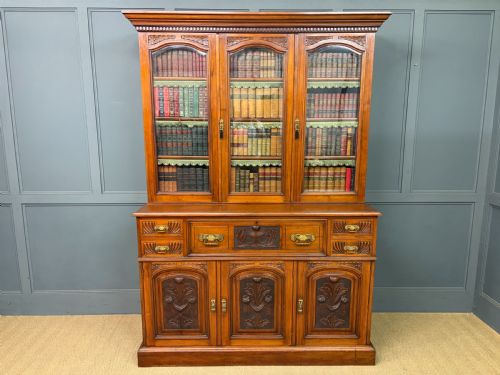
An antique writing secretary brings together a fitted writing compartment and domestic storage, spanning walnut, mahogany, and oak across several centuries.

Antique Writing Secretary
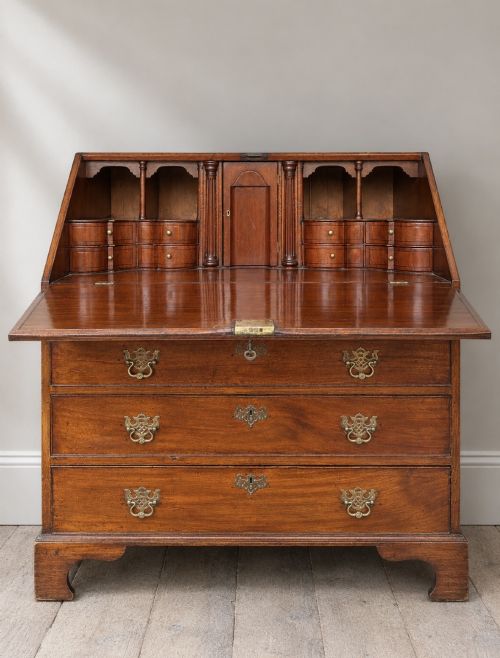
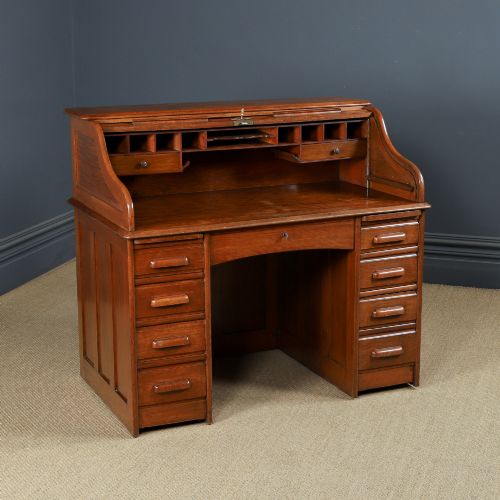
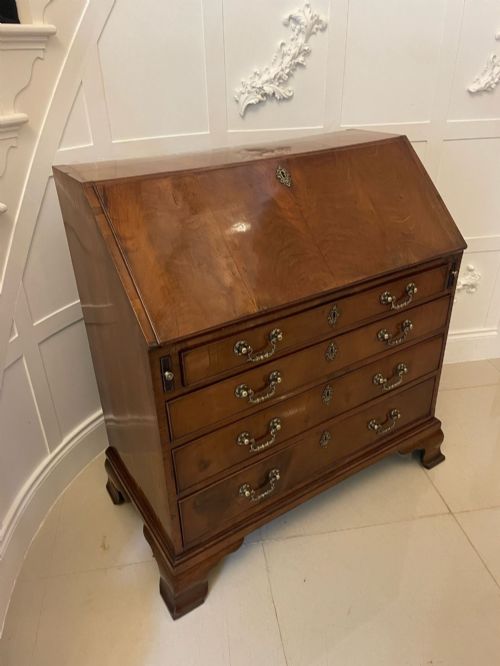
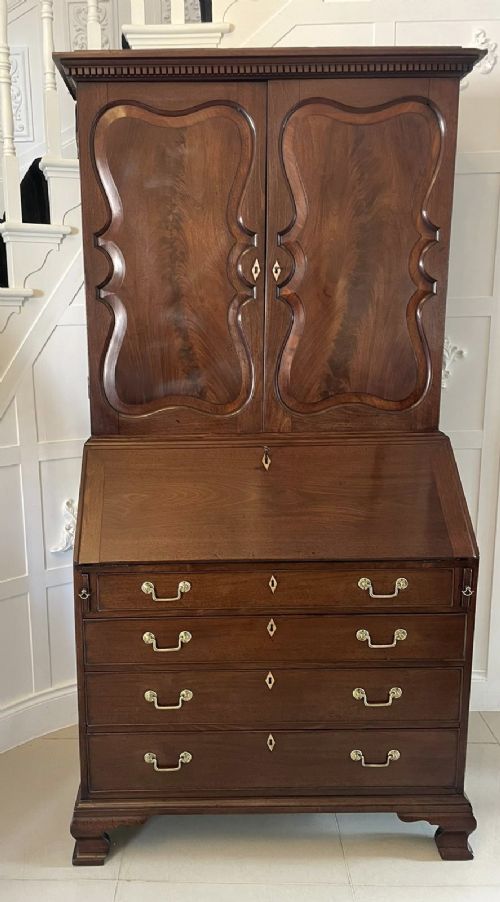
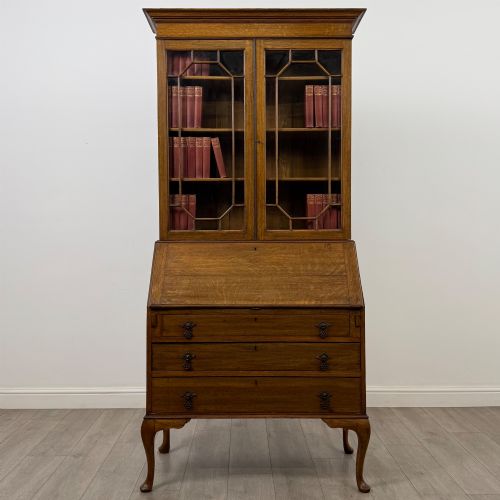
The antique writing secretary category encompasses drop-front bureaux, fall-front desks, and large bureau bookcases originating from the eighteenth to the early twentieth century. These pieces combine a writing surface with concealed internal drawers and pigeonholes, often surmounted by glazed shelving.
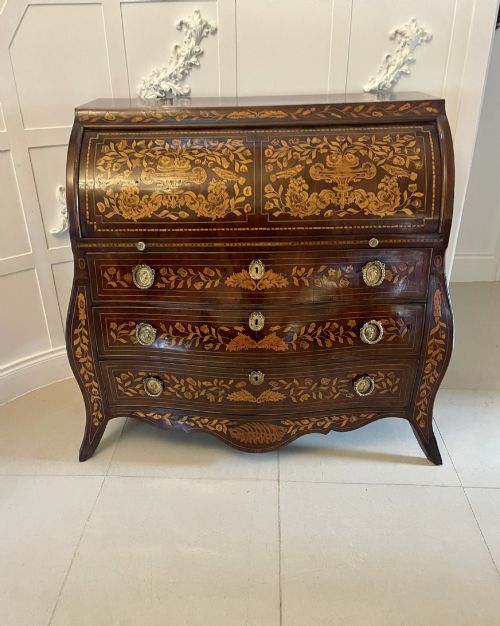
Mahogany and walnut predominate among the formal Georgian and Regency examples, frequently featuring inlaid flame veneers and marquetry work. Oak and yew wood versions appear more commonly in Edwardian and later twentieth-century iterations.
Bureau bookcases and compact fall-front desks form the core of the selection on this page, reflecting both domestic writing habits and formal library storage from periods spanning Queen Anne to the Edwardian era.
Materials and construction methods
Cabinetmakers utilised solid timbers alongside figured veneers, applying mahogany, burr walnut, and oak over secondary woods. Brass hardware, including drop handles and escutcheons, secures the drawers and fall fronts.
Internal compartments involve intricate joinery, creating stepped drawers, sliding wells, and hidden pigeonholes behind the drop-front writing surface. Glazed upper doors utilise timber glazing bars to house collections of books.
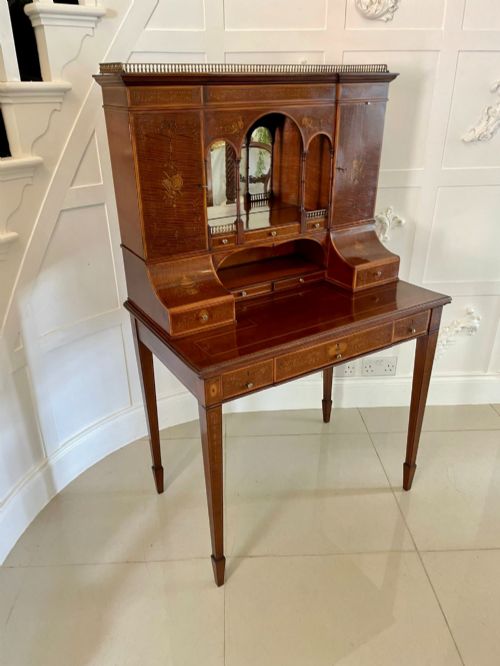
Marquetry and parquetry inlay decorate select continental and English pieces, employing floral motifs in contrasting woods. Bracket feet, plinth bases, and bracket supports carry the weight of these tall casework bodies.
Listings feature walnut, mahogany, oak, yew, and fruitwood spanning the eighteenth century through to the Edwardian era.
Distinctions in construction and finish
The choice of timber grain dictates visual hierarchy, with highly figured flame mahogany and burr walnut commanding attention over plain utilitarian boards. Matching veneers across drawer fronts show disciplined workshop practice.
Internal complexity separates simpler drop-front desks from elaborate bureau bookcases with stepped pigeonholes and secret compartments. The execution of dovetail joints on internal drawers indicates the standard of cabinetmaking.
Proportion and surface patination determine the overall presence of a bureau, where original polish highlights the natural depth of the timber without obscuring the grain.
Heals of London
The Antique Writing Secretary Glossary
- Bureau
- A desk featuring a sloping hinged lid that drops down to form a writing surface, revealing internal drawers and pigeonholes.
- Secretaire bookcase
- A tall cabinet combining a secretaire drawer or drop-front writing compartment with upper glazed shelving for books.
- Marquetry
- Decorative patterns formed by inserting pieces of coloured wood, ivory, or shell into a veneered surface.
- Linenfold
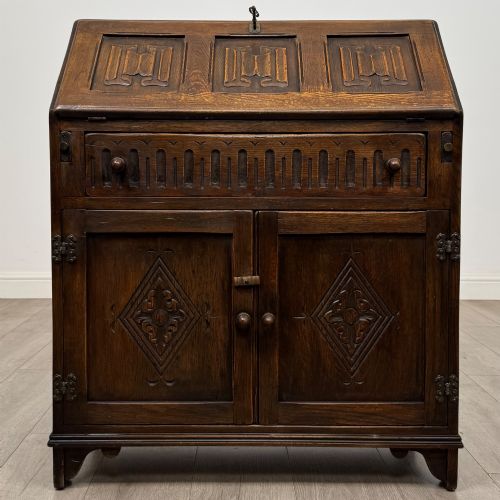
- A style of carved wooden panelling that resembles folded vertical lengths of fabric, seen on early twentieth-century oak pieces.
- Bracket feet
- Simple architectural supports that project outward at the corners of a case piece, typical of Georgian cabinetwork.
Antique Writing Secretary: Frequently Asked Questions
How do I use a bureau desk?
Lower the hinged fall-front to horizontal to create a writing surface. The internal drawers and pigeonholes remain accessible for stationery and correspondence.
Close and lock the fall-front when writing is finished to conceal the interior and protect the writing surface.
What is the difference between a bureau and a secretaire bookcase?
A bureau uses a sloping drop-front lid that opens downward across the entire upper section of the desk base. A secretaire bookcase typically incorporates a fitted writing drawer that pulls straight out or drops forward like a drawer front.
Both forms often include glazed bookcase sections above, but the operating mechanism of the writing area differs.
How do I identify a Georgian bureau?
Georgian pieces display solid mahogany or walnut construction, often featuring bracket feet and hand-cut dovetails on the drawer linings. The internal fittings include small drawers and central wells arranged in a stepped layout.
Timber choice and secondary woods like oak or pine inside the carcase help confirm the eighteenth-century origin.
Can I fit a modern laptop inside one?
Most antique writing secretaries provide compact internal depths designed for paper, ink, and ledgers rather than modern technology. Measure the internal writing surface and clearance height beneath the fall-front before attempting to store electronic devices.
Shallower laptop models fit certain larger bureau desks, but smaller eighteenth-century examples restrict interior clearance.