



Brass Inlaid Writing Cabinet
A brass inlaid writing cabinet offers refined storage and a fitted desk surface, uniting Regency and Victorian cabinet-making with striking metal detailing.

Brass Inlaid Writing Cabinet
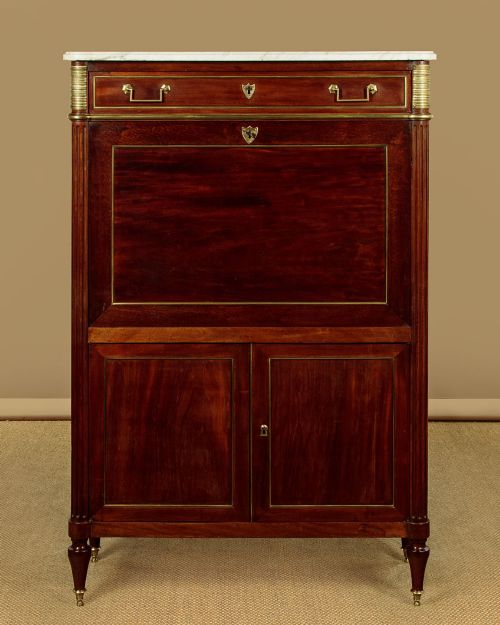
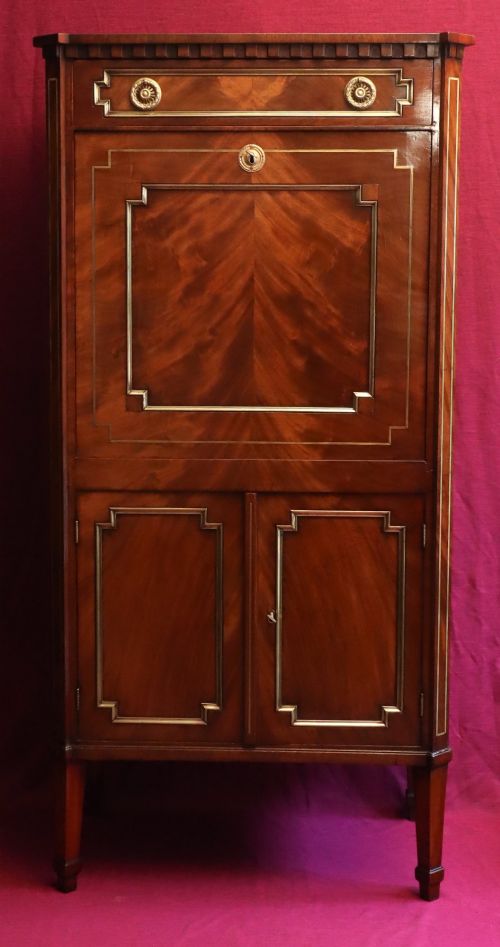
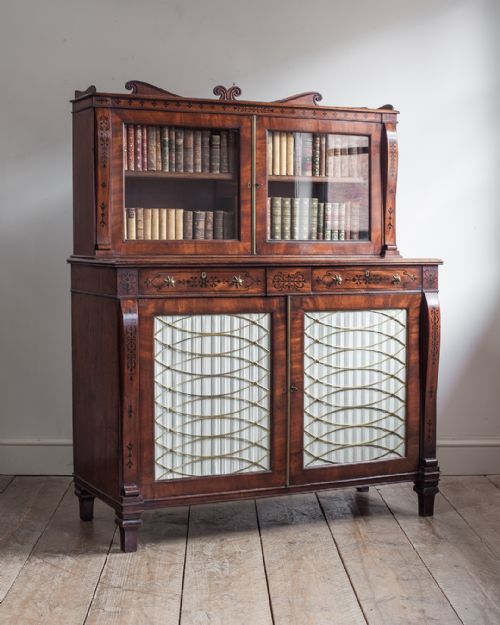
A brass inlaid writing cabinet combines the utility of a desk with the enclosed storage of a cabinet, serving as a private workspace for correspondence and record keeping. The pieces seen span Georgian, Regency, and Victorian periods, incorporating forms such as secretaire abattants, escritoires, and bureau bookcases.
The version most commonly encountered on this page is the rosewood or mahogany writing cabinet from the Regency period, often featuring delicate brass stringing or marquetry. These compact items were designed for domestic parlours and private studies, housing pigeonholes and small drawers behind a drop-front writing flap.
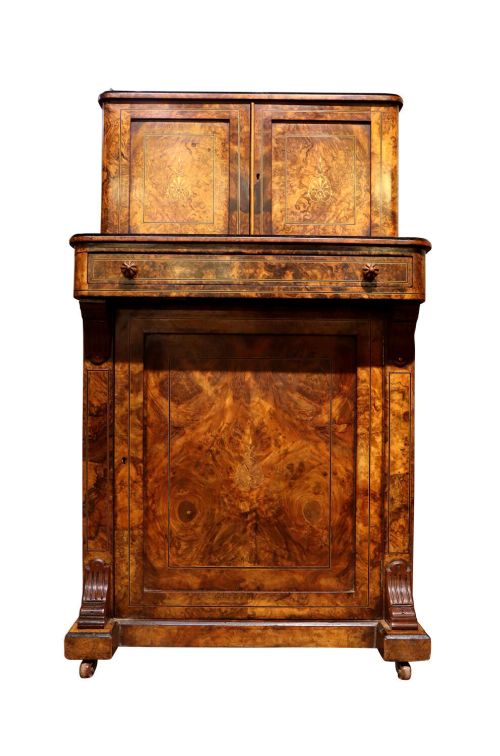
Makers and cabinet-makers of the nineteenth century utilised exotic timbers like rosewood, burr walnut, and ebonised wood to showcase the bright contrast of polished brass inlay. Whether structured as a bonheur du jour or a secretaire chiffonier, each piece reflects the changing domestic requirements for portable and functional study furniture.
How they were made
Craftsmen built these cabinets using solid structural carcases of mahogany or oak, faced with finely figured veneers of rosewood, satinwood, or burr walnut. The primary surfaces were meticulously prepared to receive precise channels cut for brass wire or sheet inlay.
Metal inlay was hand-sawn and embedded flush into the timber surface, sometimes complemented by boxwood stringing or boulle work. Interior compartments utilised secondary woods like pine or mahogany for drawer linings, fitted with small brass pulls and working locks.
Many writing cabinets hide miniature secret compartments behind pigeonholes, designed for letters and valuables.
What varies in quality
The standard of timber selection and veneer matching defines the upper tier of these cabinets, where continuous grain patterns flow across the fall-front and drawer fronts. Lesser pieces rely on simpler cuts of mahogany with minimal decorative contrast.
The precision of the brass inlay separates standard workshop production from finer cabinet-making. Crisp, tight joints around the metalwork and well-fitted internal stationery compartments indicate superior execution.
Edwards and Roberts·John Mclean
The Brass Inlaid Writing Cabinet Glossary
- Secretaire abattant
- A tall cabinet featuring a drop-front writing flap that conceals an interior of small drawers and pigeonholes. This form provides substantial vertical storage while offering a dedicated desk surface when opened.
- Escritoire
- A writing cabinet or desk designed for correspondence. It typically includes a sloping or fall-front writing surface.
- Bonheur du jour
- A light ladies writing desk featuring a small cabinet or superstructure on top with drawers and shelves. These appeared frequently in nineteenth-century boudoirs and drawing rooms.
- Boulle work
- An elaborate form of marquetry consisting of brass and tortoiseshell inlay developed in France. It creates a rich, patterned surface across cabinet doors and writing flaps.
Brass Inlaid Writing Cabinet: Frequently Asked Questions
What is a brass inlaid writing cabinet used for?
These cabinets served historically as private desks for writing letters, storing documents, and keeping stationary organised in the home. The drop-front flap opens to reveal fitted pigeonholes and small concealed drawers.
Today, they function as practical writing desks and display pieces that fit well in studies, living rooms, or bedrooms where floor space is limited.
How do I date a writing cabinet?
Dating relies on identifying the timber choices, structural styles, and inlay techniques characteristic of specific eras like the Regency or Victorian periods. Rosewood and brass stringing frequently point to early nineteenth-century work.
Examining secondary woods inside the drawers and the construction methods of the internal carcase also helps confirm the period of manufacture.
What is the difference between a secretaire and a bonheur du jour?
A secretaire generally refers to a tall cabinet with a fold-down front that conceals a writing space, prioritising enclosed storage. A bonheur du jour is typically a lighter, smaller lady's desk featuring an open or shelved superstructure on top.
Both forms incorporate writing surfaces and small drawers, but the bonheur du jour offers a more delicate profile suited to parlour use.
How should I care for rosewood and brass inlay?
Maintain the timber by applying a microcrystalline wax periodically to nourish the veneer and protect the French polished surface. Avoid placing the cabinet in direct sunlight or near heat sources to prevent the wood from drying out.
Clean the brass inlay gently with a dry, soft cloth to avoid disturbing the metal strips embedded flush within the timber surface.