



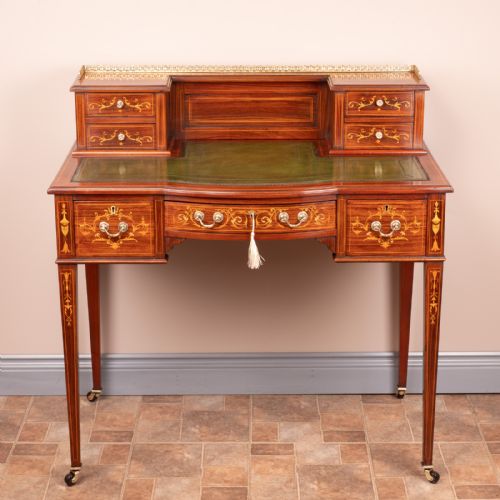


Brass Inlay Rosewood Bureau
These brass inlay rosewood bureau pieces bring together rich dark grain and gleaming metal work to form practical writing furniture that grounds a room.

Brass Inlay Rosewood Bureau
A brass inlay rosewood bureau combines rich tropical timber with precise metal detailing, creating a striking centrepiece for a study or drawing room. When searching for this form, buyers encounter pieces spanning the Regency, Victorian, and Edwardian eras, each showing distinct cabinet-making traditions.
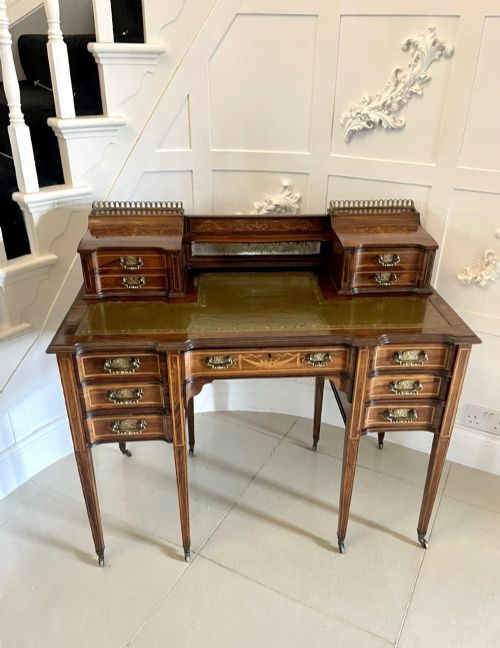
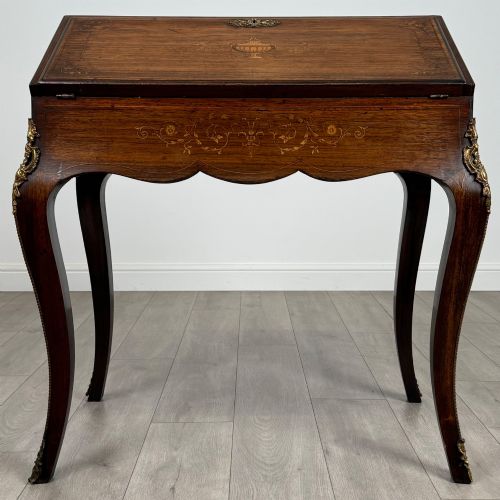
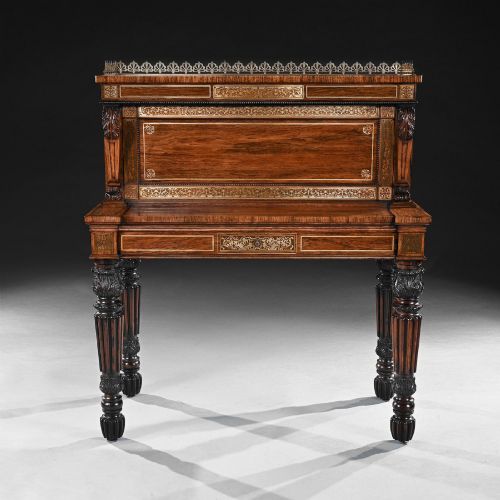
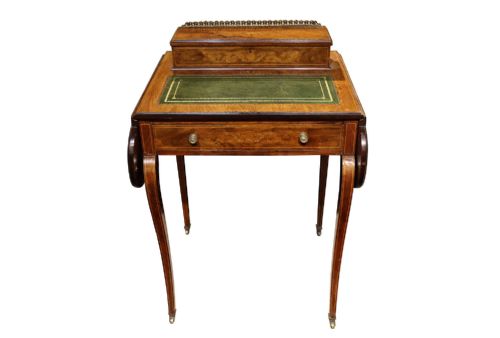
The selection on this page includes writing desks, writing tables, and bureau bookcases alongside smaller forms like the bonheur du jour. Most examples showcase the deep reddish-brown tones of rosewood paired with polished brass stringing or intricate brass scrollwork.
Makers adapted the form across the nineteenth century, moving from bold Regency designs to elaborate Victorian revivals and delicate Edwardian ladies writing tables. These variations ensure that whether a buyer seeks a grand bureau bookcase or a compact desk, the characteristic rosewood and brass combination remains central.
Materials and construction
Cabinet-makers relied on solid rosewood and carefully cut veneers applied to secondary structural timbers, creating stable surfaces that resisted warping. Craftsmen then channelled the timber to embed fine brass line inlay and ornate brass scroll motifs into the surface.
Interior fittings frequently involved contrasting secondary woods such as satinwood and walnut, paired with fitted leather writing surfaces and small compartments. Metalwork components like ormolu mounts and glass panels completed the assembly on select French and English revival pieces.
Brass Inlay Rosewood Bureau Retail Price Guide 2026
Typical asking prices for brass inlay rosewood bureau among the pieces listed under this phrase on Sellingantiques today, from the lower quarter to the upper quarter. They describe what is for sale here now, not the wider market.
Listings feature rosewood, walnut, satinwood, and ormolu across Regency, Victorian, and Edwardian periods.
Factors of quality
The distinction between standard examples and superior pieces rests on the precision of the brass inlay and the selection of the rosewood grain. Master workshops ensured that brass lines remained flush with the timber surface and that book-matched veneers flowed seamlessly across drawers and falls.
Internal complexity also dictates the tier of the piece, with finer desks offering fitted pigeonholes, hidden compartments, and original tooled leather writing inserts. Structural integrity in the legs, hinges, and drawer linings further separates workshop output.
Maple and Co·Gillows Oxford Street Workshop·Donald Ross
The Brass Inlay Rosewood Bureau Glossary
- Bureau
- A writing desk featuring a sloping lid that folds down to reveal a fitted interior of pigeonholes and small drawers. This form provides a concealed workspace that can be closed up when not in use.
- Rosewood
- A dense, heavily figured tropical timber prized for its dark purple-brown colour and contrasting black grain lines. It takes a high polish and serves as the primary exterior wood for these desks.
- Ormolu
- Gilt bronze mounted onto furniture as decorative feet, handles, or corner accents. This technique adds metallic brilliance and architectural structure to nineteenth-century revival pieces.
- Parquetry
- Geometric wood-mosaic work used to create patterned surfaces on tabletops and drawer fronts. Craftsmen arrange small blocks of contrasting timber to form geometric designs.
- Bonheur du jour
- A light lady writing desk featuring a small cabinet or set of shelves superstructure upon the main writing surface. This delicate French form became popular during the nineteenth century.
Brass Inlay Rosewood Bureau: Frequently Asked Questions
How do I date a brass inlay bureau?
Dating relies on stylistic shifts and construction methods visible in the timber and brass work. Regency examples tend to feature bold classical lines with precise brass stringing, while Victorian and Edwardian pieces often incorporate revival motifs or lighter proportions.
Examining secondary woods, drawer linings, and hardware provides further clues to the decade of manufacture. Comparing these elements with documented workshop pieces helps narrow the production period.
Where were these desks placed?
These writing desks sat in principal reception rooms, libraries, or private boudoirs where householders managed correspondence and personal accounts. Freestanding models allowed placement in the centre of a room rather than pushed strictly against a wall.
Smaller formats like the bonheur du jour and ladies writing tables suited intimate parlour spaces. Larger bureau bookcases served as substantial architectural furniture for studies.
How do I care for rosewood surfaces?
Rosewood requires stable humidity levels and protection from direct sunlight to prevent the timber from fading or drying out. Regular dusting with a soft, dry cloth maintains the finish without building up unnecessary residues.
Applying occasional specialist wax feeds the timber and preserves the contrast between the dark grain and the brass inlay. Avoid using modern silicone polishes which can damage antique French polish.