


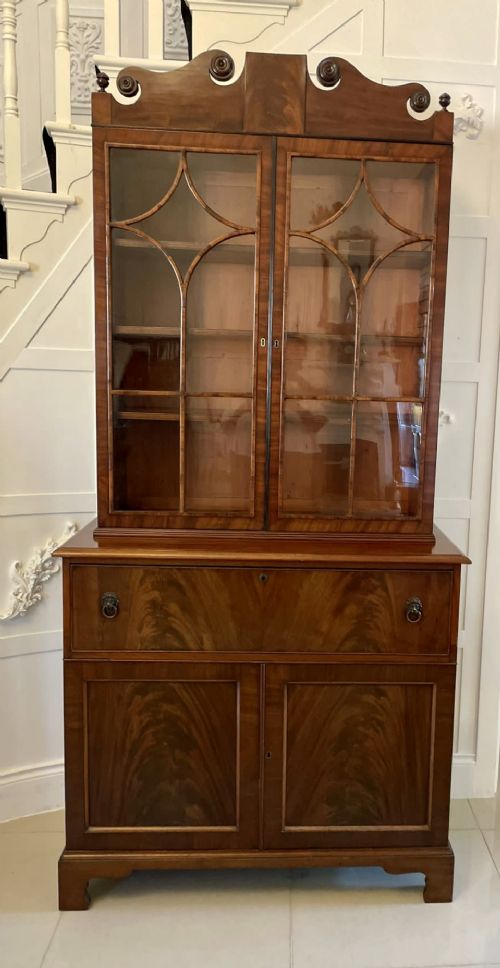
Antique Writing Drop Desk
An antique writing drop desk offers a fitted writing surface that conceals away neatly when the day's correspondence is done.
Antique Writing Drop Desk
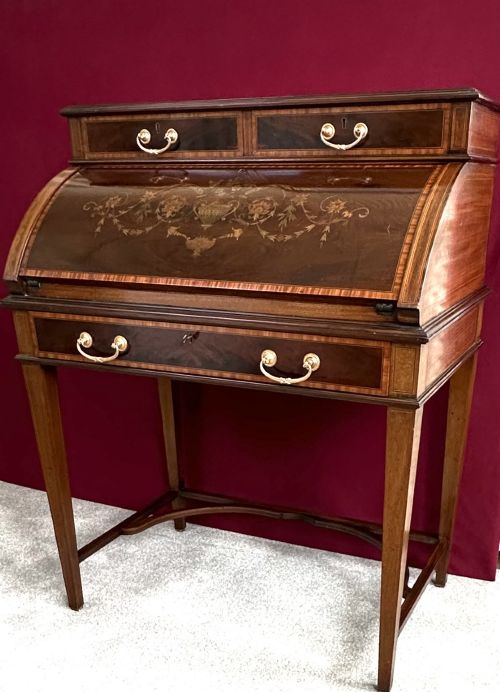
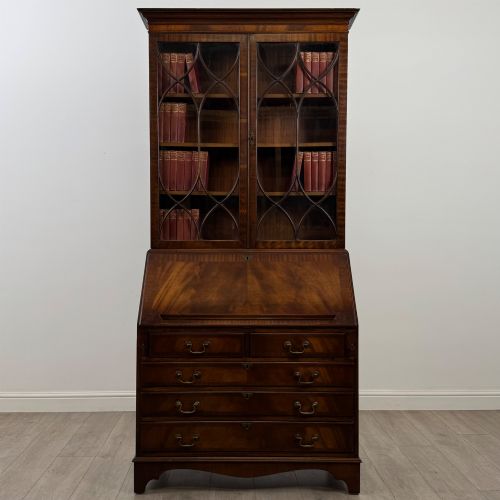
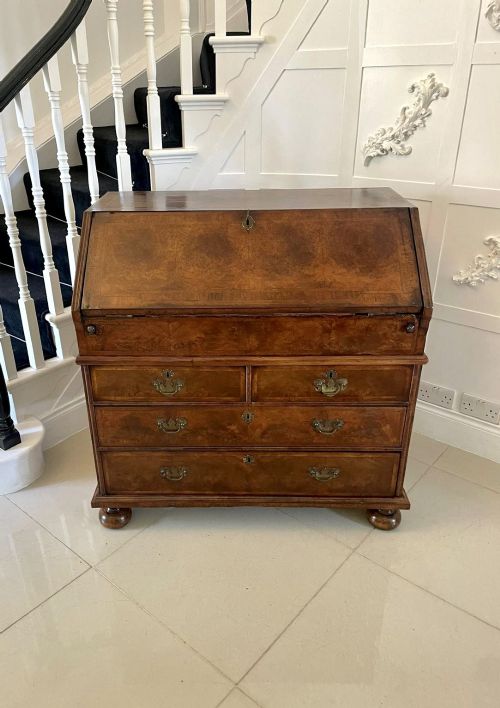
When searching for an antique writing drop desk, buyers encounter forms ranging from compact fall-front bureaux to large bureau bookcases and secretaire abattants. These pieces span centuries of design, with examples appearing across the seventeenth, eighteenth, nineteenth, and twentieth centuries.
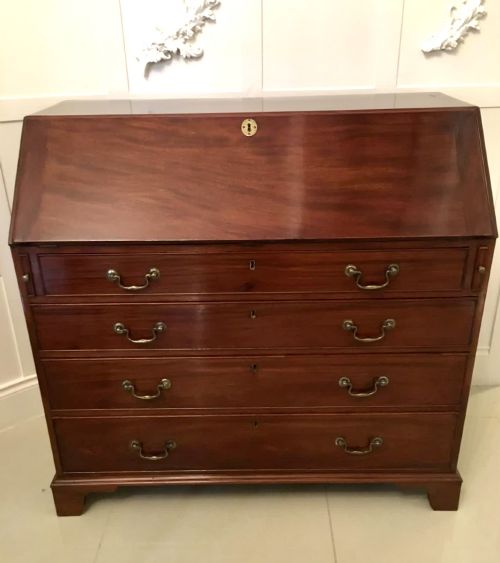
The most common variants on this page include Edwardian oak and walnut bureaux alongside substantial Georgian mahogany examples. Makers utilised various regional styles, producing pieces influenced by Jacobean revival, Arts and Crafts, and French design traditions.
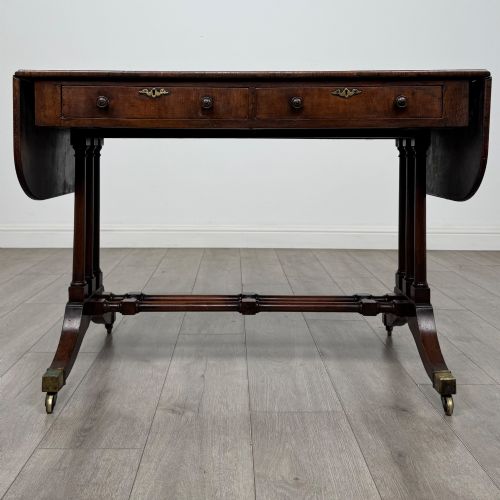
Object types also incorporate writing tables with drop side flaps and fitted lady's writing desks with internal compartments. Each configuration provides a dedicated writing space supported by drawers, pigeonholes, or glazed upper bookcases.
Materials and construction
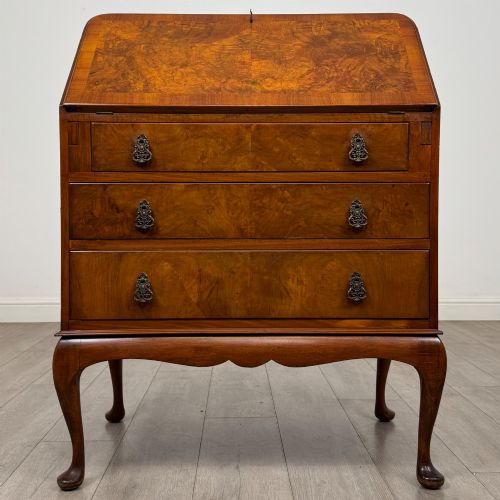
Cabinet makers constructed these pieces primarily using timbers such as mahogany, oak, and walnut, frequently enhancing surfaces with figured veneers, burr walnut, and delicate herringbone inlay. Brass hardware, including handles and escutcheons, provides functional and decorative contrast against the dark woods.
Several desks conceal secret sliding compartments within their pigeonholes, designed for hiding love letters or family fortunes.
Judging quality and craftsmanship
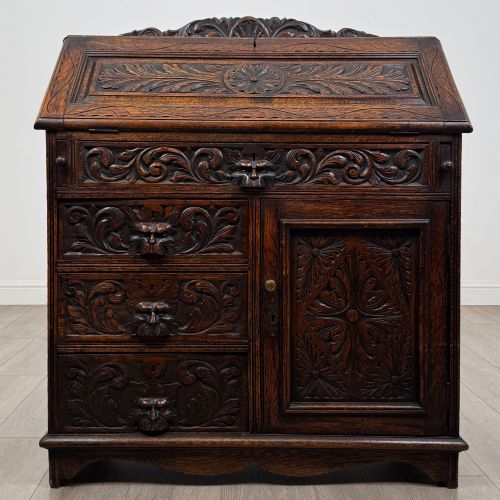
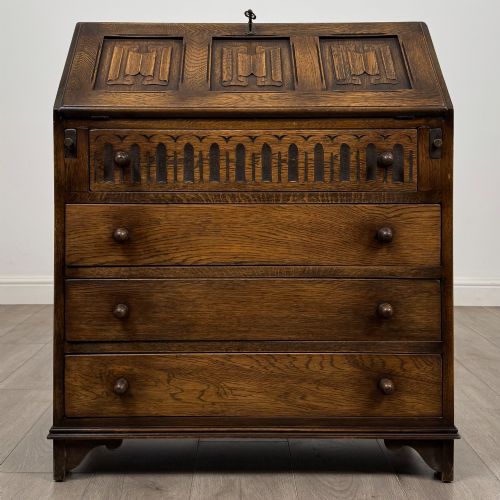
Superior quality in these pieces rests upon the selection of timber, where well-figured veneers and consistent grain patterns elevate a bureau above standard utility work. Finely executed carving, such as intricate linenfold panels or green man motifs, distinguishes the better workshops from mass production.
Structural integrity of the drop mechanism and the precision of the internal stationery compartments reveal the maker's hand. Pieces retaining original brassware, working locks, and harmonious proportions achieve the highest standing among collectors.
ARTHUR BASIL REYNOLDS·LARKIN·GEORGE OAKLEY·GILLOWS
The Antique Writing Drop Desk Glossary
- Bureau
- A writing desk featuring a sloping hinged lid or fall front that opens to reveal a fitted interior of small drawers and pigeonholes. This term often refers specifically to freestanding writing cabinets with drawer storage below.
- Secretaire Abattant
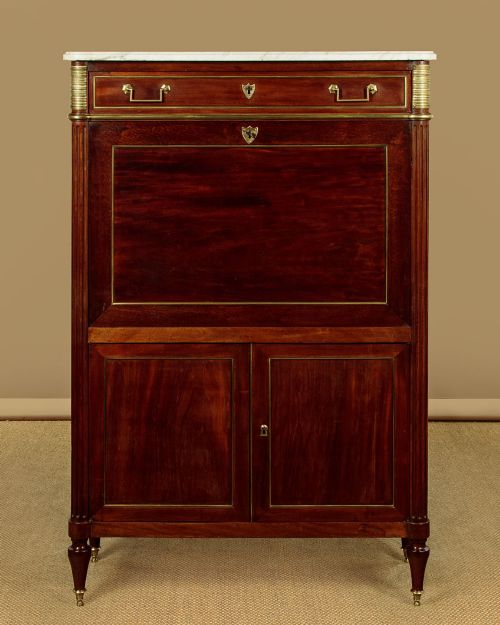
- A tall vertical cabinet with a drop-front writing surface that conceals an internal arrangement of compartments when closed. This continental form often includes lower cupboard doors or drawers.
- Fall Front
- A hinged panel that drops from a vertical position to horizontal, serving as a writing surface. It requires internal supports known as lopers to bear the weight.
- Lopers
- Wooden pull-out arms or brackets positioned beneath a fall-front desk to support the writing flap when opened. They slide directly into the carcase when the desk is closed.
- Escritoire
- A writing cabinet or desk, originating from French terminology, typically denoting a refined piece for correspondence. These often feature decorative marquetry or original marble tops.
Antique Writing Drop Desk: Frequently Asked Questions
What is a drop desk?
A drop desk is a piece of furniture featuring a hinged writing flap that lowers for use and closes vertically to hide the workspace. This design keeps writing materials out of sight when not required.
Historical examples incorporate interior pigeonholes and small drawers behind the main flap, providing organised storage within a compact footprint.
How do I identify a Georgian bureau?
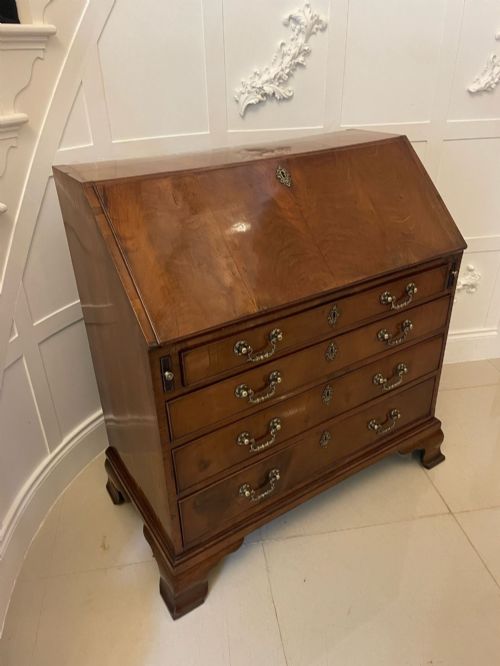
Georgian bureaux typically display solid mahogany or walnut construction with cockbeaded drawer linings and bracket feet. The proportions remain heavy yet elegant, reflecting eighteenth-century cabinet making standards.
Interior fittings often include secret compartments or sliding wells concealed beneath the central pigeonhole section.
Where were bureau bookcases used?
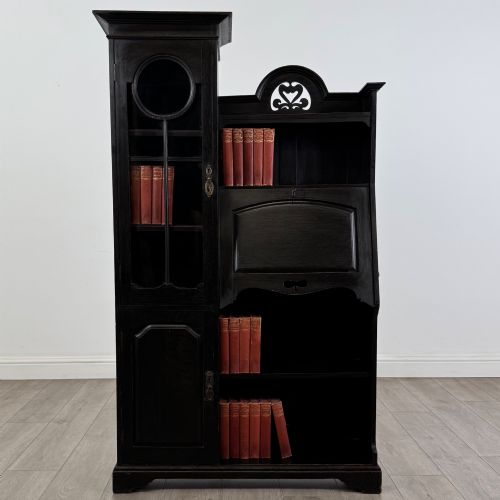
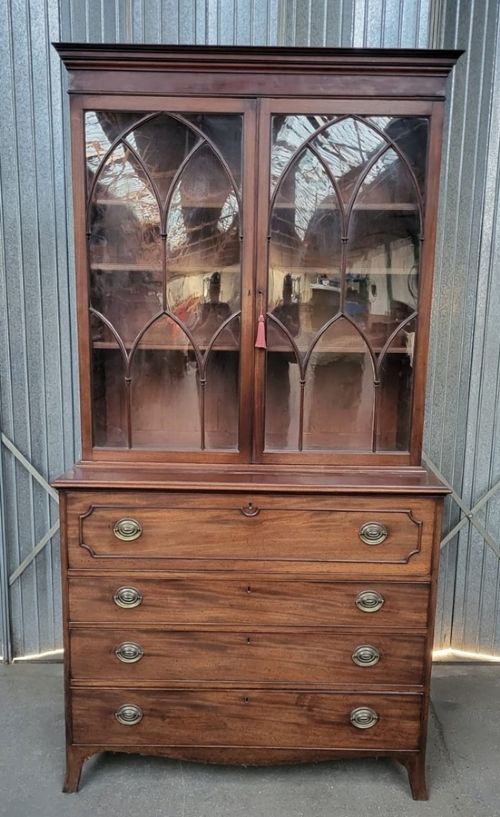
Bureau bookcases served as multifunctional furniture for libraries, parlours, and private studies in large homes. The upper section housed books behind glazed doors while the lower desk handled daily correspondence.
These two-part constructions allowed owners to store their entire library and writing supplies within a single vertical unit.
How should I care for an oak bureau?
Maintain oak furniture by applying occasional traditional wax polish to nourish the timber and preserve the natural grain. Avoid placing the piece near direct heat sources or strong sunlight to prevent wood splitting.
Keep the internal fitted drawers clean and dry, allowing air circulation around antique finishes.