

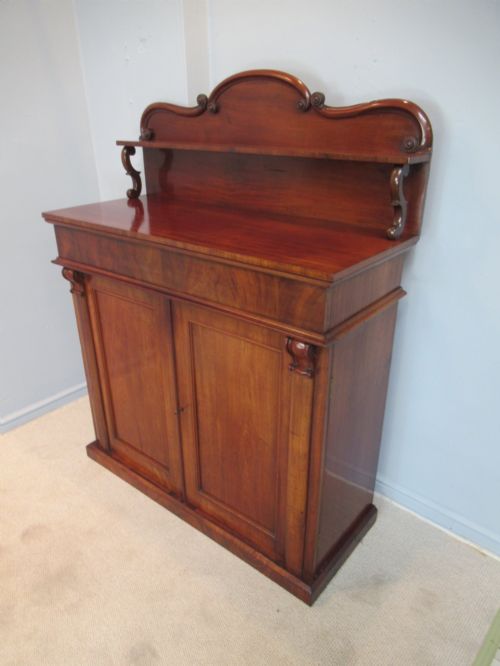
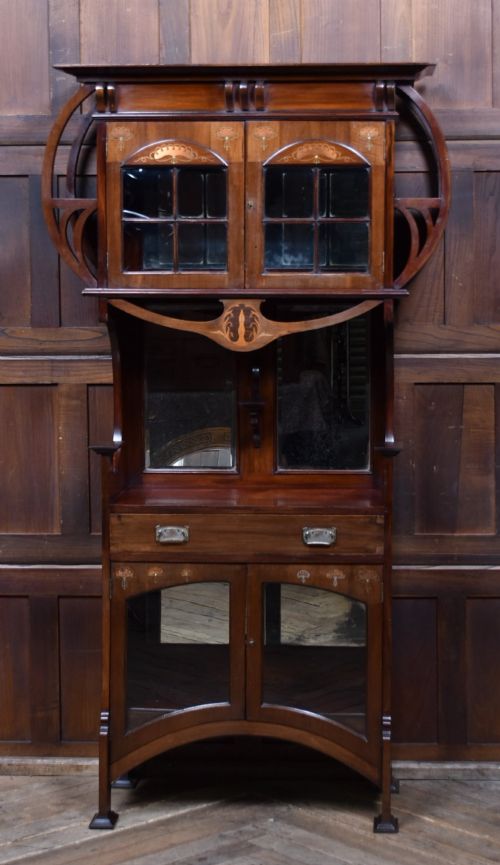
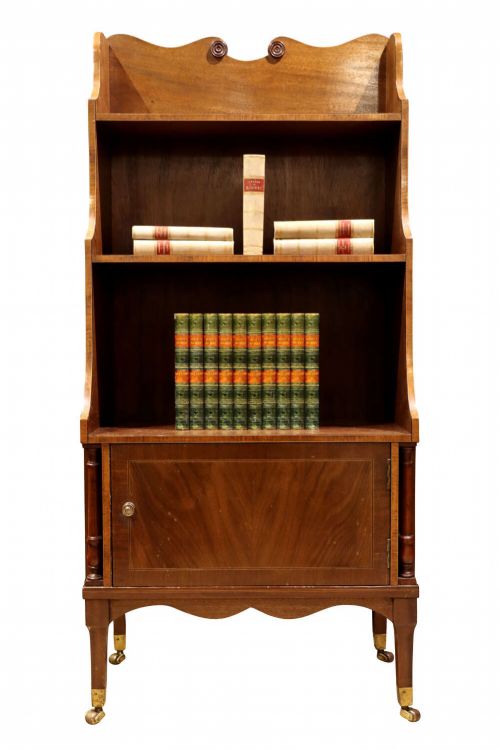
Brown Mahogany Chiffonier
A brown mahogany chiffonier is a low, practical side cabinet holding silver, linen or books in nineteenth-century rooms.
Brown Mahogany Chiffonier
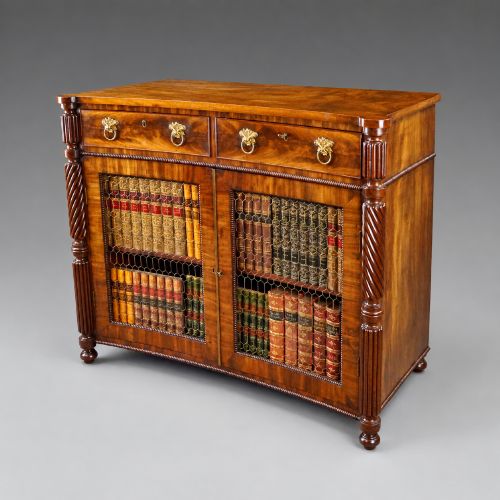
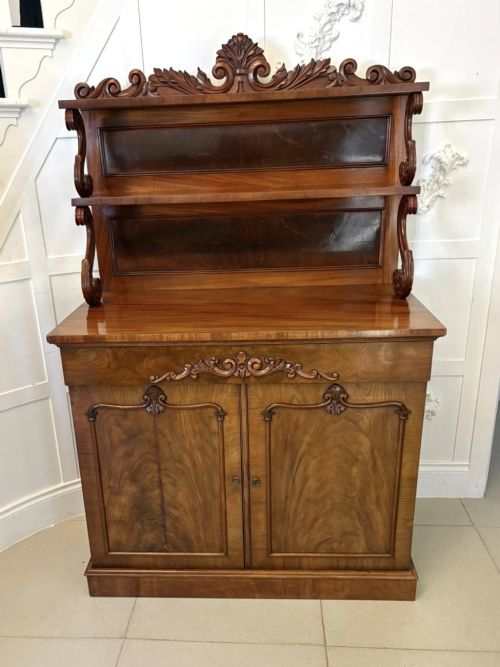
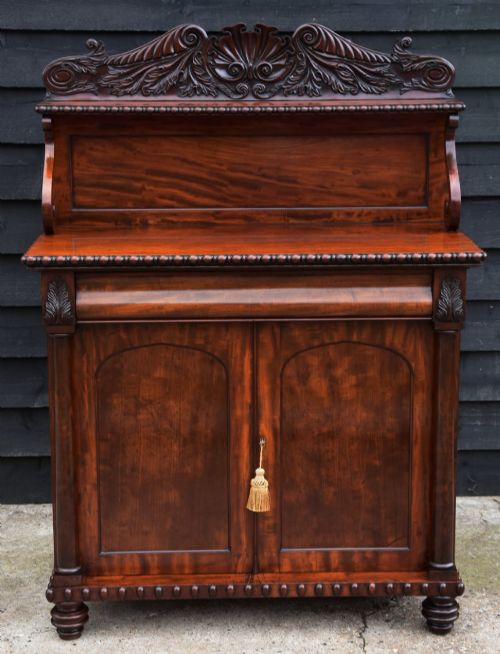
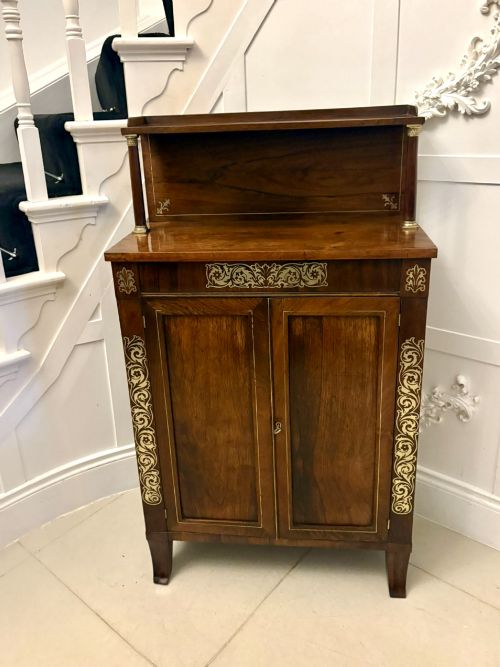
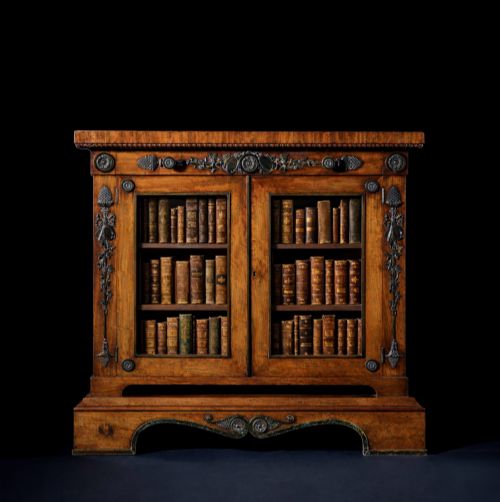
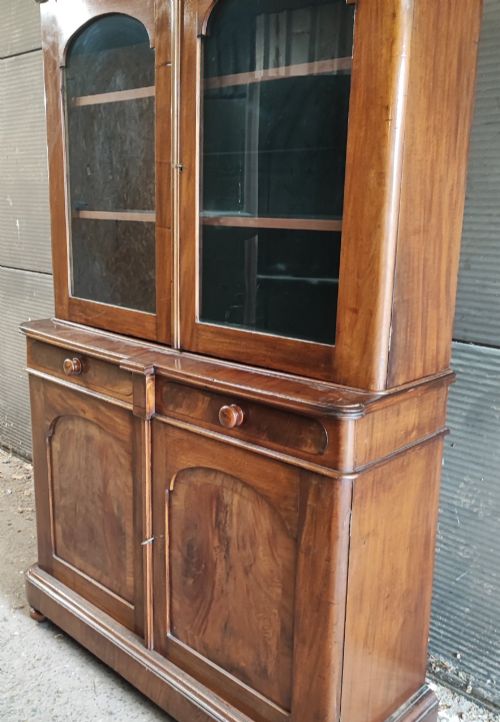
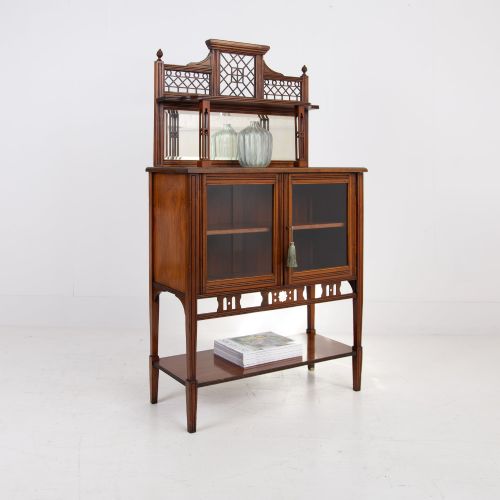
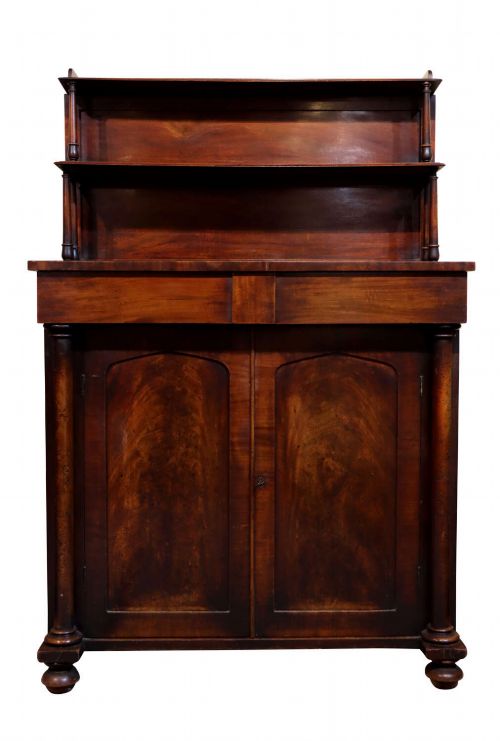
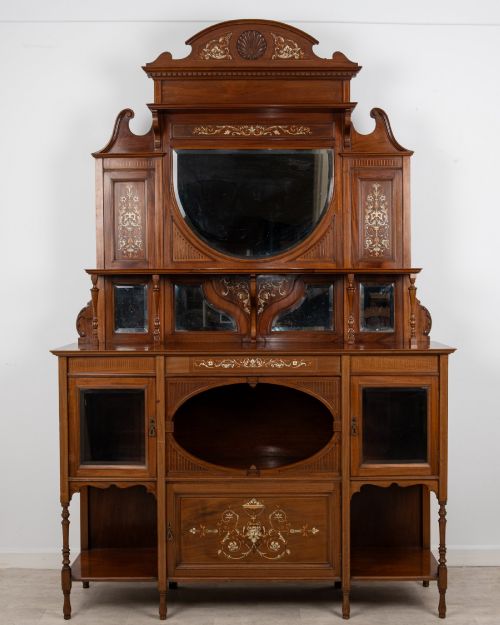
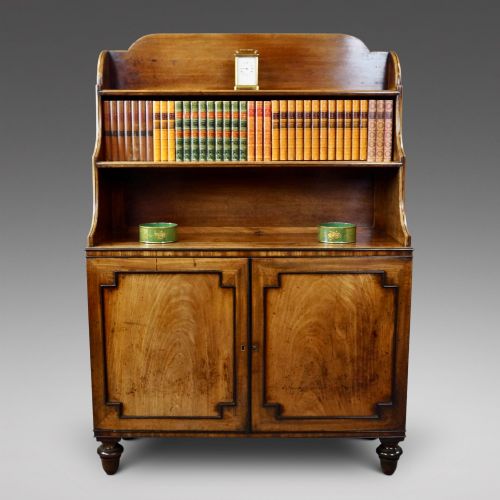
A brown mahogany chiffonier brings together sturdy timber and enclosed storage, most frequently appearing in Victorian and Regency forms across this page. These pieces combine a lower cupboard section with upper shelving or a plain top, designed for domestic dining rooms and parlours.
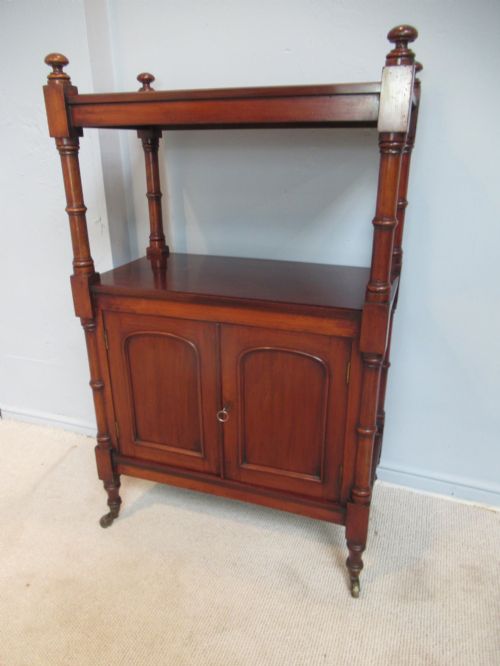
The versions most common here date from the nineteenth century, including William IV and Georgian examples alongside Victorian iterations. Buyers encounter items ranging from compact side cabinets to small two-tiered cupboards fitted with doors or open shelves.
Materials and construction
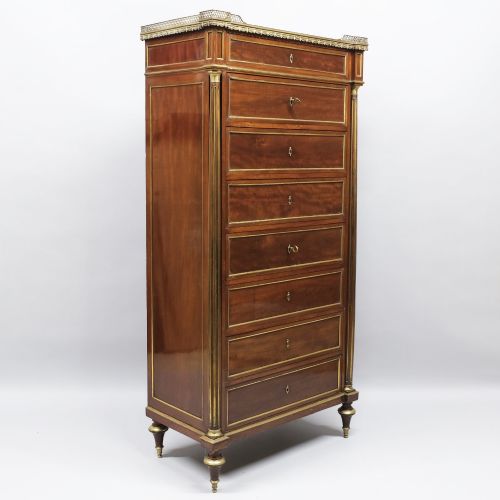
The primary timber is mahogany, often enhanced with flame mahogany veneer to create deep, figured surfaces on the doors and drawer fronts. Cabinetmakers frequently added brass hardware, mirror glass, or boxwood inlay to articulate the structure.
Joinery follows traditional cabinetmaking methods of the period, resting sometimes on brass castors or shaped feet. Carved details and panelled doors reflect the stylistic shifts from Georgian restraint to Victorian elaboration.
Several pieces roll on tiny brass castors, built so Victorian servants could wheel the sideboard closer to the dining table with ease.
Judging quality in brown mahogany chiffonier pieces
Quality rests upon the selection of timber figures, where rich flame mahogany veneer displays superior depth compared to plain grain boards. The crispness of carved mouldings and the precise fit of doors indicate the skill of the original workshop.
Structural integrity and the retention of original brass fittings or glass panels elevate an example above standard utility pieces. Proportion also dictates worth, as smaller, neat iterations demand greater precision in scaling.
The Brown Mahogany Chiffonier Glossary
- Chiffonier
- A low sideboard or cabinet featuring a two-door lower cupboard, sometimes surmounted by a shelf tier. It evolved during the nineteenth century into a staple dining room piece.
- Flame mahogany veneer
- A thin slice of timber cut from the fork of the mahogany tree to produce a distinctive, flickering flame pattern. Cabinetmakers applied this over secondary woods to create decorative fronts.
- William IV
- A British design period spanning the 1830s characterised by robust classical proportions and bold mahogany scrollwork. Pieces from this era often display heavy, confident styling.
- Regency
- The stylistic period covering the early nineteenth century up to the accession of Queen Victoria, known for neoclassical lines. Cabinets from this time employ clean geometry and select veneers.
- Boxwood inlay
- Narrow strips of pale boxwood set into contrasting darker mahogany to form geometric borders or floral motifs. This technique highlights the edges of doors and drawers.
Brown Mahogany Chiffonier: Frequently Asked Questions
What room suits a brown mahogany chiffonier?
These cabinets fit well in dining rooms, living spaces or hallways where surface space and enclosed storage are both required. Their compact footprint allows them to sit against walls without dominating the floor plan.
Historically used to store silver and glassware, modern interiors utilise the top surface for lamps or displays while keeping the cupboards functional.
How do I spot a Regency chiffonier?
Regency examples display cleaner classical lines, restrained mouldings and often incorporate brass mounts or simpler geometric panels. They lean towards architectural symmetry and lighter proportions.
Later Victorian versions tend to feature heavier carving, mirror backs or tiered shelving above the main cupboard body.
Are these cabinets difficult to maintain?
Mahogany requires straightforward dusting and occasional treatment with suitable wax to preserve the polish of the timber. Keeping the wood away from direct heat sources prevents the veneer from lifting.
The brass fittings and glass panels need only gentle cleaning with dry cloths to maintain their finish.
What is the difference between a chiffonier and a sideboard?
A chiffonier is typically smaller and includes an enclosed cupboard base, often with a shelf or tiered superstructure above. Sideboards are generally longer pieces designed specifically for dining room service.
Many listings categorise smaller side cabinets and chiffoniers together due to their overlapping domestic functions in the nineteenth century.