

Antique Writing Accessory
An antique writing accessory brings the tactile pleasure of pen and ink back to the desk, offering functional craftsmanship from Georgian, Victorian, and Edwardian parlours.
Identifying an antique writing accessory
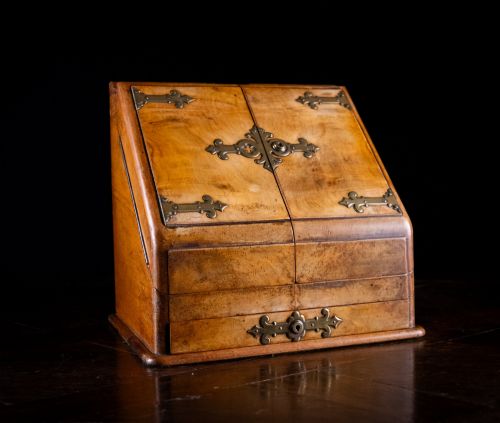
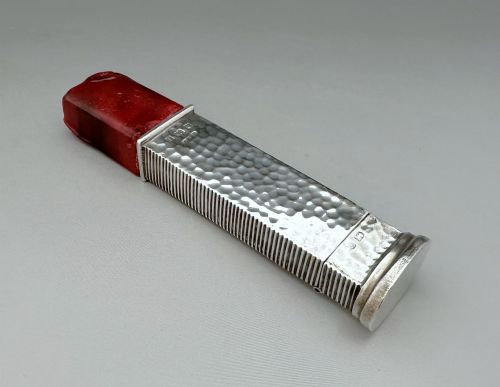
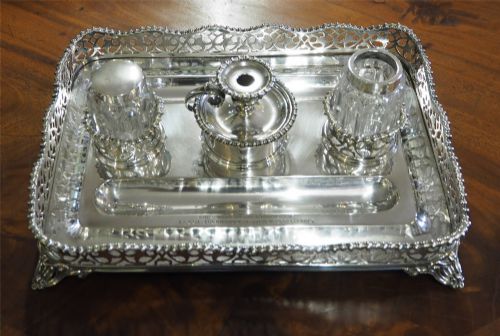
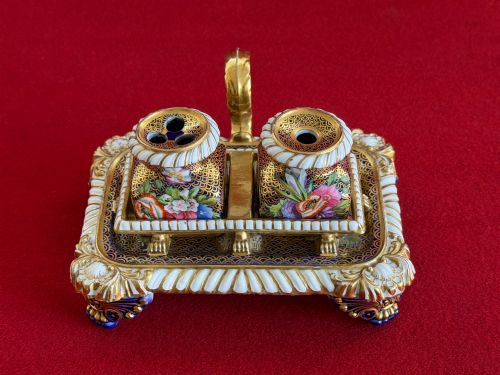
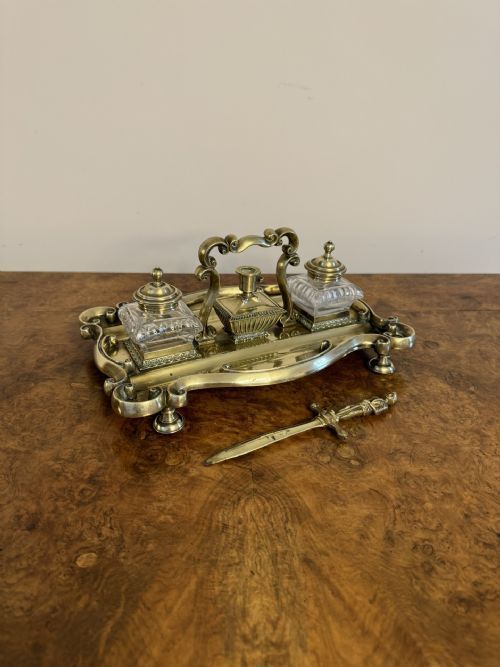
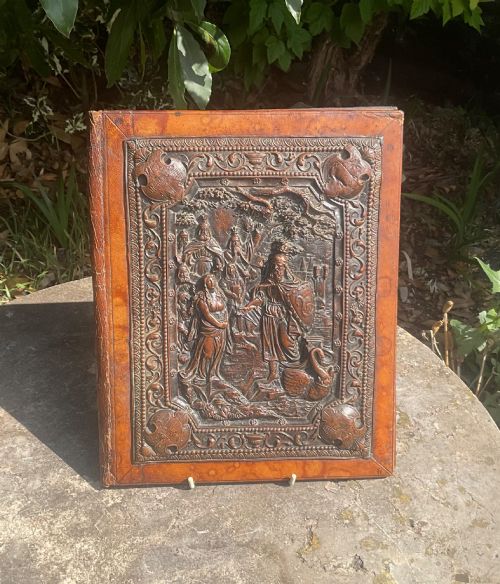
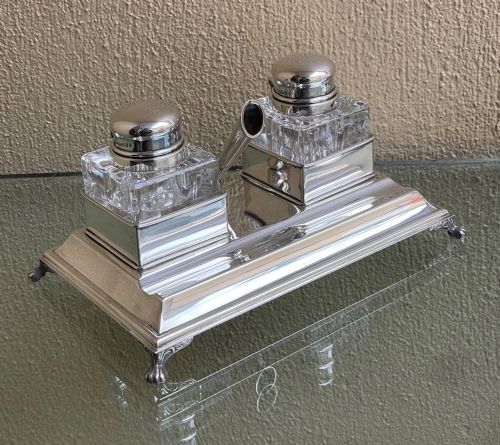
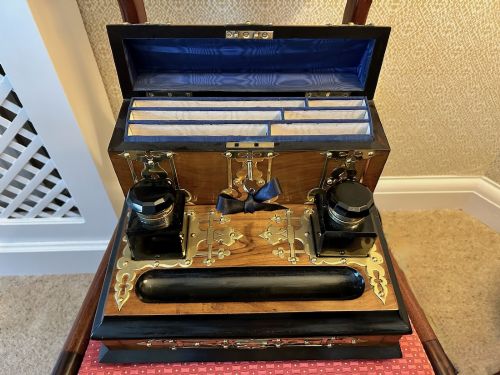
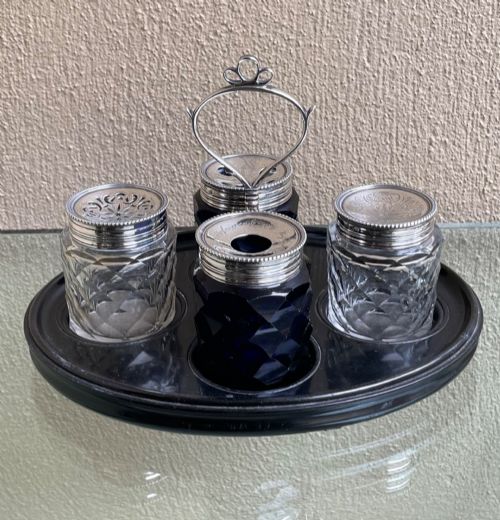
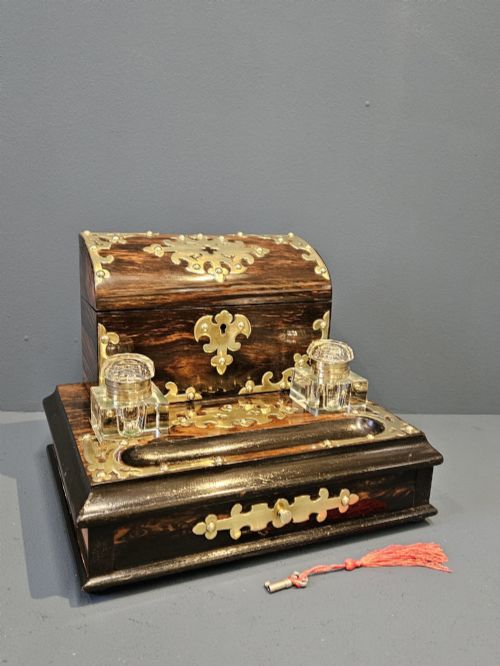
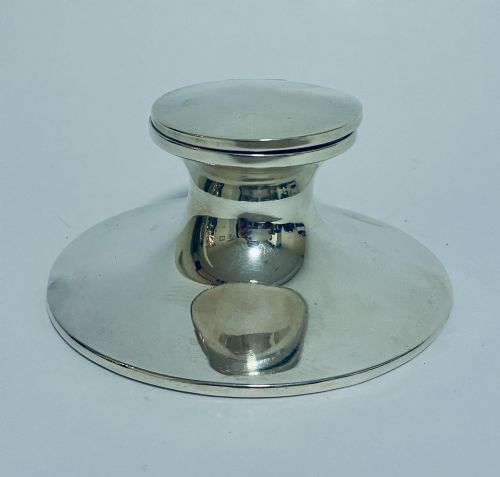
Every antique writing accessory on this page is a desk item designed for correspondence, ranging from silver inkwells and pen wipes to porcelain inkstands and desk blotters. These pieces survive from the Georgian, Victorian, and Edwardian eras, reflecting the domestic and business writing habits of past centuries.
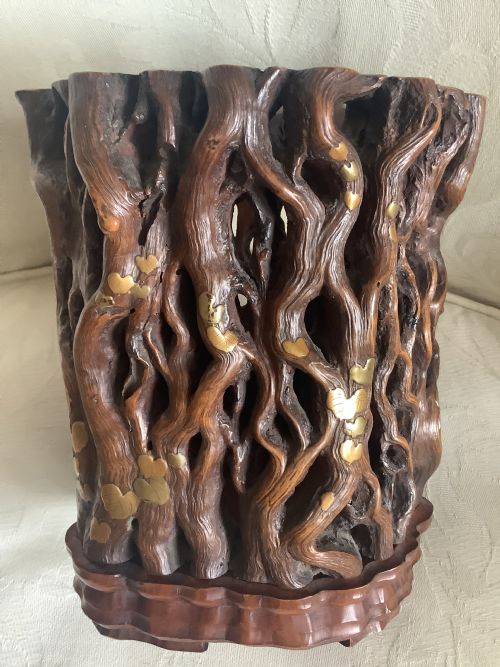
The most frequent finds are inkstands and inkwells, alongside novelty silver bell pieces and carved Black Forest animal designs. Such items served everyday utility in home studies and offices before ballpoint pens and digital communication took over.
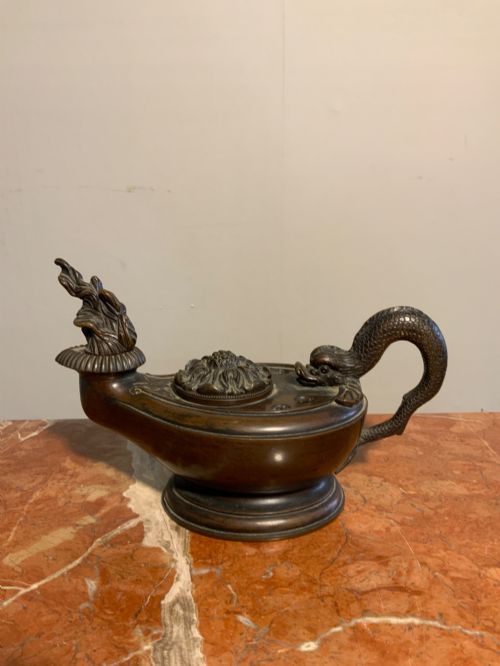
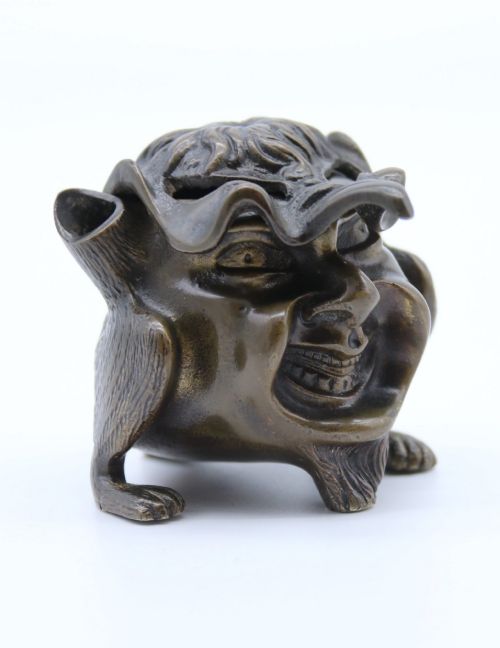
Styles span from grand Regency pieces and French Napoleon III designs to English Victorian silver and Edwardian novelty silver. Each object demonstrates the specific aesthetic priorities of its decade, whether ornate gilt bronze or rustic carved wood.
Materials and construction
Makers utilised sterling silver, glass, walnut, gilt bronze, ormolu, and porcelain to build these functional desk objects. Interior linings often featured felt or wool felt to protect the desk surface and cushion glass inkwells within metal or wooden frames.
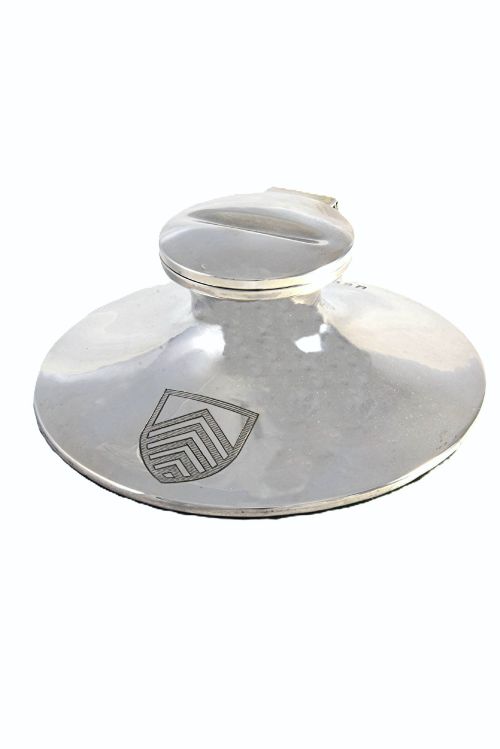
Metal items incorporate casting and hallmarking, particularly visible on London sterling silver pieces from the late nineteenth century. Porcelain examples, such as Worcester porcelain, combine fired ceramic bodies with hand-painted or gilt decoration, while Black Forest pieces show intricate hand-carving in wood.
Retail Price Guide 2026
Typical UK retail prices for writing accessory, calculated from the Sellingantiques database of over a million retail prices indexed since 2003. This retail price guide relies exclusively on Sellingantiques data; no external sources or auction records are used, so the figures do not describe the wider market.
Listings feature items spanning the Georgian, Victorian, and Edwardian periods, constructed from silver, porcelain, glass, and carved walnut.
Distinguishing quality across the range
Quality rests on the integrity of the materials, the refinement of the craftsmanship, and the retention of original components such as glass inserts in silver inkwells. Superior examples demonstrate crisp casting, clear hallmarks, and undamaged porcelain or carved wood.
Peculiarities of style also drive interest, where imaginative novelty forms like bear carvings or bell mechanisms command attention for their sculptural ambition. Simpler utilitarian pieces rely entirely on the quality of their silver weight or porcelain painting for their standing.
The Antique Writing Accessory Glossary
- Inkstand
- A desk tray or stand fitted to hold one or more inkwells, and often pens or sanders. These stationary fittings anchored the nineteenth-century writing table.
- Ormolu
- Gilt bronze, typically French, used for decorative mounts and decorative desk accessories. The technique involves applying a gold amalgam to bronze.
- Hallmark
- An official stamp applied to precious metals indicating standard, maker, and assay office. London silver pieces carry these marks for dating purposes.
- Black Forest
- Carved wooden items originating from the Swiss and German border regions, frequently depicting bears or woodland animals. These functional carvings became popular Victorian novelties.
Frequently Asked Questions
What is an antique inkstand?
An inkstand is a desk tray designed to hold inkwells, pen rests, and sometimes a sander or wafer box. These pieces sat permanently on writing desks for daily correspondence.
They appear in materials ranging from sterling silver and porcelain to carved wood and gilt bronze, reflecting the wealth and taste of the owner.
How do I date a silver inkwell?
Silver inkwells usually bear hallmarks that reveal the assay office, the maker, and the exact year of manufacture. London hallmarks from the late Victorian period are particularly clear on these items.
Stylistic cues such as Edwardian novelty shapes or Georgian neoclassical lines also help narrow down the decade of production.
What are Black Forest inkwells?
Black Forest inkwells are carved wooden desk accessories, often shaped as animals like bears holding logs. Carved in the mountainous regions of central Europe, they became sought-after Victorian novelties.
They combine rustic carving techniques with functional glass ink inserts concealed within the wooden figures.
How do I use an antique inkstand today?
Many collectors place antique inkstands on modern desks as decorative statement pieces or use them to hold modern fountain pens and small stationery items. They add period character to a home office.
Care should be taken with original glass liners and delicate materials like felt linings when cleaning or displaying the piece.