
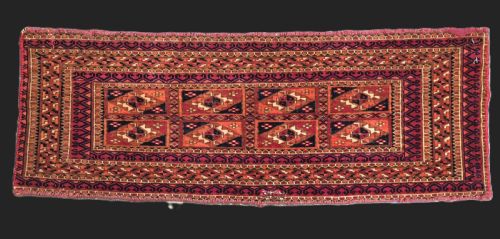
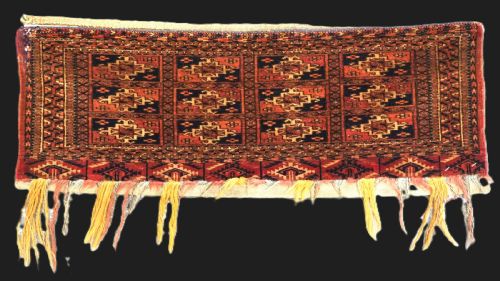


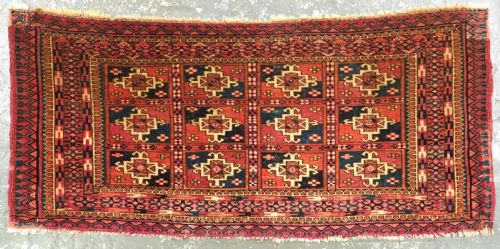

Antique Woven Mafrash
These antique woven mafrash pieces are nomadic storage chests and panels that bring rich tribal geometry into a modern interior.
Antique Woven Mafrash
When you search for an antique woven mafrash, you encounter tribal storage bags and panels originating from nomadic and village weavers across the Caucasus, Central Asia, and Turkmenistan. These textile pieces functioned originally as horizontal bedding chests or pack bags loaded onto camels and horses during seasonal migrations.
You meet complete storage bags with their flatweave backs intact alongside individual bag faces and panels repurposed into kilim rugs. The corpus spans from the mid-nineteenth century through the early decades of the twentieth century, representing specific tribal groups including Tekke, Yomut, Ersari, and Shahsavan makers.
The format varies from rectangular container faces bearing traditional gul motifs to flatweave banded designs and Soumak panels woven with bird and dragon iconography. Pieces appear either as standalone fragments, complete containers with plain weave backs, or assembled decorative rugs.
How they were made
Nomadic weavers constructed these storage containers using hand-spun wool foundations paired with durable cotton and linen structural elements. Artisans employed vegetal and natural dyes to colour the wool, producing deep tones that developed rich patinas over decades of use.
Techniques range from intricate Soumak brocading to flatweave slit tapestry and pile knotting. The combination of dense wool pile and sturdy structural weaving ensured the bags withstood the rigours of nomadic transport.
Listings feature pieces attributed to nineteenth-century Turkmen, Yomut, and Shahsavan tribal workshops using natural wool and vegetable dyes.
What varies in quality
The distinction between ordinary examples and exceptional pieces rests upon the precision of the tribal design and the saturation of the natural dyes. Early pieces from the mid-nineteenth century often display superior wool quality and more complex secondary motifs like birds and dragons.
Completeness dictates much of the character, as surviving examples retaining their original plain weave backs or side panels offer a fuller record of nomadic craftsmanship than isolated fragments. The clarity of regional patterns, such as Tekke aina gul motifs or Shahsavan Soumak work, marks the distinction in execution.
The Antique Woven Mafrash Glossary
- Mafrash
- A traditional nomadic storage bag or chest panel used by tribes in the Caucasus and Central Asia for transporting household goods.
- Torba
- A smaller storage bag or hanging sack produced by Turkmen tribes, often sharing design vocabulary with larger mafrash containers.
- Soumak
- A flatweave technique utilising wrapping threads over warp strands to create a textured, durable surface with raised design details.
- Gul
- A medallion or repeated octagonal motif characteristic of Turkmen tribal weaving traditions and regional carpet designs.
- Flatweave
- A textile constructed without pile by interlacing warp and weft threads directly, resulting in a smooth, tapestry-like fabric.
Antique Woven Mafrash: Frequently Asked Questions
What is an antique woven mafrash?
An antique woven mafrash is a heavy storage bag or panel made by nomadic tribes in regions like the Caucasus and Turkmenistan during the nineteenth and early twentieth centuries.
These textiles served as functional containers for bedding and household possessions during seasonal migrations before surviving as decorative examples of tribal art.
How were mafrash bags used?
Nomadic families packed these durable wool bags with blankets and clothing to load onto pack animals during tribal travels.
Inside the tent, stacked containers functioned as storage furniture and interior partitions within the nomadic dwelling.
How do I identify Shahsavan pieces?
Shahsavan tribal textiles frequently employ Soumak technique featuring distinctive bird, dragon, and geometric animal motifs.
Their panels often display bright natural dye palettes and precise structural weaving associated with northwestern Iran and the South Caucasus.
How do I care for a textile panel?
Protect your textile from direct sunlight and dust accumulation by vacuuming gently through a mesh screen on low suction.
Mount flat panels securely on breathable backing materials if hung on a wall to distribute weight evenly across the wool structure.