


Antique Works on Paper
Antique works on paper encompass original drawings, prints and watercolours spanning the eighteenth, nineteenth and early twentieth centuries.
Antique Works on Paper
Antique works on paper include watercolour paintings, technical drawings, pastel portraits, prints and cut paper pictures spanning the Georgian, Victorian and Edwardian eras. These pieces capture historical scenes, landscapes, architecture and portraiture created by hand or through early printmaking techniques.
Watercolour paintings and ink drawings dominate the selection, often framed behind glass in wood or rosewood surrounds. Buyers encounter diverse subjects ranging from locomotive works and Venetian views to rustic family scenes and botanical studies.
Many items survive within period frames, sometimes accompanied by complementary decorative boxes or housed within larger collections. The selection ranges from delicate cut paper flower pictures to large multi-fold scrap work screens.
Materials and construction
Artists and makers utilised paper combined with ink, watercolour and pastel, mounted within wood, rosewood and brass frames featuring glass protection and gold leaf accents. These materials define the tactile quality of each composition.
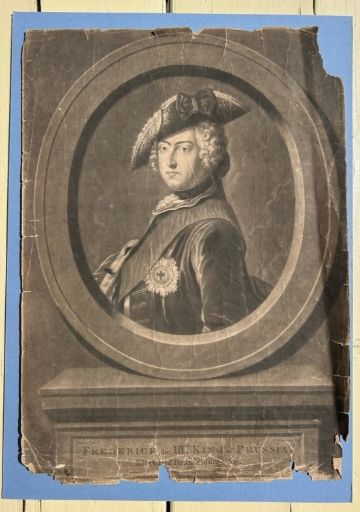
Printmakers employed engraving techniques such as mezzotint on paper supports, while other artisans constructed intricate collage works, quill work pictures and cut paper displays. Framing often incorporated traditional joinery and protective glazing to preserve the delicate mediums.
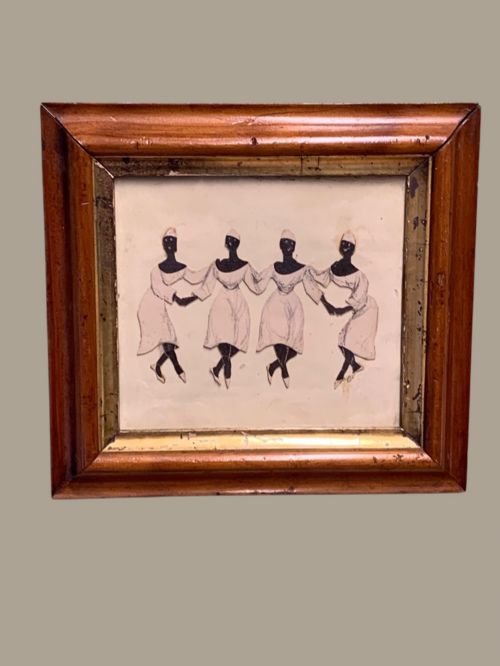
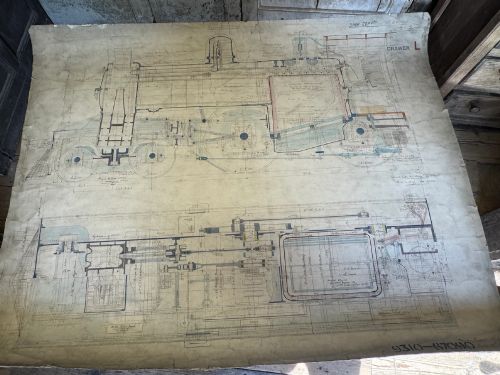
An engineering drawing records a locomotive destined for Bombay, while dancing African figures leap across an unusual nineteenth-century collage.
Assessing quality and execution
Execution and detail separate standard prints and sketches from masterworks by named artists and skilled draughtsmen. The precision of pen and ink work or the subtlety of watercolour washes dictates the visual strength of a piece.
Condition of the paper and the integrity of the original frame heavily influence the standing of an item. Intricate decorative elements, such as period quill work or detailed scrap work arrangement, reflect the maker's time and skill.
Richard Houston·Thomas Gainsborough·Louis Wain·John Augustus Atkinson·Adrian Jones·George Hamilton Constantine·John Hoppner·Fred Lawson·Charles James Adams
The Antique Works on Paper Glossary
- Mezzotint engraving
- A printmaking process where the copper plate is roughened to achieve tonal variation. This technique allows for subtle gradations of light and shade.
- Pastel portrait
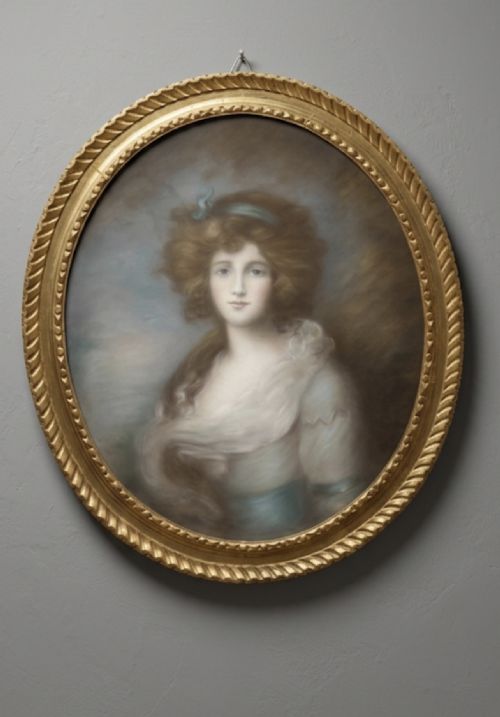
- An artwork executed using powdered pigment sticks on paper. These works require careful glazing to protect the friable surface.
- Quill work
- A decorative technique utilising rolled paper strips edged with gold or colour to form pictorial designs. Artisans frequently mounted these compositions behind protective glass.
- Scrap work
- An arrangement of printed or cut paper elements layered to form decorative screens or panels. Victorian examples often combine varied printed ephemera into dense collages.
Antique Works on Paper: Frequently Asked Questions
How should I frame antique paper?
Protect antique works by using acid-free mounting boards and UV-filtering glass to prevent degradation from light and humidity.
Keep pieces away from direct sunlight and damp environments to maintain the stability of the paper and pigments.
Are these works hand-painted?
Many examples are original hand-drawn watercolours, pastels or ink illustrations created directly by the artist.
The selection also includes period printmaking formats, such as mezzotint engravings, alongside mixed media collages and cut paper art.
How do I identify the period?
Dating relies on stylistic clues, framing methods, paper watermarks and inscriptions left by the artist or publisher.
Georgian and Victorian pieces often display distinct handwriting styles, framing profiles and subject matters tied to their era.
What is scrap work?
Scrap work involves assembling numerous small printed paper cutouts into a dense, decorative composition often applied to folding screens.
This Victorian craft utilised commercially produced coloured scraps arranged by hand into elaborate thematic displays.