






Antique Wool Sampler
An antique wool sampler brings centuries of quiet needlework into a room, offering small domestic histories stitched in wool and linen.
Antique Wool Sampler
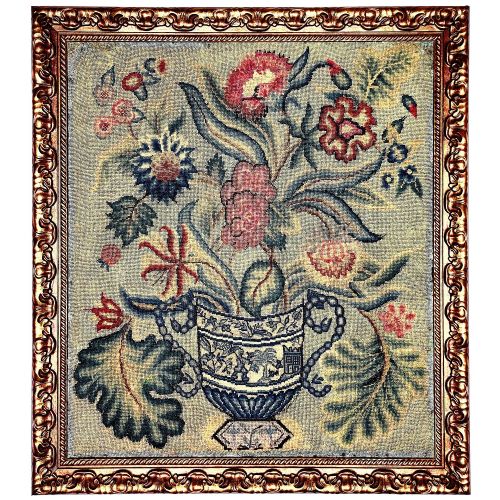
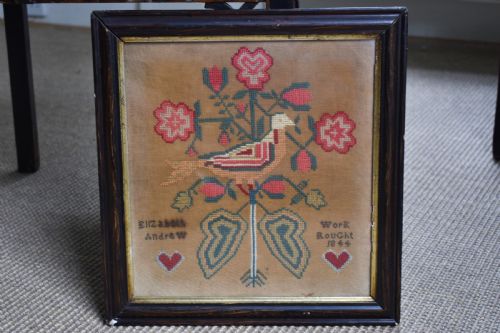
When you search for an antique wool sampler, you encounter stitched textile art spanning the eighteenth century through the early twentieth century. These pieces record domestic needlework skills across Georgian, Victorian, and later folk art traditions.
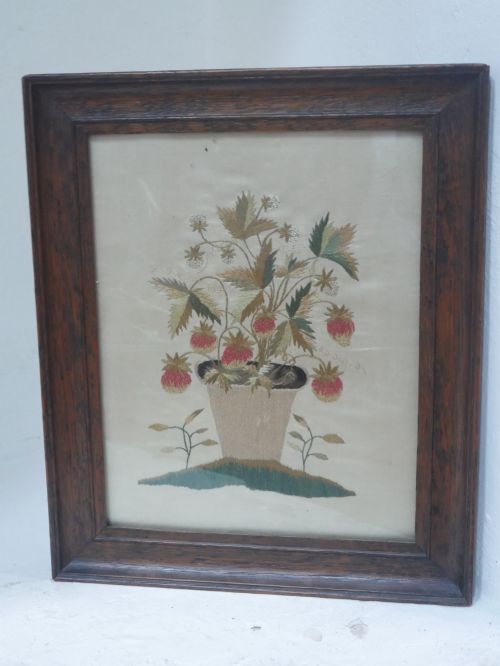
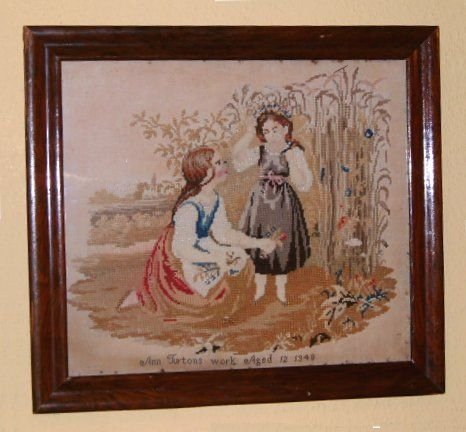
The most common examples on this page are framed Victorian wool work samplers and needlework pictures set behind glass in wood or rosewood frames. Subjects range from traditional alphabets and love motifs to botanical studies, religious scenes, and figurative needlepoint.
Earlier pieces from the eighteenth century often take the form of detailed needlework pictures, while nineteenth-century examples frequently feature gros point and petit point techniques. Makers ranged from young girls learning stitches to accomplished needleworkers creating framed wall art.
Materials and construction
These pieces are constructed primarily using wool and silk threads stitched onto a foundation of linen or canvas. Artisans worked various stitches by hand to build up texture and pictorial detail.
Many of the nineteenth-century works on this page are preserved within bespoke wooden frames, notably rosewood or gilded wood, fitted with protective glass. The combination of durable wool yarns and sturdy linen grounds explains their survival across centuries.
Antique Wool Sampler Retail Price Guide 2026
Typical asking prices for wool sampler among the pieces listed under this phrase on Sellingantiques today, from the lower quarter to the upper quarter. They describe what is for sale here now, not the wider market.
Current listings feature textiles spanning the eighteenth century through the nineteen-thirties, utilising wool, silk, linen, and rosewood frames.
Distinctions in quality
Quality in these textiles rests upon the precision of the needlework, the complexity of the stitch variety, and the preservation of the wool colours. Finer examples display meticulous execution in petit point and detailed pictorial composition.
The framing also influences the character of the piece, with original rosewood frames and intact glass adding significantly to the historical integrity of the textile. Pieces that retain clear provenance, such as named makers or specific dates, command greater historical interest.
The Antique Wool Sampler Glossary
- Sampler
- A piece of needlework produced as a demonstration or test of skill in various stitches and designs. They frequently incorporate alphabets, numbers, and motifs.
- Gros point
- A coarse type of needlepoint stitch worked on canvas, commonly utilised for backgrounds and bolder pictorial elements in nineteenth-century works.
- Petit point
- A fine, detailed needlepoint stitch worked over a single thread of canvas, allowing for intricate facial expressions and subtle shading.
- Needlework picture
- A framed textile artwork designed purely for wall display rather than as a stitch练习 or recording of alphabets.
- Canvas
- The open-weave fabric foundation used as a stable base for needlepoint and tapestry stitching.
Antique Wool Sampler: Frequently Asked Questions
How old is my sampler?
Dating relies on stylistic clues, framing materials, and any inscribed dates or names stitched directly into the textile. Eighteenth-century pieces often feature distinct pictorial styles, while Victorian examples frequently include specific family records or maker ages.
Examination of the backing boards, thread types, and frame construction also helps narrow down the period of manufacture.
Were samplers made by children?
Many traditional samplers were indeed stitched by young girls as part of their domestic education, serving to demonstrate competence in basic lettering and decorative stitches.
Other advanced needlework pictures and large tapestries were created by skilled adult makers working in gros point and petit point.
How do I hang a textile sampler?
Display these framed pieces away from direct sunlight to prevent the wool and silk threads from fading over time. Maintaining stable indoor humidity protects both the antique fabric and the wooden frames.
Ensure the hanging wire or fixings securely support the weight of the framed glass and wood.
What is the difference between a sampler and a tapestry?
A sampler typically showcases a collection of diverse stitches, alphabets, and standalone motifs arranged on a single ground. A tapestry or needlework picture generally presents a unified pictorial scene, such as a landscape or religious subject.
Both forms utilise similar wool and canvas materials but serve different decorative and educational purposes.