




Antique Wooden Liquor Cabinet
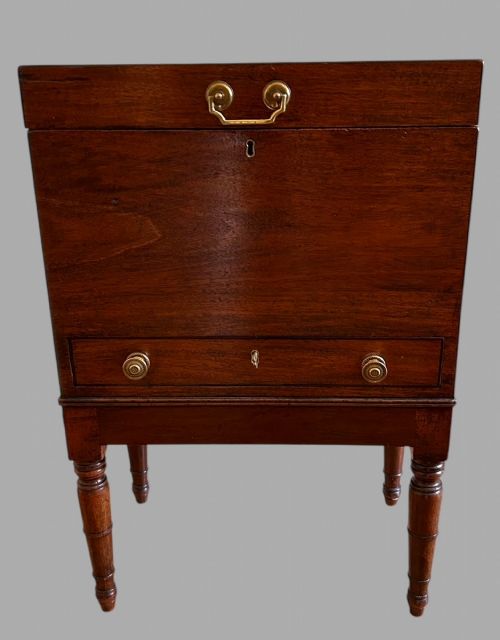
An antique wooden liquor cabinet encompasses everything from Georgian cellarettes to Art Deco cocktail cabinets designed for holding spirits and wine.
Antique Wooden Liquor Cabinet
An antique wooden liquor cabinet serves as a dedicated storage vessel for wine, spirits, and decanters. Buyers searching for an antique wooden liquor cabinet encounter forms ranging from formal Georgian and Regency cellarettes to Victorian tantalus sets and later cocktail cabinets.
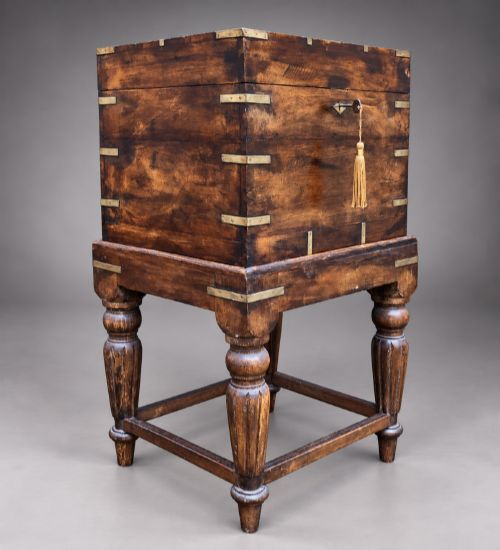
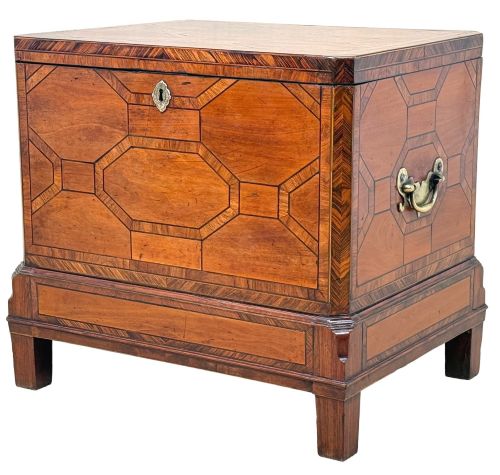
The selections span distinct periods, including George III, the nineteenth century, and the early twentieth century. Pieces take the form of box cellarettes on stands, octagonal wine coolers, and locking cabinets fitted with crystal decanters.
How they were made
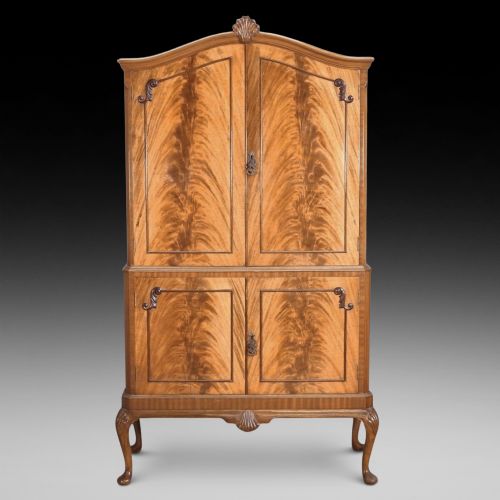
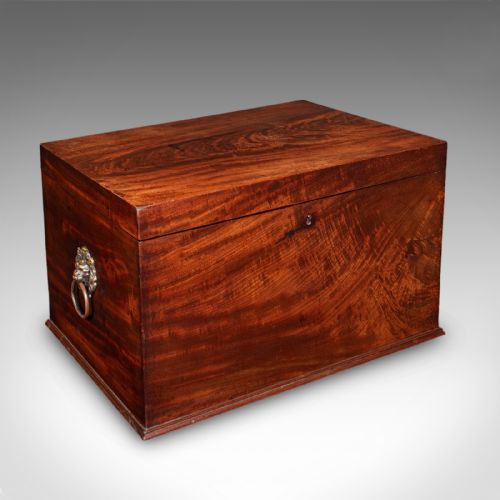
Cabinetmakers utilised dense hardwoods such as mahogany, oak, walnut, and burr walnut, often complemented by satinwood and kingwood veneers. Flame mahogany and pollard oak highlight natural wood figuring.
Mounts, handles, and binding utilise brass and occasionally ormolu, while interior fittings incorporate glass mirrors and cut crystal decanters for storing spirits.
Listings feature woods spanning mahogany, oak, walnut, burr walnut, satinwood, and kingwood across Georgian, Regency, Victorian, and 1930s periods.
What varies in quality
Excellence rests in the selection of timber veneers, such as flame mahogany or burr walnut, matched with precise cabinet joinery and sturdy stands. Superior examples display refined proportions and intact internal partitions designed to cradle bottles securely.
Hardware and metalwork differentiate pieces, with heavy cast brass carrying handles, secure locking mechanisms, and original cut crystal decanters elevating the execution of the design.
Gillows of Lancaster and London·Gillingtons
The Antique Wooden Liquor Cabinet Glossary
- Cellarette
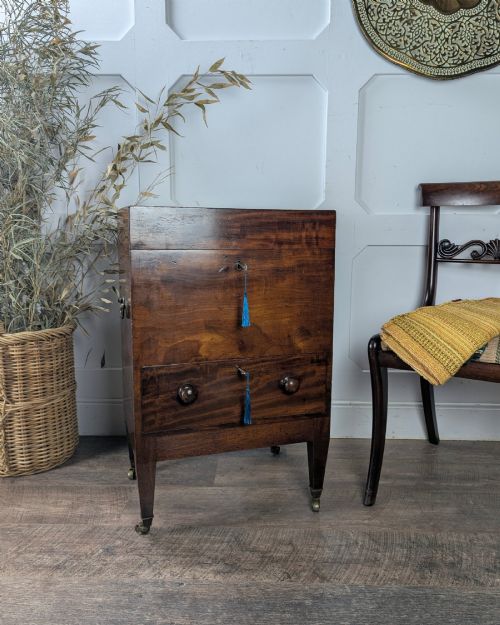
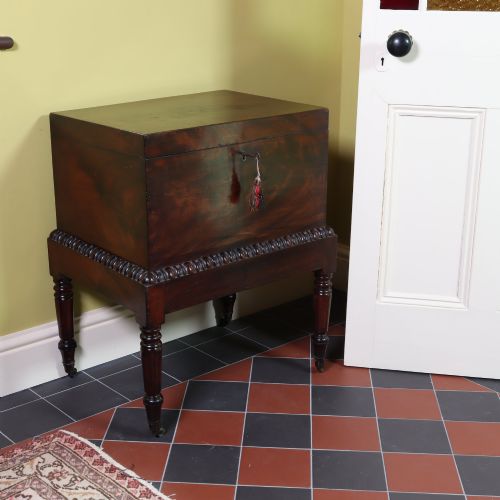
- A lockable container or chest designed for storing wine bottles near the dining table. They appear in box, octagonal, and freestanding forms during the Georgian and Regency periods.
- Tantalus
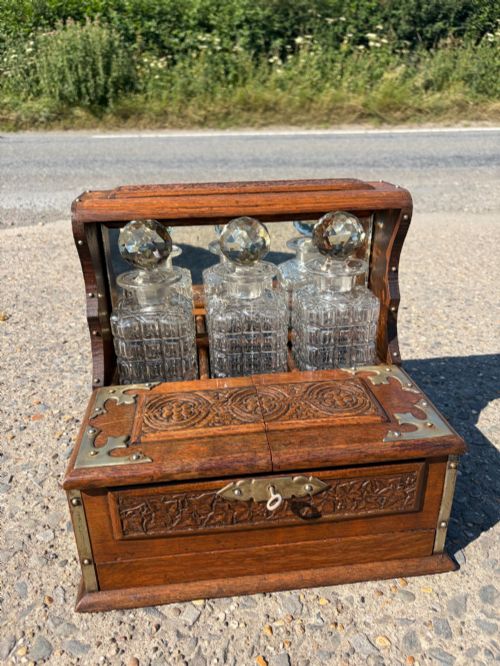
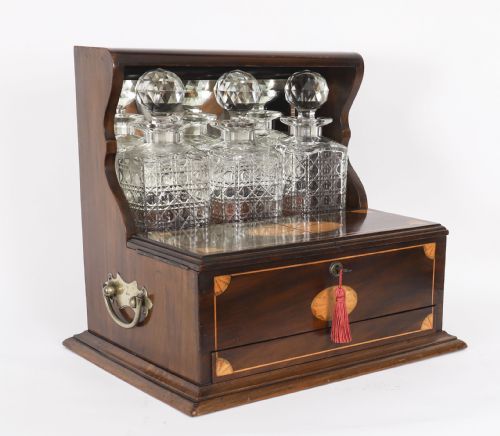
- A locking wooden frame holding decanters of spirits in a way that displays the contents while preventing access without a key. Late Victorian examples often incorporate games compartments.
- Wine Cooler
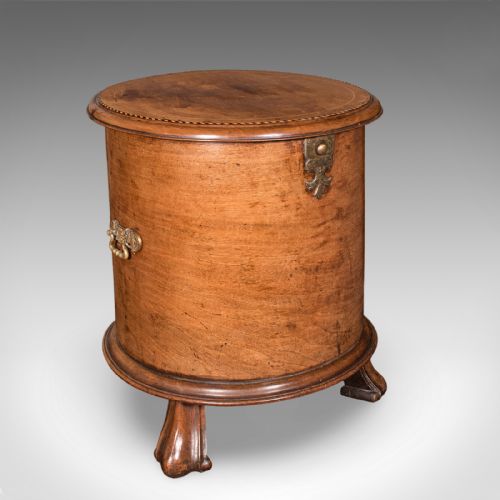
- A vessel traditionally lined to hold ice and bottles during meals. Many 19th-century variants share forms with cellarettes.
- Cocktail Cabinet
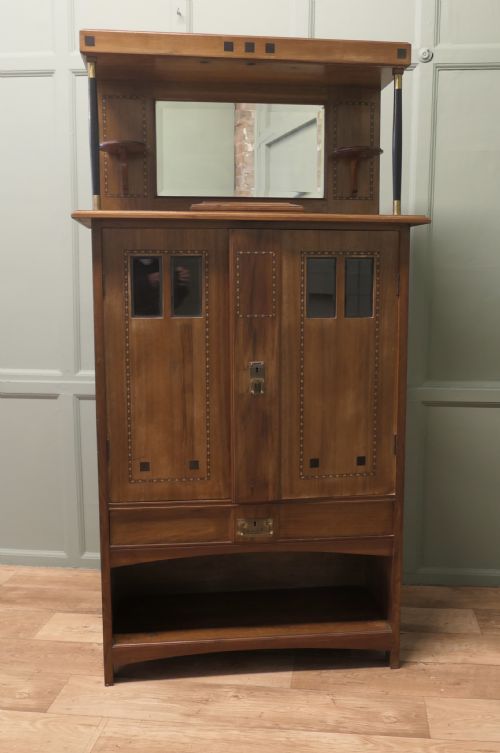
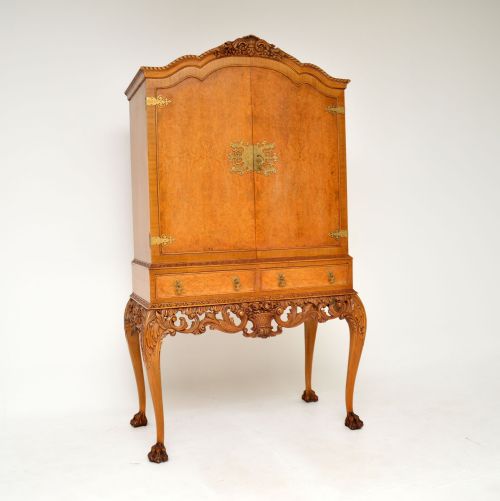
- A later 20th-century piece designed specifically for mixing drinks, frequently featuring mirrored glass interiors, drop-down serving shelves, and display sections.
Antique Wooden Liquor Cabinet: Frequently Asked Questions
What is a tantalus?
A tantalus is a locking wooden stand holding exposed glass decanters of spirits. The frame prevents guests from pouring drinks without the key.
These pieces gained popularity during the Victorian era and often include silver-plated or brass locking bars alongside games drawers.
How do cellarettes differ from cocktail cabinets?
Cellarettes were made primarily during the Georgian and Regency periods to store wine bottles beneath or beside the dining table. They use heavy timbers like mahogany and oak with secure cellar locks.
Cocktail cabinets emerged in the 20th century for entertaining guests in reception rooms, featuring internal mirrors, glass shelves, and compartments for mixing implements.
What woods were used for these cabinets?
Cabinetmakers relied heavily on mahogany, oak, and walnut as primary construction timbers. Decorative surfaces often incorporated burr walnut, pollard oak, satinwood, and flame mahogany veneers.
Metal mounts in brass added structural reinforcement and decorative contrast to the timber.
How do I date an antique liquor cabinet?
Dating relies on architectural styles, hardware, and timber treatment. Georgian and Regency pieces emphasise classical proportions, brass banding, and solid mahogany construction.
Late Victorian and 20th-century examples introduce complex mechanisms like the tantalus, marquetry stringing, or streamlined Art Deco silhouettes.