


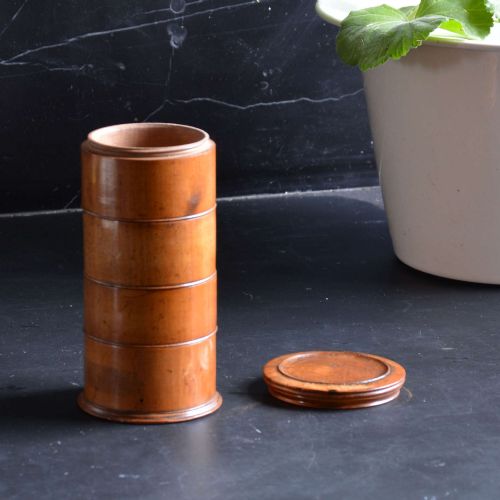


Antique Wooden Kitchenware
These antique wooden kitchenware pieces are utilitarian domestic items shaped by hand from fruitwood, oak, pine and sycamore, prized for their tactile domestic utility and honest craftsmanship.
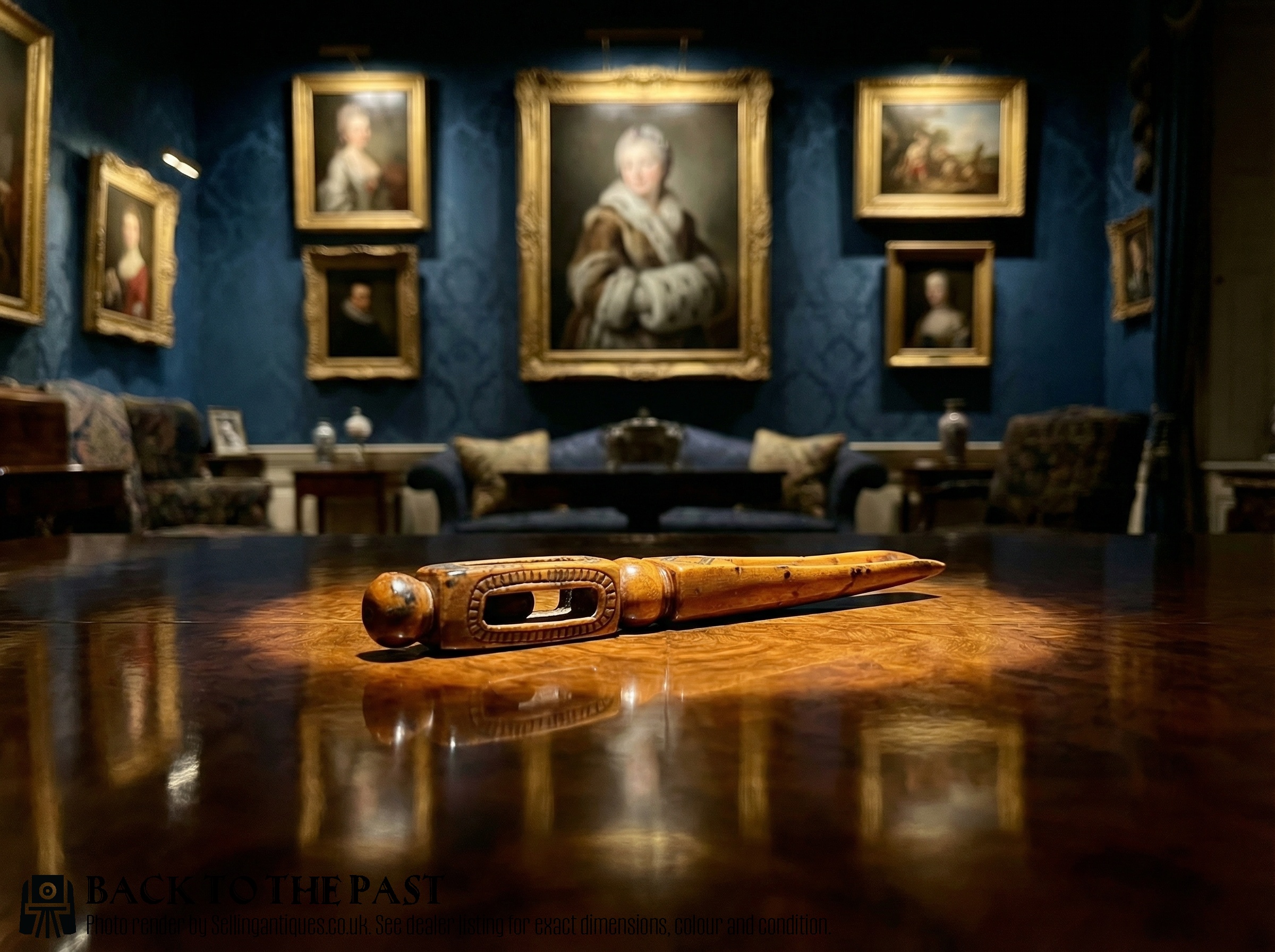
Antique Wooden Kitchenware
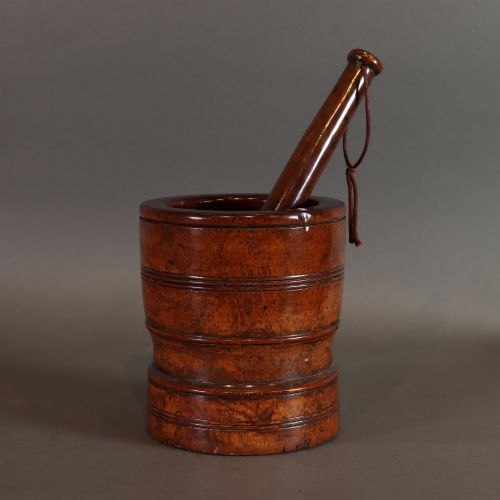
The pieces on this page are predominantly treen, bowls, salt boxes, scoops, spice towers and spoons originating from Georgian, Victorian and earlier periods.
Fruitwood, sycamore, beech and pine dominate these utilitarian forms, reflecting the regional timber available to vernacular turners and makers.
How they were made
Makers utilised native hardwoods like fruitwood, boxwood and sycamore, turning bowls and spice towers on lathes or carving scoops and spoons by hand.
Iron and brass hardware, hinges and handles were integrated into wooden salt boxes and wall boxes using traditional blacksmithing methods.
Surfaces often retain original paint traces, tool marks and the deep patination acquired through generations of domestic use.
Antique Wooden Kitchenware Retail Price Guide 2026
Typical asking prices for wooden kitchenware among the pieces listed under this phrase on Sellingantiques today, from the lower quarter to the upper quarter. They describe what is for sale here now, not the wider market.
One listed nutmeg grater is cleverly carved in the exact shape of a wine bottle.
What varies in quality
Quality rests in the crispness of the original turning, the integrity of the timber and the depth of the surface patination built up through handling.
The finest examples retain their original components, such as iron hardware, lids or matching pestles, without excessive modern intervention or structural replacement.
Regional vernacular character and legible tool marks separate standard utilitarian items from exceptional pieces of early folk art.
The Antique Wooden Kitchenware Glossary
- Treen
- Small handmade wooden domestic objects. The term derives from old English words for tree and encompasses items like spoons, bowls and boxes.
- Fruitwood
- Timber sourced from fruit-bearing trees such as apple, pear or cherry. It was frequently utilised by turners for its dense and stable grain.
- Sycamore
- A light-coloured hardwood favoured for dairy and kitchen items because it imparts no taste or odour to food.
- Vernacular
- Objects designed and made by local craftsmen for everyday use rather than high-style polite manufacture. These pieces reflect regional traditions and materials.
- Patina
- The surface sheen and colour developed on wood over decades of handling, cleaning and exposure to light.
Antique Wooden Kitchenware: Frequently Asked Questions
What is treen kitchenware?
Treen refers to small domestic objects made of wood, including bowls, spoons, spice towers and graters.
These pieces were shaped by hand or on a lathe for daily tasks in the kitchen.
What woods were commonly used?
Makers utilised native timbers such as fruitwood, sycamore, beech, boxwood, oak and pine.
Choice of wood depended on the local availability of timber and the specific function of the item.
How do I date antique wood?
Dating relies on observing tool marks, timber species, construction methods, wear patterns and original hardware.
Georgian and Victorian pieces often show distinct turning styles and joinery techniques compared to earlier centuries.