

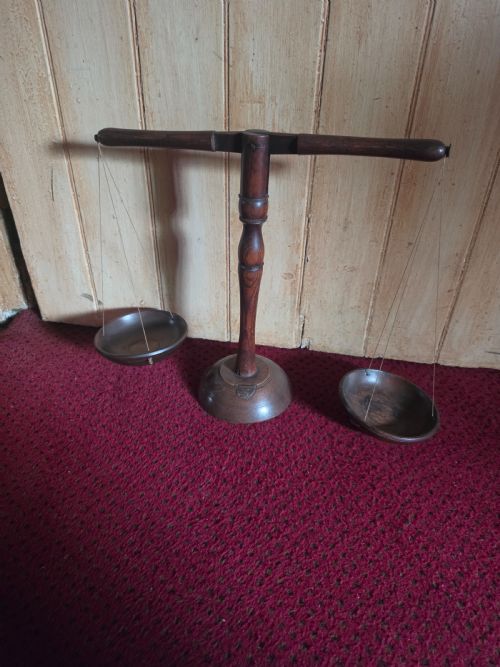


19th Century Welsh Treen
These 19th century welsh treen pieces are practical wooden household objects shaped by rural makers, offering warm tactile charm to any interior.
19th Century Welsh Treen
When you search for 19th century welsh treen, you are looking at functional wooden household utensils and decorative items shaped by regional makers. The selections span domestic kitchenalia and dairy implements alongside symbolic love tokens.
You are most likely to meet fruitwood and sycamore pieces originating from rural workshops. These range from turned bowl stands and salt containers to chip-carved lovespoons and grain scoops.
The aesthetic sits firmly within Welsh folk art and vernacular traditions. Makers utilised local timbers to supply everyday domestic needs with enduring utility.
How they were made
Makers shaped these items primarily from native hardwoods such as fruitwood, sycamore, and beech. These timbers provided the dense, resilient grain required for daily kitchen and dairy use.
Construction combined manual turning on lathes with traditional hand-carving techniques. Chip carving and fruitwood inlay decorated presentation pieces like lovespoons and snuff boxes.
Finishes remained straightforward, relying on the natural grain or occasional coats of paint. Grain scoops and dairy bowls show the direct tool marks of the village artisan.
19th Century Welsh Treen Retail Price Guide 2026
Typical asking prices for 19th century welsh treen among the pieces listed under this phrase on Sellingantiques today, from the lower quarter to the upper quarter. They describe what is for sale here now, not the wider market.
Listings feature items from the 19th century and Georgian period, constructed primarily in fruitwood and sycamore within Welsh folk art styles.
What varies in quality
The crispness of detail in chip-carved decoration separates standard utility items from presentation pieces. Lovespoons and snuff boxes display varying degrees of patience in the heart inlay and geometric incisions.
Surface preservation and the depth of natural patina dictate desirability. Pieces retaining their original tool marks and uncompromised timber surfaces command greater appreciation.
Proportion and turning balance distinguish finer treen bowls and stands. The harmony of the turned profile reflects the individual skill of the country maker.
The 19th Century Welsh Treen Glossary
- Treen
- Small handmade wooden domestic objects. The term encompasses everything from dairy bowls to kitchen scoops.
- Lovespoon
- A traditionally decorated wooden spoon given as a token of affection. These often feature intricate chip carving and heart motifs.
- Vernacular
- Architecture and objects built to local needs using local materials. These pieces reflect the specific rural character of Welsh country life.
- Chip carving
- A style of decoration removing small chips from a wooden surface with a knife. This technique creates geometric patterns on boxes and spoons.
- Sycamore
- A pale hardwood favoured by turners. It resists splitting and was widely used for dairy bowls and kitchen utensils.
19th Century Welsh Treen: Frequently Asked Questions
What is treen?
Treen covers small handmade wooden objects created for domestic use. These items include kitchenalia, dairy bowls, and small personal containers.
Makers shaped them from local timbers to serve practical purposes in traditional households.
How were lovespoons used?
Lovespoons served as traditional courting gifts carved by young men in rural communities. They communicated affection and skill through symbolic motifs.
Makers often incorporated hearts and intricate chip carving into the fruitwood handles.
What timber did makers use?
Makers selected native hardwoods like fruitwood, sycamore, and beech for their density and stable grain. These woods withstood heavy kitchen and dairy tasks.
Different timbers suited specific forms, such as turned bowls or carved spoons.
How do I care for treen?
Keep wooden treen away from direct heat sources and sudden temperature changes to prevent splitting. Maintain the surface using traditional beeswax or mineral oil.
Avoid washing these pieces in water or placing them in dishwashers.
Are these items functional?
Many pieces began as working utensils in rural kitchens and dairies. Scoops, bowls, and salt containers were designed for daily physical tasks.
Collectors today generally display them as decorative folk art rather than using them for food preparation.