
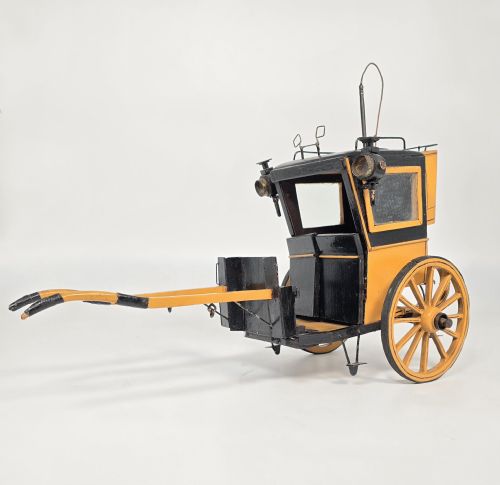


Antique Wooden Horse Model
An antique wooden horse model is a carved representation spanning folk art, pull-along toys, and agricultural scales that brings tactile history into a room.
Antique Wooden Horse Model
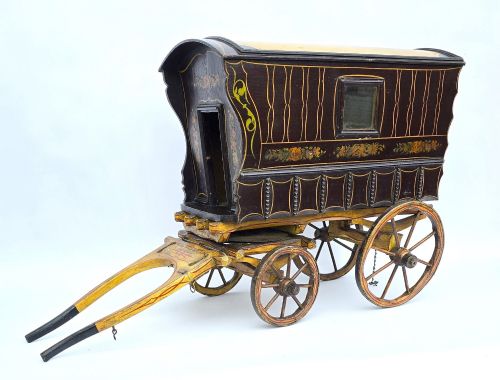
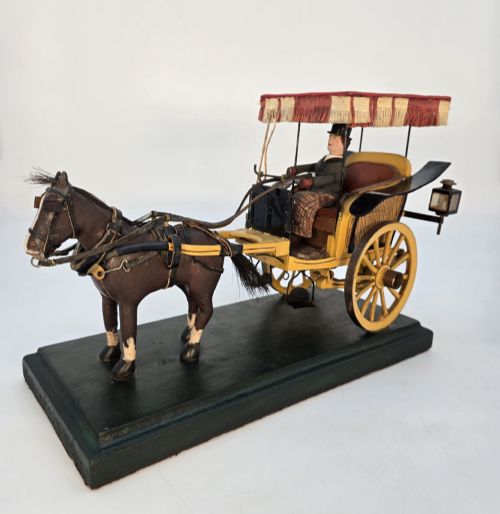
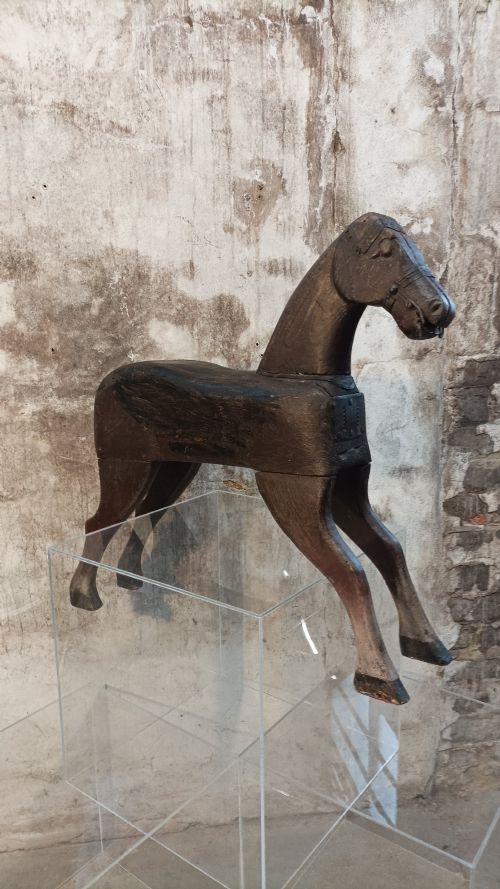
An antique wooden horse model appears across diverse vernacular forms, from naive painted sculptures and pull-along children's toys to intricate scale models of farm carts and carriages. These pieces emerge from the nineteenth century, the Victorian era, and the early decades of the twentieth century.
The selection ranges from European folk art traditions, including Russian and Spanish pieces, to East Asian and Indo-Persian examples. Buyers encounter everything from simple carved toys to life-size leather models and processional figures.
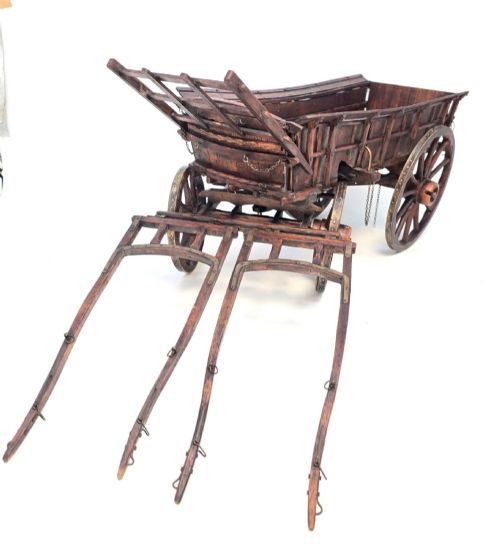
Makers often worked within regional folk traditions, producing agricultural models such as twin horse-drawn hay carts alongside decorative sculptures and artists' models. Each piece reflects the functional or artistic priorities of its period of origin.
Materials and Construction
Makers shaped these models primarily from wood, utilising oak and carved hardwoods alongside painted surfaces that often retain their original pigments. Metal, iron, and brass frequently provide structural reinforcement, harness details, or moving parts.
Leather and glass appear in specific applications, particularly on life-size models and carriage harnesses. Scratch-built examples demonstrate manual construction techniques ranging from naive primitive carving to detailed scale miniature work.
A solitary Mongolian pack horse carries the quiet patience of the steppe right into a modern living room.
Assessing Quality and Character
The distinction between pieces rests upon the confidence of the carving and the preservation of original surfaces, such as early paint layers or patinated leather. Naive charm and primitive execution balance against the technical precision found in scale models and signed works.
Scale accuracy in carriages and farm carts, combined with the integrity of associated elements like iron harness work and wooden shafts, separates standard examples from exceptional items.
R.D. Roberts·Robert Kime
The Antique Wooden Horse Model Glossary
- Pull-along toy
- A children's plaything fitted with wheels or a pull cord. These objects show the wear of active childhood use.
- Scale model
- A physical representation of an object maintained in accurate proportion. These models often reproduce carts, carriages, and agricultural machinery with exactitude.
- Naive
- An art style showing a childlike perspective with deliberate simplicity in proportion and perspective. This approach highlights expressive character over anatomical accuracy.
Antique Wooden Horse Model: Frequently Asked Questions
What periods do these models date from?
The available selection spans the eighteenth, nineteenth, and early twentieth centuries, including Victorian and Edwardian examples.
Dates are assigned based on construction methods, materials, and stylistic markers recorded in the evidence.
How were these wooden models used?
Uses ranged from children's pull-along toys and artists' studio reference models to scale representations of agricultural carts and processional figures.
Many functioned as decorative sculptures or folk art displays reflecting rural trades and transport.
What materials are typical for these pieces?
Makers relied primarily on carved wood, oak, and hardwood, frequently finished with paint, gesso, or leather. Iron, brass, and glass elements often appear in harnesses, carriage fittings, and eyes.
Combinations of these materials define specific regional folk traditions and scale model categories.
How do folk art models differ from scale models?
Folk art pieces prioritise expressive, naive, or primitive forms that emphasise character and traditional regional aesthetics. Scale models focus on precise engineering and accurate miniature reproduction of carts and cabs.
Both categories utilise wood carving but serve entirely different aesthetic and functional intentions.