

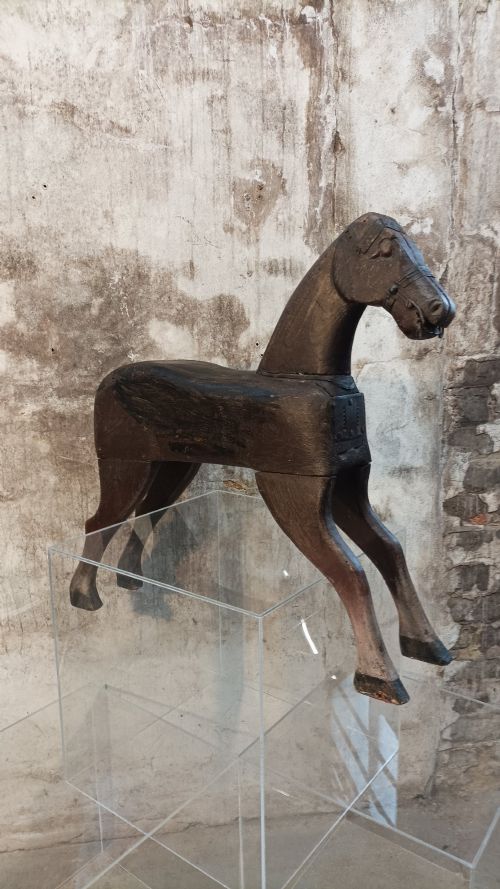


Painted Wooden Toy Horse
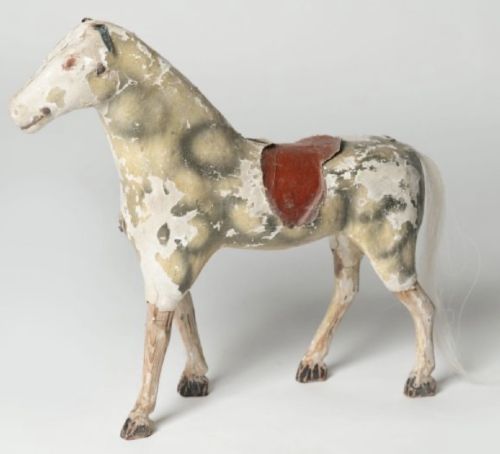
These painted wooden toy horse examples span rocking horses and naive sculptures created across the nineteenth and twentieth centuries.
Painted Wooden Toy Horse
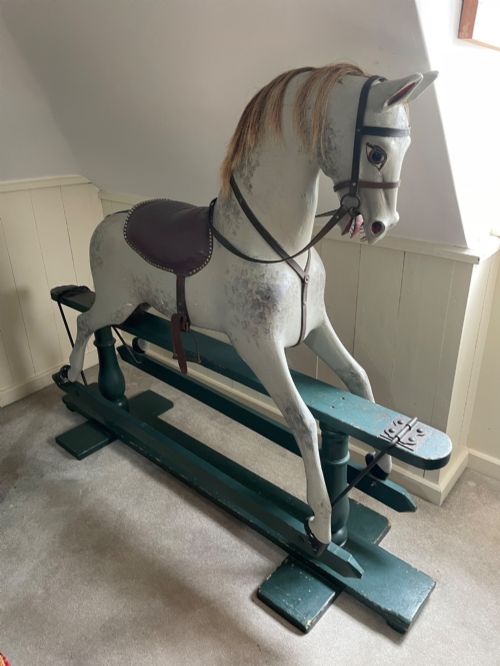
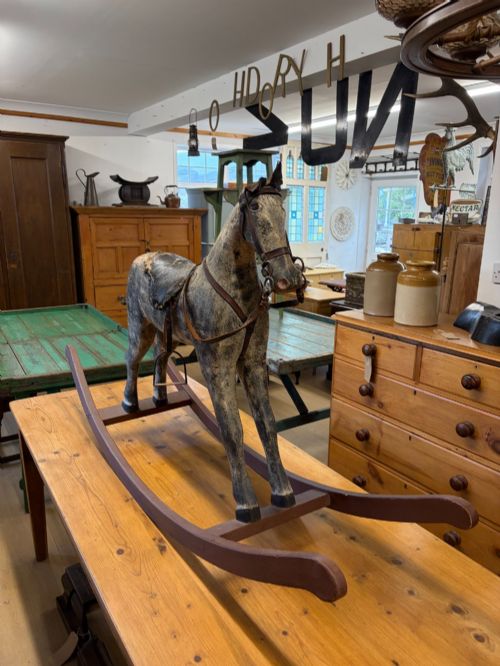
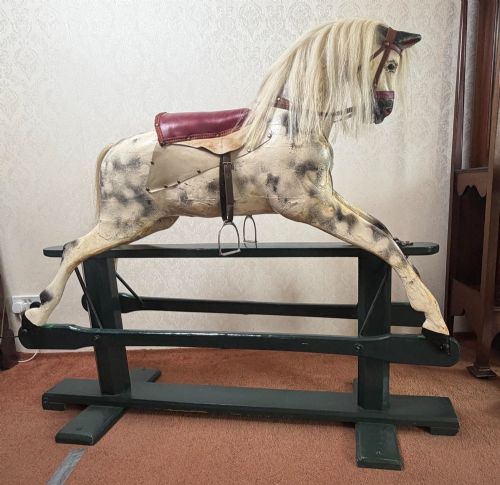
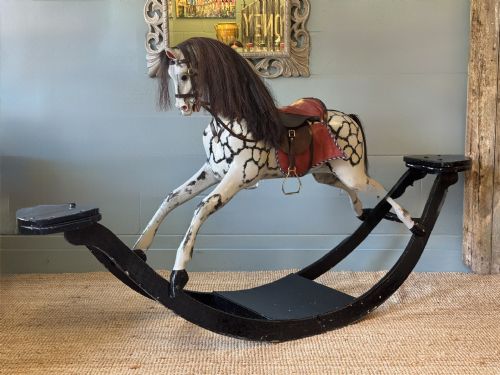
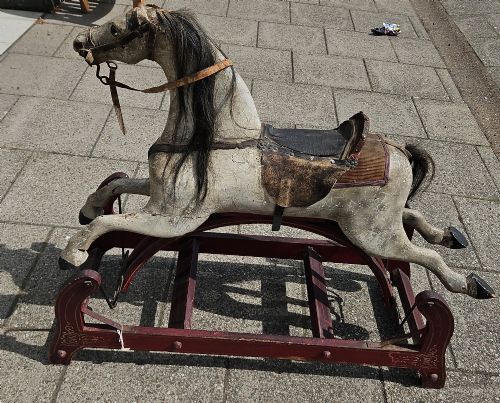
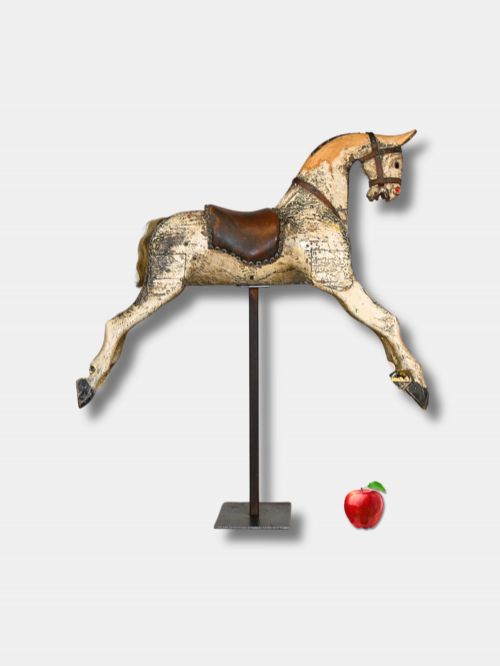
A painted wooden toy horse search brings up a selection of nineteenth and twentieth-century nursery pieces and folk art sculptures. Most examples appearing here take the form of rocking horses mounted on original rockers or safety stands, alongside smaller carved models.
The objects originate from various periods including the Victorian and Edwardian eras, with makers such as G & J Lines and F.H. Ayres represented. Buyers encounter both substantial playroom pieces and smaller naive sculptures created by domestic carvers.
Many survivors retain remnants of their early paint schemes, showing the evolution of child playthings through the decades. These items combine utilitarian construction with decorative appeal, making them popular with collectors of folk art and antique toys.
How they were made
Makers constructed these figures primarily from carved wood and pine, often utilising iron or metal fixings for structural stability. Carvers shaped the bodies by hand or machine before applying layers of paint to create dappled or solid coats.
Craftspeople added tactile details using leather for tack and harnesses, alongside horsehair for manes and tails. These organic materials frequently show age-related wear while retaining their original texture and assembly methods.
Painted Wooden Toy Horse Retail Price Guide 2026
Typical asking prices for painted wooden toy horse among the pieces listed under this phrase on Sellingantiques today, from the lower quarter to the upper quarter. They describe what is for sale here now, not the wider market.
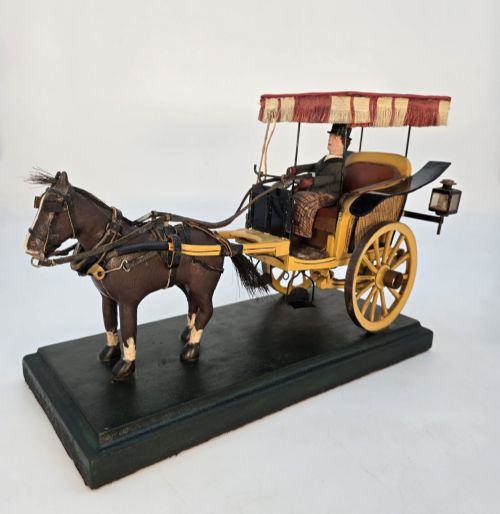
Object forms range from large nursery rocking horses to miniature folk art carriages with horse and driver.
What varies in quality
Quality in a painted wooden toy horse depends upon the survival of original surface finishes and the precision of the carving. Finer pieces demonstrate careful attention to anatomical proportion and facial detailing by established makers.
The integrity of the underlying wooden frame and original rockers distinguishes superior examples from heavily altered pieces. Retaining authentic tack, horsehair, and early paint layers elevates the standing of an individual sculpture.
G & J Lines·F.H. Ayres·Lines Bros Sportiboy·Collinsons
The Painted Wooden Toy Horse Glossary
- Rocking horse
- A child's toy mounted on curved wooden rockers or a static safety stand. These domestic items formed a central part of nineteenth and twentieth-century nurseries.
- Folk art
- Objects created by self-taught or traditional craftsmen outside academic artistic traditions. These pieces often display naive charm and direct methods of construction.
- Original paint
- The initial decorative surface applied to an object by the maker. Surviving early paint layers provide historical evidence of an item's age and appearance.
- Playworn
- Condition terminology indicating that an item shows heavy use from childhood play. This surface wear records the active history of the object.
- Dappled
- A painted spotting pattern applied to the body of a toy horse. This technique mimics the coat of a grey horse.
Painted Wooden Toy Horse: Frequently Asked Questions
How do I date a painted wooden toy horse?
Dating relies on construction methods, iron fixings, and stylistic cues from periods like the Victorian era or the early twentieth century. Examining the underlying pine and nail types provides further chronological context.
Makers' marks or stamps from firms such as G & J Lines or F.H. Ayres offer definitive dates when present on the wooden base.
Are these horses safe for children to ride?
Most antique pieces function primarily as decorative objects or collector pieces rather than modern playthings. Their historic wooden frames and iron components may not meet contemporary safety standards.
Buyers should treat older rocking horses as sculpture or heritage items rather than active toys for young children.
What is folk art style in these toys?
Folk art examples display a naive or primitive aesthetic created by traditional carvers without formal academic training. These pieces prioritize expressive form over strict anatomical accuracy.
Such sculptures often originate from domestic workshops and exhibit charming irregularities in their painted surfaces.
How should I clean original paint?
Preserving the historic surface requires gentle dusting with a dry cloth to remove loose particles. Water and chemical solvents can damage fragile nineteenth-century paint layers and horsehair.
Consulting a professional restorer is advisable before attempting any deeper cleaning of delicate wooden toy surfaces.