


Victorian Wooden Toy Horse
These surviving pieces of victorian wooden toy horse capture the character of nineteenth-century playrooms, offering solid craftsmanship and enduring charm.
Victorian Wooden Toy Horse
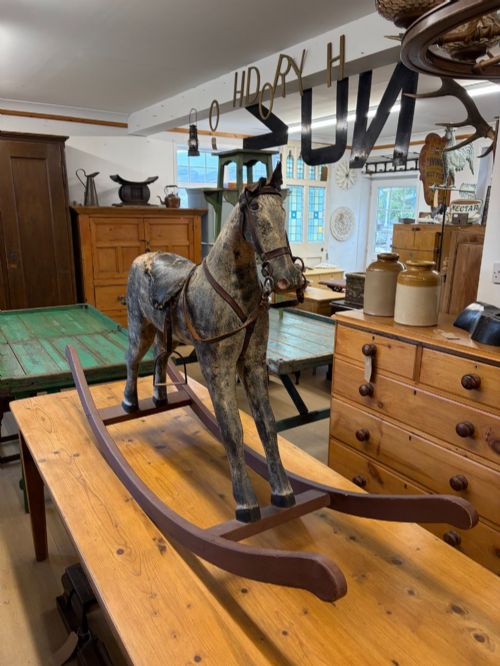
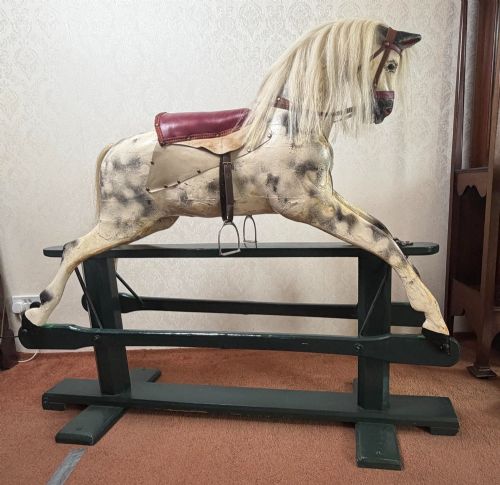
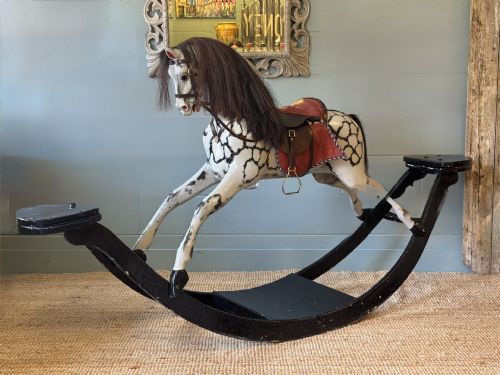
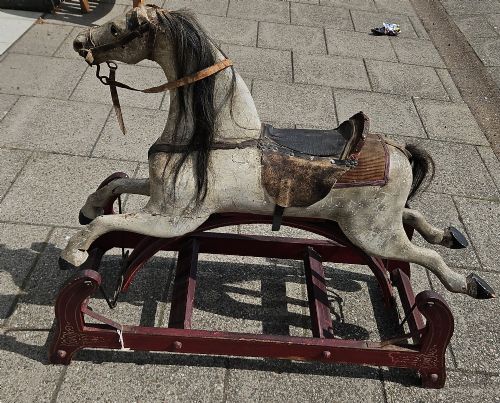
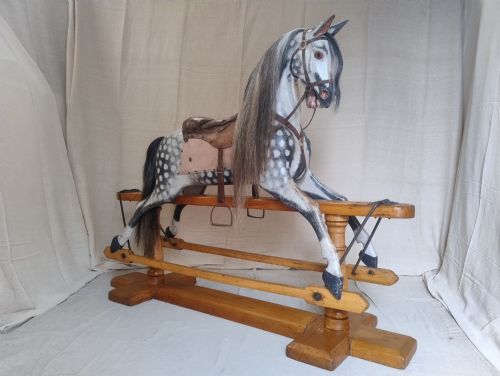
When you search for a victorian wooden toy horse, you encounter substantial children's playthings designed for mounting, rocking, or pulling across the floor. These items appear primarily as large rocking horses mounted on original wooden rockers or safety stands, alongside smaller pull-along toys.
The objects stem predominantly from the nineteenth century and the early decades of the twentieth century. Makers constructed them using sturdy timbers like pine, shaping forms that range from sophisticated carved rocking horses to naive folk art pieces.
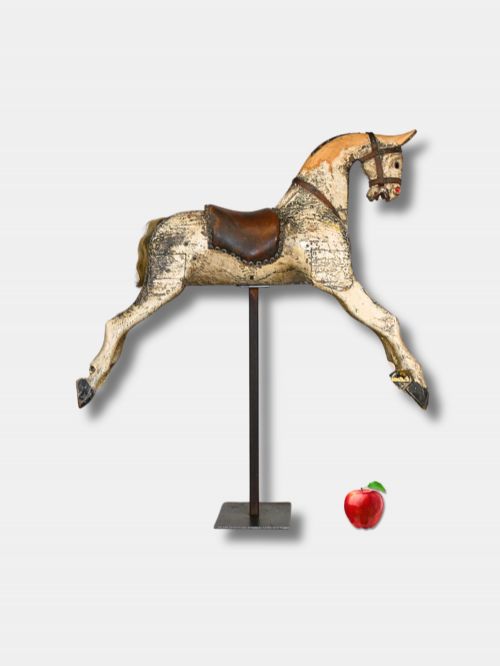
Beyond standard rocking horses, listings feature ride-on toys and chain-driven horse tricycles from various European origins. This variety reflects the diverse ways children engaged with wheeled and rocking playthings across different regions.
How they were made
Makers built the core structures using carved wood and pine, often mounting the bodies on curved wooden rockers or heavy iron and steel stands. These dense materials provided the necessary weight and stability for vigorous children's play.
Makers finished the wooden surfaces with layers of paint, sometimes adding leather elements and real horsehair for mannes and tails. Iron and metal components reinforced joints and mechanism parts on wheeled toys and stands.
The listings combine pine, iron, leather, and horsehair across nineteenth-century and early twentieth-century examples.
What varies in quality
The survival of original surface finishes significantly influences the character of each piece. Surviving early paint schemes and original tack retain historical integrity, whereas later overpainting alters the visual presentation.
G & J Lines of London·F.H.Ayres·Collinson
The Victorian Wooden Toy Horse Glossary
- Rocking Horse
- A child's toy horse mounted on curved wooden rockers or a standing frame. These objects allowed children to simulate riding indoors.
- Folk Art
- Objects created by self-taught or traditional makers working outside academic art traditions. These pieces prioritise practical utility and expressive design over strict anatomical accuracy.
- Pull-Along Toy
- A small children's toy equipped with wheels or a platform for towing across the floor. Such items often included iron axles and wooden pull handles.
- Original Paint
- The initial surface coating applied to an object by the maker. Collectors value this condition for preserving the authentic period appearance.
Victorian Wooden Toy Horse: Frequently Asked Questions
How do I date a wooden toy horse?
Examine the construction methods, nail types, and mounting styles used in the piece. Rockers curved from single timbers and early iron bracket designs typically point toward nineteenth-century production.
Compare the surface paint layers and wear patterns with documented examples from known makers. Regional styles and traditional folk art characteristics also help narrow down the manufacturing period.
Were these toys meant for play?
Most surviving pieces served as robust playthings for children in nurseries and parlours. Substantial pine construction and iron reinforcement allowed them to withstand heavy daily use.
Subsequent generations preserved many of these items as decorative objects rather than active toys. Their sturdy build ensured survival across multiple centuries of domestic life.
What is a safety stand?
A safety stand is an immobile wooden or iron framework that suspends a rocking horse above the floor. This design prevents the horse from tipping over during vigorous rocking.
Nineteenth-century workshops introduced these stands to protect children from accidents caused by traditional curved rockers sliding across nursery floors.
How should I care for original paint?
Keep wooden toys away from direct sunlight and excessive humidity to prevent paint flaking and wood splitting. Gentle dusting with a dry, soft cloth maintains the surface.
Avoid using modern chemical cleaners or water on aged painted surfaces. Preserving the dry, untouched character of early paint maintains the historical integrity of the piece.