





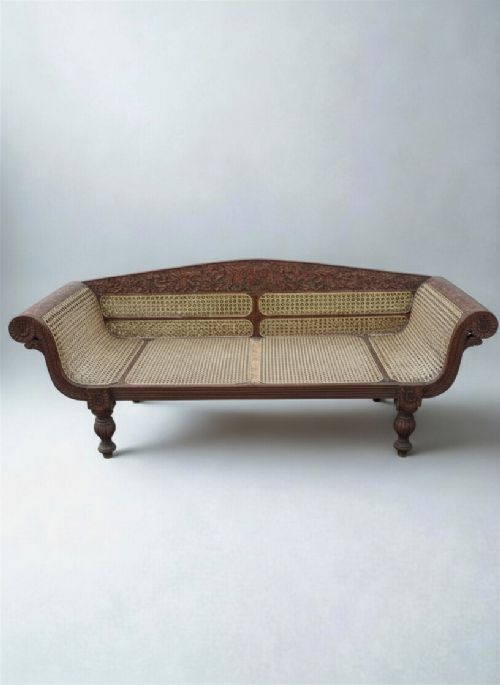


Antique Wooden Daybed
An antique wooden daybed offers a versatile seat and bed for a room, moving between periods from the eighteenth century to the twentieth.
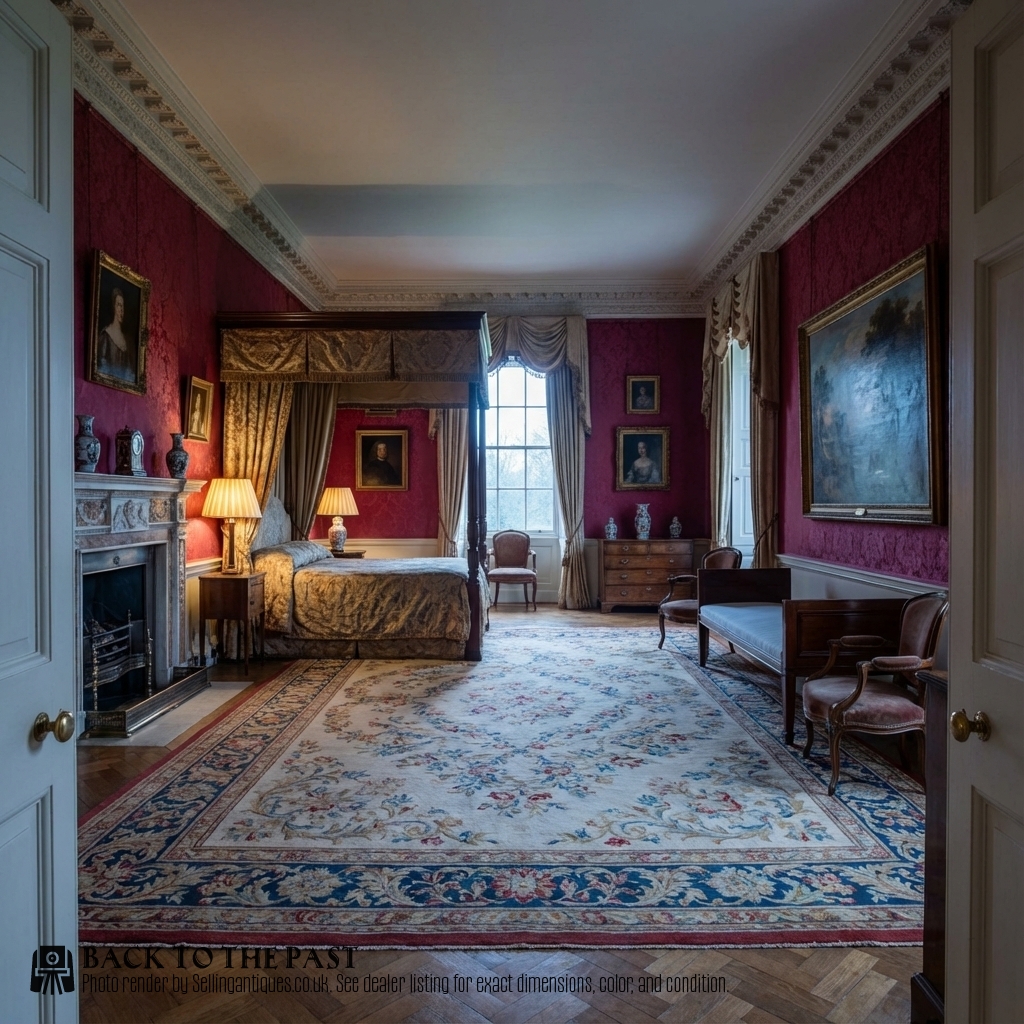
Antique Wooden Daybed
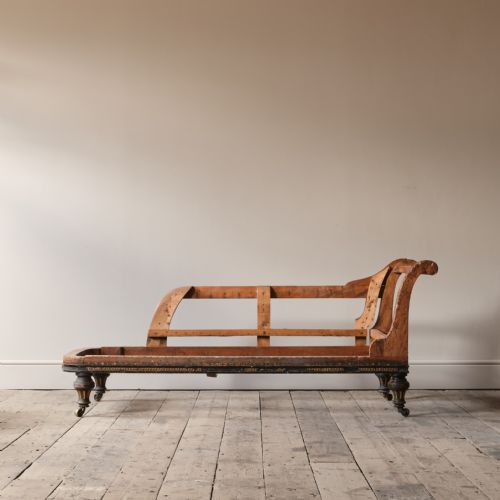
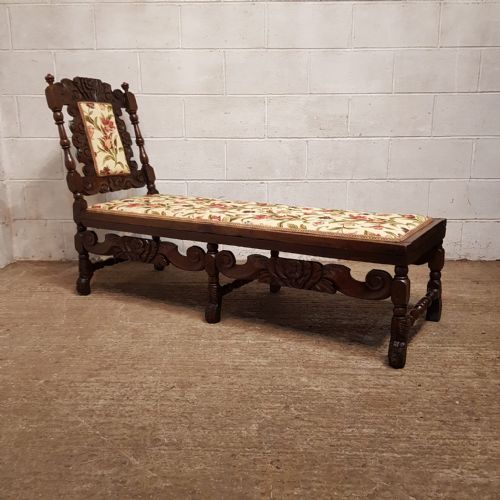
An antique wooden daybed bridges the gap between seating and sleeping furniture, taking forms such as campaign beds, chaises longues, and benches. Buyers seeking this phrase encounter varied regional designs, including Anglo-Indian hardwood pieces, Chinese lacquered beds, and European painted frames.
The pieces listed here span the eighteenth, nineteenth, and early twentieth centuries, encompassing Victorian, Regency, and Gustavian styles. Daybeds and related day beds appear alongside settees, sofas, and miniature furniture items made from materials like mahogany, oak, and pine.
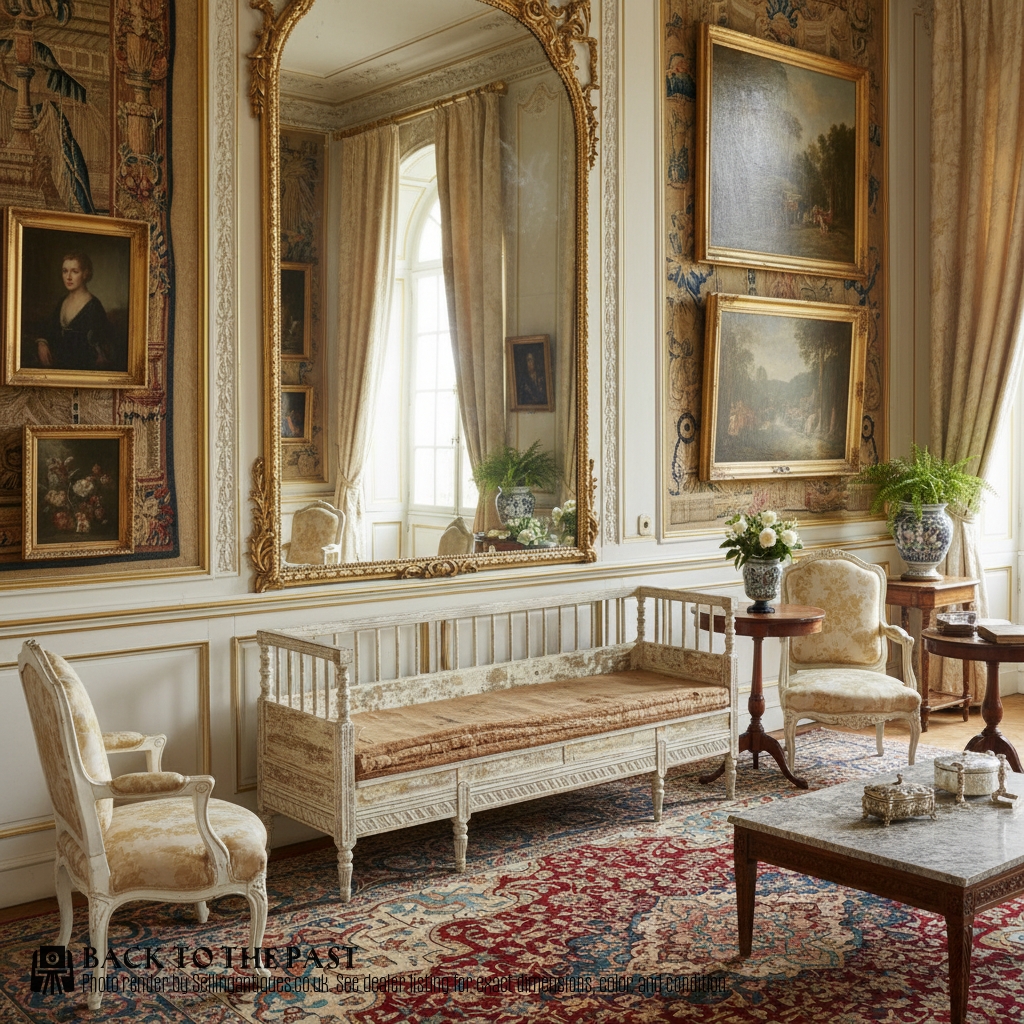
Materials and construction
Timbers such as mahogany, oak, walnut, hardwood, and pine form the primary structure of these daybeds. Artisans frequently incorporated cane and rattan for seating panels, alongside fabric upholstery and brass hardware on campaign styles.
Surface finishes range from original paint and red lacquer to ebonised details and carved decorative elements. Folding mechanisms and adjustable components appear on campaign beds and nineteenth-century examples designed for mobility.
Antique Wooden Daybed Retail Price Guide 2026
Typical asking prices for wooden daybed among the pieces listed under this phrase on Sellingantiques today, from the lower quarter to the upper quarter. They describe what is for sale here now, not the wider market.
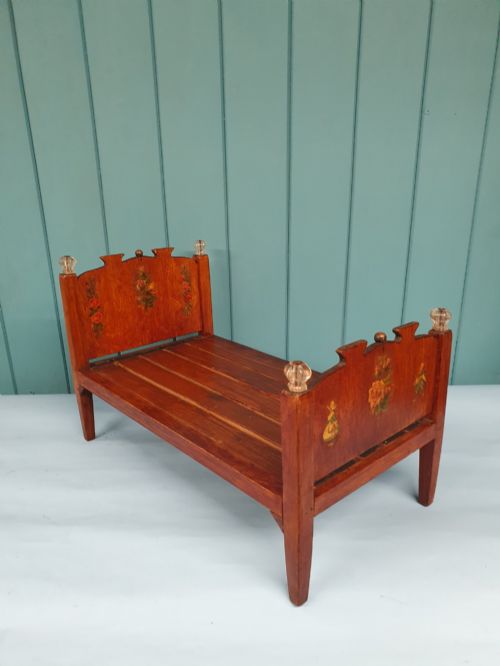
Miniature doll beds and children's toy furniture appear alongside full-scale opium beds and marriage beds.
Assessing quality
Quality rests in the integrity of the timber frame, the crispness of any carved decoration, and the survival of original finishes like paint or lacquer. Pieces retaining their original castors, turning, and caning hold greater integrity than those with altered elements.
Design distinction separates standard regional furniture from high-style Regency scroll-end sofas or finely carved Anglo-Indian daybeds. The harmony of proportions and the quality of joinery dictate the standing of each piece.

Holland and Sons·Thomas Hope
The Antique Wooden Daybed Glossary
- Campaign bed
- A portable bed designed for travel, often featuring folding frames, brass mounts, and detachable legs. These pieces allowed officers to transport their sleeping quarters during nineteenth-century campaigns.
- Bergere
- An enclosed upholstered armchair or sofa with wooden frames and cane sides. The style originates from France and often incorporates exposed polished timber.
- Chaise longue
- An upholstered sofa in the form of a chair with a long seat to support the legs. Eighteenth and nineteenth-century versions frequently display scroll ends or Louis XV styling.
- Settle
- A wooden bench with high backs, solid arms, and often a storage box beneath the seat. Older examples utilise oak or painted pine construction.
- Takhat
- A low Indian platform or table used for sitting or sleeping. These hardwood pieces often feature detailed carvings.
- Duchesse brisée
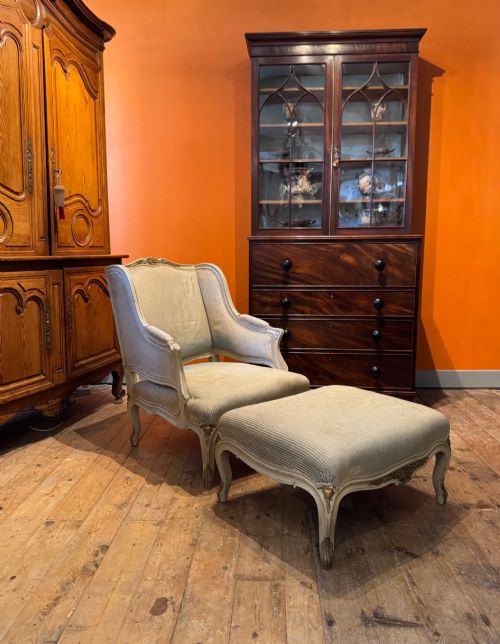
- A two or three-part chaise longue comprising a chair and one or two footstools that combine to form a continuous resting place.
Antique Wooden Daybed: Frequently Asked Questions
What is an antique wooden daybed used for?
These pieces function as daytime seating and occasional sleeping furniture within a study, bedroom, or living space. Their compact length allows them to fit into alcoves where a full bed would prove too large.
Historically, they served elite resting quarters and military officers on the move. Today, they provide decorative focal points while offering practical lounging space.
How do I identify a Regency daybed?
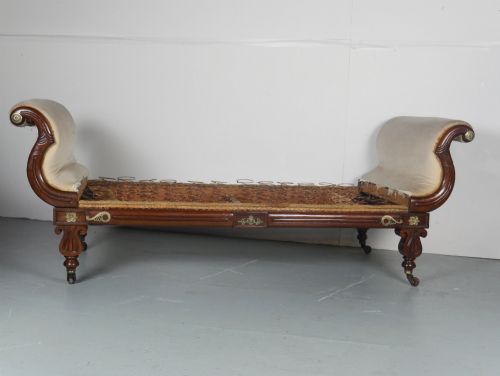
Regency daybeds typically display classical influences inspired by ancient Greek and Roman designs. Look for scroll-end arms, dark woods like mahogany and rosewood, and saber legs.
Many examples feature boat-shaped profiles or campaign folding mechanisms. The overall aesthetic prioritises clean architectural lines and restrained classical ornamentation.
What is an Anglo-Indian daybed?
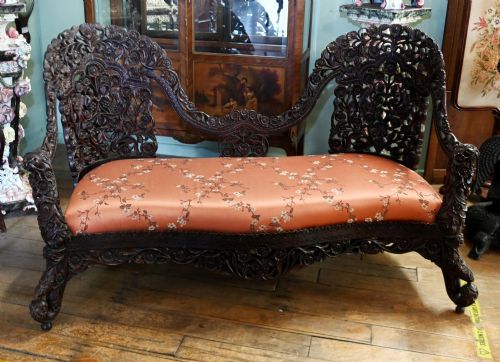
Anglo-Indian daybeds combine British furniture forms with traditional Indian woodworking techniques and native hardwoods. They often feature dense carving, caned panels, and scroll backs.
Created during the nineteenth century for colonial residences, these pieces showcase exotic timbers such as ebony and diverse hardwoods. Their substantial construction sets them apart from domestic European equivalents.
How do I care for a caned daybed?
Caned panels require gentle dusting with a soft brush and occasional light moisture to prevent the rattan from becoming brittle. Avoid placing them in direct sunlight or near intense heat sources.
Natural cane expands and contracts with humidity changes, so maintaining a stable room climate preserves its strength. Weight should be distributed evenly across the woven surface during use.