

Antique Wooden Candlesticks
Antique wooden candlesticks bring warm grain and domestic ritual to a room, offering functional candlelight shaped by centuries of turnery.
What antique wooden candlesticks are
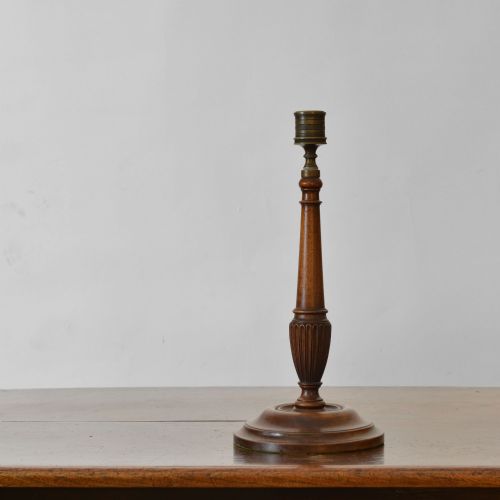
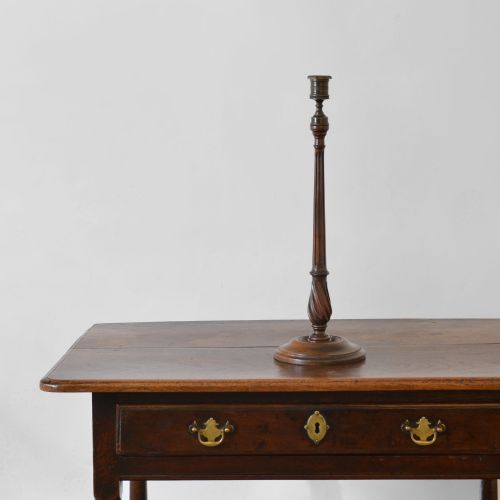
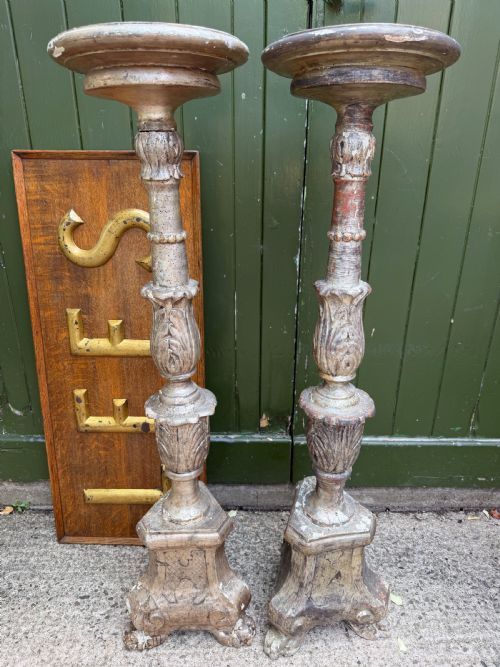
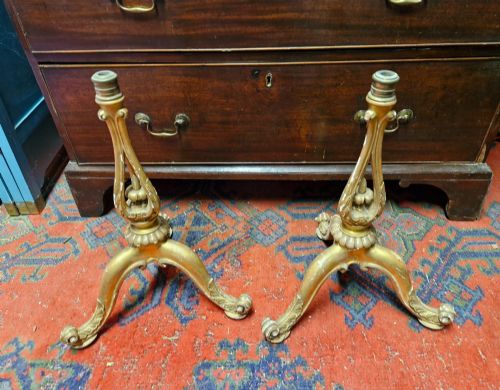
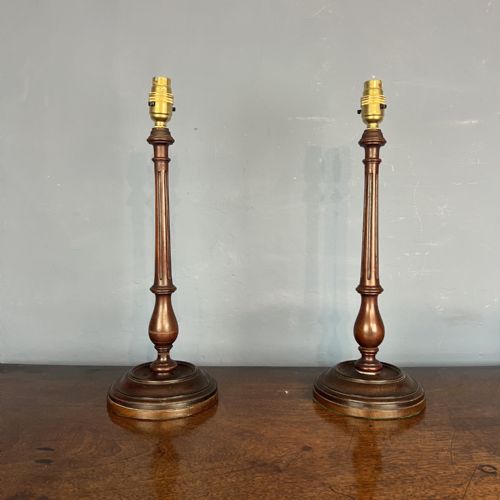
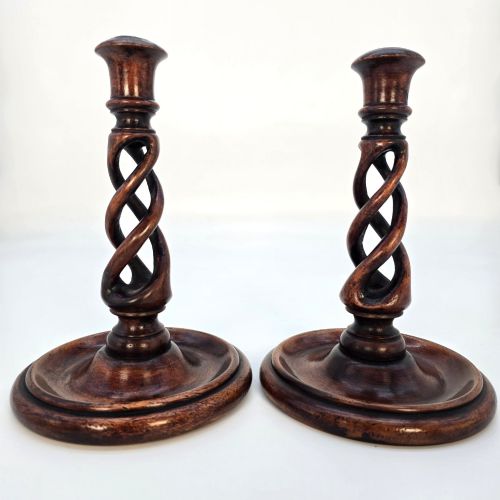
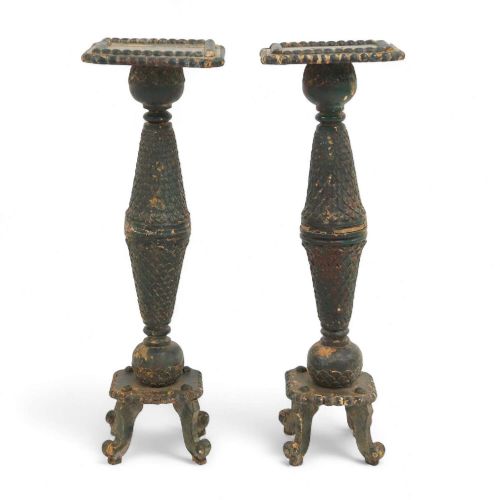
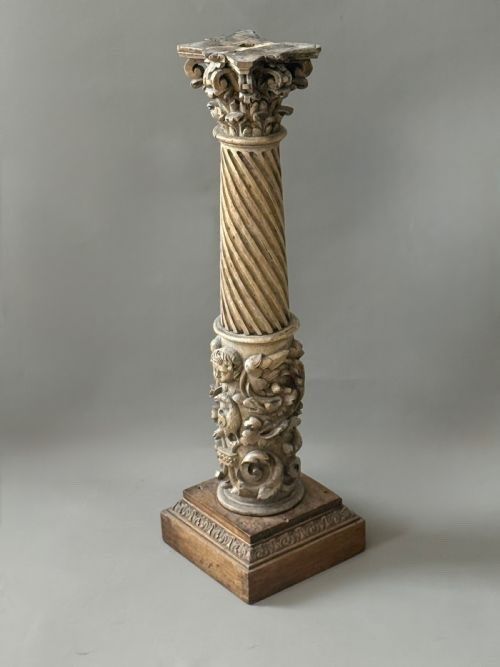
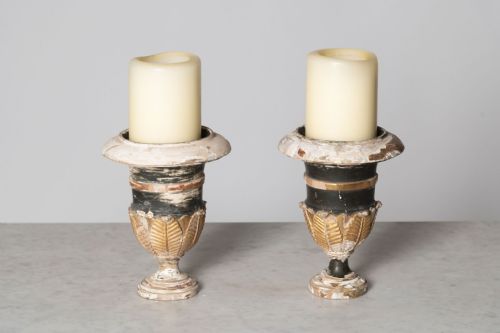
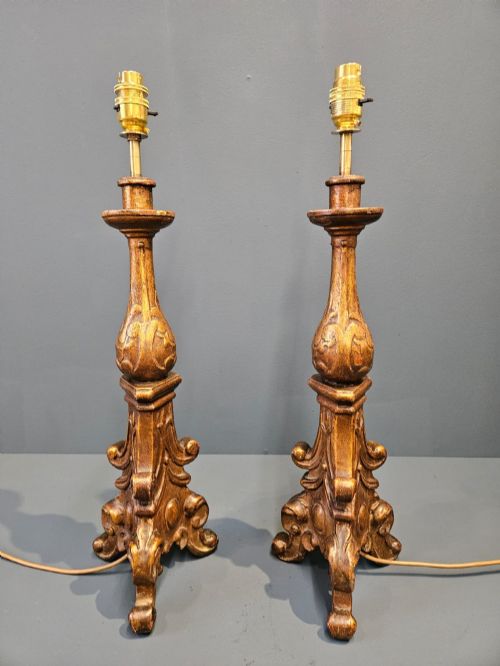
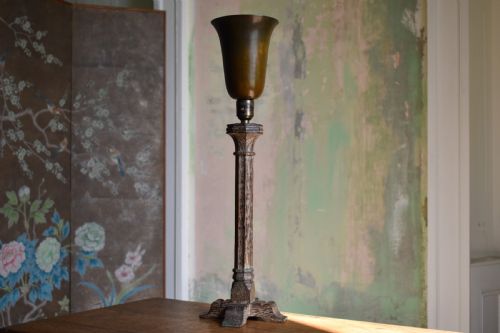
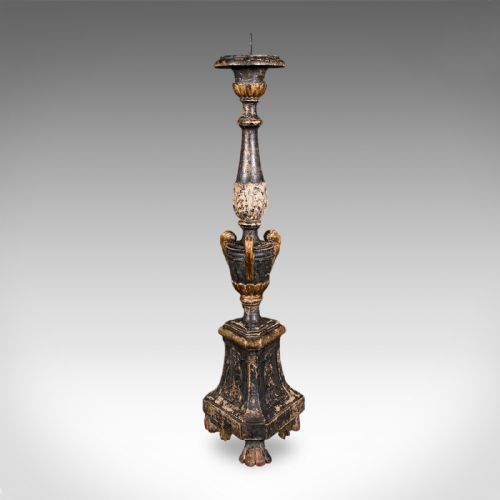
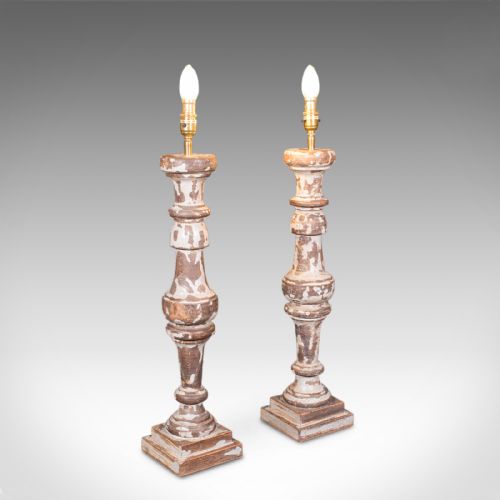
Antique wooden candlesticks are domestic lighting supports fashioned from timber, frequently encountered on this page as matched pairs spanning the nineteenth and early twentieth centuries. These pieces display distinct profiles shaped by turnery, standing upright to hold taper candles in domestic settings.
How antique wooden candlesticks were made
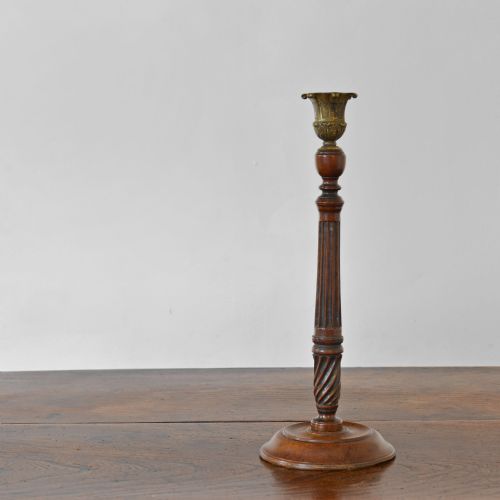
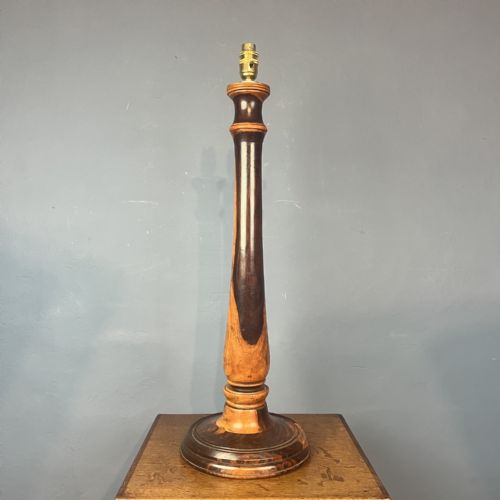
Craftsmen utilised dense hardwoods such as oak, walnut, and mahogany, often shaping the shafts on a lathe to create smooth columns and twists. Turning allowed artisans to produce symmetrical stems and sturdy circular bases.
Many examples incorporate secondary materials like brass, integrating metal nozzles or sconces to protect the timber from burning wax and heat. These mixed-media constructions combine turned wood components with fitted metal hardware.
Retail Price Guide 2026
Typical UK retail prices for wooden candlesticks, calculated from the Sellingantiques database of over a million retail prices indexed since 2003. This retail price guide relies exclusively on Sellingantiques data; no external sources or auction records are used, so the figures do not describe the wider market.
Some candlesticks survived decades of candlelit dinners while others sat purely as ornamental mantel furniture.
What varies in quality
Quality rests in the precision of the turnery and the grain of the timber, where crisp profiles and rich, figured walnut or oak distinguish finer workshop output from simpler utilitarian pieces. The harmony between turned wooden stems and fitted brass elements also marks the distinction.
The integrity of the construction and the proportional balance between base and column dictate the visual weight of each piece. Superior examples maintain structural straightness across the centuries without excessive wear to the turned details.
The Antique Wooden Candlesticks Glossary
- Barley twist
- A decorative spiral carving resembling a turned column, commonly found on nineteenth and early twentieth-century wooden shafts. This helical form creates dynamic light reflection along the turned surface.
- Sconce
- The metal cup or nozzle fitted at the top of a candlestick to hold the candle securely and catch melting wax. It protects the surrounding wood from direct flame and heat.
- Turned wood
- Timber shaped on a lathe by rotating the material against cutting tools to achieve symmetrical profiles and cylindrical columns. This traditional woodworking technique defines the primary silhouette of these pieces.
- Jacobean Revival
- A nineteenth-century stylistic movement that emulates seventeenth-century English design characteristics, featuring dark woods and sturdy turned elements. Pieces in this style emphasise robust construction and traditional ornamentation.
Frequently Asked Questions
How do I clean them?
Dust gently with a dry, soft cloth to preserve the finish and patina of the aged timber.
Avoid liquid cleaners and harsh polishes, which can strip the historical wax and damage exposed wood grain.
Why are they sold as pairs?
Pairs were traditionally produced to balance mantelpieces, sideboards, or dining tables symmetrically.
Matching sets remain desirable for maintaining visual harmony in period interior displays.
How do I date them?
Dating relies on stylistic clues like revival motifs, turning patterns, and the integration of brass hardware.
Comparing the timber species and construction methods against known period examples helps narrow the era of origin.