



Antique Wooden Candleholder
These antique wooden candleholder selections bring warm character to a room, ranging from simple barley twist stems to monumental carved torcheres.
Antique Wooden Candleholder
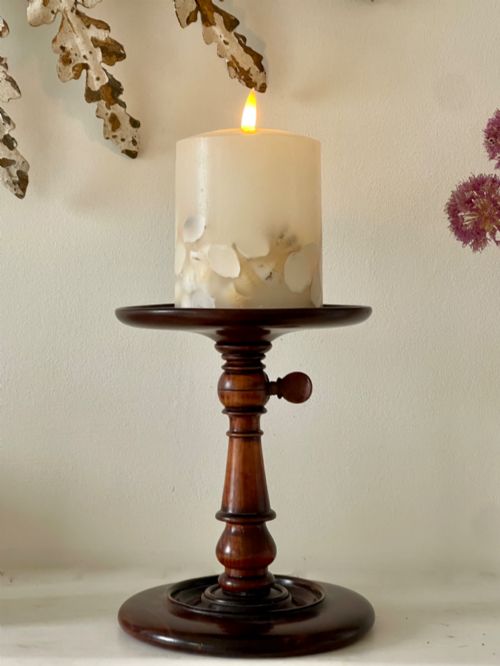
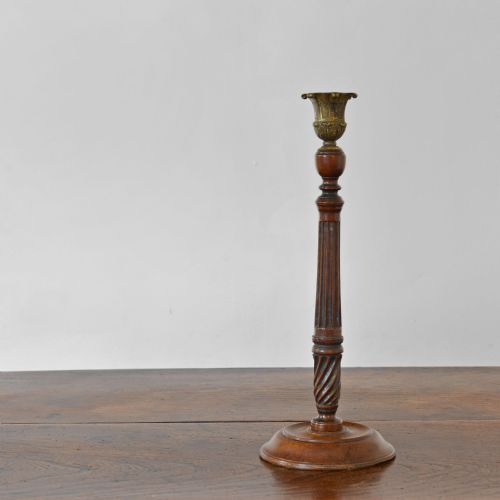
An antique wooden candleholder takes many structural forms, from domestic table candlesticks and adjustable stands to tall torcheres and wall sconces. The search for an antique wooden candleholder often leads to turned oak or mahogany stems, frequently fitted with brass nozzles or sconces.
Examples span several centuries, with robust Georgian mahogany pieces appearing alongside Italian giltwood altar-style holders and later twentieth-century barley twist designs. Domestic items sit alongside architectural church pieces and travel items such as olive wood Brighton buns.
Makers utilised native and exotic timbers including teak, oak, and mahogany, sometimes combining carved wood with gesso, silvering, or polychrome decoration. Pieces range from utilitarian rushlight holders to elaborate carved figures and baroque altar candleholders.
How they were made
Makers shaped timber using lathes for turned components like barley twists and columns, or carved solid blocks by hand for figures, torchere shafts, and ornate bases. Hardwoods such as mahogany and oak provided stability for slender stems and heavy tripods.
Many items combined wood with other materials, mounting brass sconces or pans at the top to protect the timber from melting wax and flame. Giltwood, silvered mecca finishes, and polychrome paint were applied over gesso grounds on continental altar-style pieces.
Antique Wooden Candleholder Retail Price Guide 2026
Typical asking prices for wooden candleholder among the pieces listed under this phrase on Sellingantiques today, from the lower quarter to the upper quarter. They describe what is for sale here now, not the wider market.
Listings feature woods spanning mahogany, oak, teak, and olive wood, alongside iron and brass combinations from the eighteenth century to the twentieth.
What varies in quality
The crispness of the hand-carving and the quality of the timber turning define the finer examples, where details remain sharp and well-defined. Proportion and scale also dictate quality, particularly in architectural torcheres and large altar sticks designed for impact.
The integrity of the original surface finish, whether polished mahogany, aged giltwood, or untouched folk art paint, influences the character and desirability of a piece. Fittments such as original brass sconces and untouched bases preserve the historical honesty of the holder.
The Antique Wooden Candleholder Glossary
- Torchere
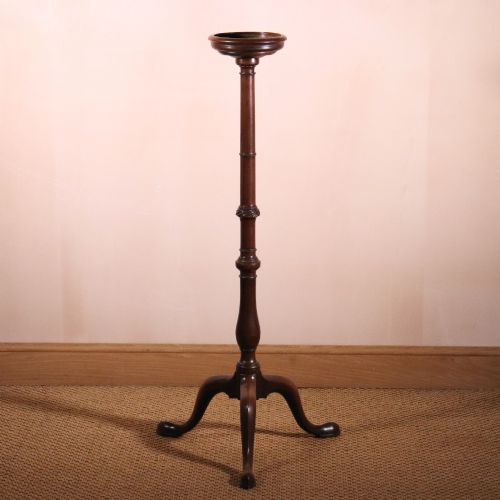
- A tall stand designed to support a candle or light, often featuring a tripod base and carved wooden column. These impressive pieces were developed to illuminate dark corners of grand rooms.
- Brighton bun
- A small, compact travelling candlestick that unscrews into two halves to store the candle safely inside. These turned wooden pieces were popular with Victorian travellers.
- Giltwood
- Timber coated with a thin layer of gold leaf over a prepared ground such as gesso. This technique was widely used on Italian and English decorative items.
- Barley twist
- A spiral turning resembling a twisted rope, popular on seventeenth-century furniture and revived in later oak and mahogany candlesticks. The style adds texture and dynamic movement to upright stems.
Antique Wooden Candleholder: Frequently Asked Questions
What is a torchere?
A torchere is a tall, freestanding wooden stand designed to hold a candle at an elevated height. They often feature tripod bases and elaborate carved shafts.
Originating in grand houses, they served to illuminate dark corners before the advent of electricity.
How do I date a wooden candlestick?
Dating relies on timber choice, turning style, and construction methods, comparing them against documented Georgian, Victorian, or later examples. Mahogany and heavy brass fittings often point to the eighteenth or nineteenth century.
Turned oak barley twists frequently indicate either seventeenth-century origins or later twentieth-century revivals.
What are Brighton buns?
Brighton buns are small, pocket-sized travelling candlesticks turned from dense woods like olive wood. They unscrew into two protective halves for safe transport.
Travellers carried them to provide personal illumination in inns and lodgings.
How were rushlights used?
Rushlights used dried rushes stripped of their outer skin and soaked in animal fat to act as primitive wicks. The iron or wooden spring-vise held the rush at an angle for burning.
They provided economical domestic lighting in rural homes before candles became affordable.