
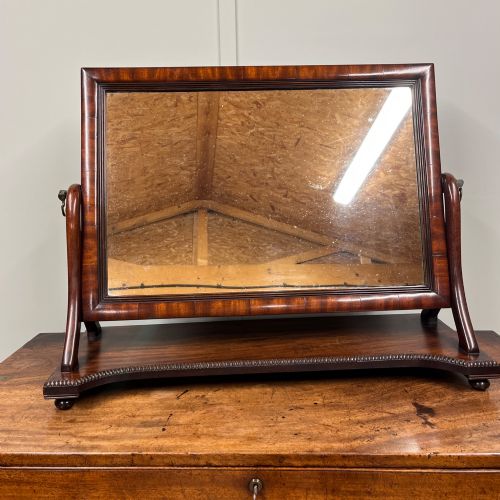
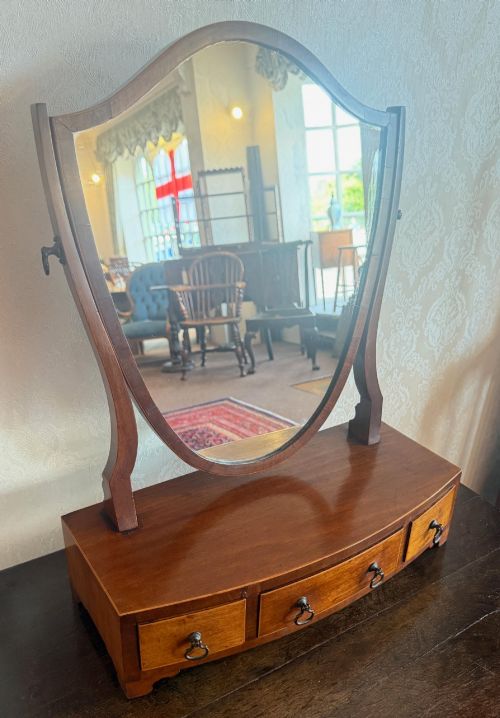


Antique Wood Swivel Mirror
An antique wood swivel mirror brings practical elegance to a room, offering adjustable reflection set within period timber frames.
Antique Wood Swivel Mirror
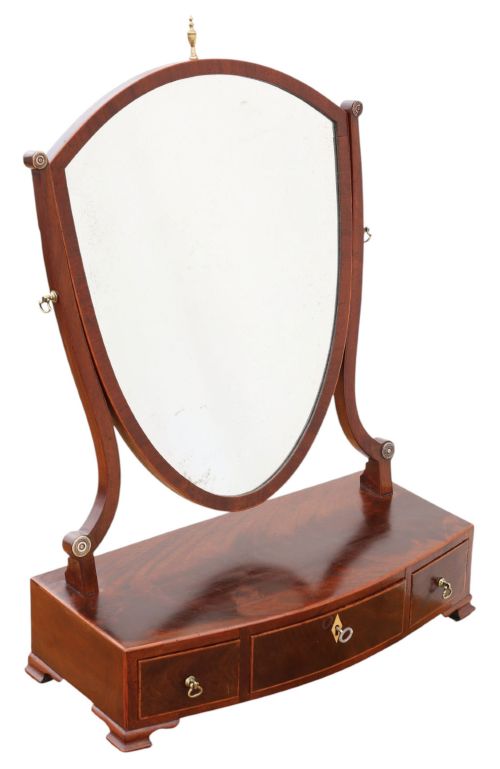
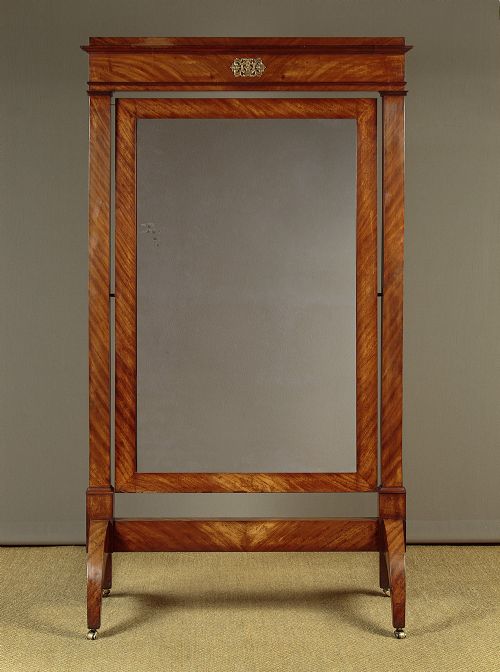
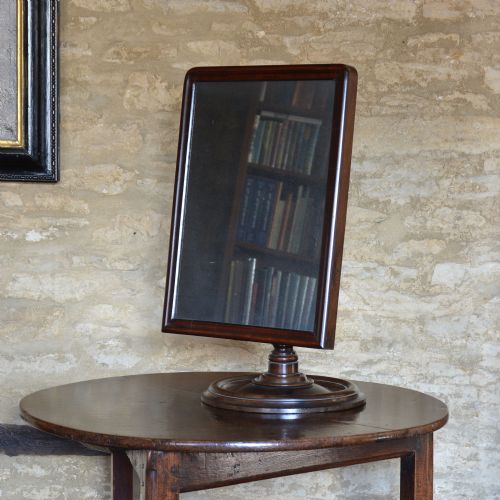
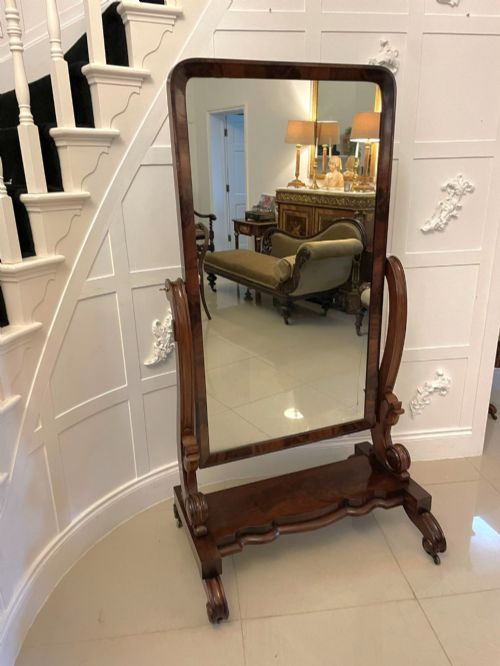
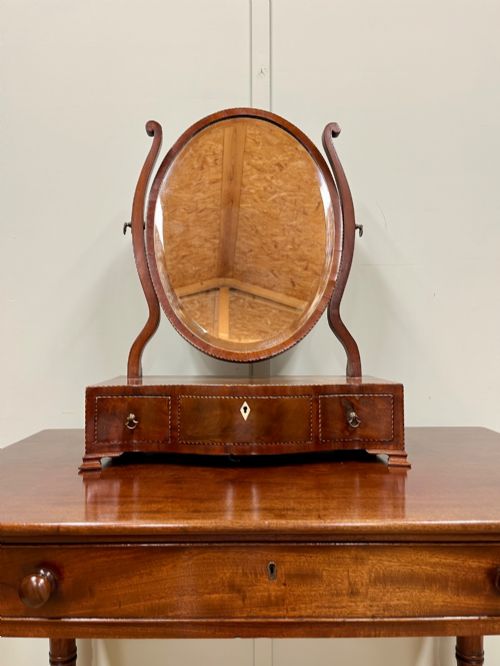
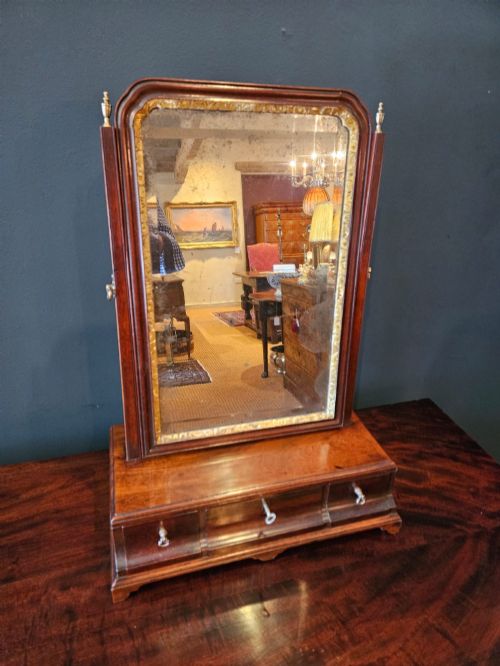
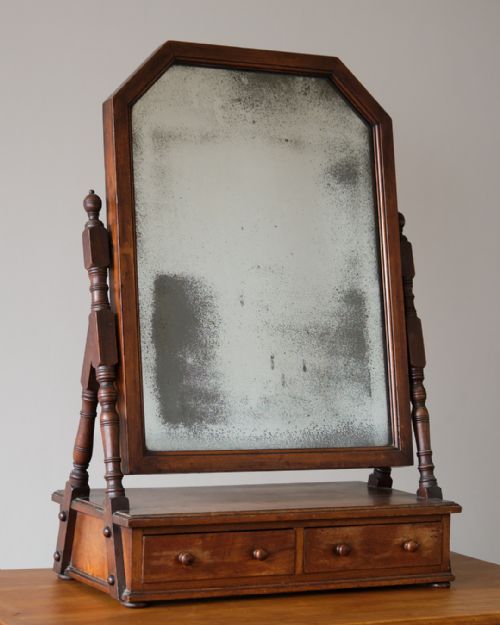
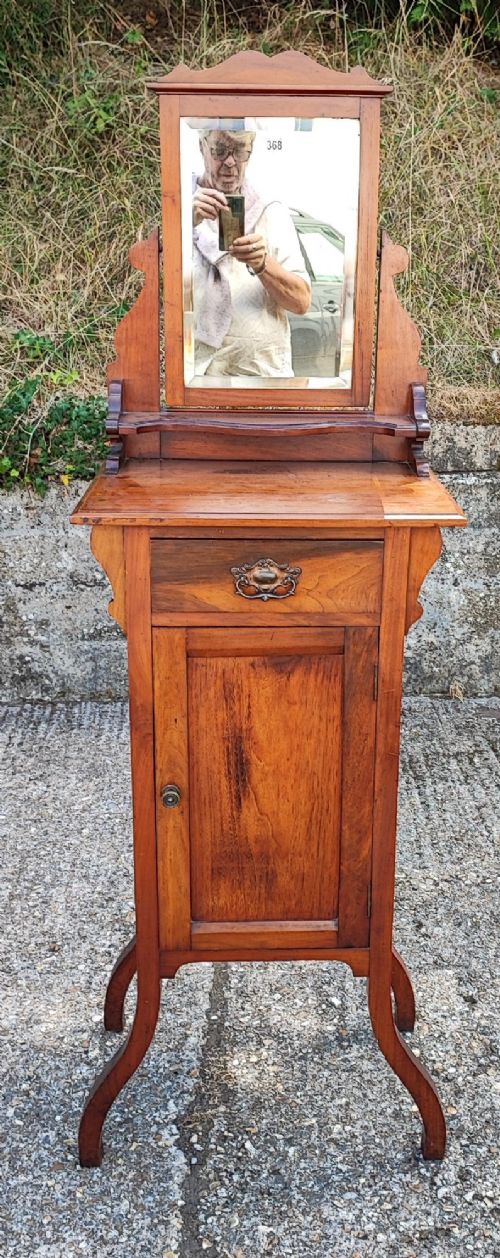
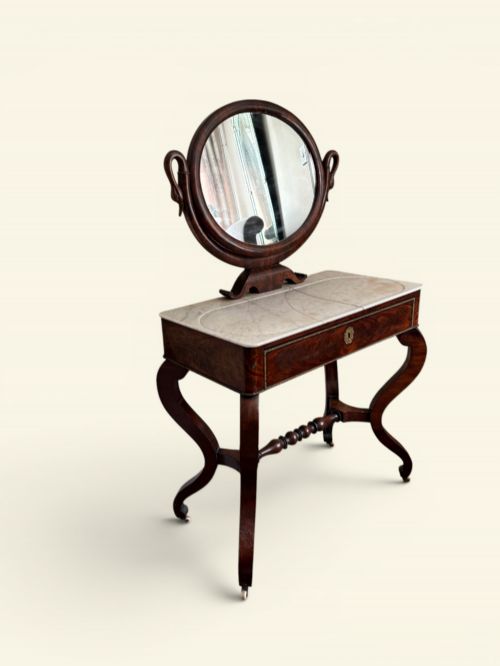
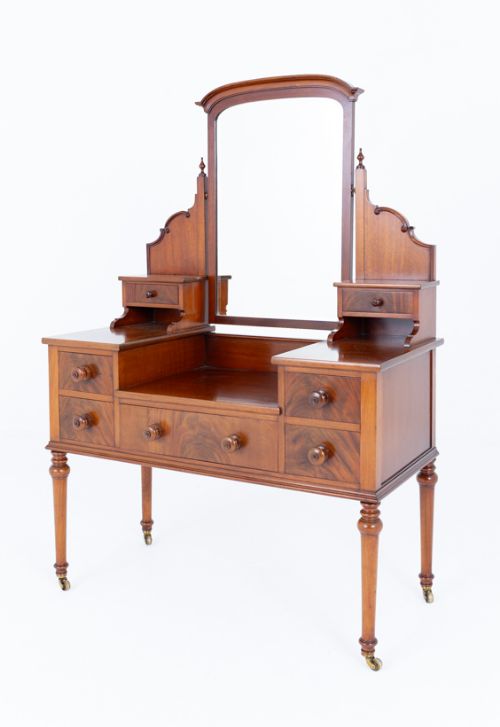
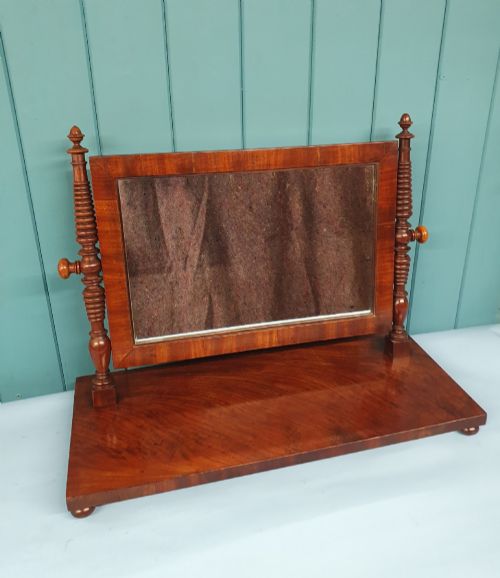
When you search for an antique wood swivel mirror, you encounter dressing table mirrors, toilet mirrors, and full-length cheval mirrors designed for personal grooming. These pieces range from compact tabletop designs with fitted drawers to large floor-standing cheval glasses.
The selections span multiple eras, with Georgian, Victorian, and Regency examples appearing most frequently on this page. Mahogany dominates the inventory, accompanied by walnut, satin birch, and satinwood variants.
Materials and construction methods
Cabinet makers utilised dense hardwoods such as mahogany and walnut, often shaping them into shield, oval, or rectangular frames. Boxwood stringing, bone inlay, and brass hardware provide functional accents and decorative contrast.
Swivel mechanisms rely on pivot screws, side arms, and upright standards mounted either to small drawer boxes or heavy floor frames. Silvered mirror glass sits securely within rebated wooden mouldings, supported by adjustable pivots.
Early shaving mirrors included tiny hidden compartments behind the glass for secret notes and small valuables.
Distinctions in quality and execution
The calibre of an antique wood swivel mirror rests in timber selection and cabinet work. Finer examples display carefully chosen grain patterns, symmetrical veneers, and precise dovetail joints within the base drawers.
Proportion and stability separate standard pieces from exceptional ones. Superior mirrors maintain balanced tension in the swivel mechanism and retain original mirror glass, brass fittings, and backboards.
Heal & Sons
The Antique Wood Swivel Mirror Glossary
- Cheval mirror
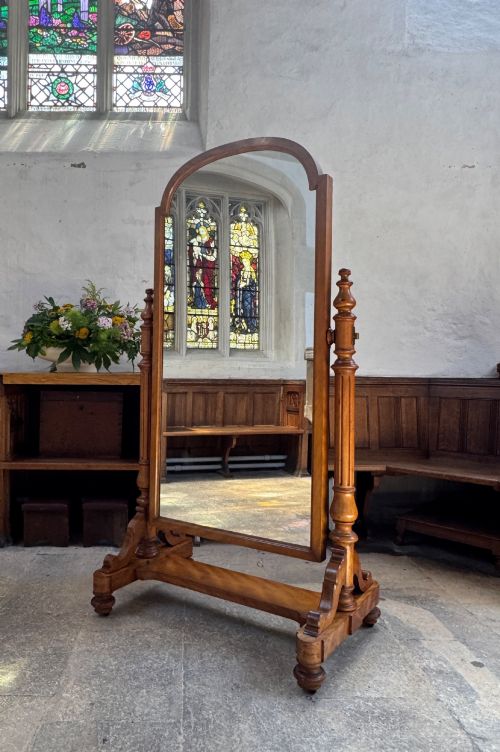
- A full-length swing mirror supported by a standing frame. These tall glasses allow a person to view their entire outfit.
- Toilet mirror
- A smaller swing mirror designed to sit atop a dressing table or chest of drawers. They frequently incorporate small trinket drawers in the base.
- Swing mirror
- An alternative descriptor for a swivel mirror. The glass hangs on pivots between two upright posts, allowing the angle of reflection to change.
- Serpentine
- A gently undulating curved line often seen on the front edges of Georgian dressing mirror drawer bases. This shape requires skilled woodworking.
- Stringing
- A thin inlay of contrasting wood, such as boxwood, set into the surface of the primary timber for decoration.
Antique Wood Swivel Mirror: Frequently Asked Questions
What is a cheval mirror?
A cheval mirror is a tall, floor-standing swivel mirror designed for full-length viewing. The glass is held within a frame that pivots between two vertical posts.
These large pieces appeared frequently in Victorian and Edwardian bedrooms to assist with complete dress inspection.
How do swivel mirrors work?
Swivel mirrors utilise threaded pivot screws or metal pins inserted into the sides of the mirror frame and the supporting upright arms. Tightening these pivots holds the glass at the desired tilt.
This mechanism allows the user to adjust the angle of reflection easily while sitting or standing.
Where were toilet mirrors placed?
Toilet mirrors sat atop dressing tables, washstands, or chests of drawers in bedrooms and dressing rooms. Their raised bases often contained small drawers for storing jewellery and cosmetics.
They provided a stable surface for personal grooming before fitted wall mirrors became standard.
How do I date a wooden mirror?
Dating relies on timber choices, construction techniques, and stylistic details. Georgian pieces often feature mahogany with delicate boxwood stringing, while Victorian examples tend to be heavier and more robust.
Examining the drawer joints, backboards, and mirror glass bevelling helps confirm the period of manufacture.