

Antique Wood Nesting Tables
Antique wood nesting tables stack together neatly, offering practical surface space in sitting rooms without crowding the floor.
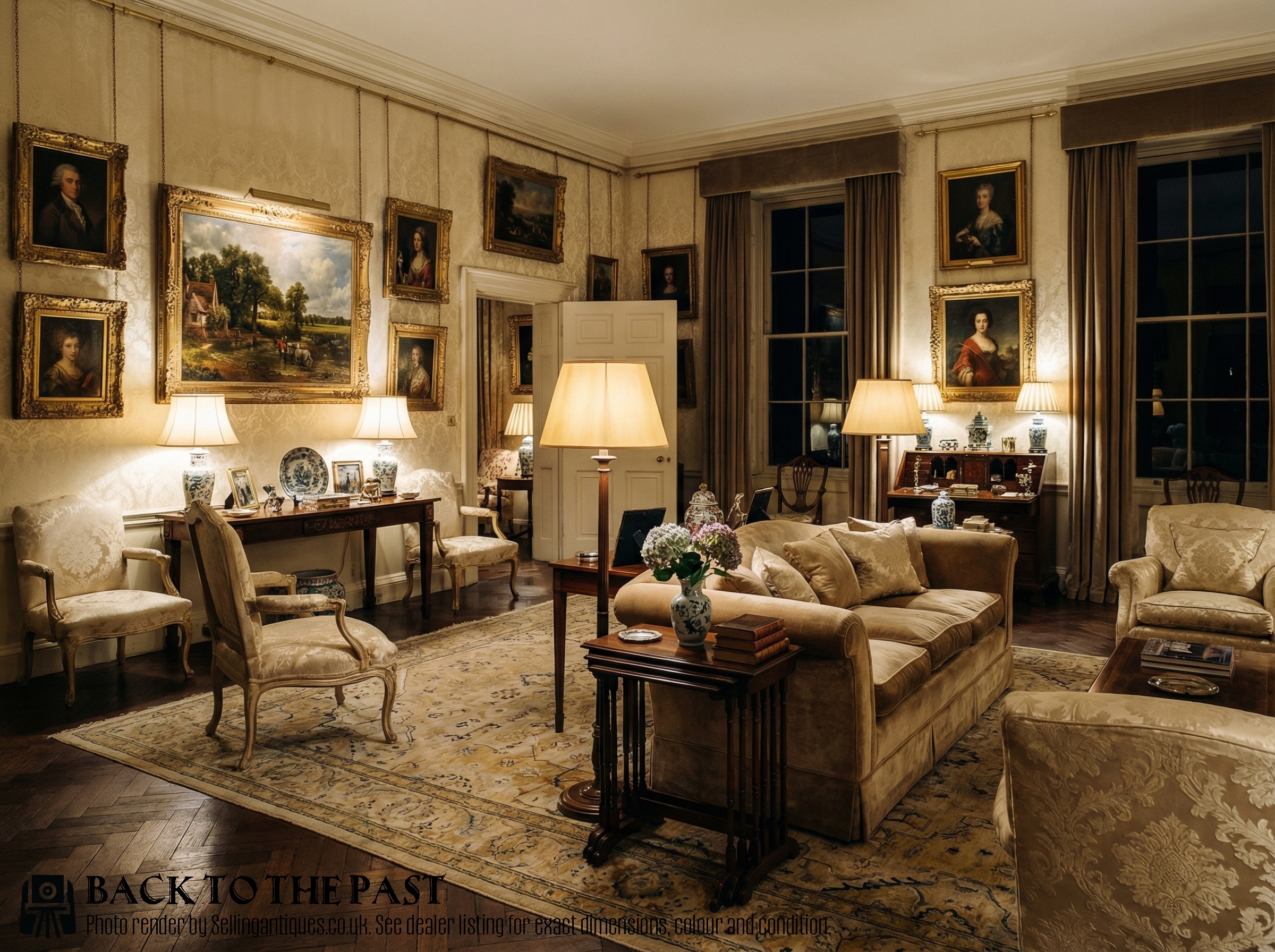
Antique Wood Nesting Tables
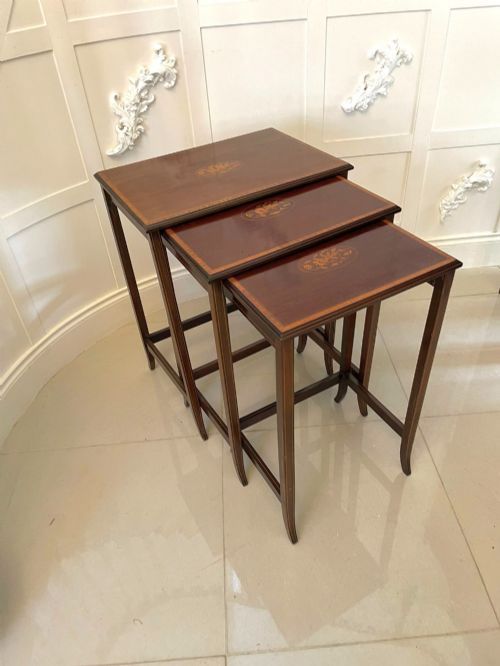
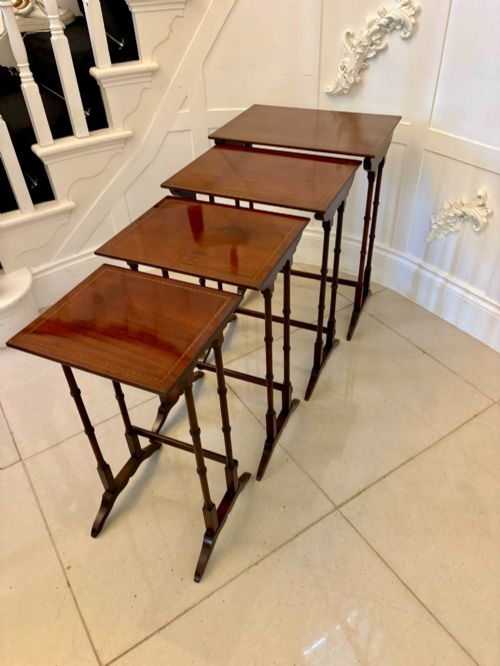
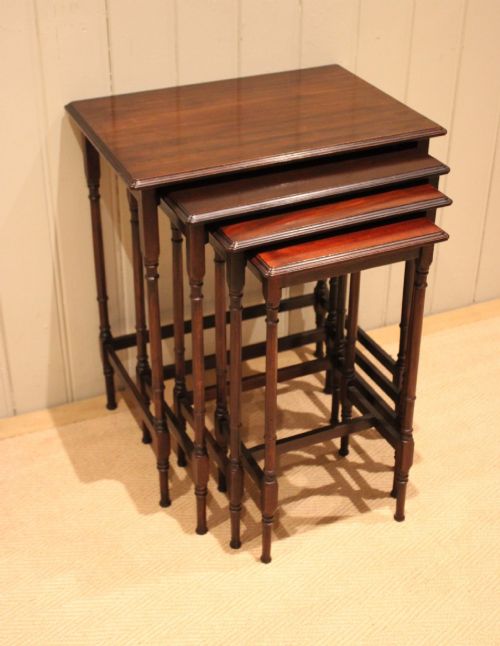
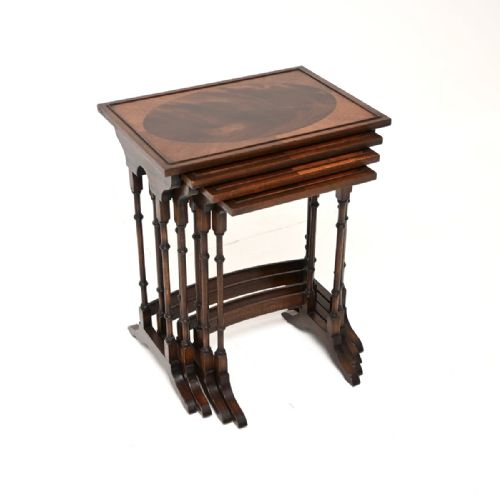
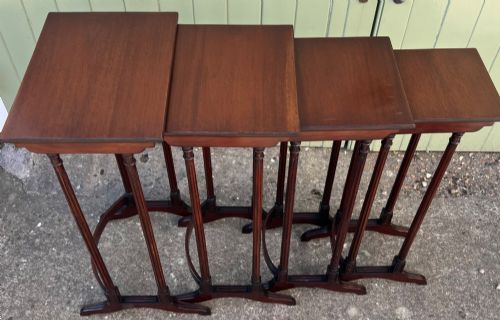
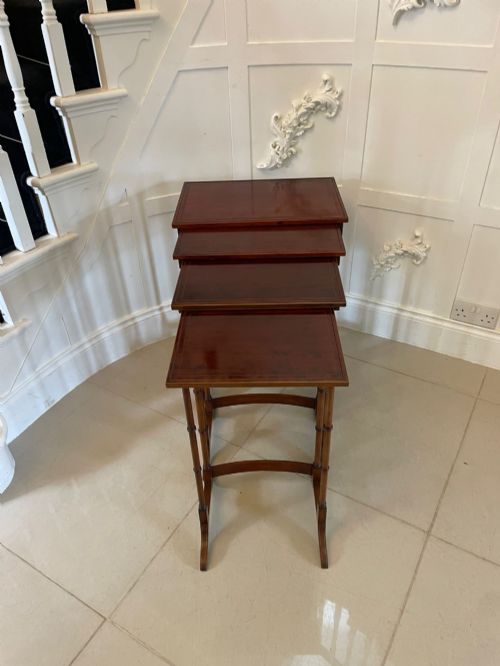
These sets typically consist of three or four occasional tables, known as quartetto sets, designed to slide one beneath another. The form appears most commonly in Edwardian and nineteenth-century pieces, spanning Regency, Victorian, and later revival styles. Buyers encounter them in mahogany, rosewood, and satinwood, occasionally featuring inlaid decoration or carved details.
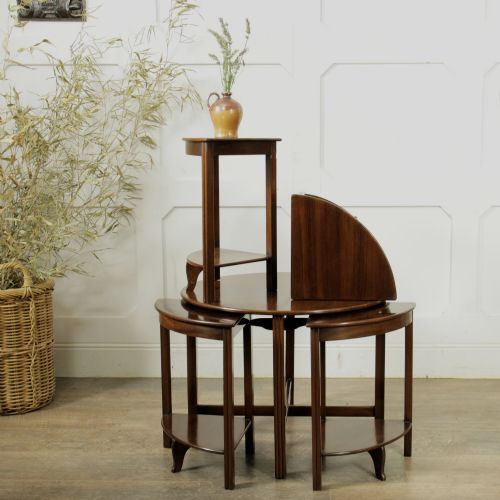
Makers adapted the form for versatile household use, allowing smaller tables to deploy around a room for tea or writing and stow away compactly when not in use. Sets range from simple three-table arrangements in Edwardian mahogany to elaborate four-piece Regency rosewood designs with brass inlay or integrated chess boards. Circular formats and specialised five-table configurations also appear among the Edwardian examples.
How they were made
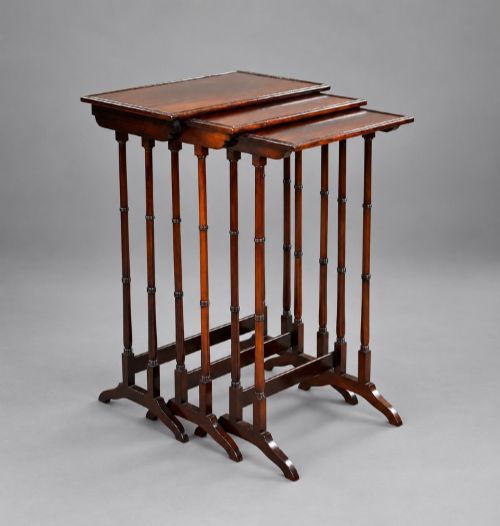
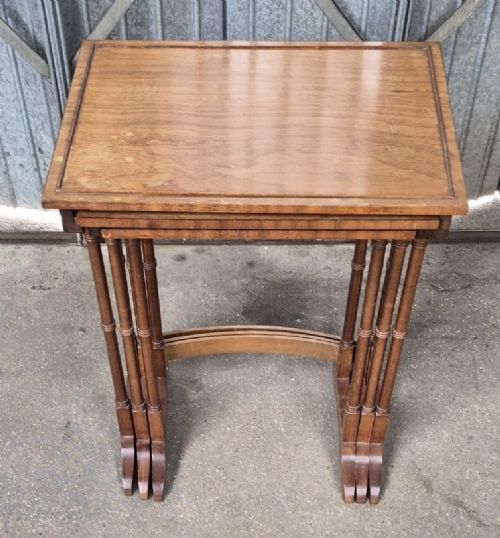
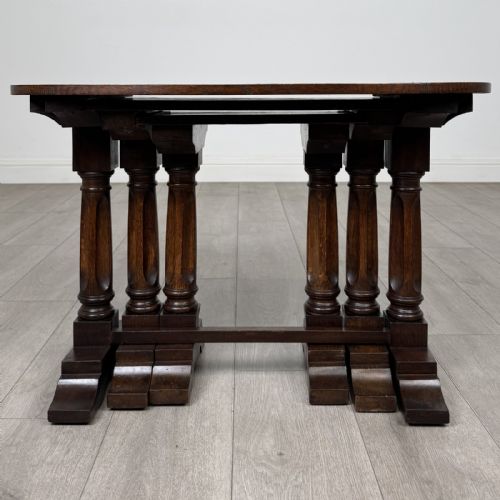
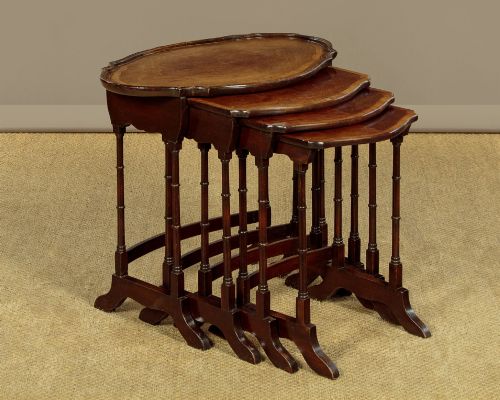
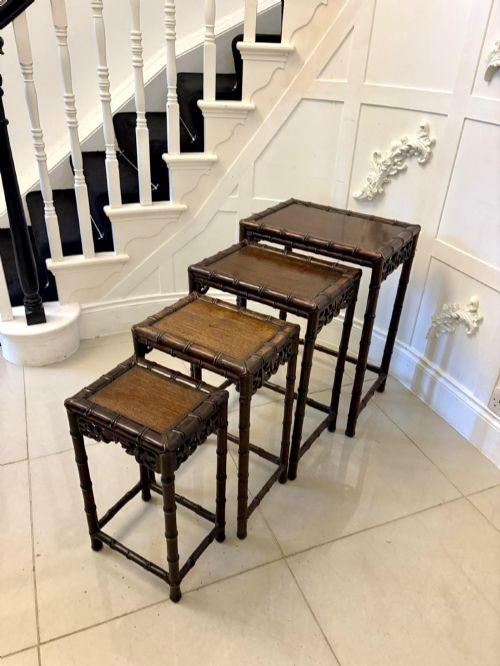
Cabinetmakers constructed these tables primarily in solid mahogany, rosewood, and satinwood, often applying veneers of yew or exotic hardwoods to the tops. Frames required precise joinery so that each graduated smaller table slid smoothly into the one above without binding. Structural support relied on slender turned columns, faux bamboo, or sabre legs depending on the period.
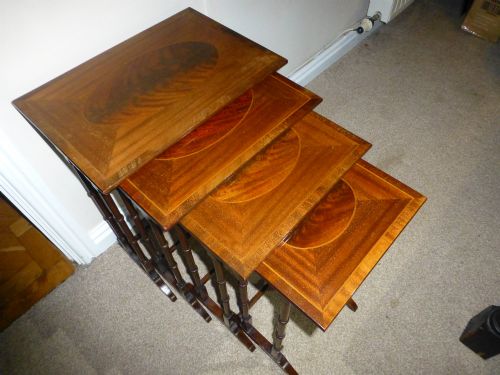
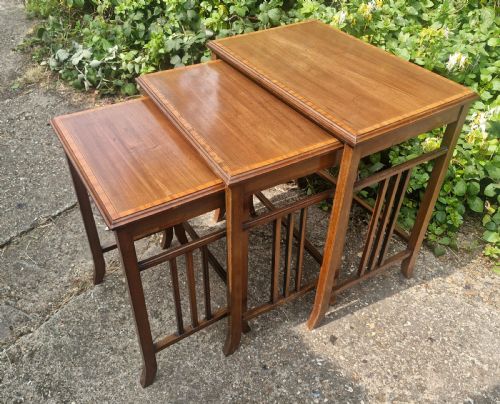
Surface decoration involved delicate stringing in boxwood, marquetry inlay, lacquer work, and brass stringing set into the timber. Artisans finished the wood with French polish to highlight the natural grain patterns while protecting the surfaces from daily wear.
Antique Wood Nesting Tables Retail Price Guide 2026
Typical asking prices for wood nesting tables among the pieces listed under this phrase on Sellingantiques today, from the lower quarter to the upper quarter. They describe what is for sale here now, not the wider market.
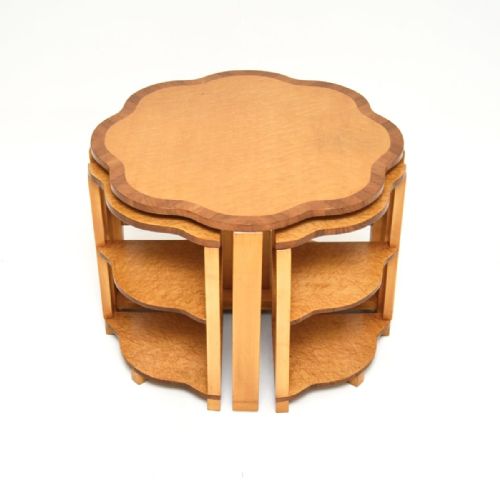
Periods represented span from the Regency era through Victorian and Edwardian times up to Art Deco designs of the 1930s.
What varies in quality
Quality rests upon the selection of timber figures and the precision of the graduating frame dimensions. Finer sets display matched veneers and subtle inlay work, such as satinwood or boxwood stringing executed by skilled hands rather than stamped decoration. The structural integrity of the joints where the legs meet the tabletop determines how well a set survives repeated stacking.
Émile Gallé·Heal's
The Antique Wood Nesting Tables Glossary
- Quartetto
- A set of four matching occasional tables designed to nest together. The term appears frequently in nineteenth-century cabinetmakers' records.
- Stringing
- A thin inlay of contrasting wood, such as boxwood, used to outline panels and tabletop edges. It provides geometric definition on Edwardian and Sheraton revival pieces.
- Hongmu
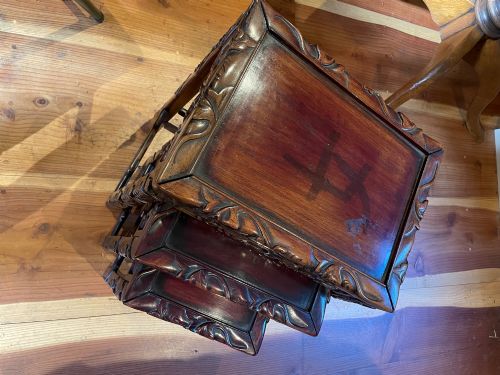
- A category of dense, dark-red Asian hardwoods often translated as red wood. It appears in nineteenth-century Chinese export furniture.
- Faux bamboo
- Wood turned and carved to imitate natural bamboo stalks. This decorative technique enjoyed popularity during the nineteenth century.
- Serpentine
- A curved line or edge shaped with a convex centre flanked by concave curves. It adds fluid movement to the silhouette of tabletops.
Antique Wood Nesting Tables: Frequently Asked Questions
What are antique wood nesting tables?
These are sets of graduated occasional tables designed to slide neatly beneath one another to save floor space. They emerged as a popular British salon furniture form during the nineteenth and early twentieth centuries.
Cabinets of this type typically include three or four pieces, though five-table sets also occur. They provide convenient surfaces for entertaining that store away compactly when not needed.
How were nesting tables used?
Victorian and Edwardian households deployed the smaller tables around a room for afternoon tea, reading materials, or writing. Servants could easily move them individually where required.
When guests departed, the tables stacked back into a single footprint beneath the largest main table. Some specialised examples even incorporated integrated chess boards for parlour games.
How do I identify Regency nesting tables?
Regency sets, often termed quartetto tables, typically feature rich rosewood timbers and elegant classical proportions. They frequently showcase fine brass inlay or sabre legs.
Cabinetmakers of this era focused on clean architectural lines and figured grain patterns. These pieces date generally from the early nineteenth century.
How do I care for antique wood tables?
Keep wooden furniture away from direct sunlight and heat sources to prevent the timber and veneers from drying out. Dust regularly with a soft, dry cloth.
Avoid commercial silicone sprays and rely instead on traditional beeswax polish applied sparingly. Use coasters to protect French polished surfaces from moisture.