




Georgian Nesting Side Tables
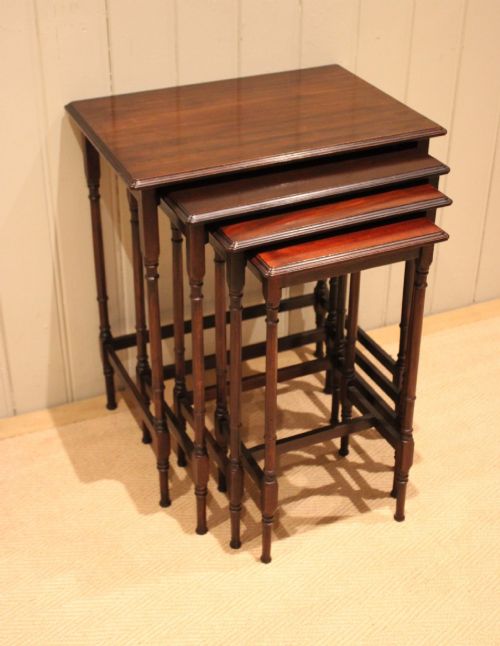
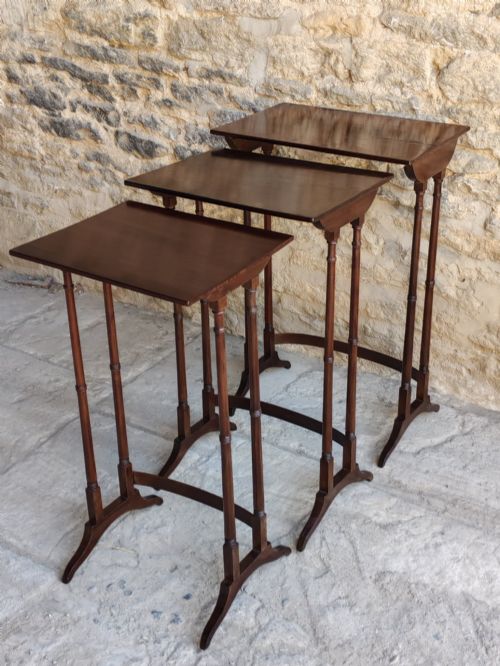
Georgian nesting side tables bring together clever space-saving design and rich timbers, offering multiple graduated surfaces that slide neatly away when not required.
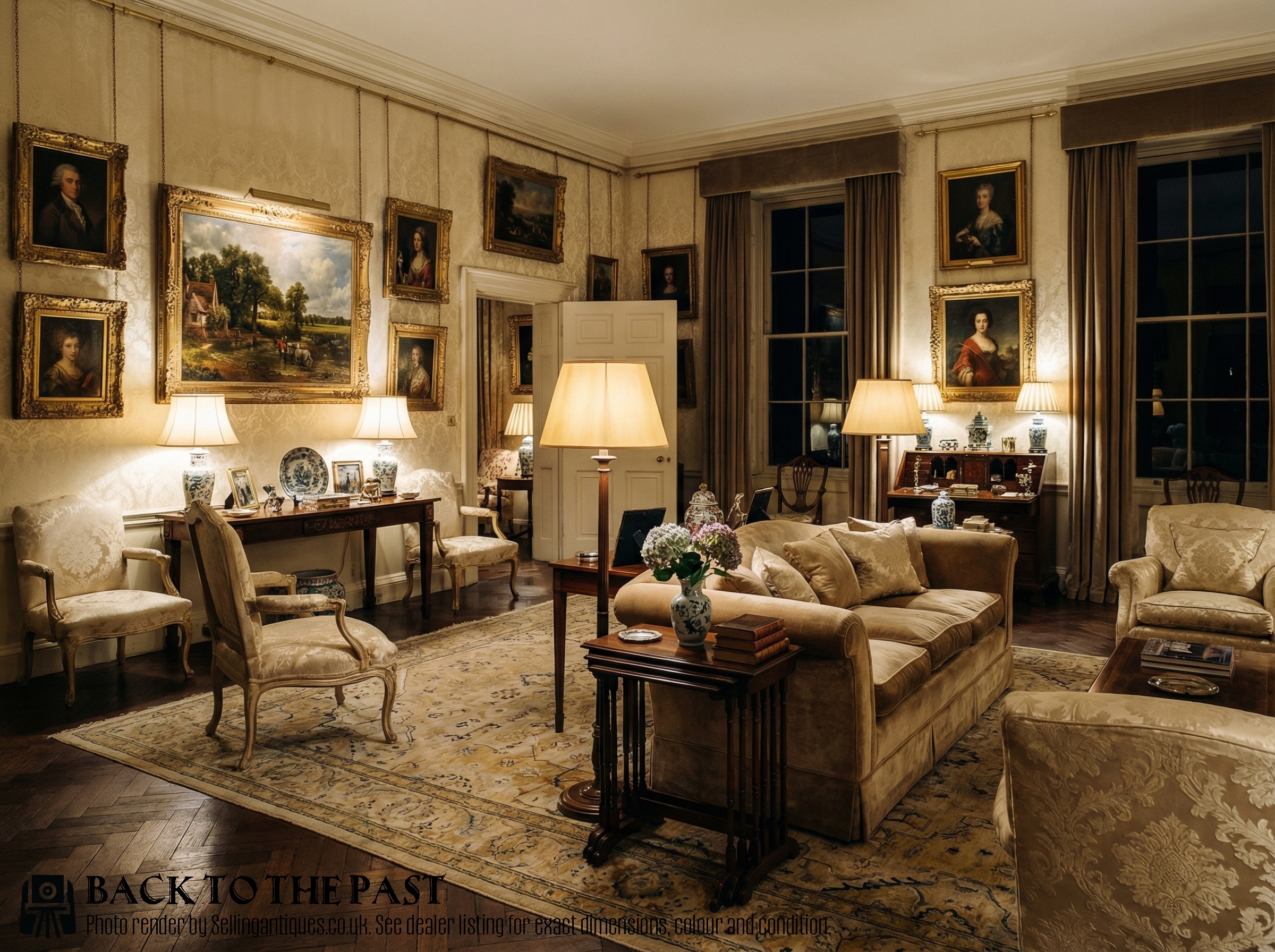
Georgian Nesting Side Tables
When you search for georgian nesting side tables, you encounter versatile sets of graduated occasional tables designed to fit one beneath another. While true Georgian examples appear alongside later Georgian style and Regency pieces, many common survivals date from the Edwardian era and the early twentieth century.
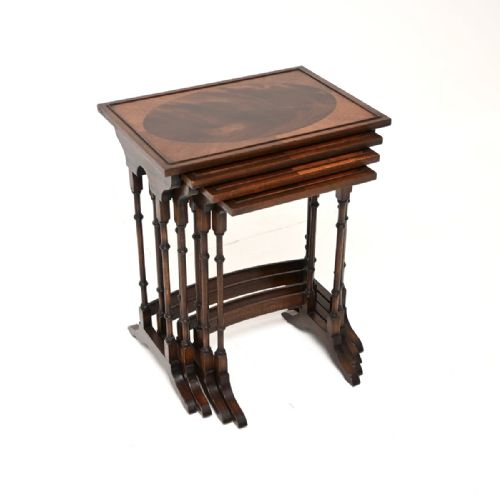
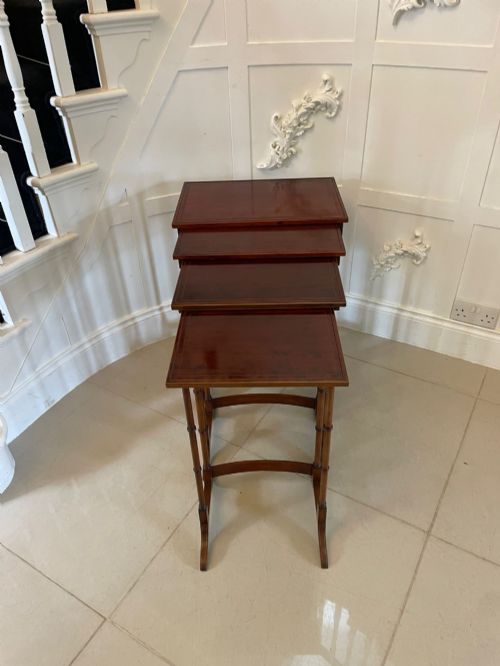
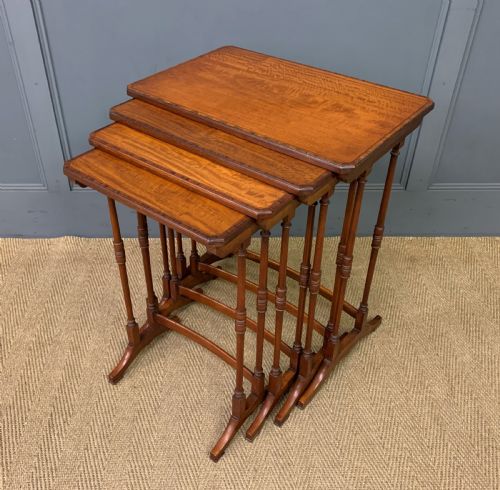
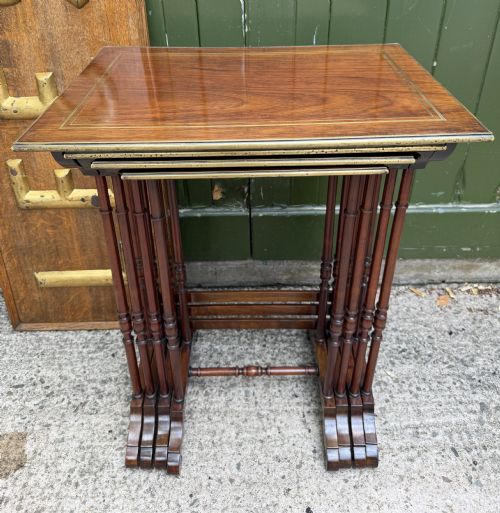
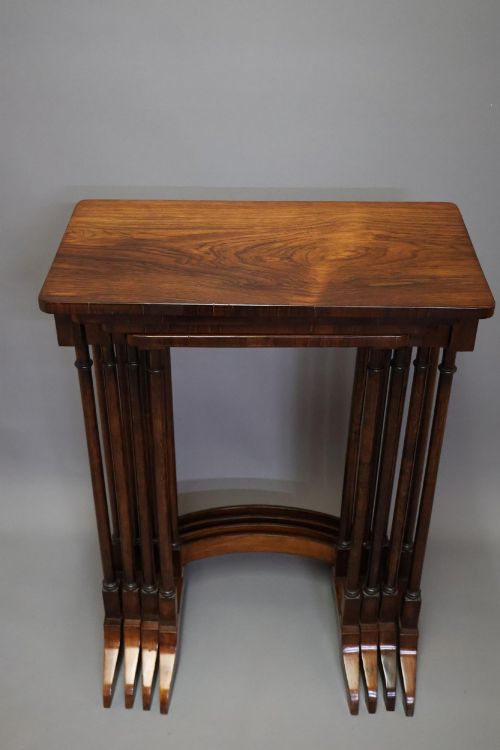
The form typically comprises a quartetto of four tables, though sets of three and occasional five-table arrangements also feature. They serve flexibly around a room as wine, lamp, or coffee tables before stacking into the footprint of a single piece.
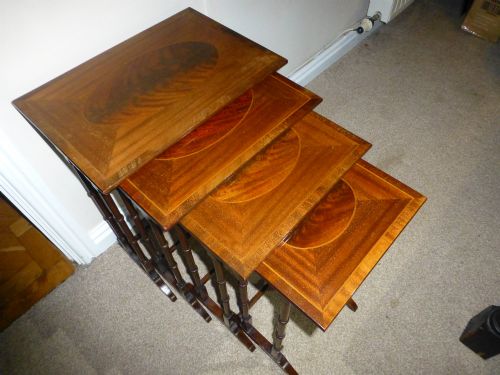
Mahogany forms the mainstay of these listings, often enriched with satinwood, rosewood, or boxwood inlay. Buyers also find yew veneer and burr walnut amongst the timber selections spanning the nineteenth and twentieth centuries.
How they were made
Cabinetmakers constructed these tables using solid timber frames and applied veneers of mahogany, rosewood, and satinwood. Tops frequently incorporate contrasting boxwood inlay or delicate stringing to define the edges.
Brass inlay appears on select Regency period examples, whilst other pieces utilise simulated faux rosewood finishes. Construction relies on graduated sizing so that each smaller table clears the frame of the one above it.
Georgian Nesting Side Tables Retail Price Guide 2026
Typical asking prices for georgian nesting side tables among the pieces listed under this phrase on Sellingantiques today, from the lower quarter to the upper quarter. They describe what is for sale here now, not the wider market.
Listings span multiple eras from the nineteenth century through to nineteen-thirty, encompassing Edwardian and Regency periods alongside Georgian styles.
What varies in quality
The refinement of the timber selection dictates much of the distinction, with finely figured mahogany and rich rosewood sitting above simpler utility pieces. Crispness in the boxwood inlay and precision in the graduation of the stacking frames demonstrate superior workmanship.
Structural integrity through the smaller joints determines longevity in daily use, as these tables experience frequent sliding and movement. Finer sets maintain stability and smooth clearance across all three or four graduated tiers.
Gillows·Waring & Gillow
The Georgian Nesting Side Tables Glossary
- Quartetto
- A set of four graduated occasional tables designed to nest together. This term appears frequently in Regency and Edwardian listings.
- Veneer
- A thin layer of finely figured wood applied to a secondary timber base. This technique allows cabinetmakers to display rich grains on the table tops.
- Inlay
- Contrasting wood or brass set flush into the surface of the timber to form decorative patterns. Boxwood stringing is a common example found on mahogany and satinwood pieces.
- Regency
- A stylistic period spanning the early nineteenth century defined by classical restraint and rich rosewood timbers. Pieces from this era often feature distinctive brass detailing or simulated finishes.
Georgian Nesting Side Tables: Frequently Asked Questions
What are quartetto tables?
Quartetto tables describe a set of four graduated stacking tables designed to nest into one another. They provide multiple surfaces while occupying the floor space of a single small table.
Cabinetmakers produced them extensively during the Regency period and later revived the form in Edwardian workshops using mahogany and rosewood.
How do I date a nest of tables?
Dating relies on timber choices, inlay styles, and construction methods recorded across the periods. Regency pieces often feature rosewood and brass inlay, while Edwardian versions frequently utilise inlaid satinwood and mahogany. <br> Later twentieth-century adaptations also appear, echoing earlier Georgian styles through traditional forms and secondary veneers.
Were these tables used as coffee tables?
While historic interiors utilised them as occasional, wine, or lamp tables, modern arrangements often place them into service as coffee tables. Their graduated heights allow them to be pulled apart when entertaining guests.
When not in use, they stack compactly back together to clear the room.
What is the difference between Georgian and Georgian style?
Georgian pieces date from the eighteenth and early nineteenth centuries, reflecting the original furniture design of the reigns of the Georges. Georgian style denotes later reproductions and revivals, such as those made around nineteen-thirty.
Both categories share the classic proportions and mahogany timbers characteristic of the traditional aesthetic.