
Antique Wood Drop Leaf Table
An antique wood drop leaf table offers exceptional versatility, folding away compactly when space is tight and expanding gracefully for dining or writing.
Antique Wood Drop Leaf Table
An antique wood drop leaf table functions as a flexible piece of furniture designed to adapt quickly to changing room layouts. The selections on this page span several centuries, with prominent representation from the Georgian, Regency, and Victorian periods.
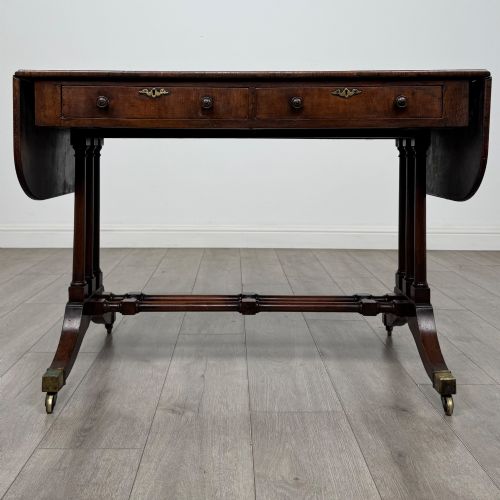
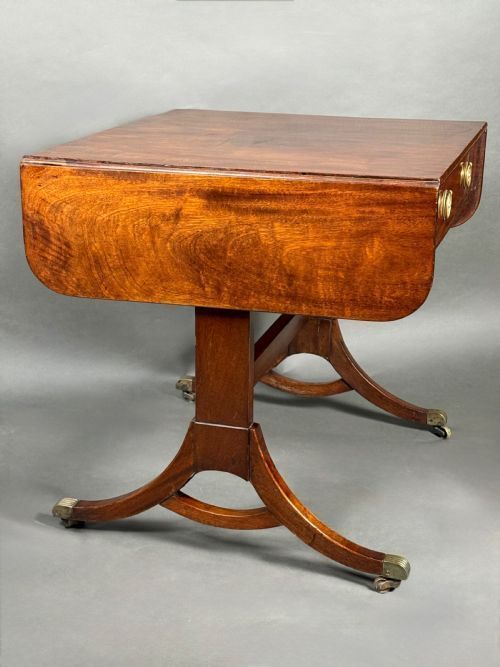
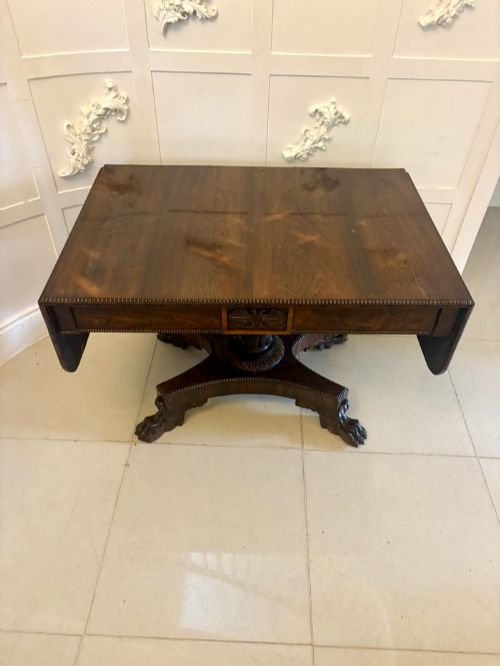
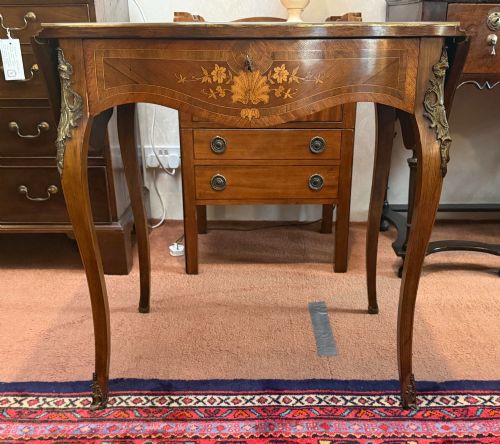
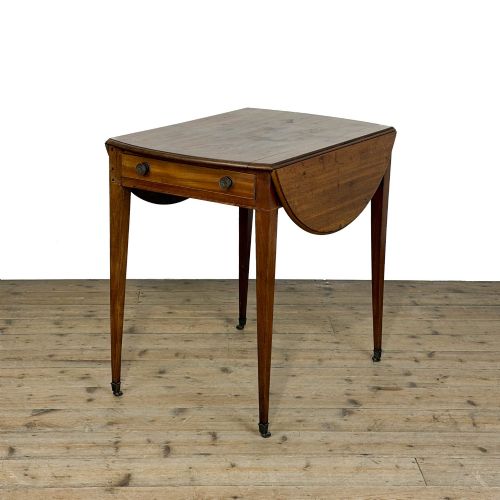
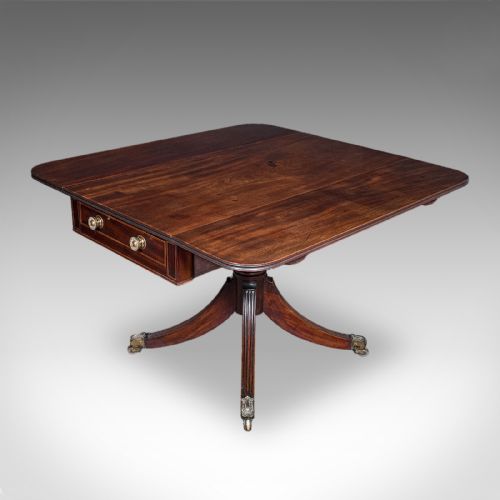
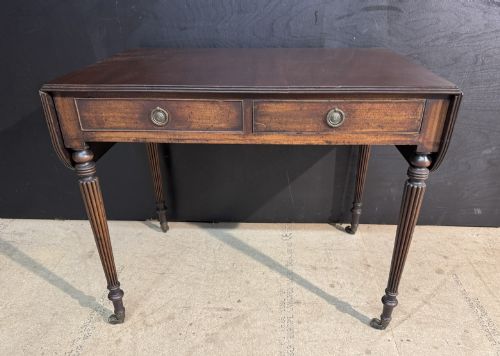
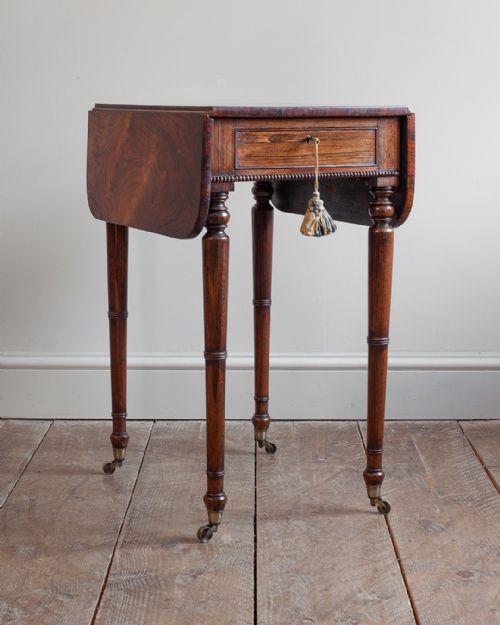
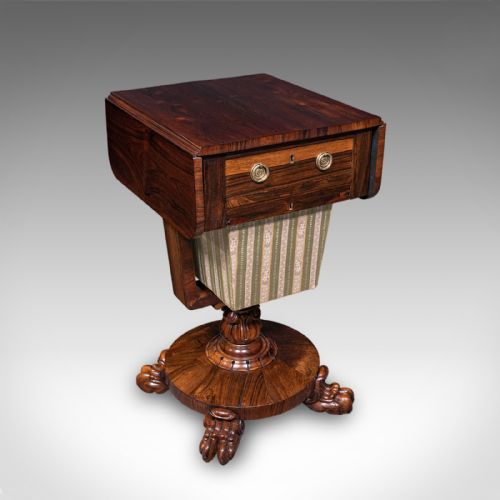
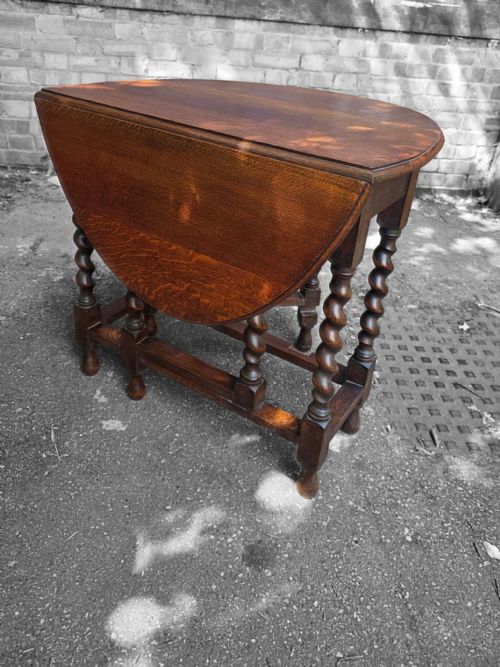
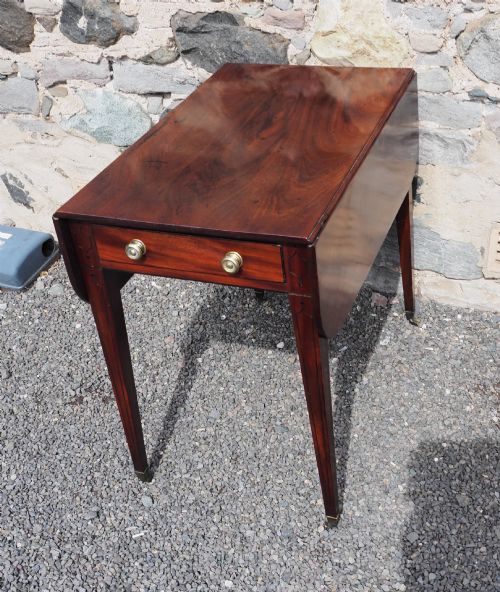
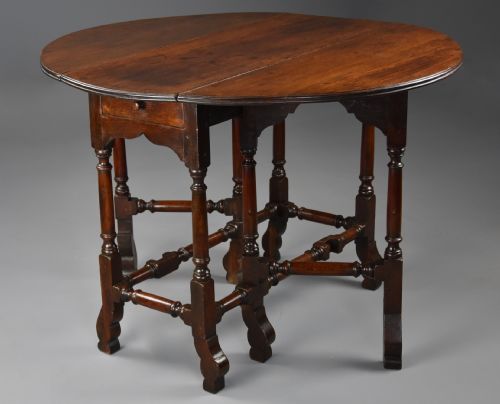
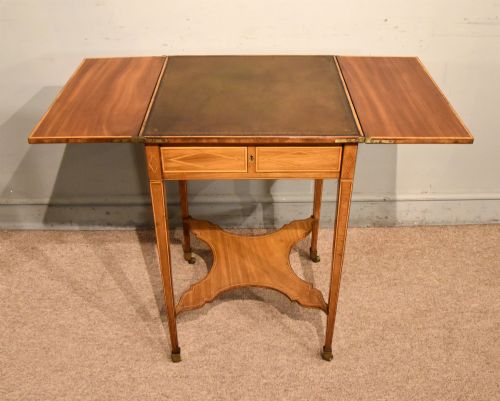
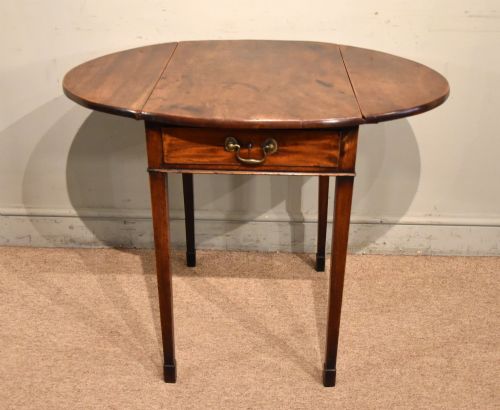
Buyers will encounter various forms, including Pembroke tables with flanking leaves, larger gateleg dining versions, and elegant sofa tables meant for central placement in a room. Timbers range from dense mahogany and figured rosewood to warm oak and walnut, often reflecting the specific stylistic preferences of their era.
Materials and construction methods
Cabinet makers utilised solid timbers alongside finely cut veneers, applying mahogany, rosewood, and walnut to create durable surfaces with rich natural grain patterns. Boxwood stringing, partridge wood cross-banding, and delicate marquetry frequently decorate the top surfaces and drawer borders of formal pieces.
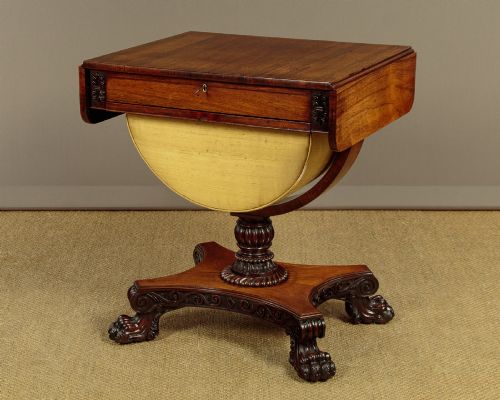
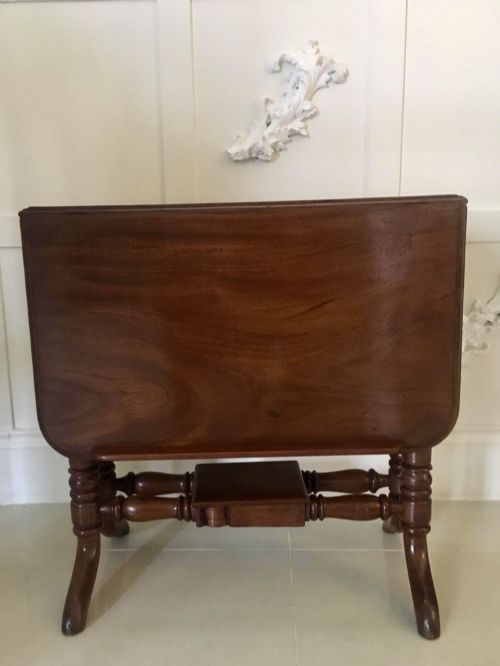
Structural integrity relied on traditional joinery methods, allowing hinged drop leaves to move smoothly on stable pivot joints or swing-out wooden brackets. Turned legs, bamboo-turned supports, cabriole legs with claw-and-ball feet, and barley twist columns provide the necessary physical support for the folding flaps.
Object types on this page include Pembroke, sofa, gateleg, writing, sewing, and occasional tables.
Distinctions in craftsmanship and finish
Quality reveals itself in the selection of timber, where symmetrical flame mahogany or richly figured burr walnut elevate a piece beyond standard utilitarian furniture. The depth of the natural patina and the precision of inlaid details such as boxwood stringing indicate the skill of the original workshop.
Mechanical execution also separates finer examples, particularly how evenly the drop leaves align when raised and how smoothly drawers or writing compartments operate. The robustness of the underframe and the subtlety of turned leg profiles further distinguish superior examples from simpler provincial work.
Druce & Co London
The Antique Wood Drop Leaf Table Glossary
- Pembroke table
- A small rectangular table featuring two hinged drop leaves on opposing sides, often equipped with one or more drawers.
- Gateleg table
- A dining or side table supported by legs that swing outward like gates to hold the hinged leaves in place when raised.
- Sofa table
- A long, narrow table traditionally placed behind a sofa, featuring drop leaves at either end and frequently mounted on trestle supports.
- Patina
- The deep, lustrous surface sheen developed on old wood over decades of handling, polishing, and natural ageing.
- Stringing
- A narrow strip of contrasting wood inlaid into the surface of furniture to form delicate linear borders and decorative panels.
Antique Wood Drop Leaf Table: Frequently Asked Questions
How were drop leaf tables used originally?
These tables served multiple daily functions in historic homes, acting as writing desks, work tables, or compact sideboards when the leaves remained folded down. Owners raised the leaves only when extra surface area was required for dining, tea service, or sewing projects.
Because they could stand against a wall or tuck into corners, they maximised floor space in smaller rooms. Their adaptable nature made them popular across parlours, libraries, and formal dining rooms alike.
How do I identify a Georgian drop leaf table?
Georgian examples often display rich mahogany timbers, straight or slightly tapered legs, and restrained proportions designed for refined interiors. Look for fine details such as hand-cut dovetails within the drawer construction and subtle brass hardware appropriate to the eighteenth century.
Earlier Georgian pieces might feature cabriole legs and pad feet, while later Sheraton influences introduce delicate satinwood or boxwood inlay. The absence of mass-produced machine marks confirms the handmade origins of this period.
Are drop leaf tables suitable for daily dining?
Many solid wood versions provide sturdy surfaces capable of handling everyday meals when fully extended. Their hinged leaves lock into position with swing brackets or folding legs designed to bear moderate weight.
It remains wise to use protective mats beneath hot dishes and liquids to preserve the historic polish and wood finish. Selecting a robust gateleg or Pembroke model ensures adequate legroom and structural stability for regular use.