
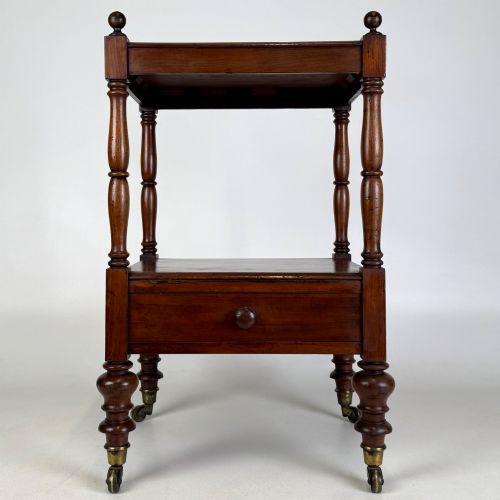
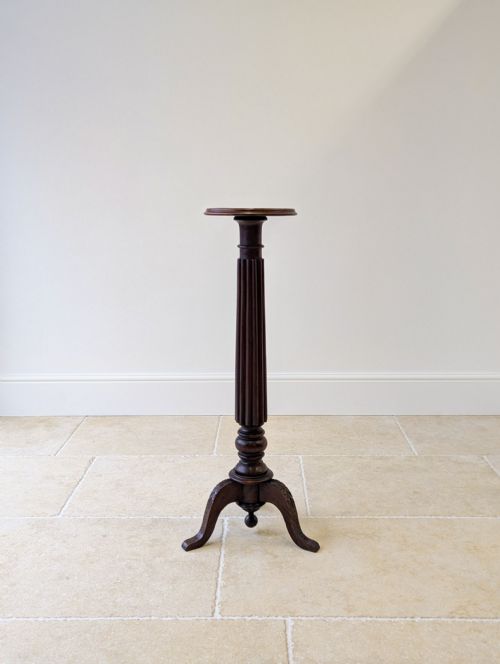
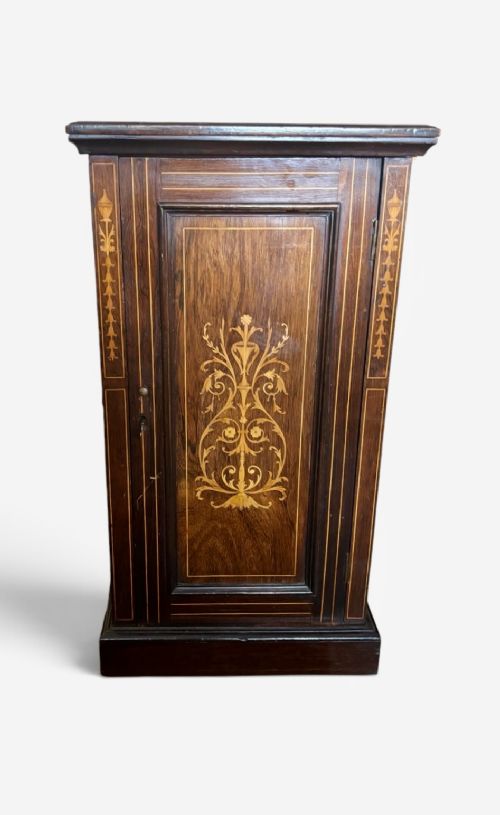
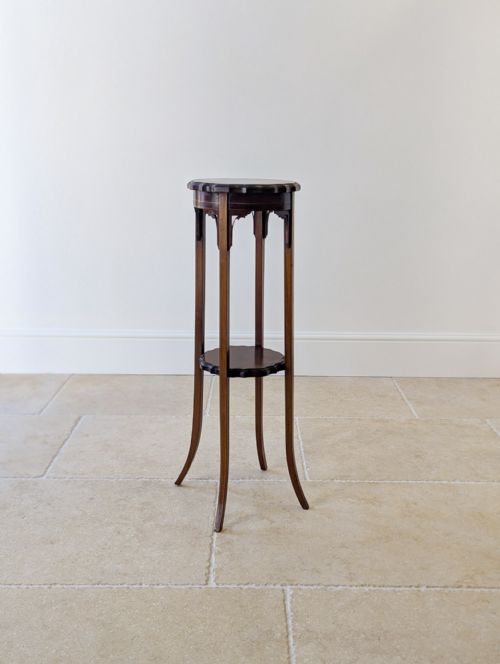
Antique Wood Display Pedestal
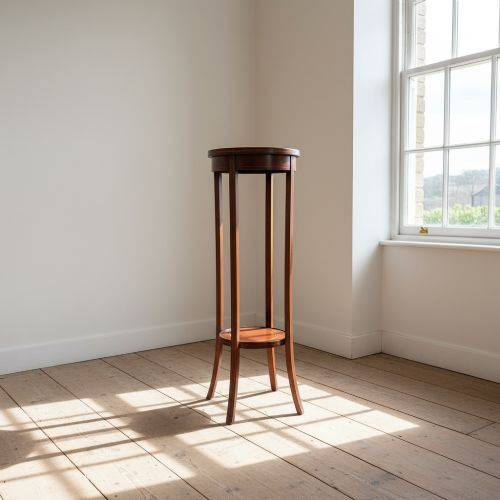
An antique wood display pedestal elevates sculpture, pottery and plants, bringing height and proportion to a room.
Antique Wood Display Pedestal
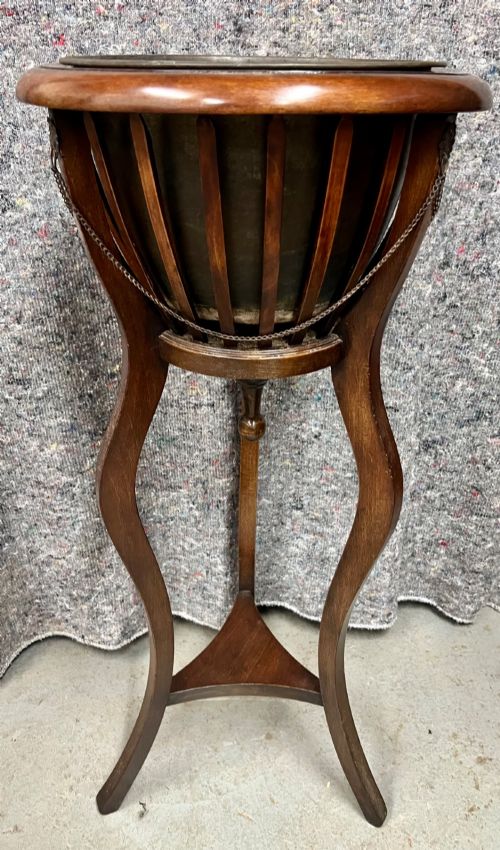
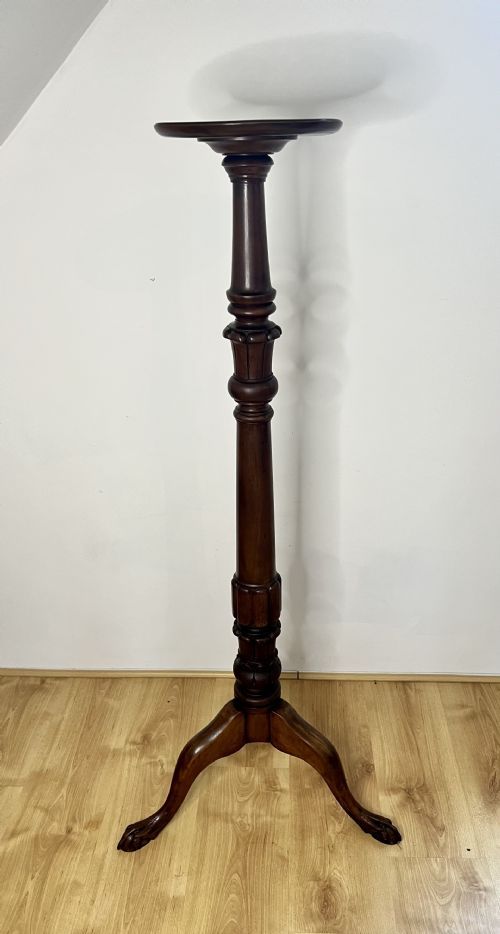
An antique wood display pedestal appears in many guises, including torchères, plant stands, columns and plinths designed to elevate objects within a room. When you search for an antique wood display pedestal, you encounter pieces intended to showcase vases, urns or sculptures.
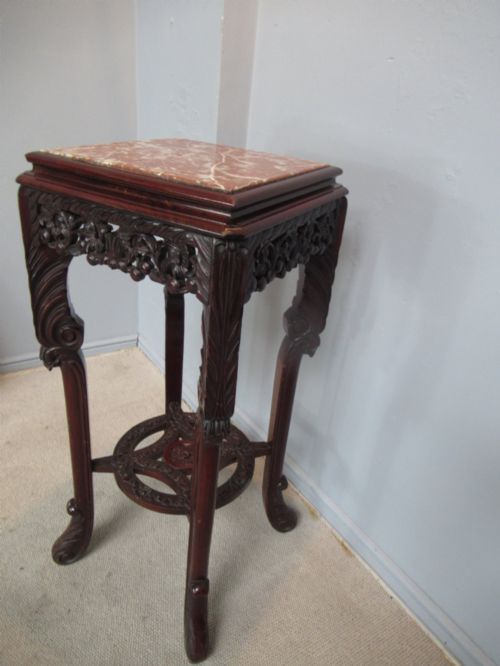
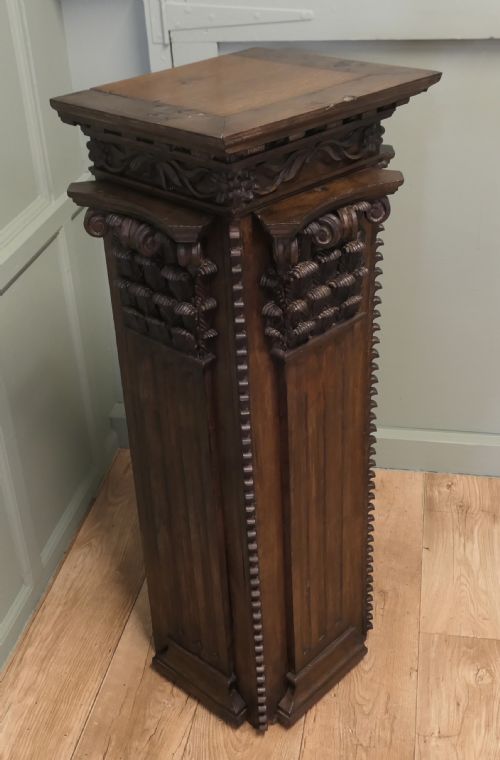
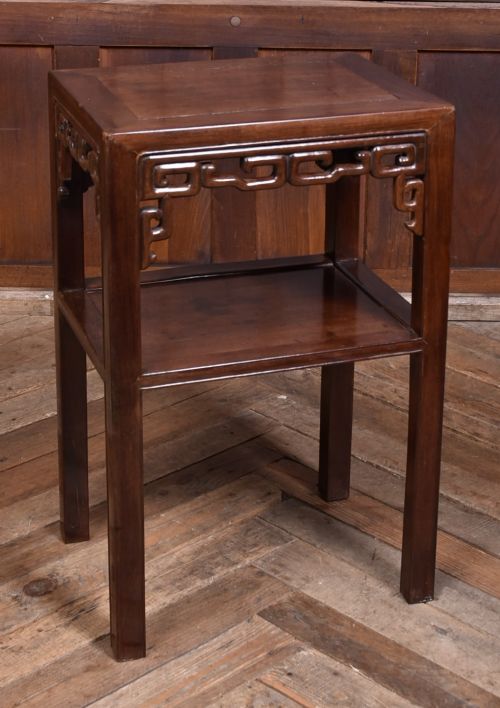
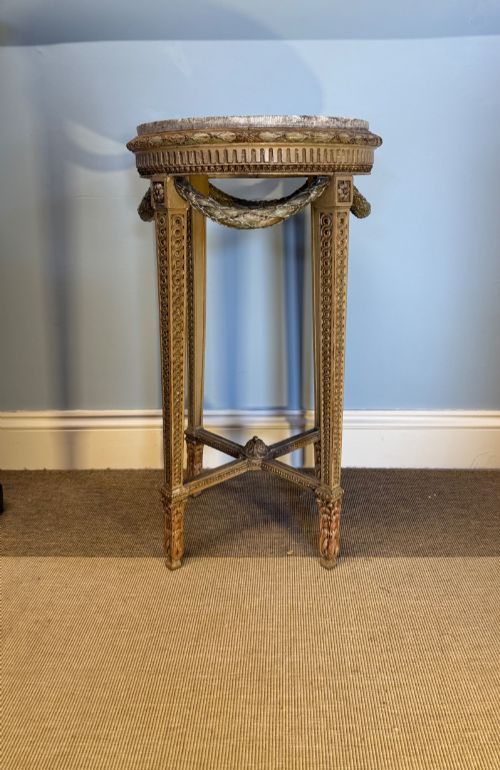
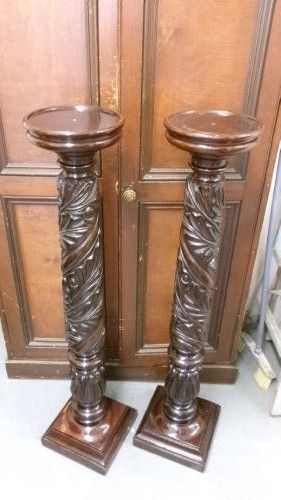
The selections span the nineteenth century through the early twentieth century, taking the form of Victorian carved mahogany columns, Edwardian inlaid stands and Chinese hardwood pot stands with inset marble tops. European and Asian workshops both contributed to this tradition, utilising native timbers alongside exotic hardwoods.
Materials and Construction
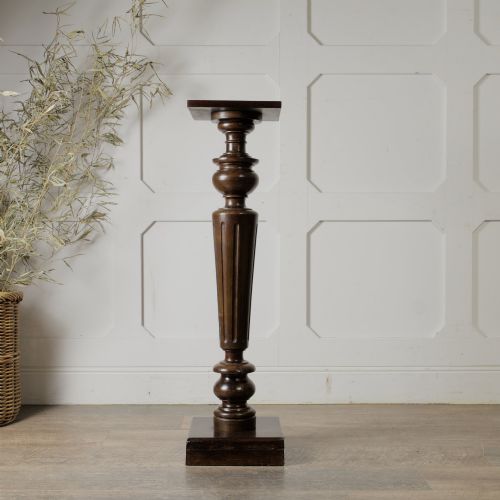
Cabinetmakers constructed these supports primarily in mahogany, walnut, oak and various exotic hardwoods, frequently employing turning, carving and joinery techniques to shape shafts and capitals. Ebonised finishes, paintwork and satinwood inlay provide decorative contrast on specific examples.
Many stands incorporate inset marble or faux marble tops designed to support heavy planters or stone vessels without water damage. Brass fittings occasionally appear on columns, while triform bases and tripod legs ensure stability for tall, slender forms.
Listings feature items spanning the eighteenth century, the Victorian era, the Edwardian period and the Art Deco style, constructed from mahogany, walnut, birch and marble.
Assessing Craftsmanship
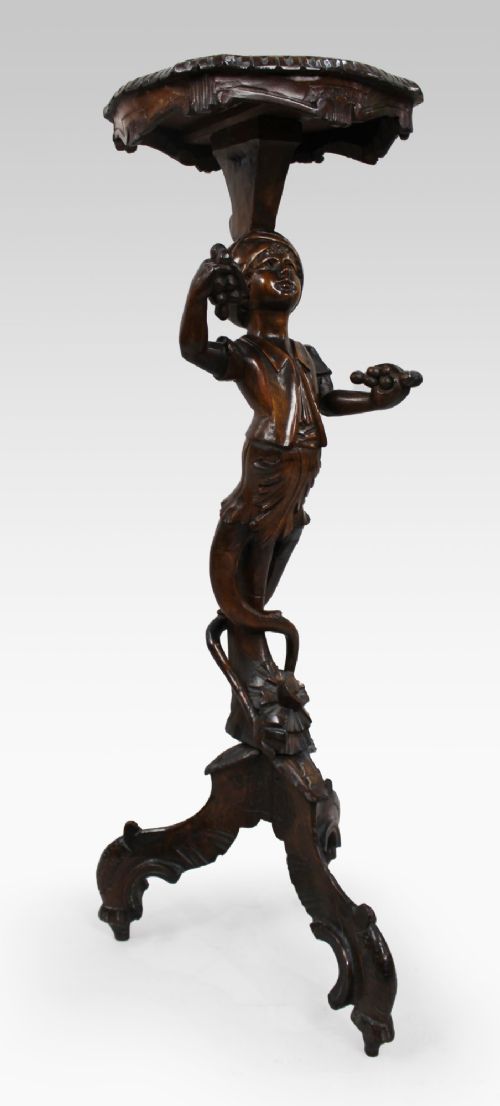
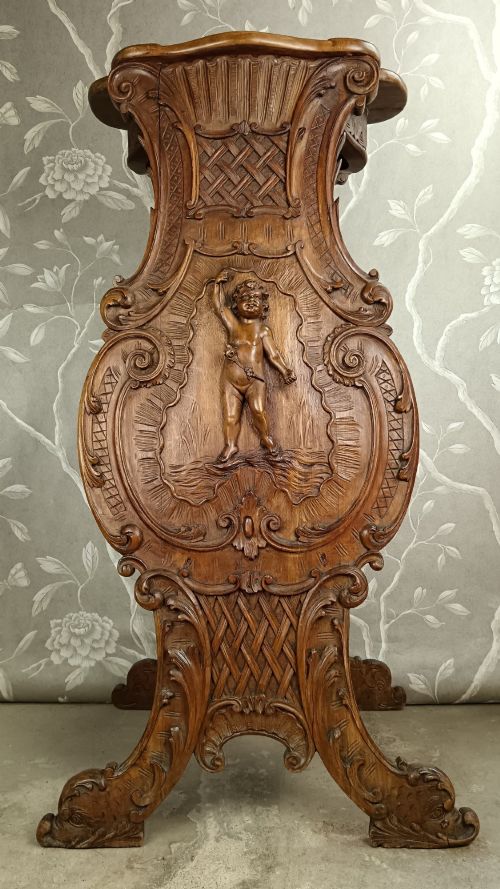
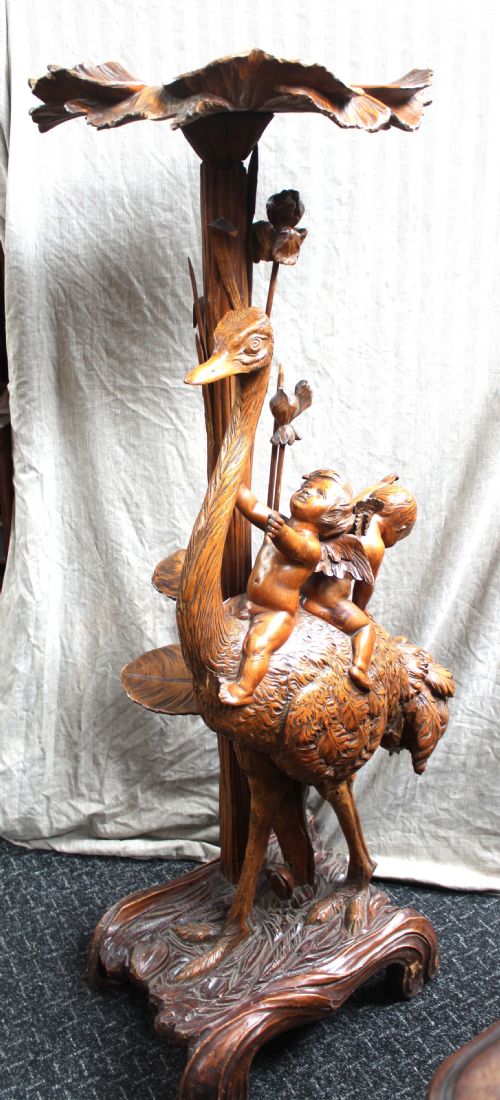
Quality rests in the crispness of hand carving, the stability of the timber and the balance of the proportions between the base, shaft and top. Superior pieces display fluid figural carving or precise turning rather than monotonous machine milling.
The integration of materials also defines the tier of a piece, such as the snug fit of an inset marble slab within a hardwood frame or the subtlety of contrasting wood inlays. Structural integrity in slender shafts separates robust examples from those compromised by loose joints.
Liberty of London·Gillow & Co.
The Antique Wood Display Pedestal Glossary
- Torchère
- A tall, slender stand designed originally to hold a candle or lamp, later adapted for vases and plant pots. These pieces typically feature a circular top supported by a single turned column.
- Plinth
- A heavy rectangular or square base supporting a column or statue. It provides visual weight and steady foundation.
- Triform
- A base possessing three sides or three supporting feet, frequently found on nineteenth century tripod pedestals. This configuration offers stability on uneven floors.
- Inlay
- A technique where pieces of contrasting timber, such as satinwood, are inserted into recessed cavities on the primary surface to create geometric or floral patterns.
- Ebonised
- Wood treated with a dark stain or finish to imitate ebony. This treatment gained popularity during the Victorian and Aesthetic movement periods.
Antique Wood Display Pedestal: Frequently Asked Questions
How do I choose the right height for a display pedestal?
Consider the height of the object you intend to place upon it and the scale of the surrounding furniture. Taller columns work well in corners or empty spaces to create vertical interest.
Shorter stands suit the display of larger urns or sculptures where eye-level viewing from a seated position is desired.
Can antique wood display pedestals support heavy items?
Solid mahogany and hardwood columns with wide triform or weighted bases handle considerable weight, particularly those featuring sturdy turned shafts. Marble-topped versions offer robust support for stone or ceramic vessels.
Slender Edwardian or Aesthetic movement stands benefit from careful weight distribution to ensure stability.
How do I care for a marble top stand?
Wipe the marble surface regularly with a soft, damp cloth and mild soap, avoiding acidic cleaners that etch the stone. Polish the wooden base with appropriate wax to nourish the timber.
Use protective pads beneath heavy or abrasive objects placed on the top.