
Antique Wood Buffet Table
An antique wood buffet table brings substantial storage and grand surface area to a dining room, uniting period cabinetmaking with daily practicality.
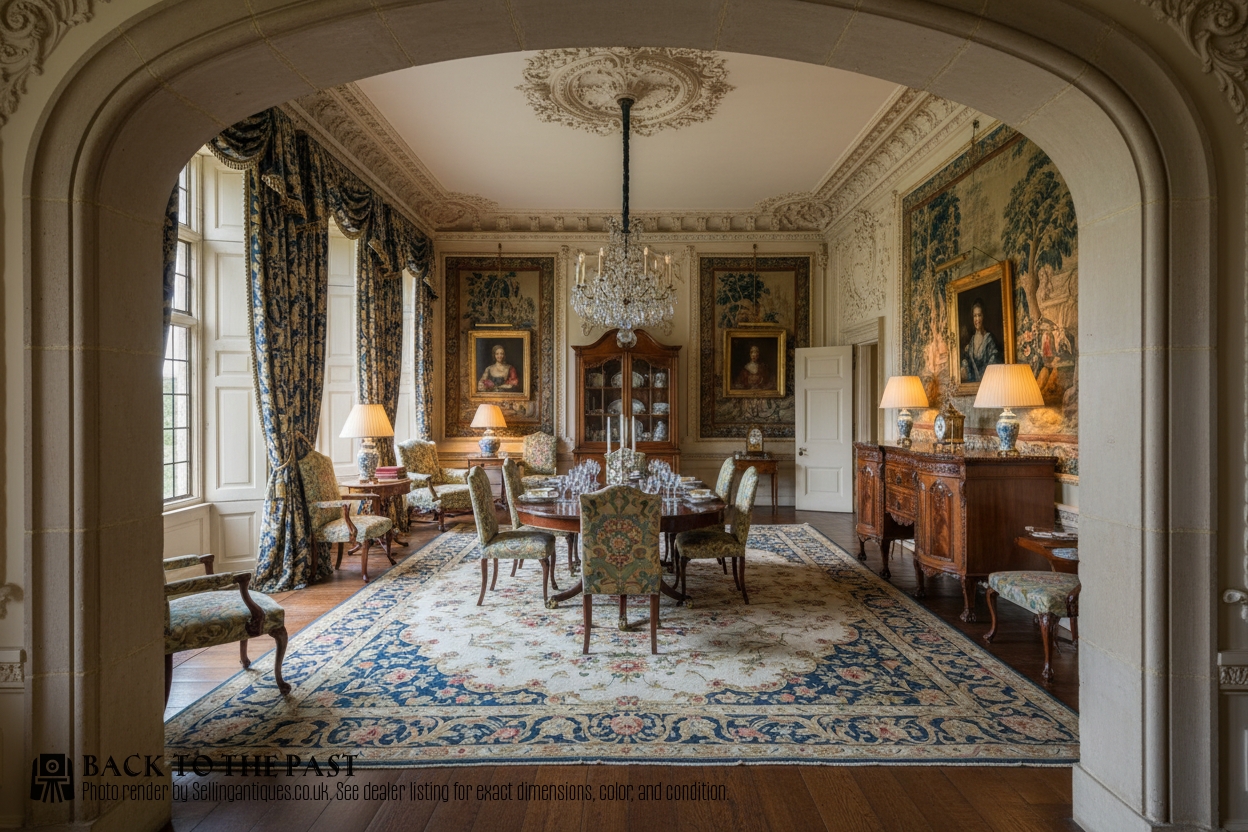
Antique Wood Buffet Table
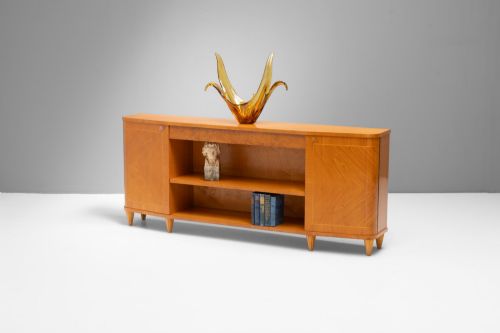
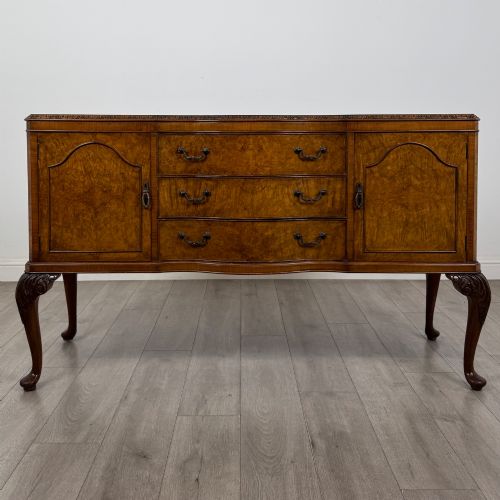
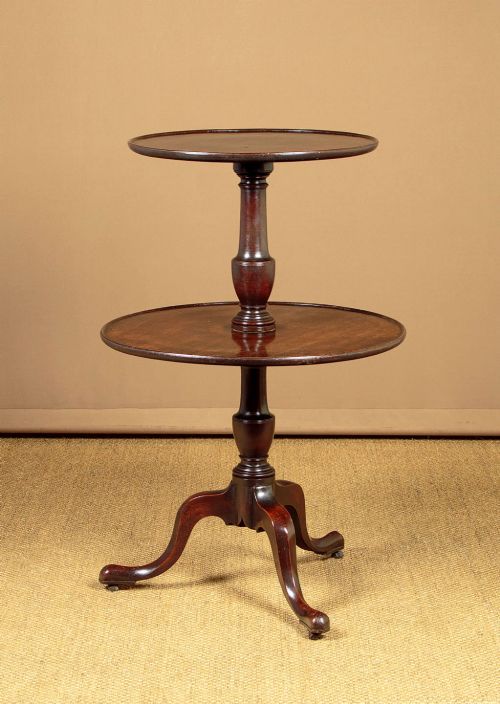
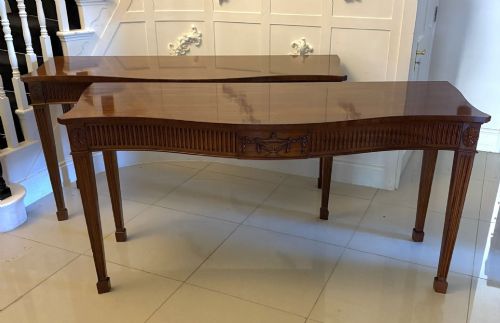
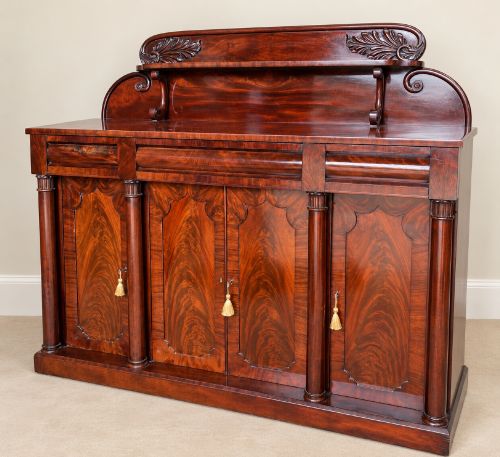
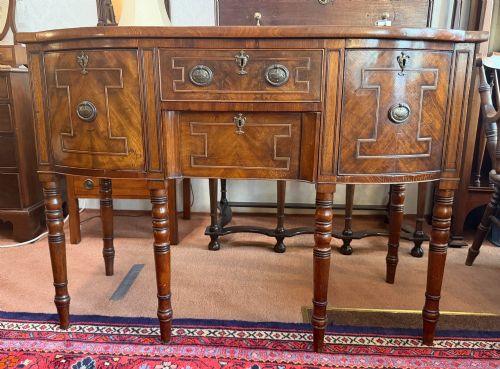
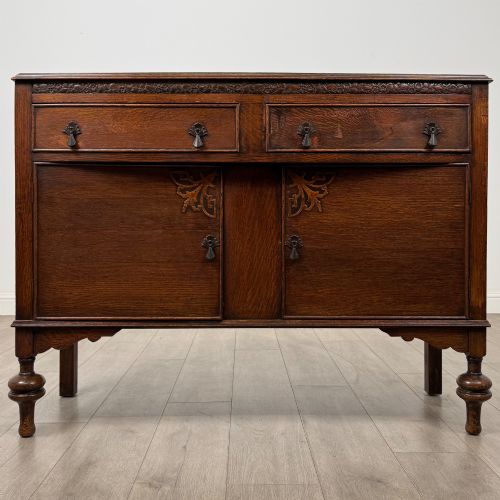
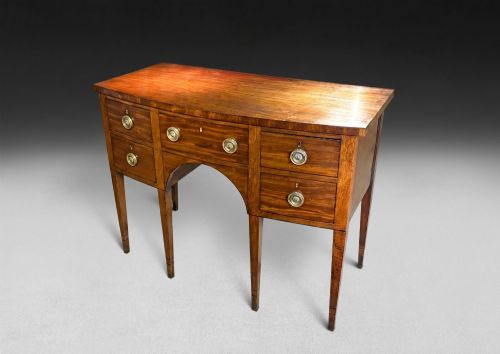
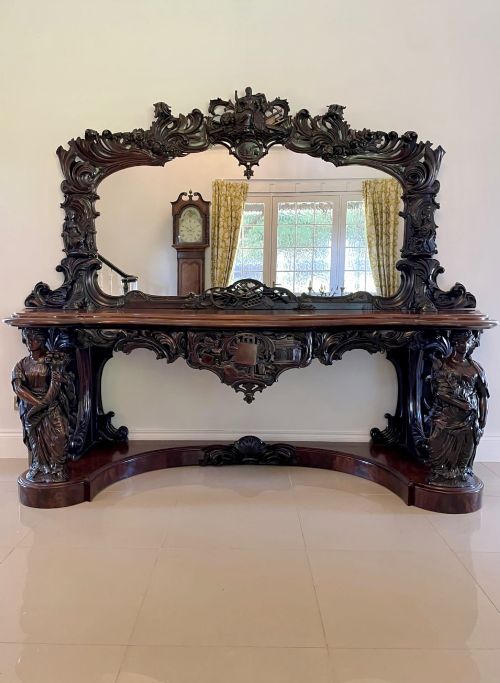
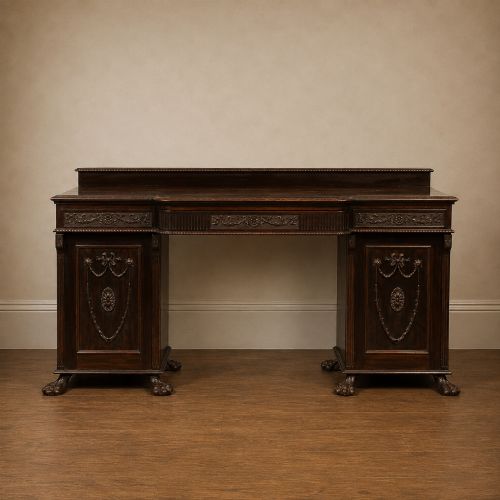
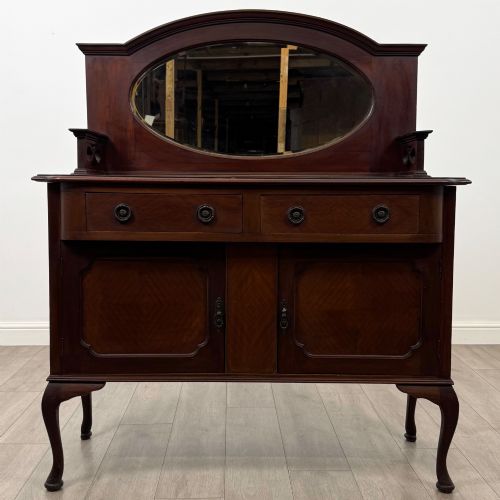
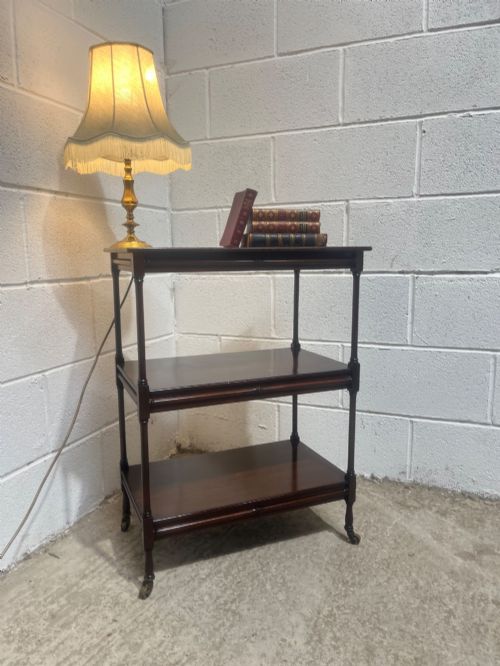
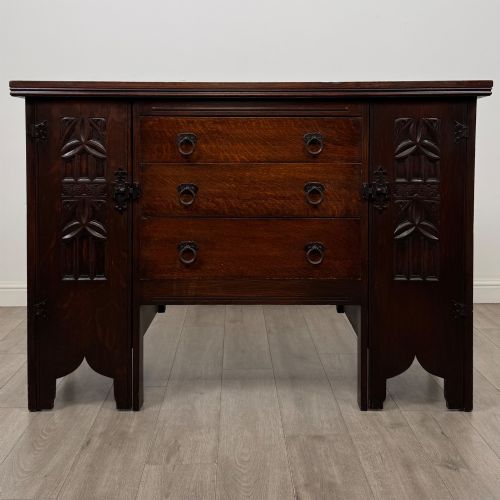
An antique wood buffet table encompasses a range of formal dining room furniture, appearing most frequently as sideboards, serving tables, and tiered dumb waiters across this selection.
The pieces span the eighteenth century, the Georgian era, and the Victorian period, alongside Edwardian revivals and early twentieth century examples.
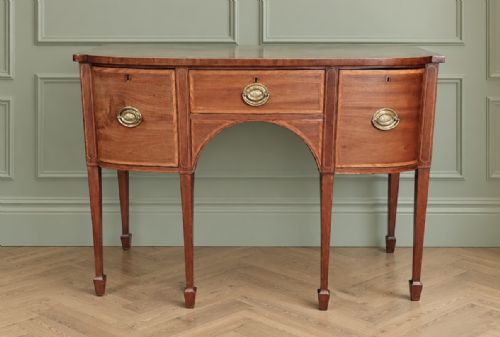
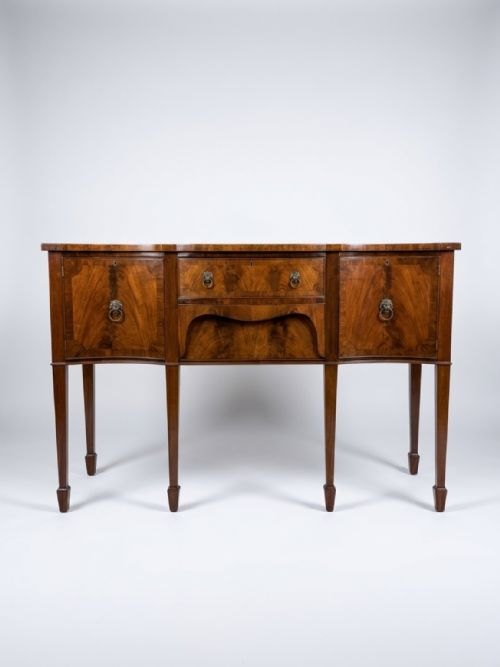
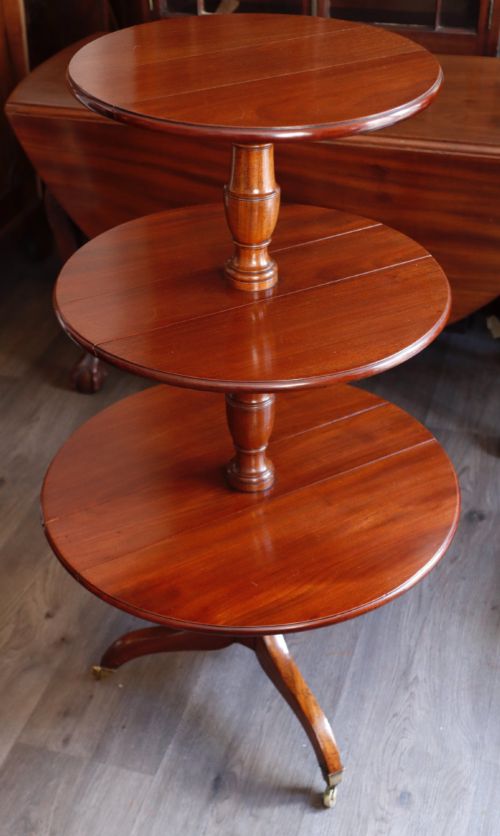
Buyers meet forms ranging from bow-front and serpentine sideboards to potboard dresser bases and multi-tiered dumb waiters.
Woods and construction methods
Cabinetmakers utilised solid timbers and veneers, building these pieces primarily from mahogany and oak, with occasional use of walnut.
Decoration relied on structural carpentry and surface enhancement, incorporating flame mahogany veneer, boxwood, and satinwood inlay alongside carved details.
Metal and glass hardware, including brass fittings and mirrored backs, completed the construction of serving tables and console pieces.
Listings feature eighteenth century and Victorian pieces alongside Edwardian revivals, constructed predominantly in mahogany and oak.
Factors separating standards of craftsmanship
The grade of timber and veneer selection dictates visual impact, separating simple utility pieces from exhibition quality items with matched grain patterns.
The precision of decorative elements, such as neoclassical carving, inlay work, and proportion, marks the distinction between standard workshops and master makers.
The Antique Wood Buffet Table Glossary
- Dumb Waiter
- A tiered piece of freestanding furniture designed to hold dishes and glasses near a dining table without servant attendance.
- Bow Front
- A convex curved cabinet front popular in Georgian and later periods.
- Potboard Dresser
- A dresser base featuring an open lower shelf traditionally used for storing pots and heavy kitchenware.
- Serpentine
- A furniture front curving inward centrally and outward at the ends in a gentle wave shape.
- Flame Mahogany
- A wood veneer cut from the fork of a mahogany tree to produce a dramatic, flickering flame-like grain pattern.
Antique Wood Buffet Table: Frequently Asked Questions
What is an antique wood buffet table used for?
These pieces served historically for staging food, holding serving dishes, and storing dining room linens or tableware during large meals.
Today, they function as substantial sideboards in dining spaces or as display surfaces in large hallways and living rooms.
How do I identify a Georgian sideboard?
Georgian pieces typically display restrained neoclassical carving, fine mahogany timbers, and balanced proportions often associated with designers like Hepplewhite.
They rely on clean architectural lines rather than the heavy ornamentation seen in later Victorian revivals.
What is the difference between a sideboard and a dumb waiter?
A sideboard is a long, static cabinet or serving table placed against a wall for storage and food presentation.
A dumb waiter is a tiered, often circular freestanding stand designed to hold smaller dishes close to the dining table.
Where should I place a large breakfront sideboard?
Large breakfront pieces require significant wall space and adequate room depth to allow doors and drawers to open fully without obstruction.
They suit spacious dining rooms where their proportions can anchor the room as a central focal point.