


Inverted Breakfront Buffet
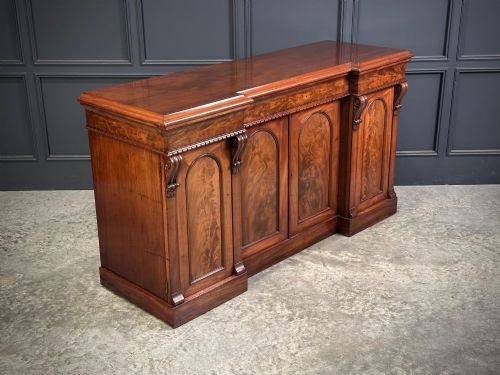
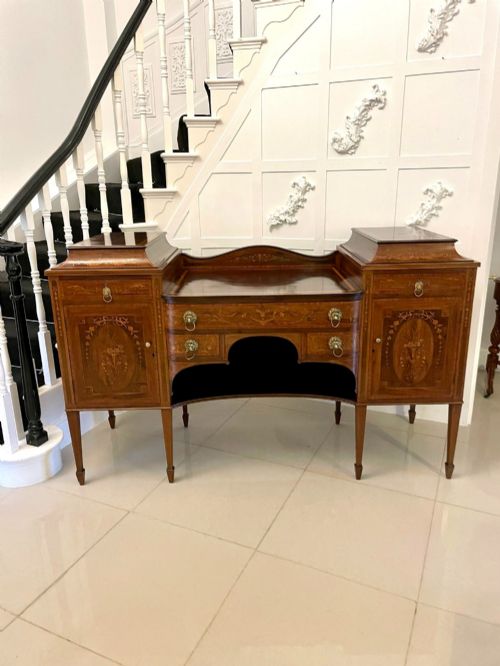
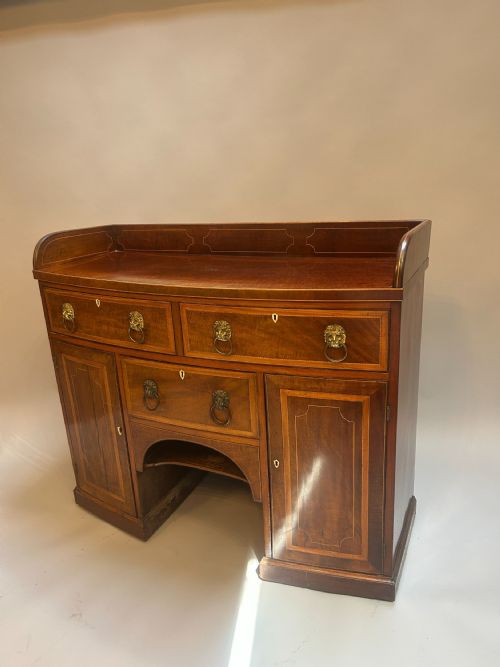
These inverted breakfront buffet pieces are grand timber storage forms offering generous proportions and striking recessed central sections, prized for both practical utility and presence.
Inverted Breakfront Buffet
When you search for an inverted breakfront buffet, you encounter substantial dining room and reception pieces dating primarily from the nineteenth century. These forms span Victorian, Regency, George IV, and William IV periods, alongside later revival styles.
You are most likely to meet Victorian and nineteenth-century sideboards and chiffoniers carrying this architectural configuration. They serve as commanding focal points in a room while providing extensive storage capacity behind panelled doors.
How these pieces were constructed
Cabinet makers selected solid mahogany and applied carefully matched flame mahogany veneers to create dynamic grain patterns across the front elevation. Brass hardware and delicate boxwood or satinwood stringing often accented these primary surfaces.
Structural integrity relied on heavy timber framing, hand-cut dovetails within drawer construction, and stable carcase building. Carved details and marquetry work required specialist hand-tooling by skilled makers working in London and regional workshops.
Cabinet makers occasionally concealed deep cellarette drawers within the pedestals designed specifically to hold wine bottles upright on ice.
What separates the finest examples
The grade of timber selection dictates visual success, with highly figured flame veneers and rich patination sitting far above plain mahogany boards. Crispness in carved enrichment and precision in marquetry inlay demonstrate superior workshop execution.
Proportion and architectural balance define the upper tier, where recessed central sections integrate seamlessly with pedestals and superstructure elements like mirror backs or pedestals.
Hewetsons London
The Inverted Breakfront Buffet Glossary
- Inverted breakfront
- A cabinet configuration where the central section steps backward from the flanking end units. This architectural arrangement creates depth and shadow across the frontal elevation.
- Flame mahogany
- A veneer cut from timber fork joints where branches meet the main trunk. This produces a distinctive flickering, flame-like pattern highly prized by nineteenth-century cabinet makers.
- Marquetry
- The art of forming decorative patterns using fitted pieces of various wood veneers. Makers apply this technique to doors and friezes to introduce contrasting tones.
- Chiffonier
- A low sideboard or cabinet developed during the nineteenth century. It frequently incorporates a mirror back or shelf superstructure above the main storage base.
- Pedestal sideboard
- A heavy dining room form featuring two substantial cupboards flanking a central section. These pieces often anchor large formal dining spaces.
Inverted Breakfront Buffet: Frequently Asked Questions
What is an inverted breakfront buffet?
An inverted breakfront buffet is a large nineteenth-century sideboard featuring a central section that steps backward rather than projecting forward.
These pieces provide substantial storage capacity while creating an architectural focal point within dining rooms and large reception spaces.
Which periods do these sideboards come from?
The pieces span the nineteenth century, encompassing Regency, George IV, William IV, and Victorian eras.
Revival styles such as Sheraton Revival and Chippendale Revival also appear among the listed items from later decades.
How do I care for flame mahogany veneer?
Maintain flame mahogany surfaces by keeping them away from direct sunlight and maintaining stable room humidity.
Apply traditional beeswax periodically to nourish the timber and preserve the warm lustre of the aged finish.
How do I distinguish a chiffonier from a standard sideboard?
A chiffonier typically includes a superstructure such as a mirrored back or shelf tiered above the main buffet base.
Standard sideboards rely purely on the low horizontal carcase without attached backing uprights.