



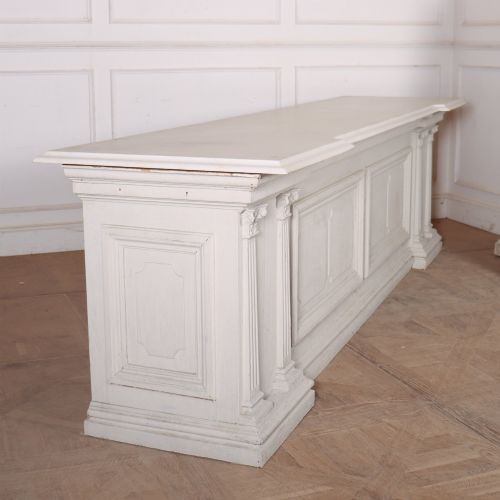
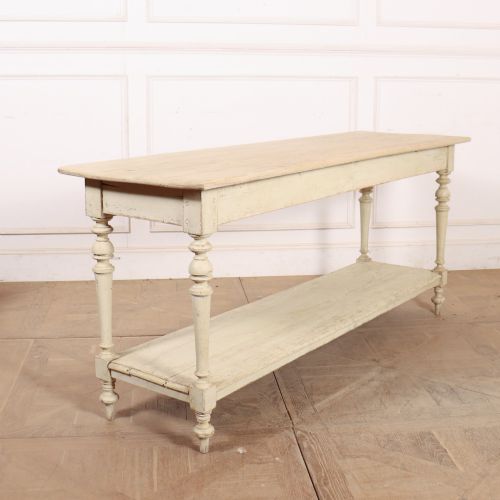
Antique White Console Tables
Antique white console tables bring elegance and practical surface space to hallways and reception rooms through classic painted finishes and marble tops.
Antique White Console Tables
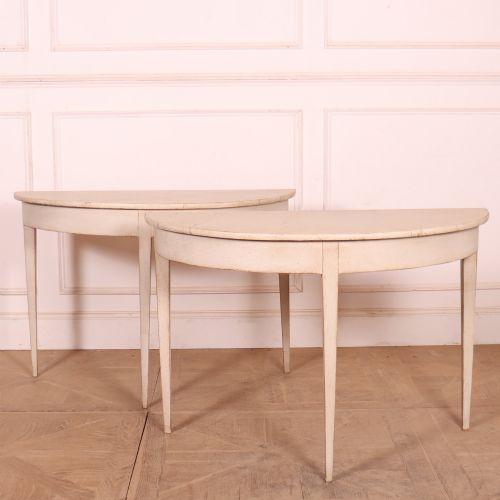
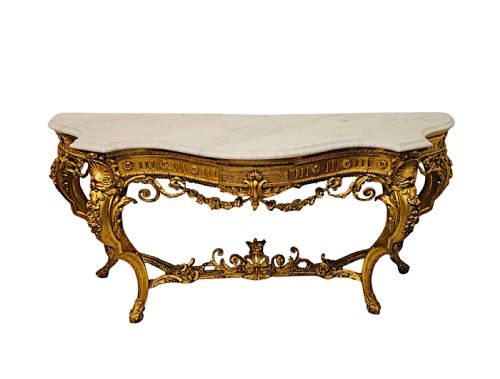
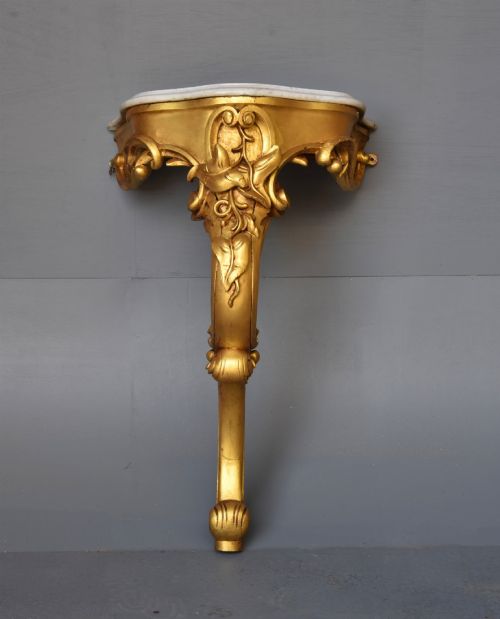
Antique white console tables encompass side tables, serving tables, and wall-mounted consoles dating from the eighteenth century through the early twentieth century. These pieces display finishes in painted wood, gesso, and gilt alongside exposed natural timbers.
Makers and workshops across England, France, Sweden, and Italy produced these console tables for domestic and commercial spaces, including orangeries, conservatories, and shop interiors. French designs often incorporate carved details, while English examples frequently feature oak, mahogany, or painted pine.
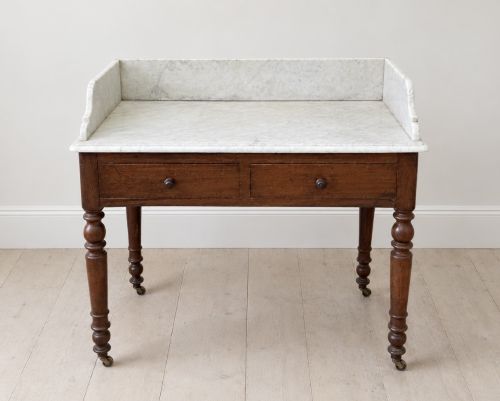
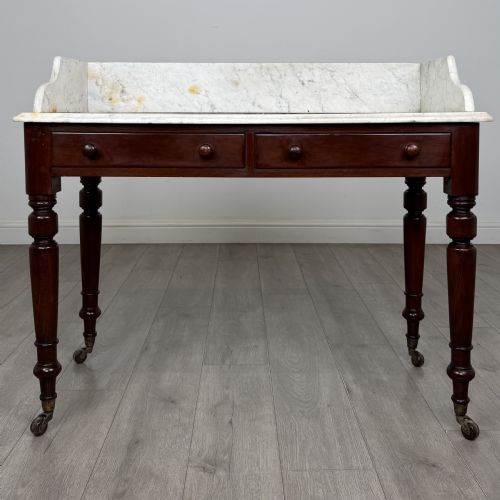
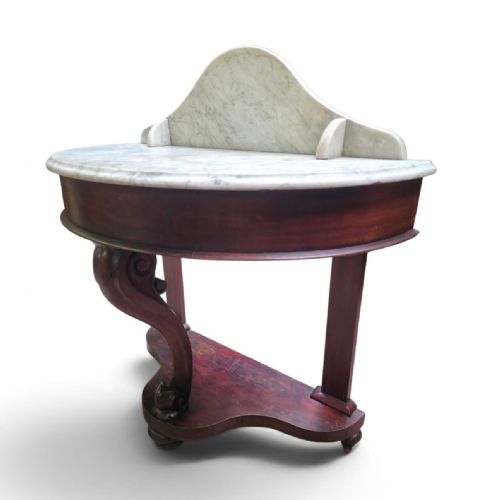
Surviving examples span several distinct design movements, including Victorian, Edwardian, Neoclassical, and Gustavian styles. Buyers meeting these pieces on this page will encounter console and pier tables, washstands, and drapers tables adapted for modern rooms.
How they were made
Cabinet makers utilised solid woods such as oak and mahogany, or applied gesso and paint over softer timber foundations to achieve the desired antique white surface. These painted finishes often weathered naturally over decades of use in bistros, kitchens, and formal reception rooms.
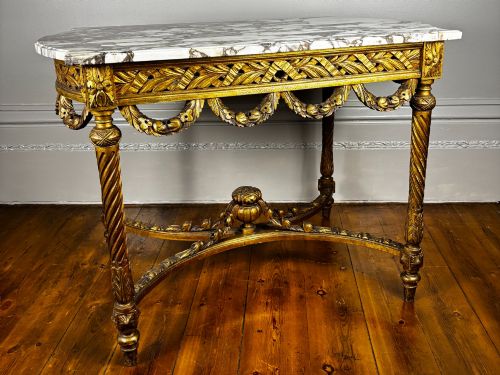
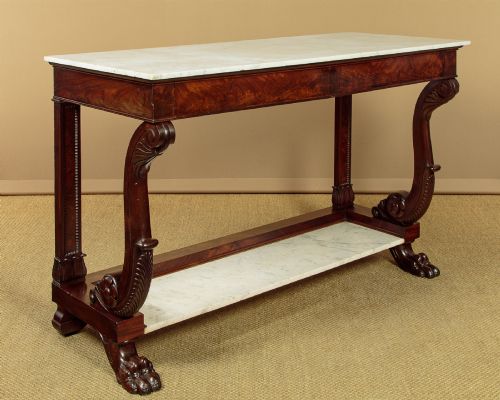
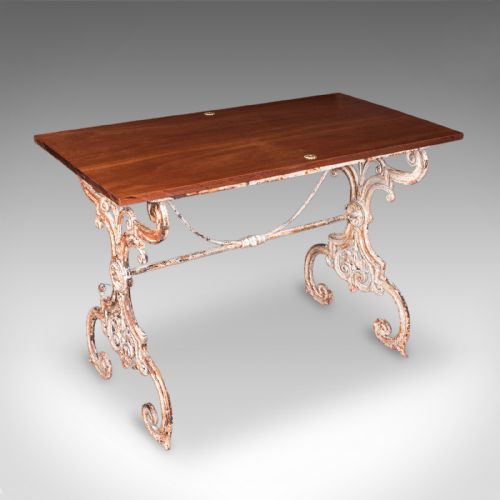
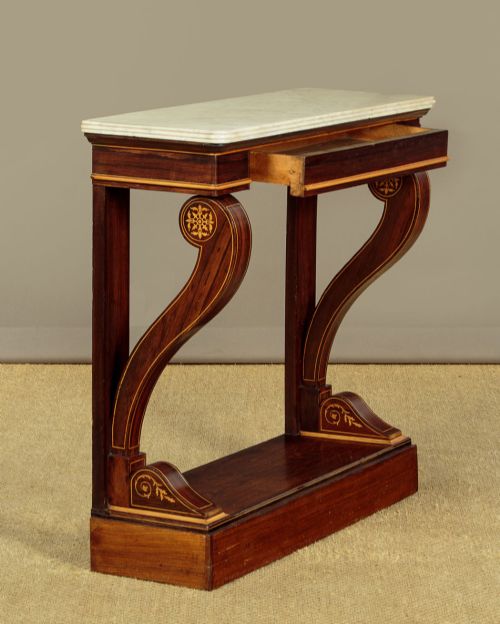
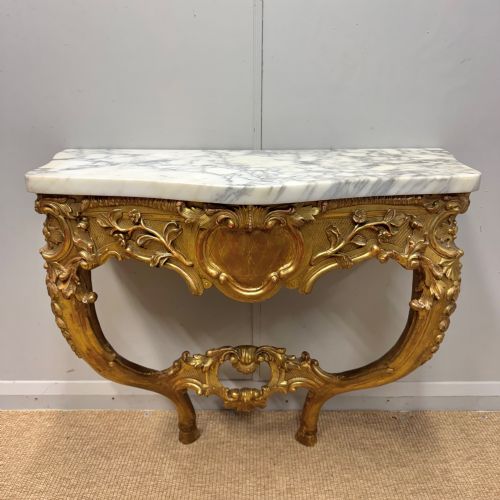
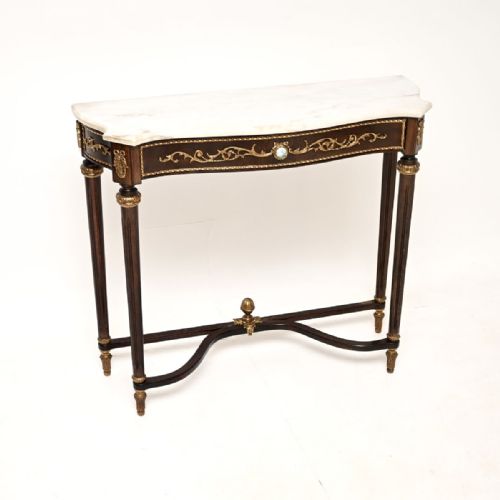
Heavy marble slabs form the top surface on many surviving examples, paired with wooden, cast iron, or gilt bases. Ormolu mounts and hand-carved decorative elements appear on select French and English pieces from the nineteenth century.
Antique White Console Tables Retail Price Guide 2026
Typical asking prices for white console tables among the pieces listed under this phrase on Sellingantiques today, from the lower quarter to the upper quarter. They describe what is for sale here now, not the wider market.
Listings feature pieces spanning the eighteenth to the twentieth centuries, utilising marble, cast iron, and painted wood.
What varies in quality
The sophistication of the carved wooden ornamentation and the depth of the painted or gilt finish distinguish standard utility furniture from high-status salon pieces. Original marble tops that fit the wooden base precisely indicate careful original construction.
Proportion and structural integrity separate robust tables intended for heavy use, such as prep tables and counters, from purely decorative wall-mounted console tables. The survival of original painted surfaces without excessive modern over-painting determines the authenticity of the finish.
Maples
The Antique White Console Tables Glossary
- Console table
- A table designed to stand against a wall, traditionally supported by brackets or console legs. Many surviving examples feature marble tops.
- Demi-lune
- A half-moon shape characteristic of certain eighteenth and nineteenth-century side and console tables. This curved profile allows the table to fit snugly against flat wall spaces.
- Ormolu
- Gilded bronze mounts applied to furniture for decorative effect. This technique appears frequently on French neoclassical and Louis XVI period pieces.
- Gesso
- A plaster-like mixture applied to wood surfaces as a base for painting or gilding. It provides a smooth foundation for decorative finishes on antique frames and tables.
- Chinoiserie
- European decorative style inspired by Chinese artistic traditions. Pieces featuring this technique display painted lacquer designs.
Antique White Console Tables: Frequently Asked Questions
Where should I place a console table?
Console tables sit flat against walls in hallways, drawing rooms, and dining spaces where floor space is limited. Their shallow depth allows them to provide surface area without obstructing walkways.
They function well beneath mirrors or paintings, serving as display areas for lamps and decorative objects.
Are marble tops original to these tables?
Many nineteenth-century console tables feature marble tops designed to handle heavy use in serving, food preparation, or display. These stone slabs rest on the wooden base and match the proportions of the frame.
Inspect the seating of the marble within the wooden rebate to check its original relationship to the table.
How do I care for painted wood?
Painted and gesso surfaces require gentle cleaning with a dry or lightly dampened cloth without harsh chemical detergents. Moisture can penetrate aged paint layers and cause lifting if left standing.
Maintain stable indoor humidity levels to protect both the wooden framework and the decorative painted finish.
How do I date a console table?
Dating relies on construction methods, timber types, and decorative styles associated with specific periods like the Victorian era or the Edwardian period. Tool marks, fixings, and the wear patterns on painted surfaces offer clues to age.
Regional styles, such as Swedish Gustavian or French country designs, also point to specific manufacturing decades.