


French Wall Console Tables
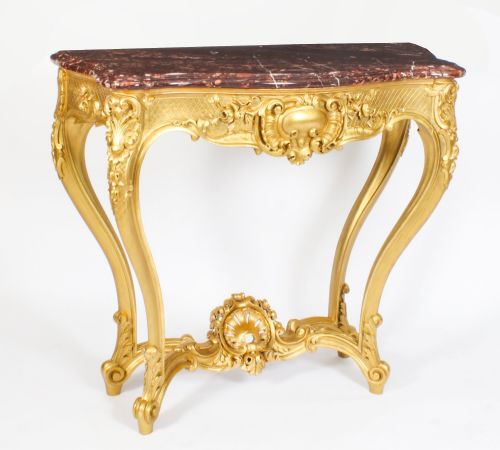
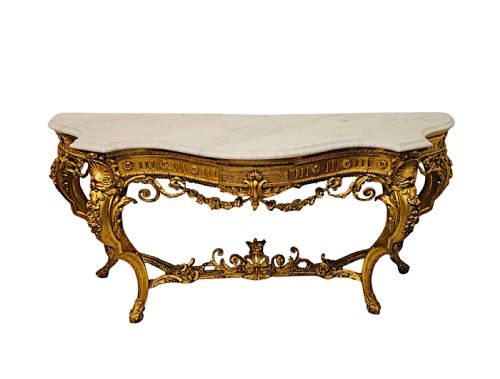
These french wall console tables bring proportion and surface to a room, anchored by carved timber, painted finishes, and fitted marble tops.
French Wall Console Tables
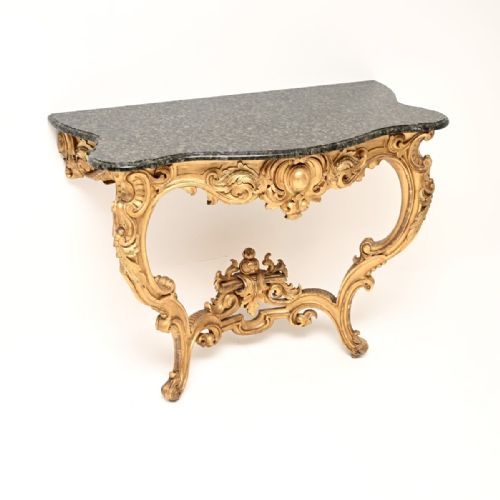
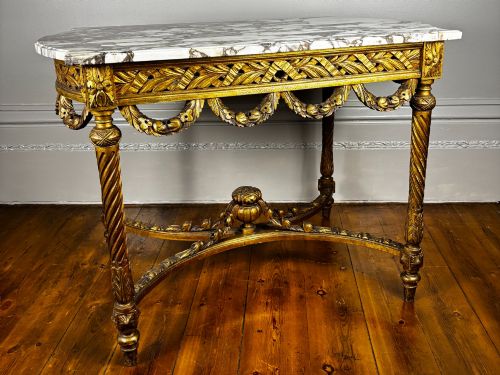
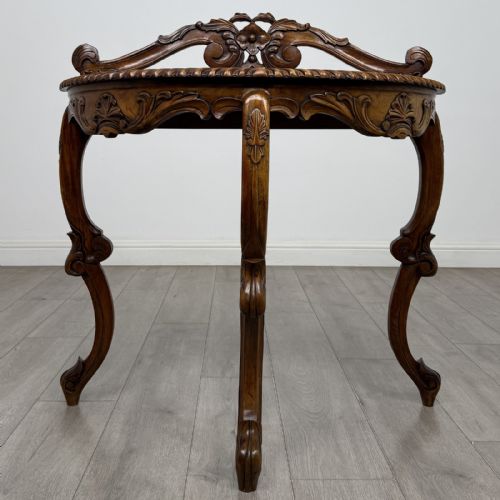
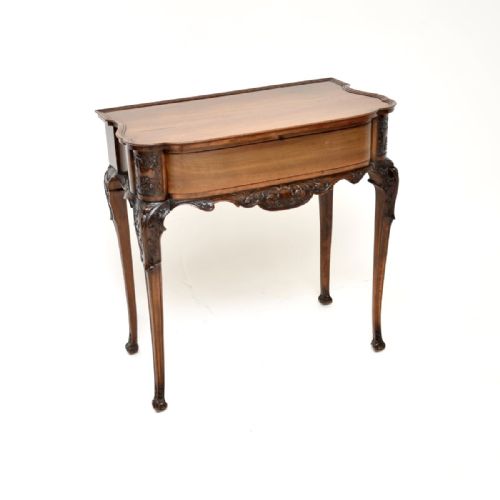
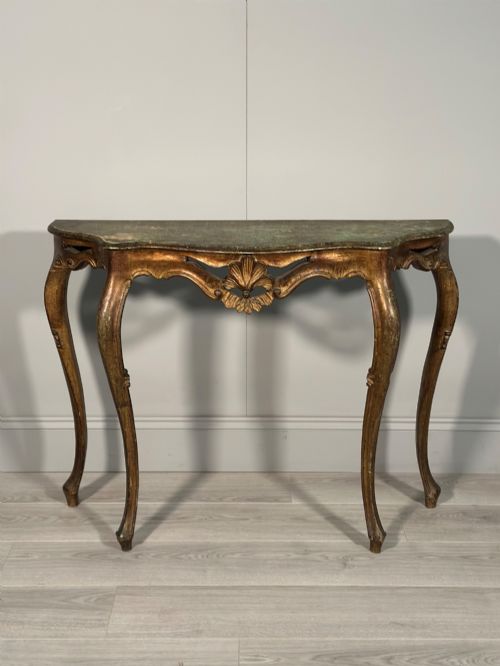
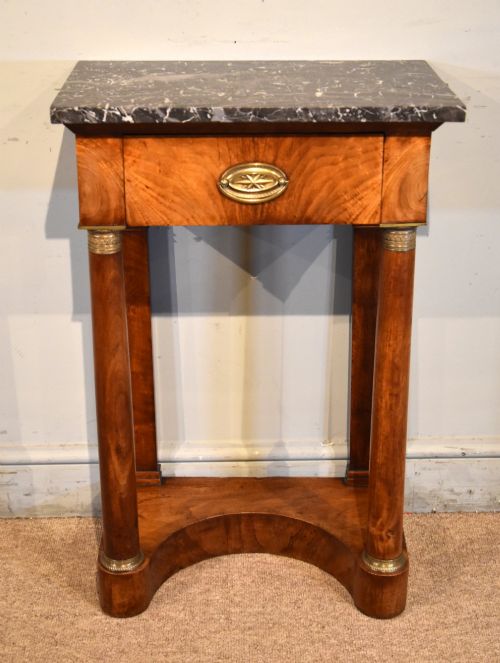
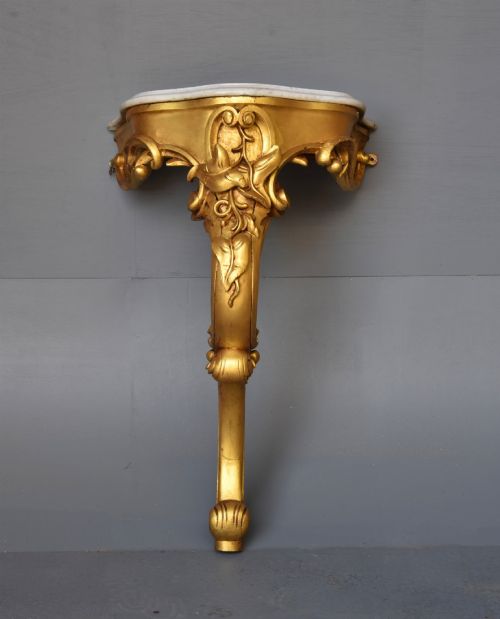
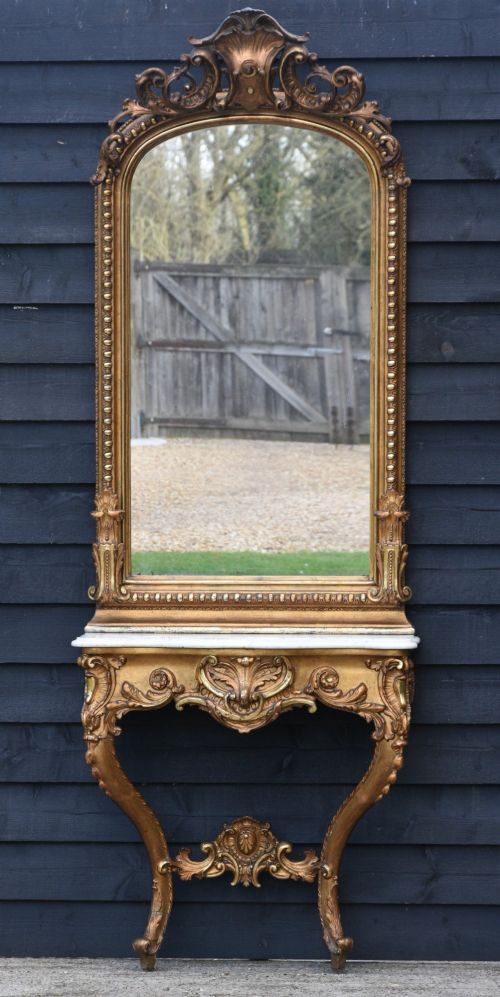
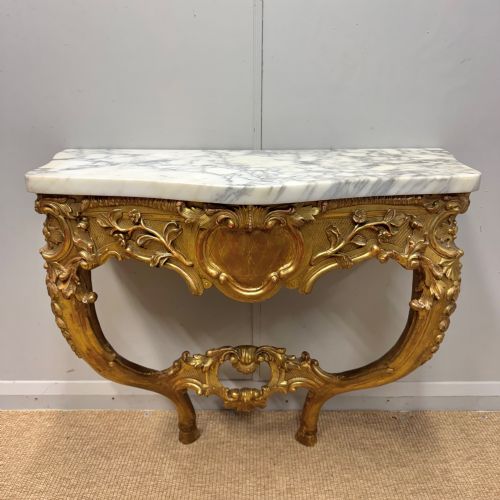
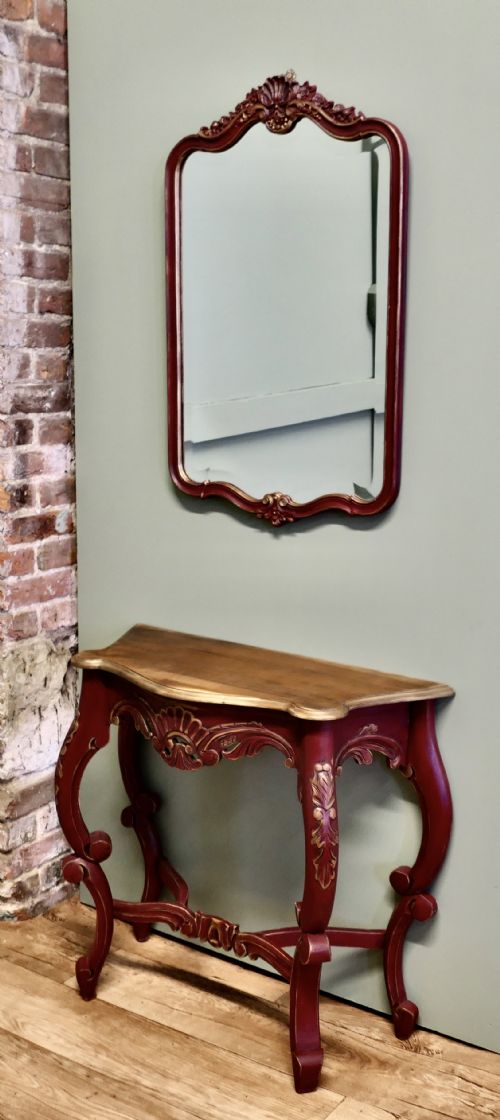
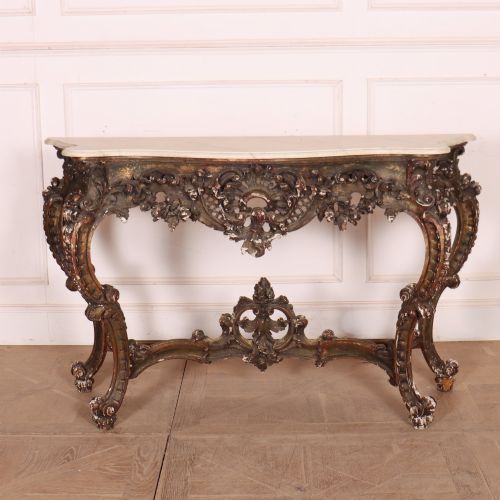
When searching for french wall console tables, buyers encounter semi-circular and serpentine forms designed to sit flush against a wall, frequently paired with matching pier mirrors. The selection spans the eighteenth century through to the nineteen-thirties, with nineteenth-century interpretations of earlier rococo and neoclassical styles forming the largest share.
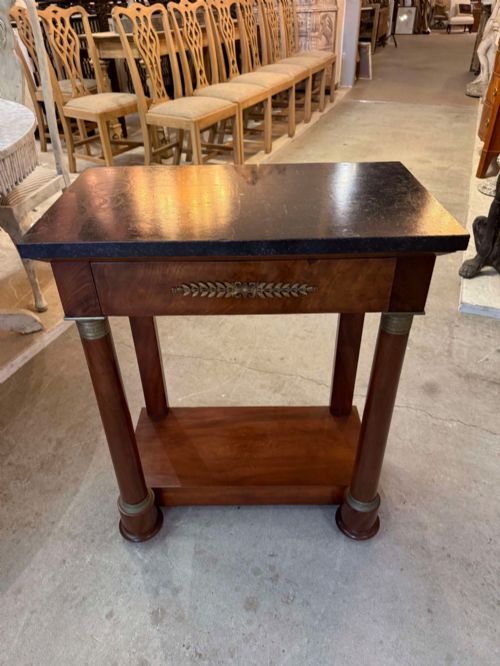
Forms vary from grand giltwood pieces adorned with heavy carving to restrained provincial examples in oak, walnut, or painted finishes. Some pieces integrate wrought iron or brass, shifting the character from formal reception rooms to more rustic interiors.
How they were made
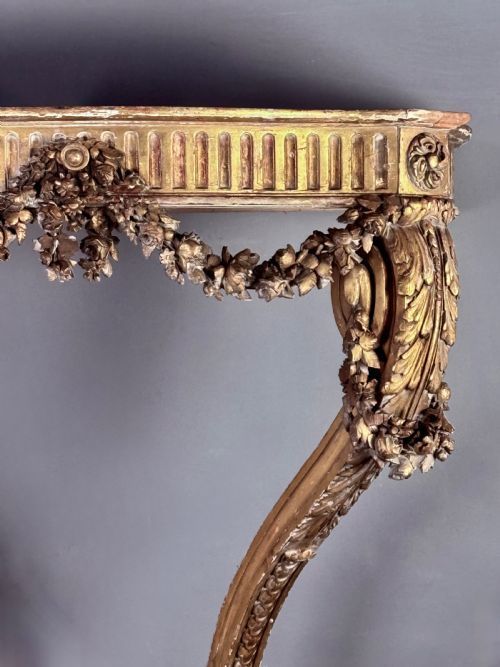
Cabinetmakers shaped these tables from solid and veneered timbers such as mahogany, walnut, and oak, often applying layers of gesso before gilding with gold leaf. Carved wooden frames required precise hand work to achieve the scrolls and foliage characteristic of the period.
Heavy marble slabs, including figured varieties like breche d'alep, were cut and polished to fit precisely over the wooden or wrought iron basework. Painted and cream finishes relied on multiple coats applied to carved timber to create an antique surface.
French Wall Console Tables Retail Price Guide 2026
Typical asking prices for french wall console tables among the pieces listed under this phrase on Sellingantiques today, from the lower quarter to the upper quarter. They describe what is for sale here now, not the wider market.
Some console tables come with matching pier mirrors, ensuring your reflection gets the same gilded eighteenth-century treatment as your hallway.
What varies in quality
The crispness of the hand-carving separates standard joinery from superior work, particularly in the depth and movement of giltwood and gesso details. Tables that retain their original figured marble tops show a higher degree of integration between the stone and the supporting frame.
Proportion and structural harmony dictate the standing of a piece, where balanced cabriole legs or rigorous neoclassical lines indicate skilled workshop production rather than mass commercial output.
Felix Alfred Ternisien·Jean Joseph Chapuis
The French Wall Console Tables Glossary
- Console table
- A table designed to be fixed against a wall, often supported by brackets or front legs rather than standing independently.
- Giltwood
- Timber coated with gold leaf applied over a prepared gesso ground, creating a reflective surface popular in formal interiors.
- Demi lune
- A half-moon shape characteristic of side and console tables designed to project minimally into a hallway or reception room.
- Serpentine
- A furniture front or marble top that curves outward in the centre and inward at the sides in a gentle 'S' shape.
- Cabriole leg
- A furniture leg that curves outward at the knee and tapers inward toward the foot, typical of rococo and provincial designs.
French Wall Console Tables: Frequently Asked Questions
How do I secure a wall console?
Because these tables are designed to stand against vertical surfaces, many rely on wall attachment for stability. Brackets and structural fixings ensure the weight of the marble top is safely supported.
Professional installation is recommended, especially for heavier nineteenth-century examples and pieces paired with large wall mirrors.
Are these tables freestanding?
Most pieces intended as wall consoles rely on the wall for balance and feature only front legs or wall brackets. They are constructed specifically to anchor against a flat surface rather than float in the middle of a room.
Reviewing the leg configuration and rear framing helps determine whether a particular console requires wall mounting.
What marble types appear on these tables?
Surfaces feature polished stone slabs, including figured varieties like breche d'alep, cut to follow the serpentine or demi lune outline of the frame. These tops provide a durable, cool surface that contrasts with carved wood and gilt finishes.
Coloration ranges from muted greys and whites to richer mottled tones depending on the specific quarry and period.
How do I date a console table?
Dating relies on stylistic markers, such as the exuberant curves of nineteenth-century rococo revival or the straight lines of neoclassical design. Construction methods, timber choices, and the specific application of gesso or paint provide further clues to the decade of manufacture.
Comparing the carved ornament to established historical periods helps narrow down whether a piece dates to the eighteenth, nineteenth, or early twentieth century.