





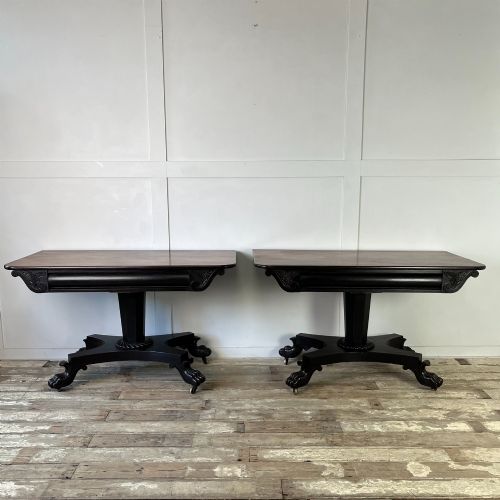

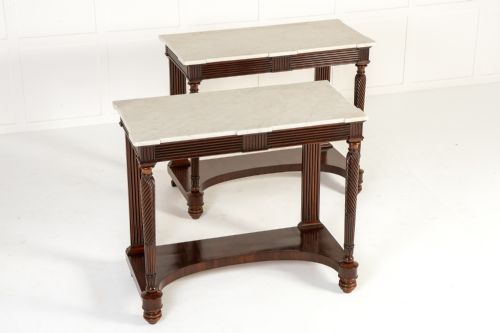

Carved Pier Tables Pair
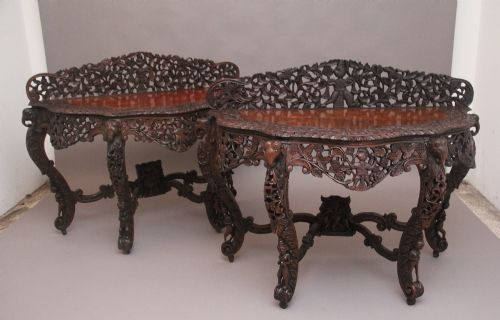
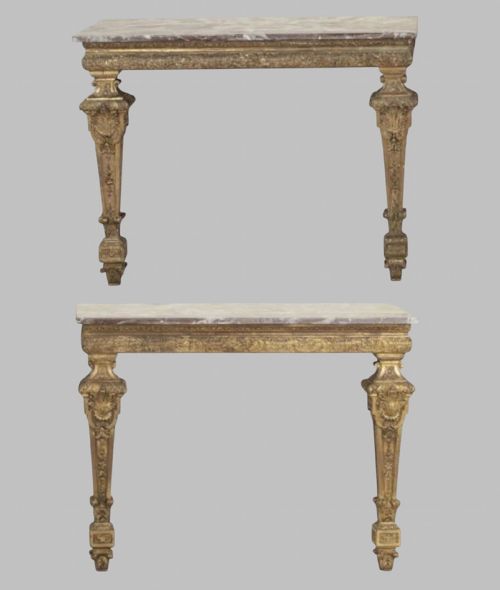
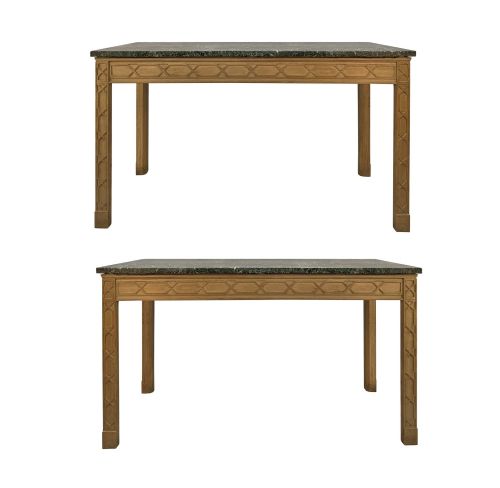
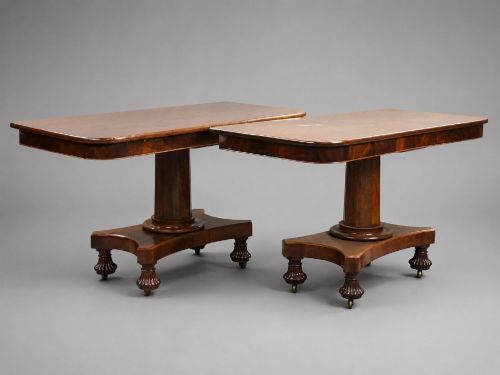
These carved pier tables pair items are matched symmetrical tables designed for a wall, bringing architectural balance and surface space to a room.
Carved Pier Tables Pair
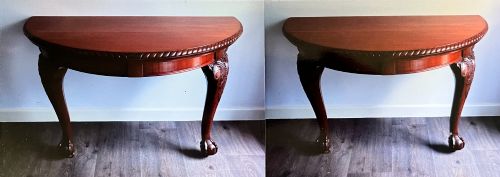
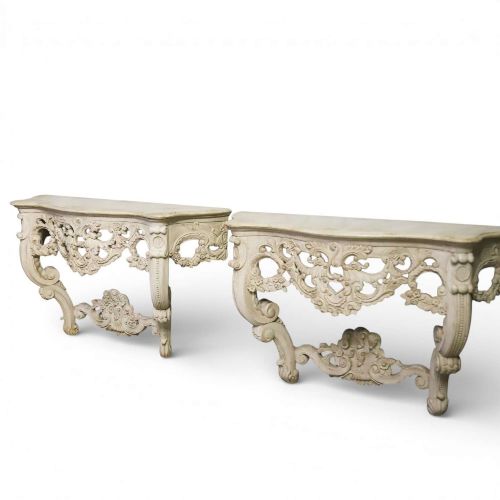
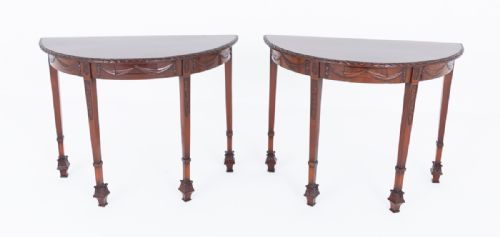
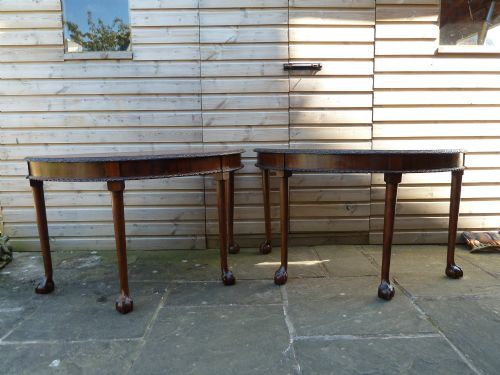
When searching for a carved pier tables pair, buyers encounter matched sets intended to stand against a wall between windows or beneath mirrors. The versions met most frequently on this page span the eighteenth, nineteenth, and early twentieth centuries, appearing primarily as console tables, side tables, or console cabinets.
The forms reflect periods including Georgian, Regency, William IV, and Victorian, alongside continental revivals like Rococo, Neoclassical, and Baroque. Makers utilised timber and stone to create symmetry, offering matching tables that share identical carved details, proportions, and leg formations.
Materials and construction
Construction relies heavily on timbers such as mahogany, walnut, and rosewood, often shaped by hand carving into intricate Neoclassical, Chippendale, or floral motifs. Many examples incorporate painted or ebonised finishes, alongside parcel-gilt details on carved wood and giltwood frames.
Tops frequently feature marble, including breccia varieties, set upon sturdy wooden bases supported by cabriole legs, lion's paw feet, or wall-mounted console brackets. Brass accents and glass elements also appear across various styles, combining structural joinery with decorative surface work.
Carved Pier Tables Pair Retail Price Guide 2026
Typical asking prices for carved pier tables pair among the pieces listed under this phrase on Sellingantiques today, from the lower quarter to the upper quarter. They describe what is for sale here now, not the wider market.
Listings feature mahogany, walnut, and giltwood frames paired with marble tops across nineteenth and twentieth-century periods.
Assessing quality
The distinction between tiers rests upon the crispness of the hand carving and the selection of materials, such as figured mahogany, burr walnut, or heavy marble tops. Superior examples display deep, deliberate chisel work on the wood and harmonious matching between both tables in the pair.
Proportion and structural integrity define the higher end, where balanced lines and substantial weight indicate careful workshop production. Lesser items show simpler timber selection and softer decorative detailing across the frames.
Jean Joseph Chapuis·Gillows
The Carved Pier Tables Pair Glossary
- Pier table
- A table designed to stand against the wall between two windows, often positioned beneath a pier glass mirror.
- Console table
- A table supported by brackets or console legs fixed to a wall or standing independently.
- Giltwood
- Wood that has been coated with gold leaf or a gold-coloured finish for decorative effect.
- Demilune
- Having a half-moon shape, descriptive of tabletops with a curved front and flat back edge.
- Breccia marble
- A type of marble composed of broken fragments cemented together in a fine-grained matrix.
Carved Pier Tables Pair: Frequently Asked Questions
What is a pier table?
A pier table is a decorative table designed specifically to fit against the wall space between two windows, historically positioned to reflect light from a matching wall mirror.
These pieces provide a narrow surface for ornaments and maintain symmetrical arrangement within formal rooms.
How do you style a pair of console tables?
Matching console tables work effectively when placed together along a long wall or separated symmetrically on opposite sides of a fireplace or entryway.
Balancing identical lamps, vases, or decorative objects on each table preserves the visual harmony intended by the matched pair.
Are marble tops original to these tables?
Many period console and side tables feature fitted marble tops that were specified during initial production to provide a durable, cool surface for interior placement.
Heavier stones like breccia sit securely within the wooden frames, often supported by carved aprons and sturdy leg structures.
How do I identify the period of a console table?
Dating relies on examining the timber species, joinery methods, and the specific decorative vocabulary of the carving styles, such as Georgian foliage or Victorian revival motifs.
Reference markers like ebonised finishes, parcel-gilt accents, and specific leg forms help narrow down the decade of origin.