


Antique Welsh Landscape
An antique welsh landscape captures the mountainous terrain, rivers, and valleys of Wales through the eyes of artists working from the eighteenth century into the twentieth.
Antique Welsh Landscape
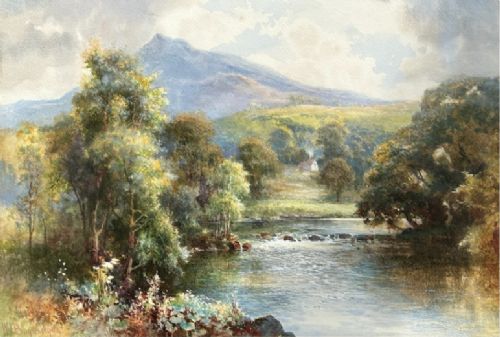
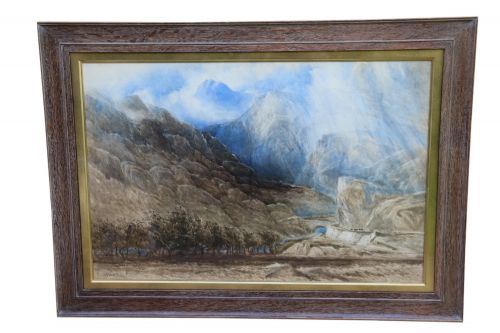
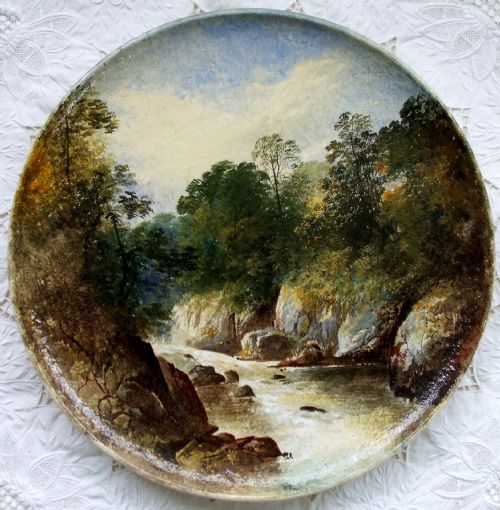
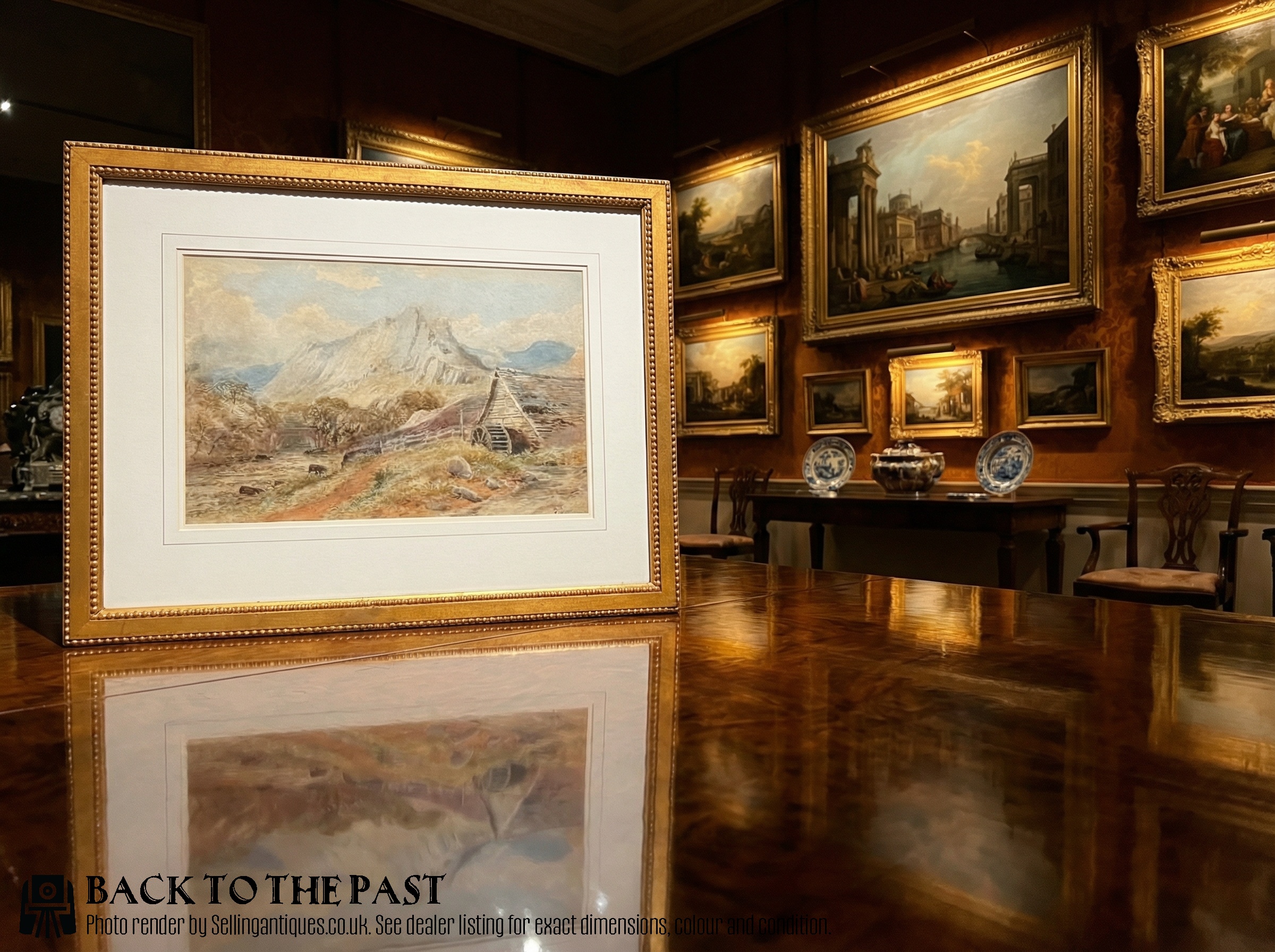
An antique welsh landscape typically takes the form of an oil painting on canvas or wood panel, a watercolour on paper, or occasionally a decorative ceramic plaque. These works focus on recognisable locations such as Snowdonia, the Conwy Valley, Betws-y-Coed, and various river estuaries across North and South Wales.
The material record spans from the late eighteenth century through the Victorian era and into the Edwardian period. Painters recurrently returned to specific geographical landmarks, depicting mountain ranges, rural homesteads, and coastal inlets under changing weather conditions.
Compositions range from intimate river scenes and pastoral valleys to dramatic mountain vistas featuring cattle, figures, or traditional architecture. The artists who recorded these regions utilised both oil and watercolour mediums to translate the distinct topography and atmosphere of the Welsh countryside.
Materials and Technique
Painters applied oil paint to stretched canvas or prepared wood panels, building up layers to render the deep greens, greys, and browns of the terrain. Watercolours on paper utilised washes and fine brushwork to capture the shifting light over lakes and mountain passes.
Substrates varied according to the scale and intention of the piece, with larger exhibition oils supported by heavy canvas and smaller field studies executed on wood panel or card. Giltwood and gesso frames completed many of the oil paintings, often contemporary to the date of execution.
Ceramic plaques employed painted pottery surfaces fired to fix the pigments, presenting detailed topographical scenes intended for interior wall display.
Listings feature oil on canvas, watercolour on paper, and wood panel supports spanning the eighteenth to the twentieth centuries.
Assessing Quality
Quality rests upon the artist's command of light, atmosphere, and spatial depth within the topographical constraints of the subject. Finer works display confident brushwork and a nuanced palette that conveys the specific weather and mood of a location rather than a formulaic rendering of scenery.
The handling of ancillary details, such as cattle, figures, or architectural elements, distinguishes accomplished compositions from generic regional views. Preservation of the original surface, minimal restoration to the pigment layer, and the presence of period framing contribute further to the standing of an individual piece.
Sidney Richard Percy·Benjamin Williams Leader·David Bates·William Henry Mander·Cornelius Pearson
The Antique Welsh Landscape Glossary
- Grisaille
- A painting executed entirely in shades of grey or neutral monochrome. This technique was frequently utilised for preliminary studies or early nineteenth-century sketches.
- Gesso
- A plaster-like mixture applied to wood or canvas as a base for painting or moulded directly onto wood to form decorative frames. It provides a smooth surface for gilding.
- Watercolour
- A paint consisting of pigment suspended in a water-based solution, applied to paper. It allows for translucent washes of colour well suited to capturing atmospheric Welsh mists.
- Giltwood
- Wood carved and coated with gold leaf or a gold-coloured finish. These frames frequently accompany nineteenth-century oil paintings.
- Topographical
- Representing a specific actual place rather than an imaginary scene. Most works in this category document named valleys, rivers, and castles.
Antique Welsh Landscape: Frequently Asked Questions
How do I identify the location in a painting?
Many works bear inscriptions, titles, or signatures directly on the front canvas, the reverse stretcher, or the framing mount. Artists frequently recorded the specific valley, river, or mountain peak within the title.
Comparing geographical landmarks such as Moel Siabod or the Llugwy river against nineteenth-century maps or contemporary descriptions often confirms the exact viewpoint.
What is the difference between oil and watercolour versions?
Oil paintings on canvas or panel offered greater durability and were traditionally produced for larger salon exhibitions. They present heavier impasto and deeper tonal ranges.
Watercolours on paper were often executed closer to nature during field excursions, relying on translucent washes of pigment to record rapid shifts in atmospheric weather.
How should I frame and display these works?
Oil paintings on canvas require stable indoor humidity away from direct sunlight to prevent cracking in the paint layer and gesso framing. They are typically displayed unglazed to let the texture of the oil paint remain visible.
Watercolours and paper works demand conservation-grade framing behind glass to protect the delicate pigments from fading under ultraviolet light.
When were most of these landscapes painted?
The majority of pieces date from the nineteenth century, driven by the Victorian interest in domestic travel, picturesque scenery, and the exploration of Welsh mountains. Artists visited regions like Snowdonia and Betws-y-Coed in significant numbers during this period.
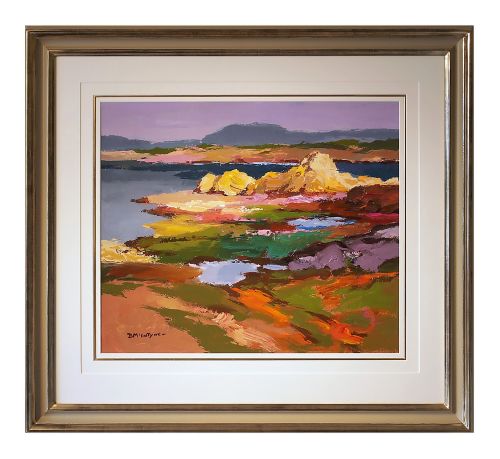
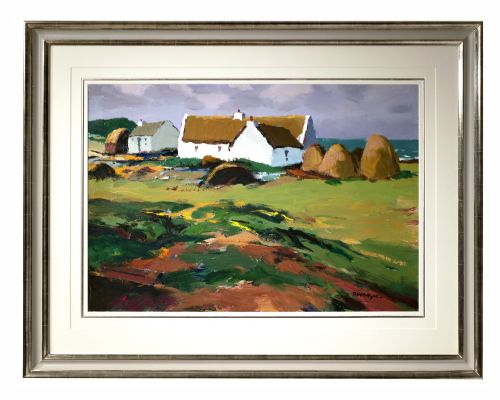
Production continued into the early twentieth century through Edwardian and modern British movements, which introduced lighter palettes and varied modernist interpretations.