


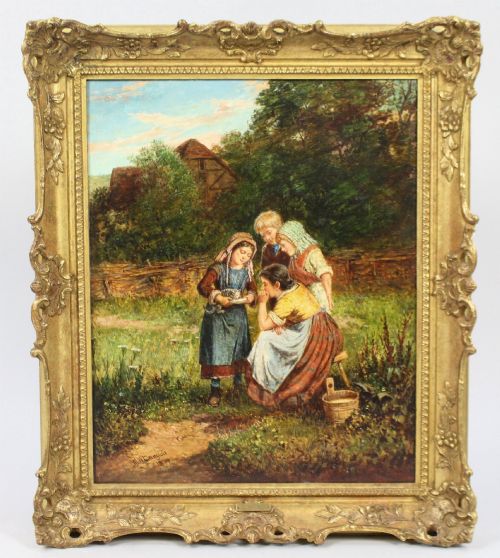

Antique Rural Artwork
Antique rural artwork captures country life, harvest scenes and village views through the brush of past centuries.
Antique Rural Artwork
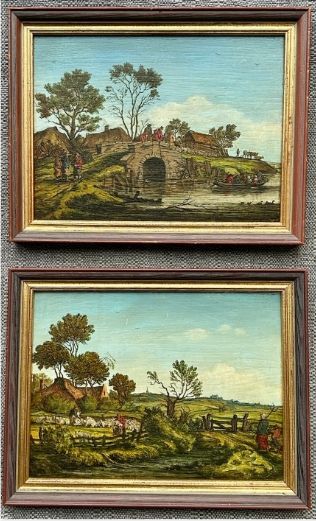
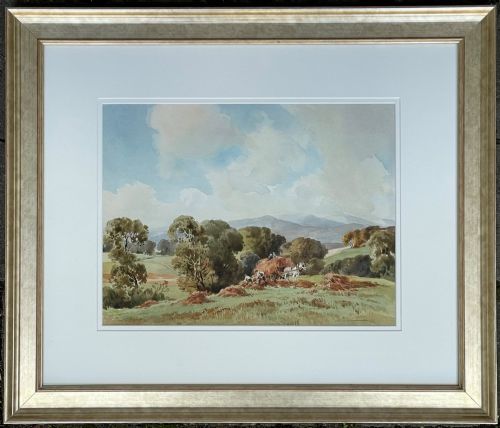
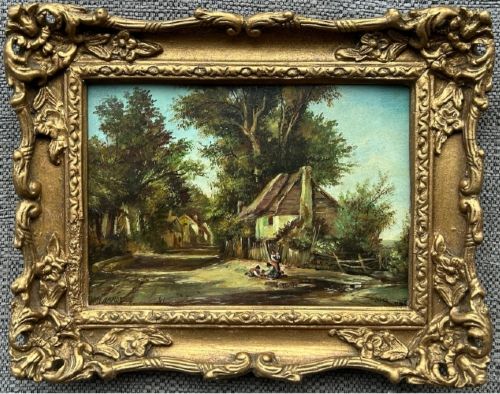
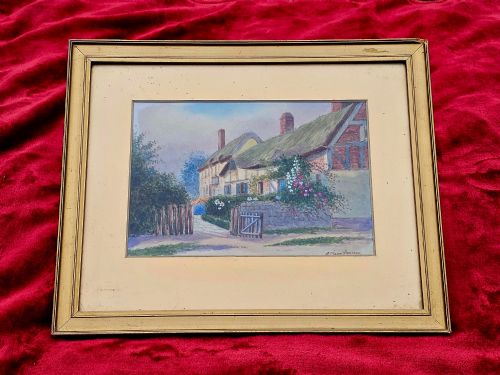
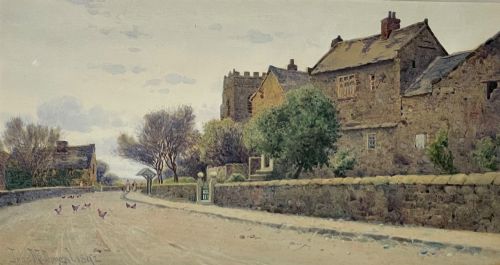
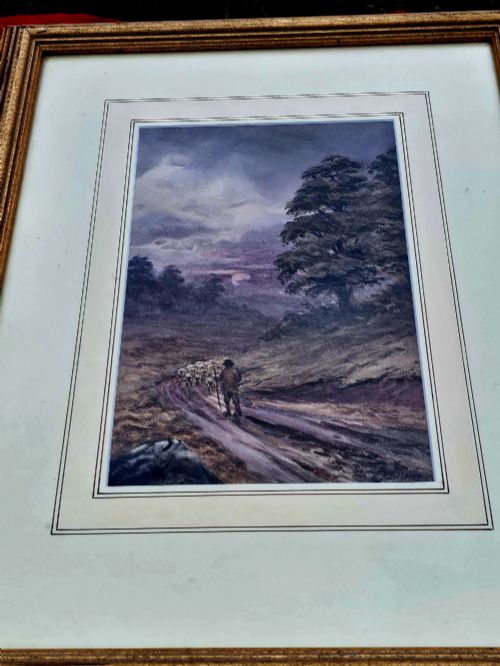
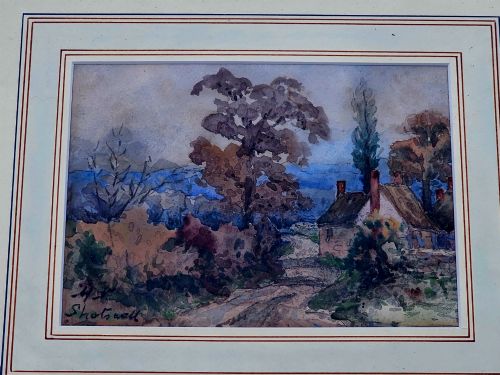
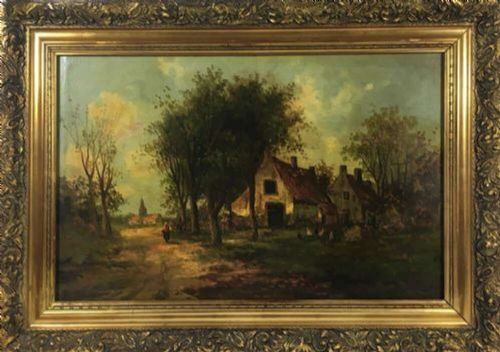
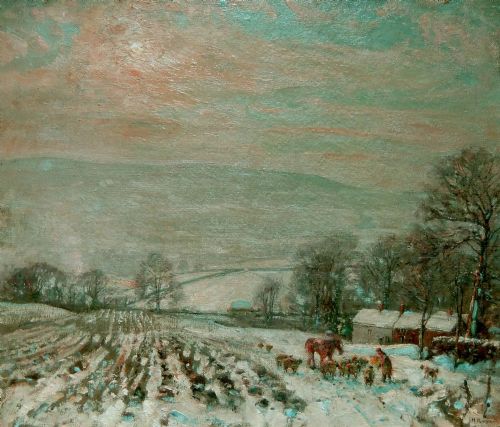
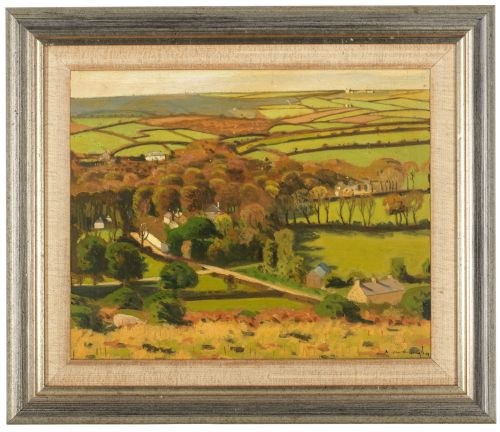
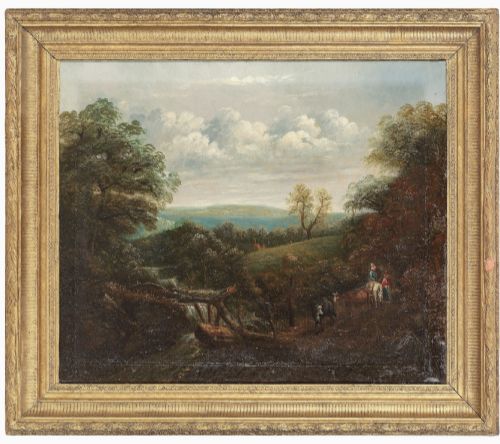
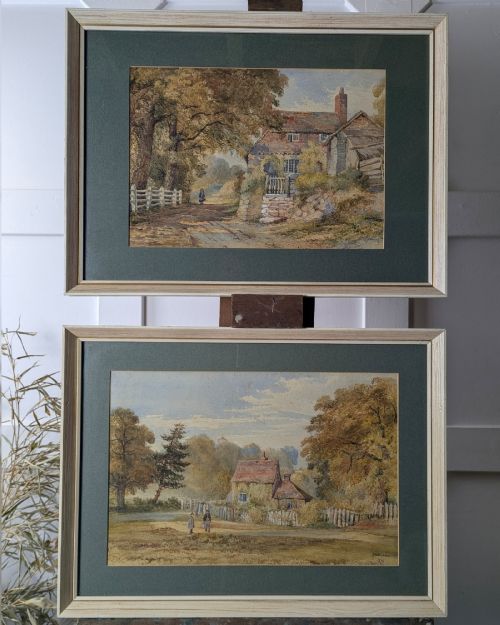
When you search for antique rural artwork, you encounter painted and watercoloured depictions of country paths, farmyards, cottages and agricultural life. The pieces on this page span the nineteenth century and the early decades of the twentieth century, capturing pastoral scenes through various regional lenses.
You are most likely to meet framed watercolours and oil paintings on panel, canvas or board. These works range from intimate watercolours of village life to larger oil paintings depicting cattle, figures and harvest landscapes.
The subjects draw heavily on British and European pastoral traditions, including works associated with schools from Norwich, Flanders and Barbizon. They reflect a period when artists turned their attention to the countryside, recording rural occupations and quiet domestic moments.
Materials and Construction
The physical foundation of these pieces relies primarily on paper for watercolours and wood panels, canvas or board for oils. Artists applied oil paint and watercolour pigments, sometimes utilising card or gilt wood frames to complete the presentation.
Techniques vary from delicate washes of watercolour on paper to rich, textured layers of oil paint applied to wooden panels or canvas. Many pieces retain their original framing materials, preserving the historic character of the artwork.
Antique Rural Artwork Retail Price Guide 2026
Typical asking prices for rural artwork among the pieces listed under this phrase on Sellingantiques today, from the lower quarter to the upper quarter. They describe what is for sale here now, not the wider market.
Several pieces capture the specific drama of livestock being herded to market or farmyard animals waiting expectantly for their meal.
Evaluating Quality and Execution
The distinction between standard works and finer pieces rests upon the surety of the brushwork and the observation of light and atmosphere. Stronger examples display a confident handling of figures, animals and landscape details that bring the rural scene to life.
Compositional balance and the preservation of the original medium also separate the ordinary from the exceptional. Works that retain their vibrant pigment and tonal harmony without excessive retouching command greater attention from collectors.
W Klombeck·Percy Lancaster·William Howard Hardy·A. Marie Parsons·William Joseph Shayer Senior·John McDougal·EJ Letheren·Herbert Royle·Robert A. Nottingham·Mark William Langlois·David Bates·Robert John Hammond·Charles Houben·Walter Heath Williams·Robert W. Macbeth·John Horace Hooper·George Augustus Holmes·Ernest Higgins Rigg·George Oyston·Frederick James Kerr·Edgar Hunt·Umberto Volpato·William Greaves·Miles Birkett Foster·Charles Henry Slater
The Antique Rural Artwork Glossary
- Watercolour painting
- A work executed with water-soluble pigments on paper, valued for its luminous transparency and delicate handling of light.
- Oil on panel
- A painting created using oil-based pigments applied directly to a wooden support rather than stretched canvas.
- Barbizon School
- A nineteenth-century French movement focused on realistic landscape painting, often capturing untamed rural scenery and farm life.
- Norwich School
- A regional group of British artists influenced by Dutch landscape traditions, depicting local scenery around Norfolk and the surrounding countryside.
- Genre painting
- The pictorial representation of scenes from everyday life, frequently featuring figures engaged in domestic tasks, farming or rural labour.
Antique Rural Artwork: Frequently Asked Questions
What subjects appear in these paintings?
These works typically show farmyards, harvest fields, cottages, livestock and figures engaged in rural labour or quiet village life.
Artists drew inspiration from local British landscapes as well as continental European pastoral traditions.
How should I frame an antique painting?
Many pieces come in period frames, often made of gilt wood, which complement the age and style of the artwork.
Preserving or matching a period-appropriate frame helps maintain the historical integrity of the piece.
Are watercolours more fragile than oils?
Watercolours on paper are sensitive to direct sunlight and moisture, requiring careful placement under glass away from harsh light.
Oil paintings on canvas or wood panels are generally more robust but still benefit from stable indoor humidity levels.
How can I tell the age of a piece?
Age is often indicated by the materials used, such as historic paper types, wooden panels, or the construction style of the frame.
Signatures, artist dates and stylistic clues relating to movements like Victorian realism provide further chronological context.