


Antique Wash Basin Jug
An antique wash basin jug brings practical Victorian and Edwardian hygiene into the modern home as a decorative ceramic centrepiece.
Antique Wash Basin Jug
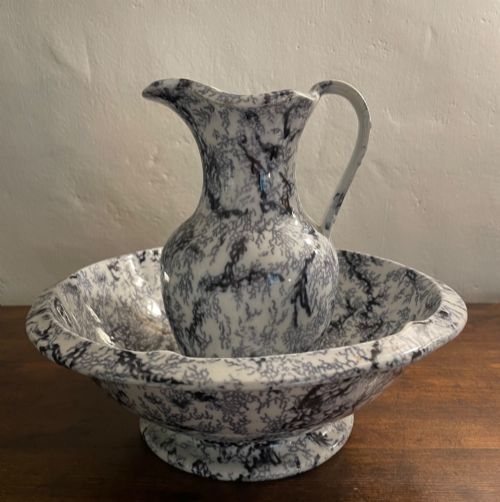
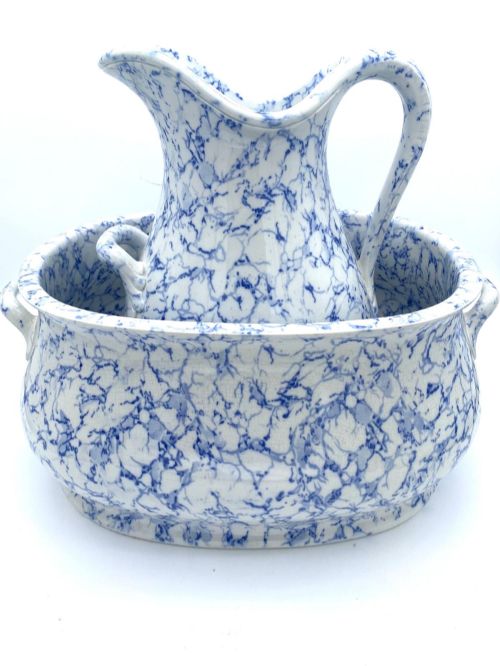
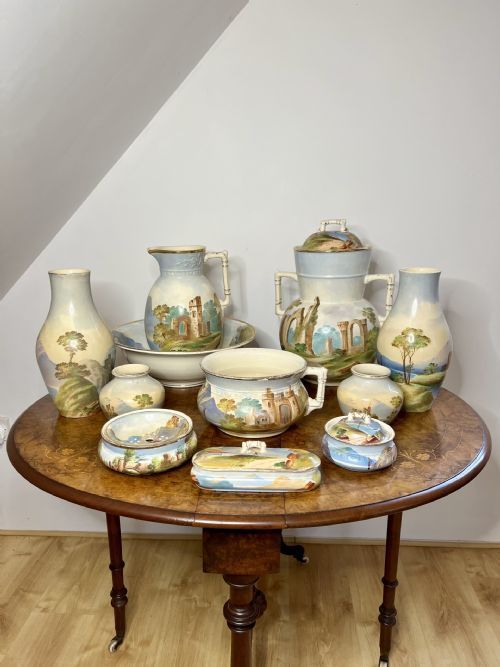
An antique wash basin jug is found within the wider category of wash sets, washstand sets, and jug and bowl sets that populated nineteenth-century bedrooms before plumbed bathrooms. These vessels range from large earthenware water pitchers designed for daily washing to miniature sets and complete four-piece bathroom suites.
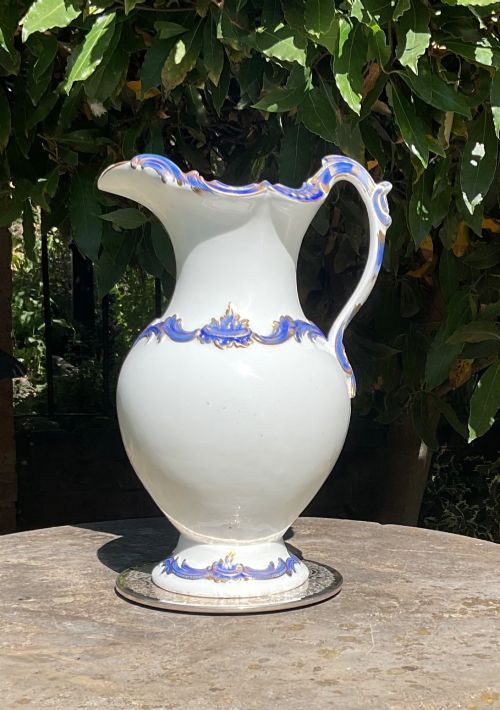
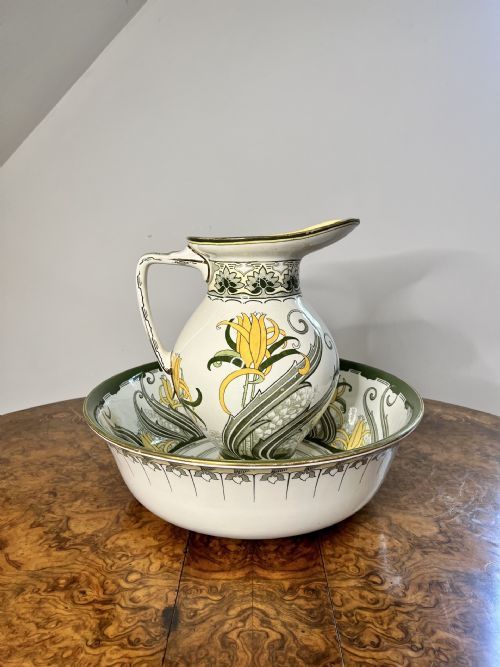
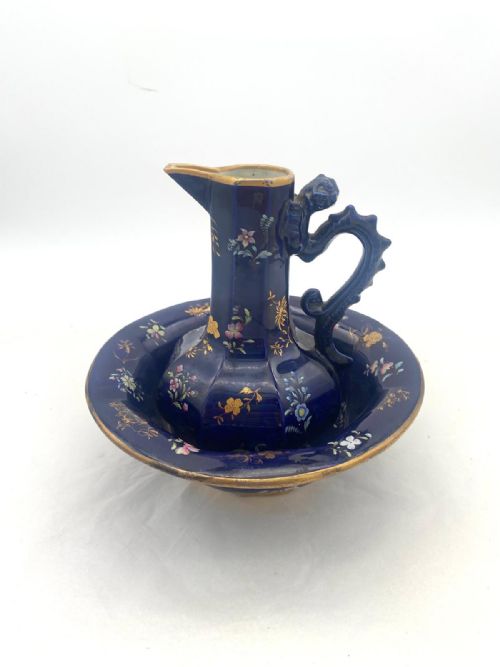
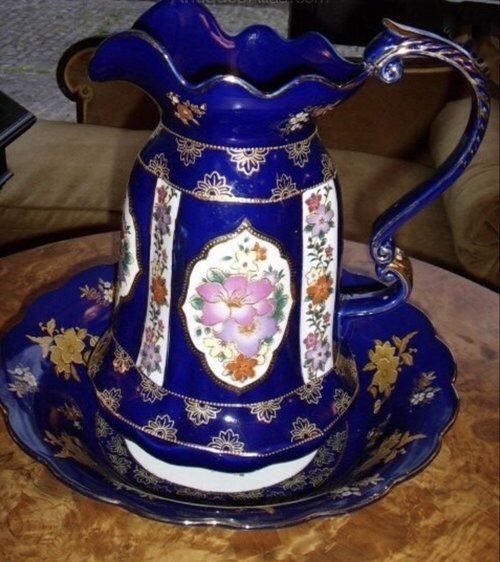
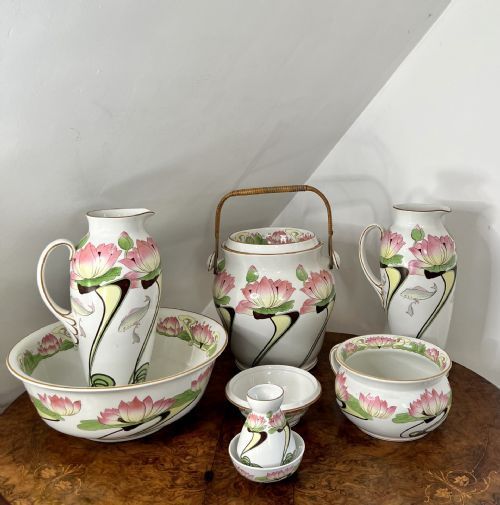
The pieces appearing on this page span the early nineteenth century through the Edwardian era, encompassing distinct styles such as Victorian Chinoiserie, Regency, and flowing Art Nouveau designs. A buyer searching for this phrase encounters varied forms, from heavy ironstone basins to delicate porcelain pitchers adorned with cobalt blue glazes or floral patterns.
Materials and manufacture
Potters constructed these sets using earthenware, ironstone, and porcelain, applying rich glazes and enamel decoration to achieve durable surfaces capable of holding water daily. Certain pitchers incorporate gold leaf, gilt accents, or silver plate to elevate the appearance of the ceramic or glass body.
Miniature sets allowed Victorian children to practice proper bedside washing manners with pint-sized jugs and bowls.
Judging quality and execution
Quality in an antique wash basin jug rests on the crispness of the transfer printing, the delicacy of the porcelain or ironstone body, and the richness of the glaze. Finer examples display hand-painted enamel touches over transfer lines, alongside well-balanced handles and symmetrical pouring lips.
The prestige of the pottery and the complexity of the pattern dictate the upper tier of these pieces. Elaborate forms like octagonal jugs, matching footbaths, and complete multi-piece sets demonstrate superior craftsmanship compared to standard utility basins.
Minton·Masons Ironstone·Doulton Burslem·Shelley·Christofle
The Antique Wash Basin Jug Glossary
- Flow blue
- A cobalt blue transfer printing style where the colour blurred slightly into the white glaze during firing. This effect created a hazy, atmospheric depth popular in nineteenth-century earthenware.
- Ironstone
- A heavy, durable type of feldspathic earthenware patented in the early nineteenth century. It resists chipping better than soft-paste porcelain while retaining a bright white surface.
- Wash set
- A matched grouping typically comprising a large water jug, a deep basin, a slop bucket, and smaller soap or brush dishes. These sets sat atop dedicated wooden washstands in period bedrooms.
- Cranberry glass
- A rich red-pink glass coloured with gold chloride during the melting process. It was frequently blown into Victorian jugs and bowls for display.
Antique Wash Basin Jug: Frequently Asked Questions
What is an antique wash basin jug used for today?
Modern collectors utilise these jugs primarily as decorative interior objects, placing them on sideboards or using them to display dried or fresh floral arrangements.
They also serve as striking umbrella stands in hallways or standalone sculptural pieces that anchor a room's decorative scheme.
How do I distinguish Victorian sets from Edwardian ones?
Victorian sets often feature heavier ironstone bodies, deep cobalt blue transfer prints, and ornate geometric or Chinoiserie motifs. They reflect a Victorian taste for robust, richly decorated utility ware.
Edwardian sets tend to display lighter porcelain construction, softer floral patterns, and flowing Art Nouveau contours that suit a brighter domestic interior.
Did these jugs always come with matching basins?
Potteries produced these vessels as components of larger wash sets designed to sit together on bedroom washstands. While jugs and basins were sold as pairs or multi-piece suites, centuries of use mean they are sometimes separated.
Finding a complete set with both the original jug and its matching basin remains a desirable outcome for collectors.
How should I clean and care for ceramic jugs?
Wash ceramic and porcelain surfaces gently using warm water and a mild detergent, avoiding harsh scrubbers that can scratch old glazes or remove gilt details. Because nineteenth-century earthenware can be porous if crazed, avoid submerging pieces for extended periods.
Hand drying with a soft cloth preserves the historic glaze and prevents moisture damage to older ceramic bodies.