
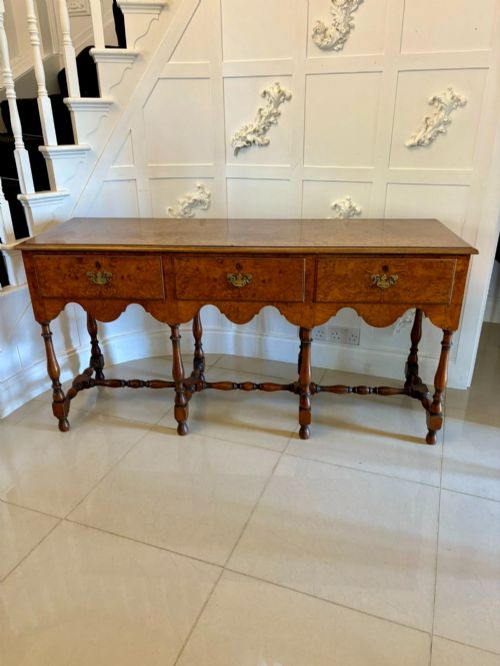
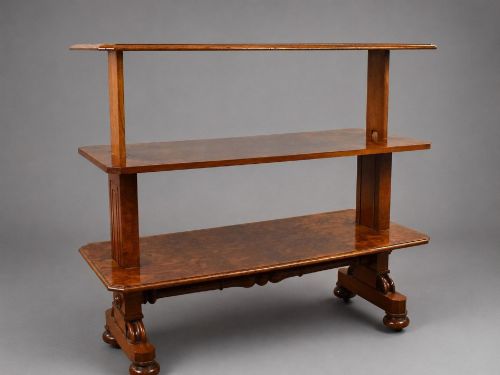

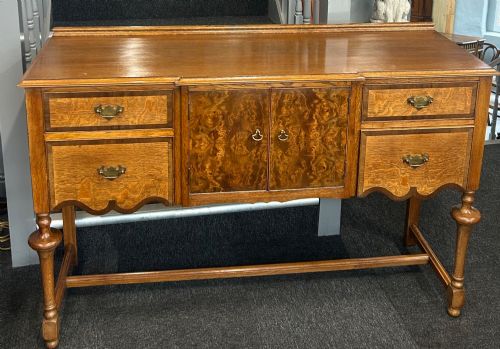
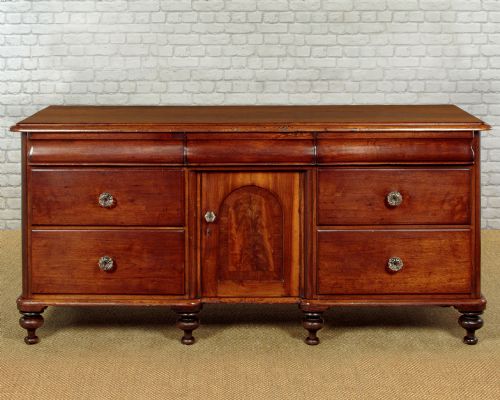


Antique Walnut Sideboard Table
An antique walnut sideboard table brings domestic service and display together through rich timber figures.
Antique Walnut Sideboard Table
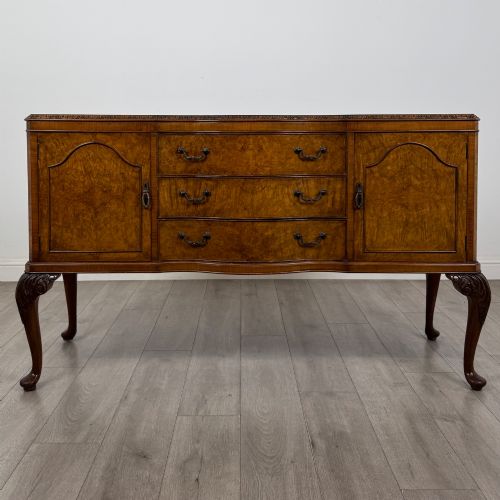
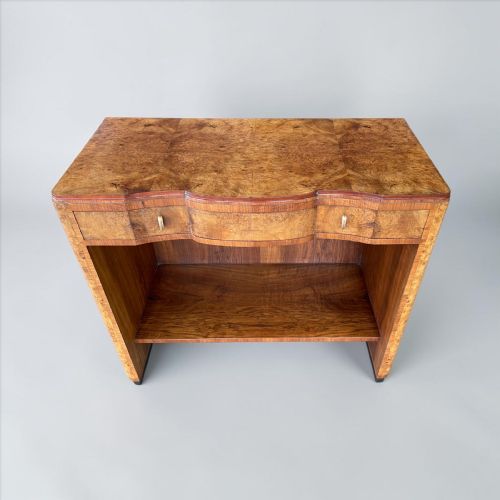
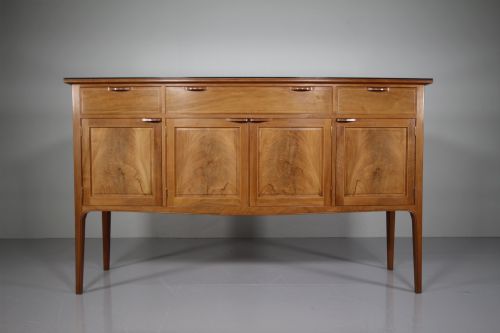
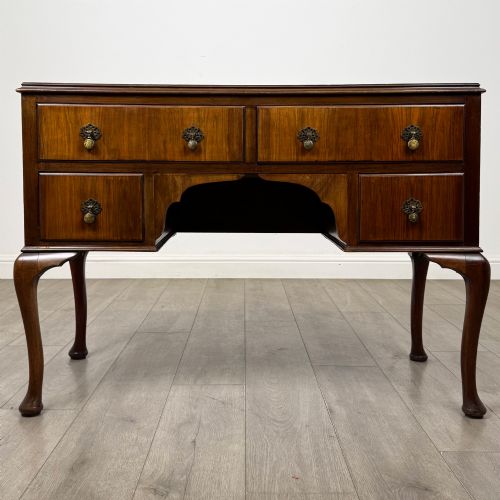
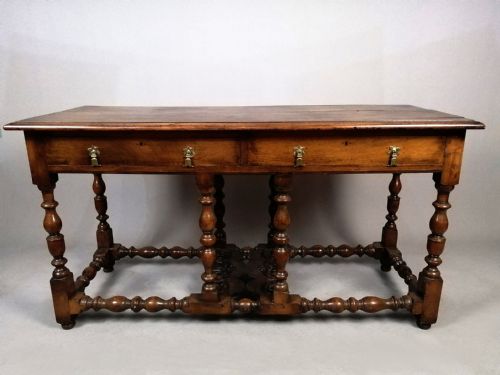
An antique walnut sideboard table spans formats from serving tables and low credenzas to pedestal desks, dresser bases, and console tables. These pieces bridge dining rooms and reception spaces, originating across British, French, and Italian workshops.
The selection ranges from eighteenth-century Georgian and Queen Anne examples through Victorian and Edwardian iterations to bold Art Deco designs from the nineteen-thirties. Buyers most frequently encounter Edwardian and interwar pieces alongside nineteenth-century buffet forms.
Makers utilised diverse secondary timbers like oak alongside the primary walnut to construct these substantial serving and storage items. The results suit contemporary interiors requiring deep timber grain and functional surface area.
Judging Quality
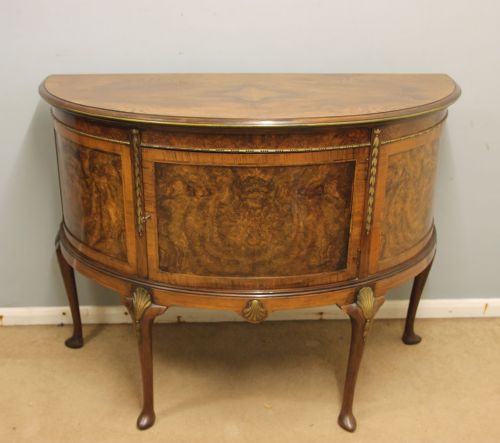
The choice of veneer defines visual hierarchy, with symmetrical burr walnut figuring commanding attention over plain straight-grained stock. Mastery of the grain layout across multiple drawers or doors separates workshop standards.
Secondary wood selection and structural joinery integrity dictate longevity. Original brass hardware, uncompromised marble tops, and crisp hand-carved mouldings elevate an example above standard commercial production.
Metamorphic French buffets transform the dining room while hiding clever compartments behind burr walnut panels.
Maurice Adams·Epstein·Hille of London·Étienne Kohlmann·Pietro Ferrario·Harry And Lou Epstein·Whytock & Reid·Thurston
The Antique Walnut Sideboard Table Glossary
- Burr Walnut
- A timber derived from the growth excrescences on walnut trees, yielding intricate, swirling grain patterns. Cabinetmakers prize this veneer for decorative door panels and tabletops.
- Dumbwaiter
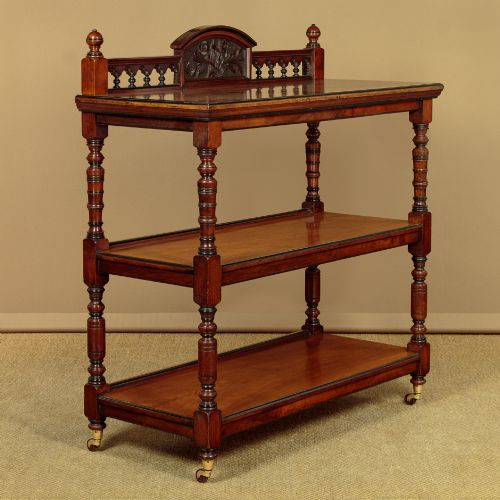
- A multi-tiered serving piece fitted with revolving or stationary shelves for holding dishes. Victorian examples often feature graduated circular trays on a central column.
- Credenza
- A low dining-room sideboard or cabinet designed for displaying plate and storing silver. These pieces frequently incorporate glazed doors or marble tops.
- Dresser Base
- A low rectangular cabinet fitted with drawers and cupboards beneath a broad serving surface. Eighteenth and nineteenth-century versions typically rely on solid timber construction.
- Console Table
- A table designed to stand against a wall, sometimes supported by wall brackets or front legs. Marble tops and demi-lune shapes frequently characterise walnut examples.
Antique Walnut Sideboard Table: Frequently Asked Questions
How do I date a walnut sideboard?
Dating relies on architectural styling, construction methods, and hardware choices. Eighteenth-century versions display simpler drawer linings and bracket feet, while Victorian examples introduce heavy carved ornamentation.
Art Deco pieces from the nineteen-thirties favour streamlined geometric curves and dramatic burr walnut veneers without traditional applied decoration.
Where should I place a sideboard table?
These pieces suit dining rooms as serving surfaces, hallways as console tables, or living spaces for media and display. Their shallow depths allow placement in narrower corridors without obstructing movement.
Pairing the rich brown tones with neutral walls lets the natural grain patterns and brass hardware stand out.
What distinguishes burr walnut from plain walnut?
Plain walnut exhibits a straight, uniform grain pattern with subtle colour variations across the board. Burr walnut comes from tree growths that create dense, swirling clusters of knots and eyes.
Cabinetmakers sliced this burr wood into thin veneers to cover large surfaces, creating dramatic decorative patterns impossible to achieve with solid timber.