
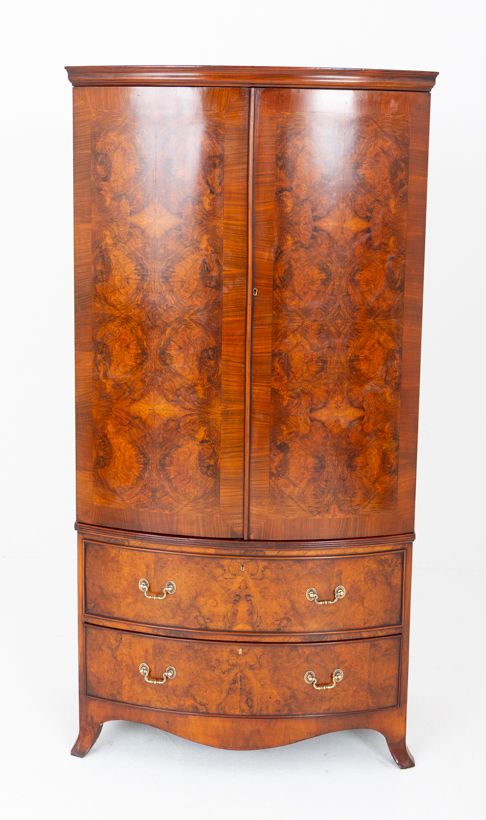
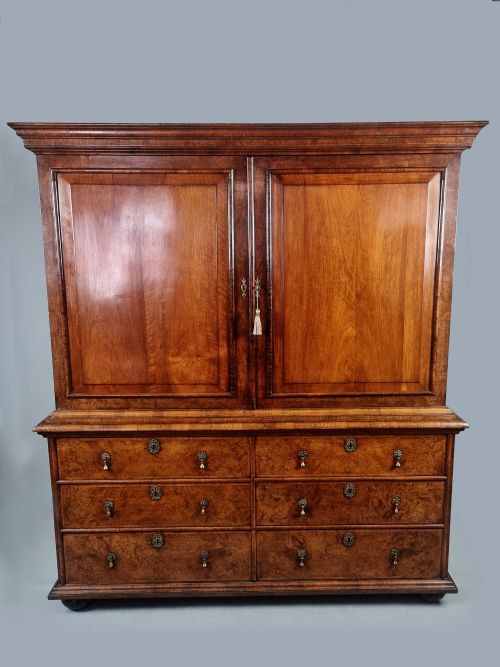
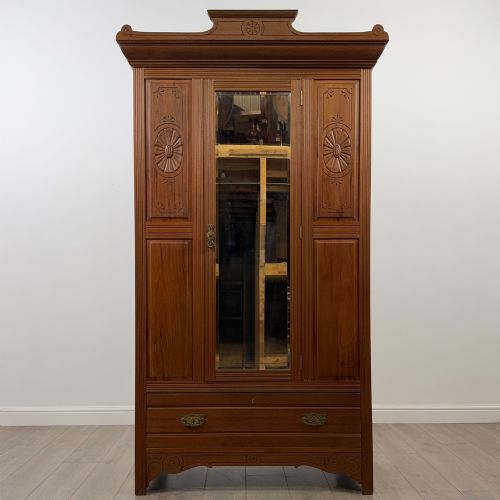
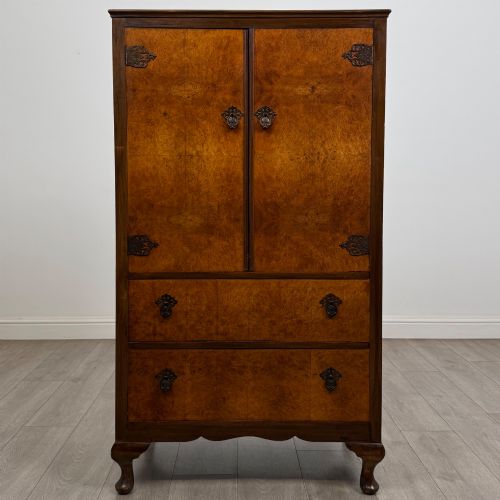

Antique Walnut Clothes Press
An antique walnut clothes press offers substantial storage through fitted internal sliding trays or hanging space, combining figured timber with period craftsmanship.
Antique Walnut Clothes Press
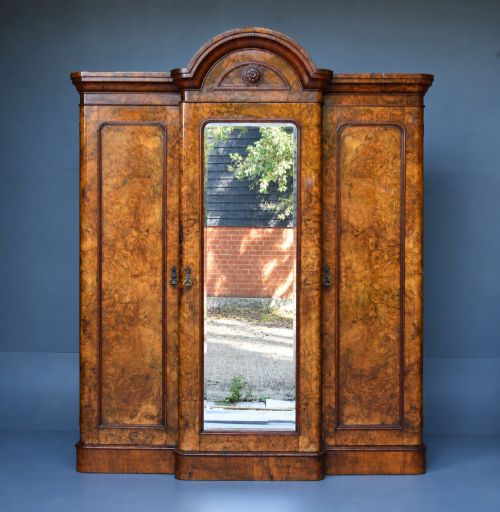
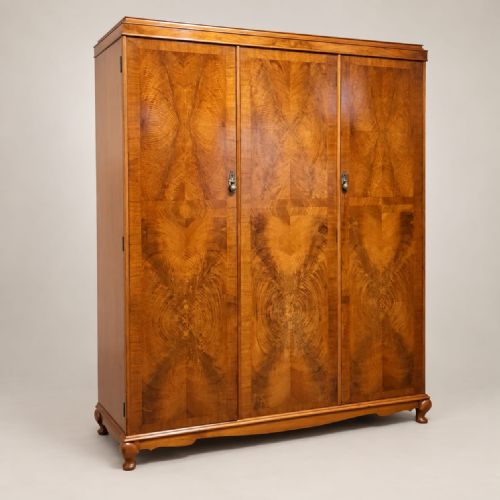
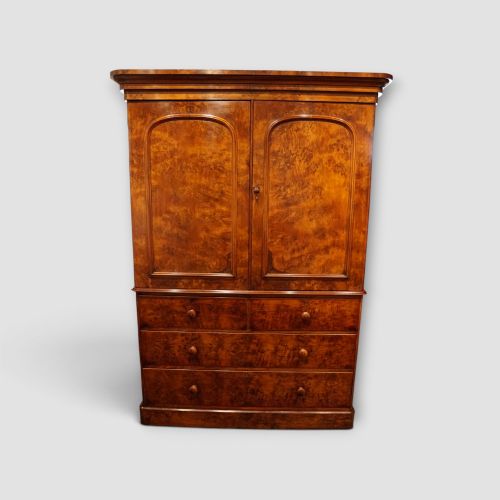
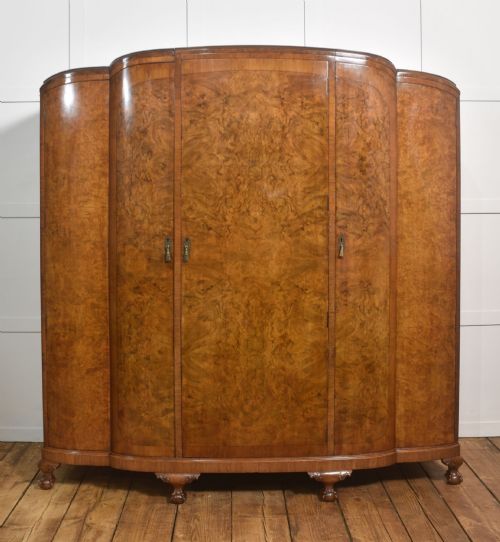
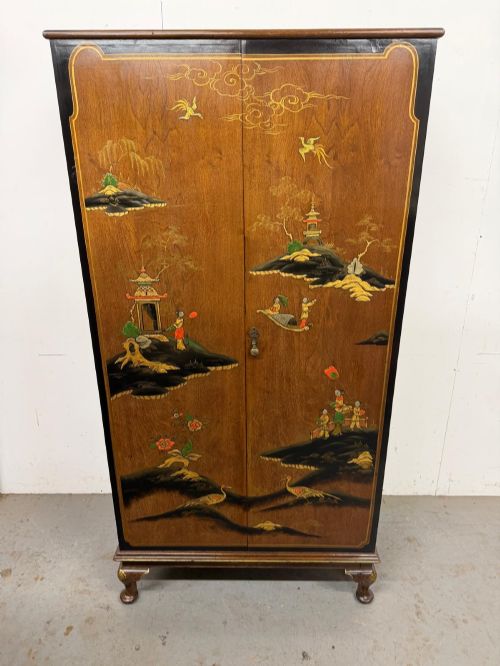
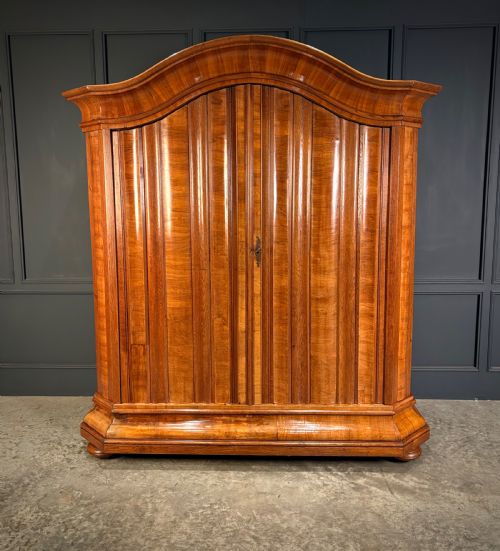
An antique walnut clothes press groups together large bedroom storage furniture including wardrobes, armoires, linen presses, and compactums. These substantial timber items range from early eighteenth-century press cupboards to Victorian triple wardrobes and later Art Deco interpretations.
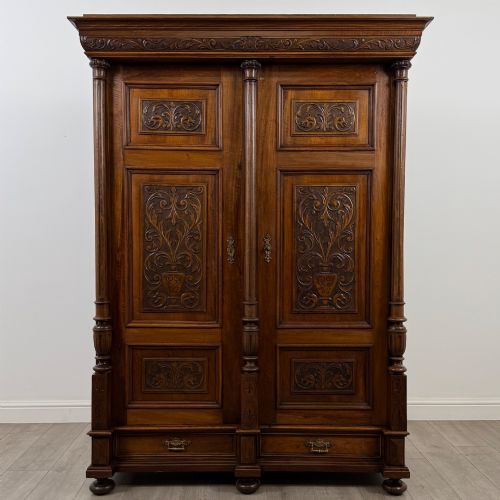
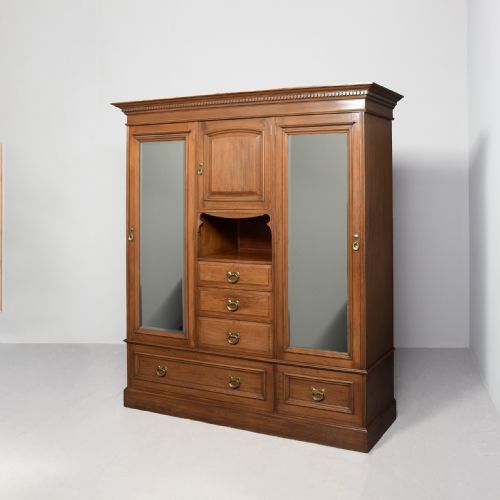
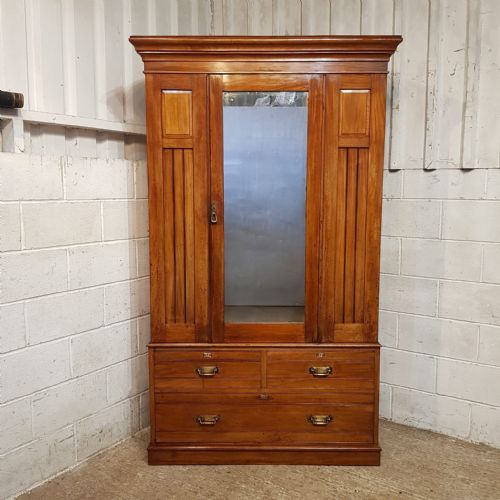
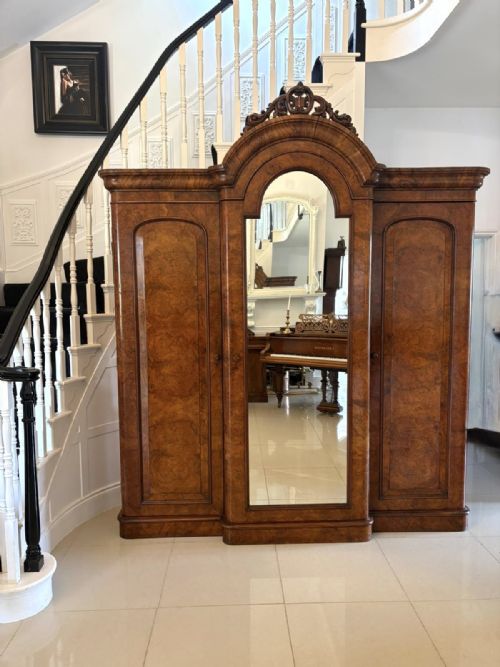
The version most commonly met on this page is the Victorian or Edwardian burr walnut wardrobe or compactum, often featuring panelled doors, mirrored sections, and internal drawers. Pieces span centuries of design, covering Queen Anne, Georgian, Art Nouveau, and 1930s styles alongside Continental armoires.
How they were made
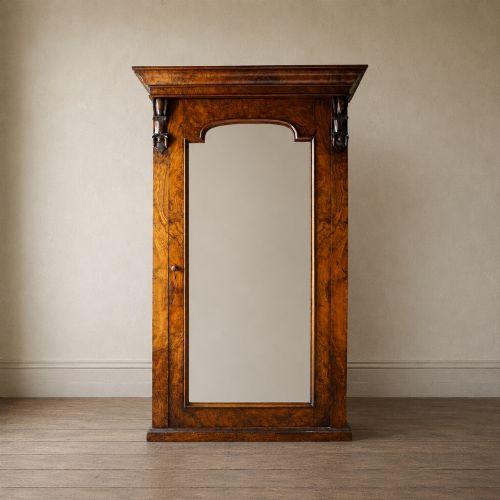
Cabinet makers utilised solid walnut and decorative burr walnut veneers applied over secondary woods like oak, pairing rich grain patterns with brass hardware and occasionally glass or ormolu mounts. Surfaces received French polishing or traditional oil finishes to accentuate the natural figure of the timber.
Construction methods evolved from eighteenth-century panelled and carved carcases to large nineteenth-century modular wardrobes and compactums designed to be dismantled for transport. Carved details, marquetry work, and curved bow-fronts required specialist joinery techniques specific to each stylistic period.
Antique Walnut Clothes Press Retail Price Guide 2026
Typical asking prices for walnut clothes press among the pieces listed under this phrase on Sellingantiques today, from the lower quarter to the upper quarter. They describe what is for sale here now, not the wider market.
Materials recorded across the inventory include solid walnut, burr walnut veneer, oak, brass, glass, and ormolu.
What varies in quality
The visual impact of the timber figure dictates much of the standing of an antique walnut clothes press, with highly figured burr walnut and book-matched veneers commanding greater appreciation than plain straight-grained surfaces. The depth of colour and the preservation of the original polished finish reflect the initial standard of manufacture.
Structural harmony and proportion separate standard utilitarian pieces from exceptional workshop output, particularly in large triple wardrobes and breakfront designs. Subtle details such as finely cut brass escutcheons, well-fitted internal sliding trays, and integrated drawer construction indicate superior cabinet work.
Lamb of Manchester
The Antique Walnut Clothes Press Glossary
- Burr walnut
- A veneer taken from the knotted growth of a walnut tree, producing swirling, highly decorative grain patterns prized by cabinet makers.
- Compactum
- A multi-functional wardrobe that combines hanging space, linen slides, and internal drawers within a single fitted unit.
- Linen press
- A traditional piece of furniture featuring upper doors enclosing sliding trays for folded textiles above a chest of lower drawers.
- Armoire
- A large freestanding cupboard or wardrobe of European origin, typically featuring two large doors enclosing deep storage space.
- Marquetry
- The art of applying pieces of veneer to a structural structure to form decorative patterns or pictorial designs.
Antique Walnut Clothes Press: Frequently Asked Questions
How were clothes presses used historically?
Before modern built-in closets became standard in homes, families relied on these large cabinets to store household linens, folded garments, and hanging clothes.
Internal sliding trays kept folded textiles neat, while lower drawer sections provided space for smaller apparel and accessories.
How do I fit a large wardrobe into a modern bedroom?
Many antique wardrobes and compactums were constructed in modular sections designed to be completely dismantled, allowing them to be moved and reassembled in rooms with standard ceiling heights.
Measuring the clearance for cornice mouldings and door swings ensures the piece sits comfortably within your available floor space.
How can I tell the period of a walnut wardrobe?
Stylistic clues such as bracket feet, fielded panels, and carved pediments point toward eighteenth-century Georgian or Queen Anne origins, whereas mirrored doors and breakfront layouts generally indicate Victorian or Edwardian manufacture.
Art Deco and 1930s examples present cleaner geometric lines, cloud walnut veneers, and minimal ornamentation compared to earlier revival styles.