

Antique Walnut Clothes Armoire
An antique walnut clothes armoire brings warmth and grand proportion to a bedroom, offering deep storage within figured timber fronts.
Antique Walnut Clothes Armoire
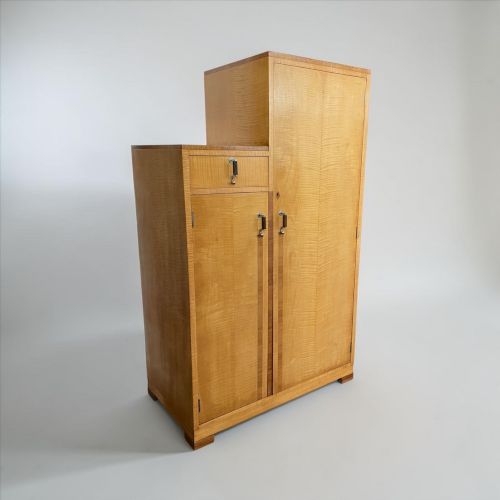
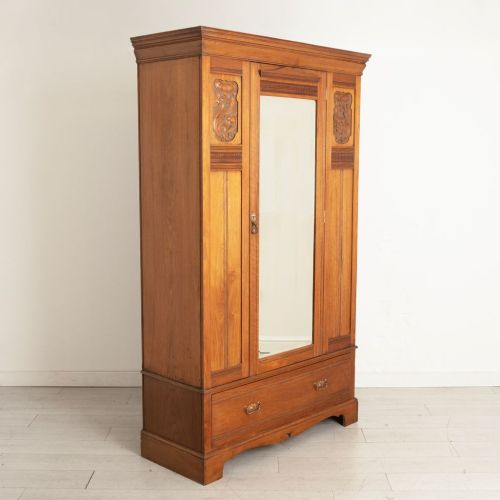
When searching for an antique walnut clothes armoire, buyers encounter a range of large storage furniture designed for hanging garments, linen, and personal items. These pieces span several centuries, with prominent representation from the Victorian era, the Edwardian period, and the 1920s and 1930s.
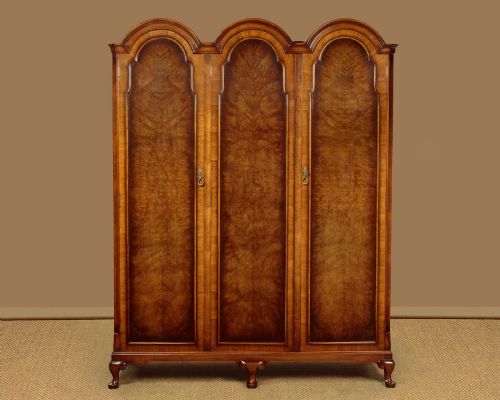
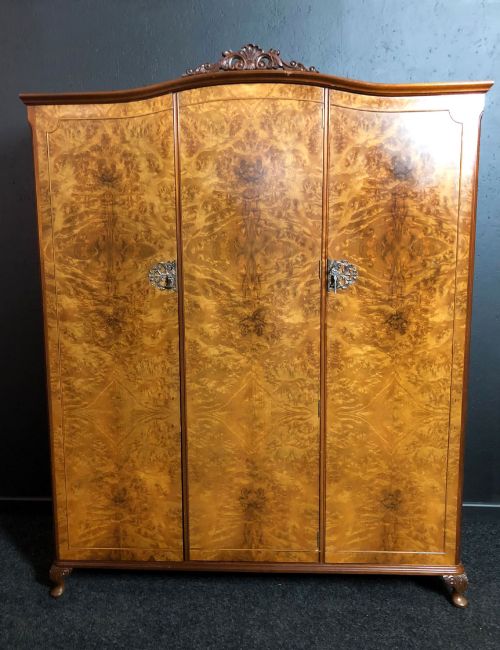
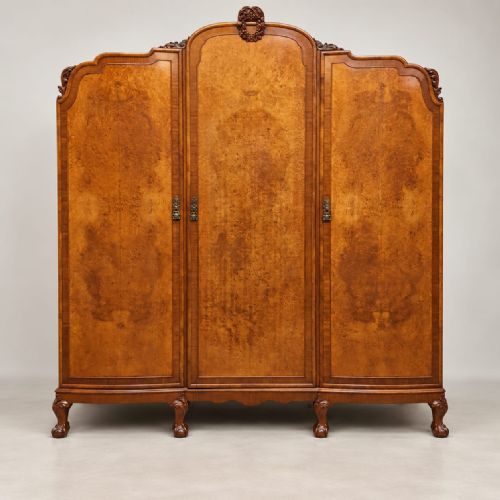
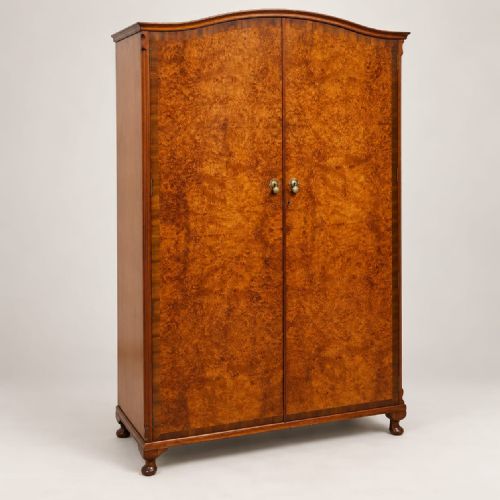
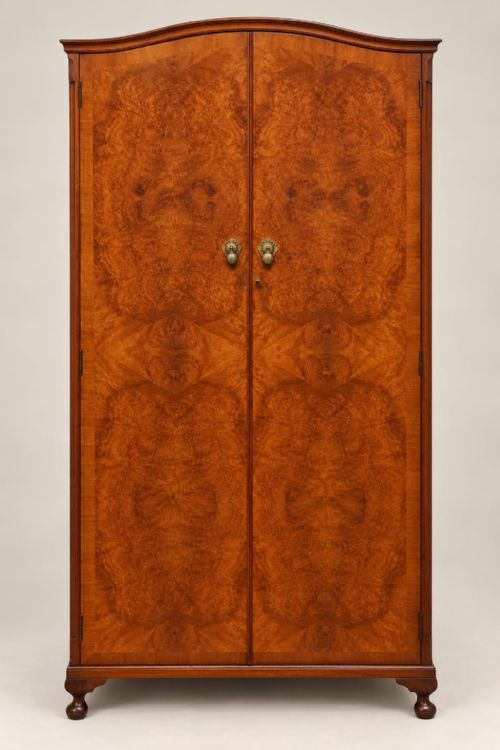
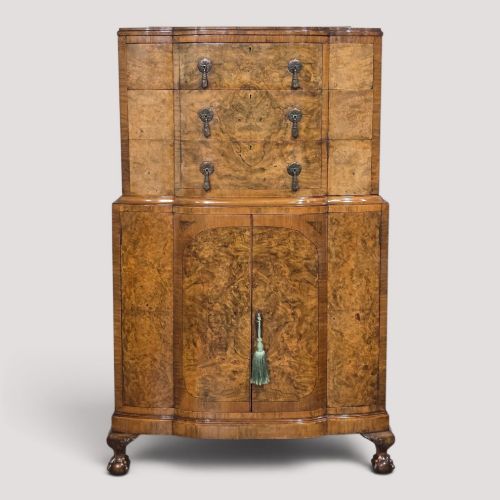
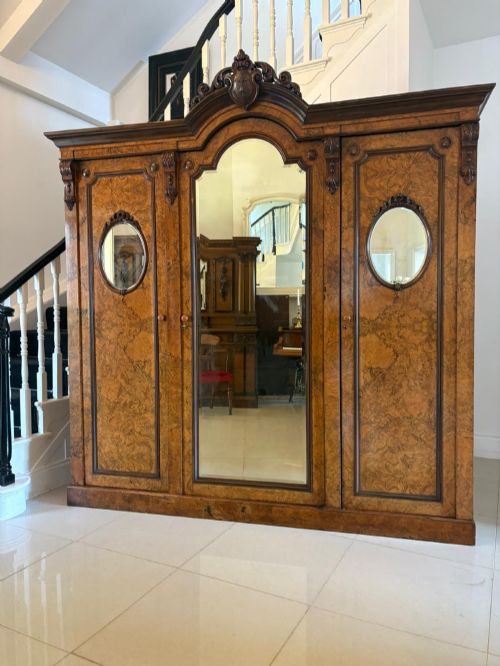
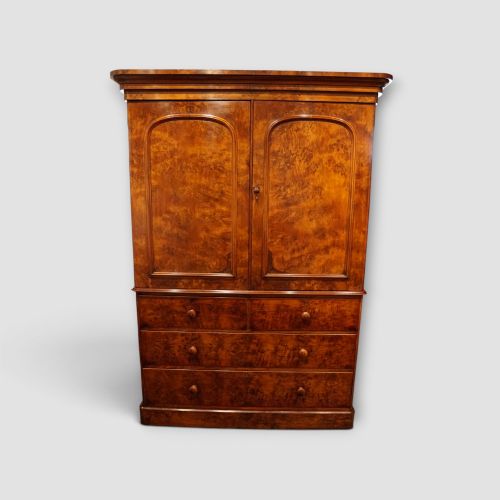
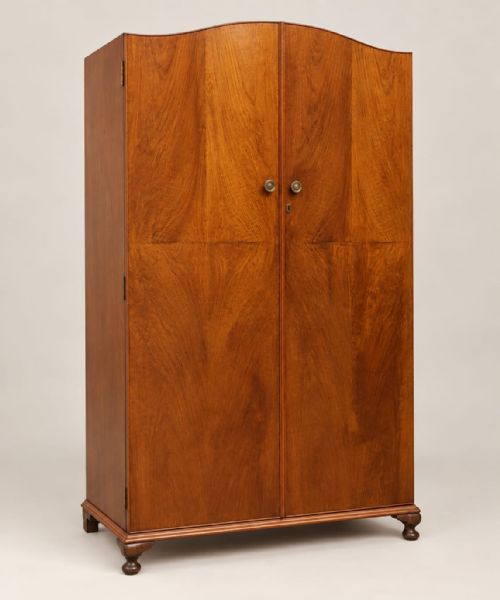
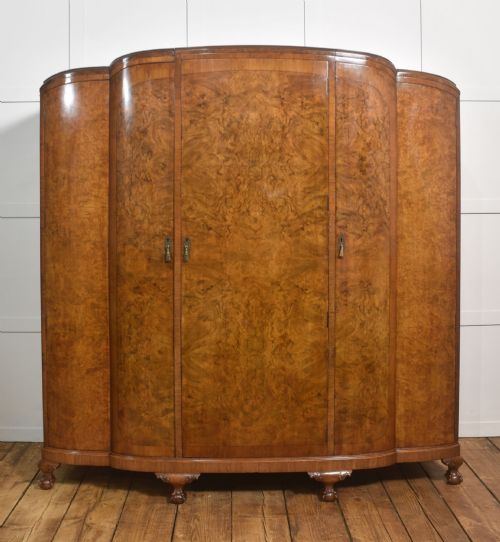
The version most likely to appear in current selections is the double or triple wardrobe, frequently constructed with burr walnut veneer. Alongside standard wardrobes, buyers find compactum models, linen presses, and corner robes originating from English and continental workshops.
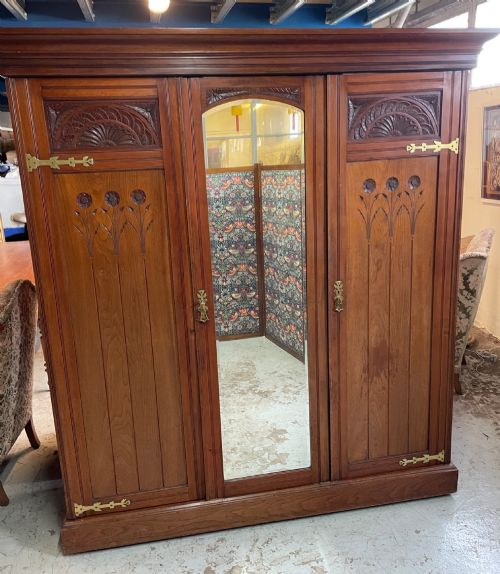
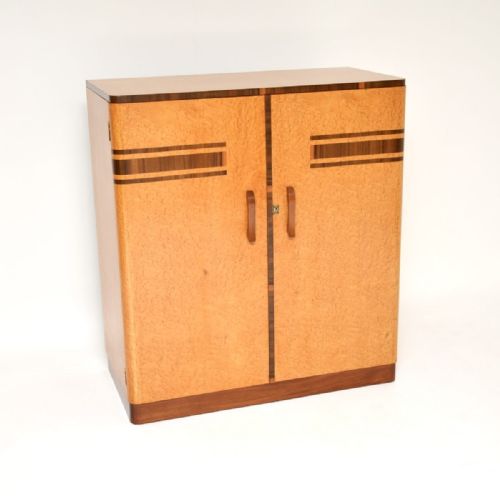
Stylistic influences vary widely across the inventory, ranging from 18th century Queen Anne revivals and Dutch Baroque forms to Arts and Crafts, Art Nouveau, and streamlined Art Deco designs. Pieces incorporate varied internal configurations such as drawers, shelves, and mirrored doors.
Materials and Construction Techniques
Cabinet makers utilised solid walnut, oak, and satinwood as structural timber frames, applying highly figured burr walnut and walnut veneer to exterior surfaces to create striking grain patterns. Brass hardware, including hinges, handles, and locks, complements the dark timber tones.
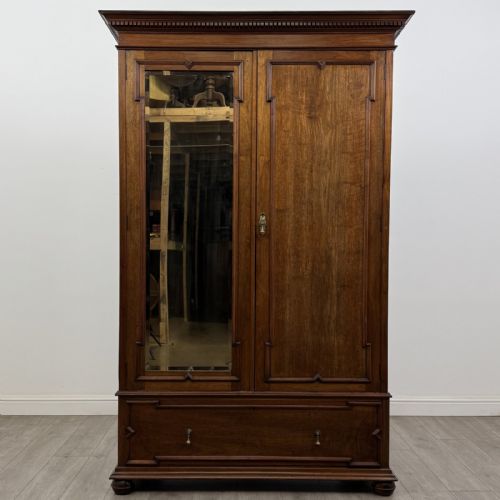
Glass panels appear frequently in mirrored doors, while internal fittings often integrate secondary timbers like oak and pine for drawers and sliding trays. Construction methods combine traditional joinery with veneering techniques tailored to curved bow fronts and breakfront forms.
Antique Walnut Clothes Armoire Retail Price Guide 2026
Typical asking prices for walnut clothes armoire among the pieces listed under this phrase on Sellingantiques today, from the lower quarter to the upper quarter. They describe what is for sale here now, not the wider market.
Several wardrobes retain secret internal drawers once designated for hiding currency and jewellery from visiting housemaids.
Distinctions in Quality
Quality in these wardrobes rests on the selection and matching of the timber veneers, particularly the symmetry of burr walnut grain across large double and triple doors. Exceptional examples display meticulous hand-carving, original brass fittings, and well-executed serpentine or bow front contours.
Structural integrity and internal configuration also define the upper tier of pieces, where fully fitted compartments, original bevelled mirror glass, and branded maker stamps indicate superior workshop production.
Waring and Gillow·Maple and Co·Shapland and Petter·Lamb of Manchester·Jean Faure
The Antique Walnut Clothes Armoire Glossary
- Burr walnut
- A veneer taken from the growth wart of a walnut tree, prized for its swirling, highly decorative grain patterns. It forms the primary visual draw on many 19th and 20th century wardrobe doors.
- Compactum
- A multi-section wardrobe that combines hanging space with internal drawers, shelves, and sometimes compartmentalised linen storage. This form maximises utility within a single cabinet footprint.
- Linen press
- A tall storage piece featuring upper cabinet doors enclosing sliding trays or shelves, positioned above a base of wider chest drawers. These cabinets were traditionally used for storing folded household textiles.
- Veneer
- A thin layer of figured wood applied over a stable secondary timber carcass to provide an ornate exterior surface. It allows cabinet makers to display dramatic grain without relying entirely on solid scarce timber.
- Breakfront
- A piece of furniture where the central section projects forward from the flanking outer wings. This architectural arrangement adds depth and shadow play to large triple wardrobes.
Antique Walnut Clothes Armoire: Frequently Asked Questions
How do I fit a large wardrobe?
Measure your ceiling height and floor space carefully before selecting a triple or compactum wardrobe, as these pieces arrive as substantial assembled units. Ensure clearance allows for the full opening of large hinged doors.
Consider delivery access through stairwells and hallways, as many antique wardrobes do not dismantle completely. Professional delivery teams usually handle the positioning and levelling on uneven historic floors.
What is a compactum wardrobe?
A compactum is a multi-functional wardrobe designed to house various types of clothing within one unit. It combines hanging compartments with banks of internal drawers and linen shelves.
This form suits bedrooms needing comprehensive storage without separate chests of drawers. Many examples from the Edwardian and Art Deco periods utilise this clever internal layout.
How do I care for walnut veneer?
Keep antique walnut furniture away from direct sunlight and heat sources to prevent the wood from drying out and the veneer from lifting. Maintain a stable room temperature and humidity level.
Dust regularly with a soft, dry cloth and occasionally apply a quality beeswax to nourish the polished surface. Avoid silicone-based polishes which can damage historic finishes.
How to tell Art Deco from Victorian?
Victorian wardrobes often display heavy carved ornamentation, arched pediments, and deep reddish-brown tones. They frequently utilise large mirrored doors and traditional panel construction.
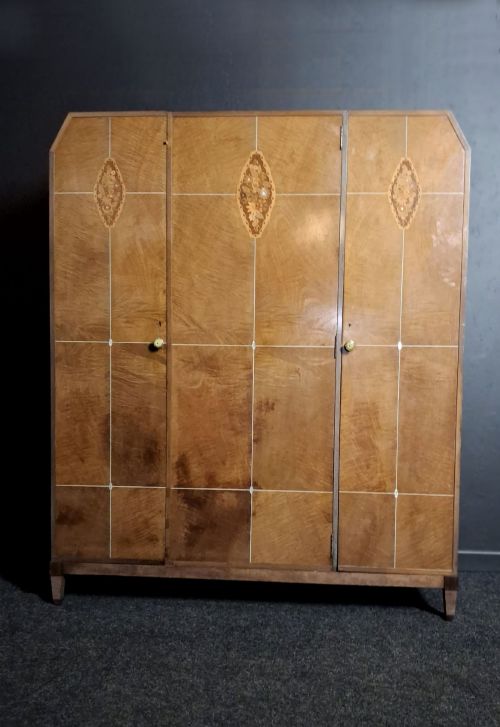
Art Deco pieces favour geometric symmetry, streamlined bow fronts, and dramatic figured burr walnut veneers without fussy applied carving. They reflect a transition towards modernism in 1930s interior design.