
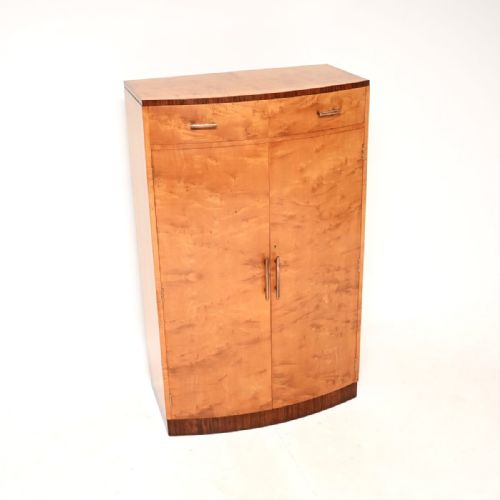
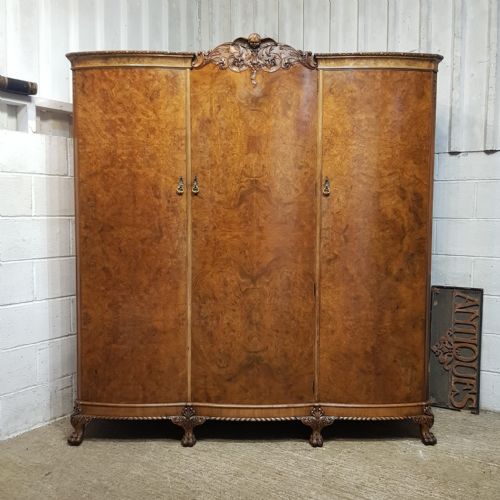


1920s Walnut Armoire
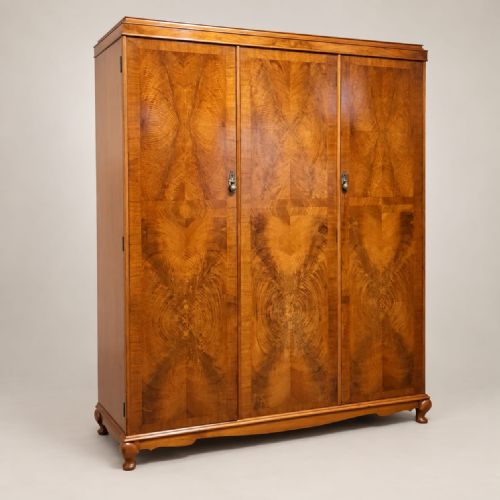
A 1920s walnut armoire brings grand scale and rich timber grain to a bedroom, offering substantial storage with distinct period character.
1920s Walnut Armoire
A 1920s walnut armoire is a large freestanding wardrobe designed to anchor a bedroom with architectural presence and generous internal storage. These pieces bridge late traditional forms and the emerging geometries of the twentieth century.
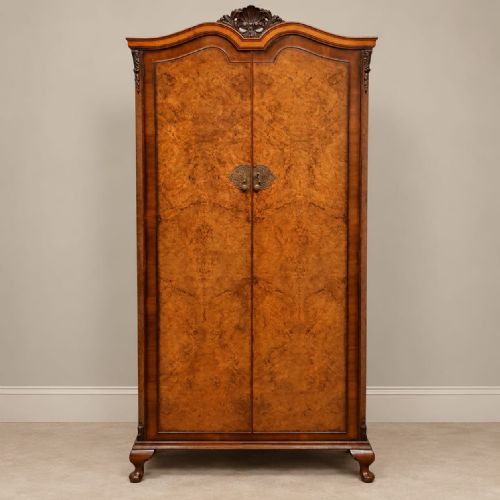
You will most frequently meet pieces from the 1920 and 1930 periods, executed in walnut, burr walnut, and burr walnut veneer. Styles range from Queen Anne Revival curves to geometric Art Deco lines.
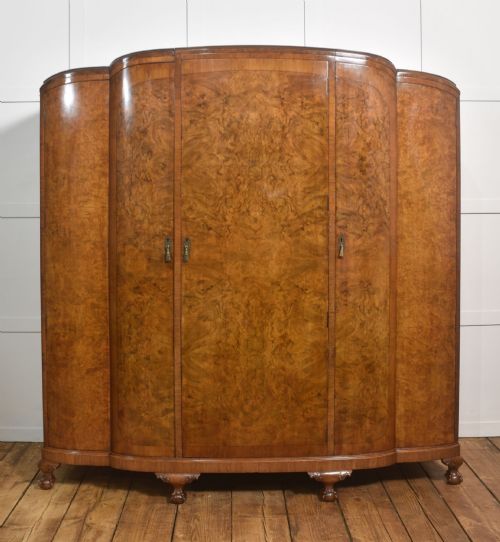
Forms vary from compactum wardrobes and fitted interiors to triple wardrobes and serpentine fronted designs. Solid oak, satin birch, metal, and brass fittings often appear alongside the primary walnut timber.
How they were made
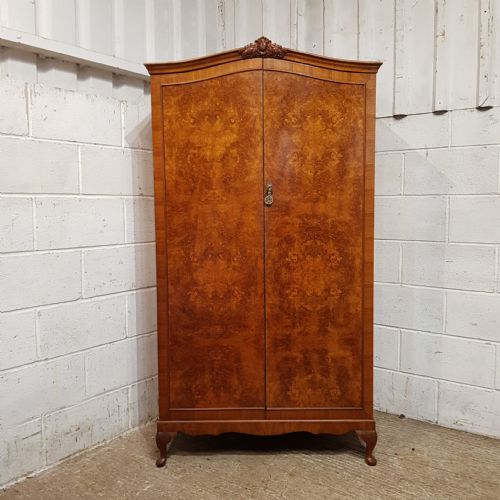
Cabinet makers utilised burr walnut veneer over solid timber foundations to create striking, figured patterns across the large doors and front panels. This technique allowed workshops to display the rich, swirling grain of the burr without risking the warping inherent in large solid boards.
Structural elements incorporated solid oak and satin birch for internal framing and drawer construction, ensuring rigidity. Metal, brass, and occasional bakelite hardware completed the assembly, fastened securely to handle the heavy doors.
Some of these grand wardrobes include hidden tie racks and valet hooks designed for gentlemen dressing in the jazz age.
What varies in quality
Quality rests primarily in the selection and matching of the burr walnut veneer across the front facade. Master cabinet makers booked and mirrored the grain patterns to create symmetrical, visually arresting surfaces, whereas lesser pieces display disjointed or plain timber.
The sophistication of the internal fittings defines the upper tier of production. Fitted compartments, specialised hanging space, and original signed details elevate a wardrobe beyond a simple carcase to a bespoke piece of furniture.
Jean Faure
The 1920s Walnut Armoire Glossary
- Burr walnut
- A wood cut from the abnormal growth of a walnut tree, yielding intricate, swirling grain patterns. It is sliced into thin veneers for decorative furniture fronts.
- Compactum wardrobe
- A multi-compartment wardrobe combining hanging space with linen drawers, shelves, and sometimes shoe racks in a single unit. This layout maximises internal storage efficiency.
- Serpentine front
- A cabinet front featuring a gentle undulating curve, convex in the centre and concave at the sides. This shape requires advanced woodworking skill to construct.
- Art Deco
- A design style of the 1920s and 1930s characterised by streamlined geometric forms, symmetry, and sleek lines. It marked a sharp departure from heavy Victorian ornamentation.
1920s Walnut Armoire: Frequently Asked Questions
What is a compactum wardrobe?
A compactum wardrobe combines hanging space, drawers, and shelving into a single fitted unit. It is designed to hold an entire wardrobe efficiently within one footprint.
These pieces often feature clever internal partitioning that separates shoes, hats, and folded garments from hanging attire.
How do I care for walnut veneer?
Walnut veneer requires protection from direct sunlight and dramatic changes in room humidity to prevent lifting or drying out. Regular dusting with a soft, dry cloth maintains the finish.
Avoid silicone-based polishes, opting instead for traditional beeswax applied sparingly to nourish the timber.
Are these wardrobes easy to dismantle?
Many large wardrobes from this era were constructed to be taken apart for transport and installation in older homes. Pegs, screws, and interlocking cornices often hold the main carcase together.
Checking the construction method helps determine whether professional installation is required upon delivery.
What distinguishes Art Deco from revival styles?
Art Deco pieces embrace sharp geometric angles, clean lines, and sleek metal or bakelite details. They reflect the modern machine age of the 1930s.
In contrast, revival pieces utilise traditional curves, cabriole legs, and classical motifs harking back to earlier centuries.