

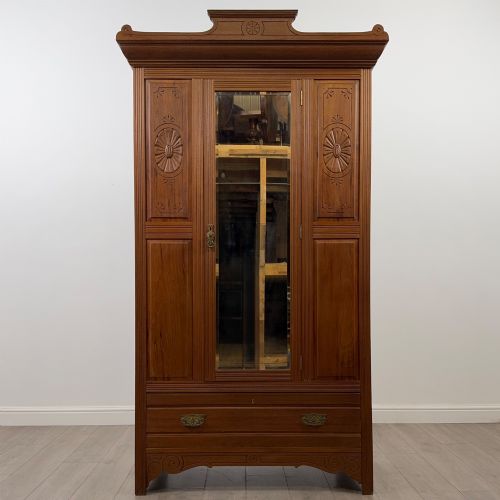
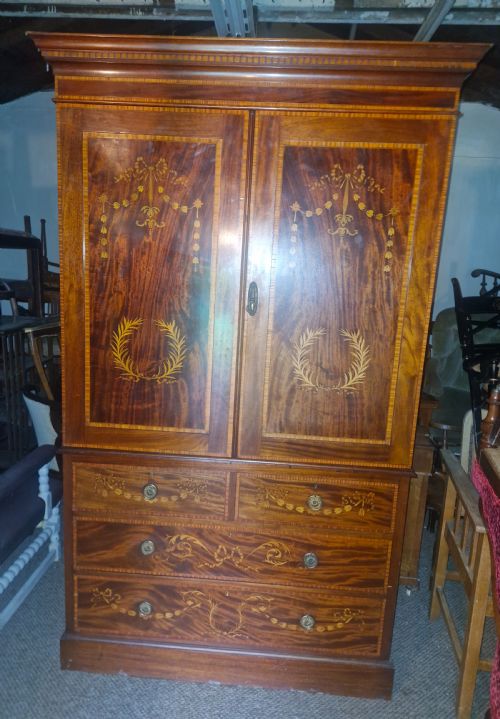


Brown Timber Clothes Cupboard
A brown timber clothes cupboard brings architectural presence and honest storage to a bedroom, combining generous hanging space with period character.
Brown Timber Clothes Cupboard
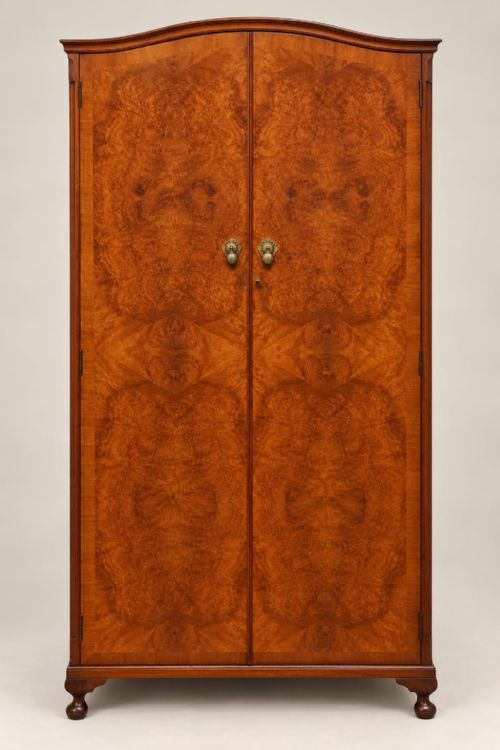
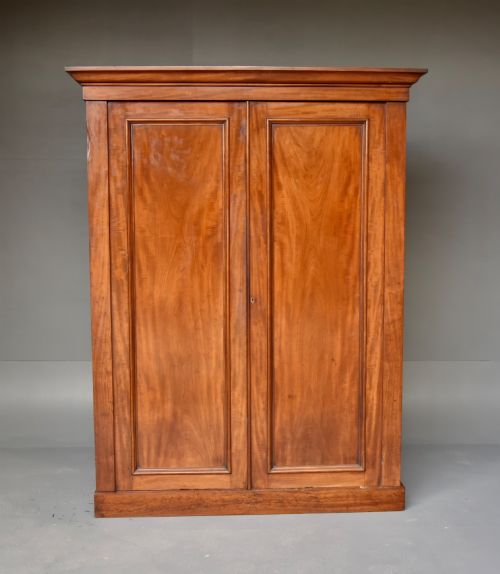
A brown timber clothes cupboard encompasses substantial bedroom storage pieces from the Georgian, Regency, Victorian, and Edwardian eras, built to house garments and linen. These pieces range from tall double wardrobes and mirrored door designs to fitted linen presses and low combination cabinets.
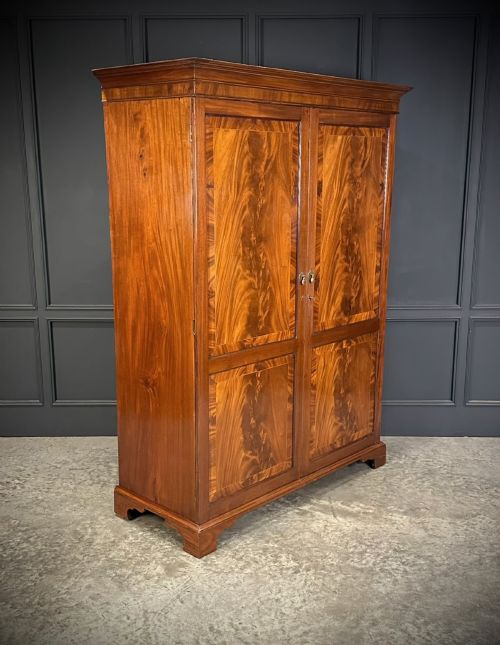
The materials recorded in the inventory lean heavily towards rich timbers, featuring solid mahogany and walnut alongside burr walnut and flame mahogany veneers. Makers often applied inlay or simple carving to break the expansive wooden surfaces of these large bedroom items.
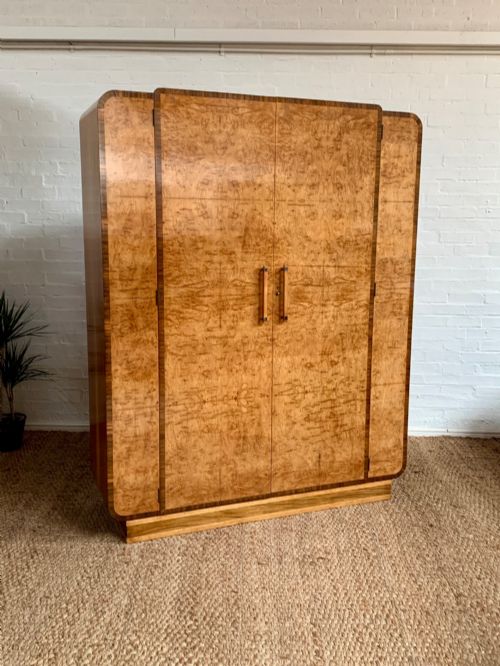
Buyers will most frequently encounter mahogany and walnut wardrobe forms on this page, reflecting the dominant timber choices of the eighteenth and nineteenth centuries. Styles stretch from restrained George III proportions through to later Edwardian interpretations and Art Deco iterations.
How they were made
Cabinetmakers constructed these brown timber clothes cupboards using solid hardwoods like mahogany and walnut for structural frames and primary panels. They frequently applied choice veneers, including burr walnut and flame mahogany, to principal door surfaces to create striking grain patterns.
Hardware played a functional and decorative role, incorporating brass handles, hinges, and escutcheons that complemented the dark timber tones. Interior fittings often involved sliding linen trays, hanging rails, and small drawers tailored to the specific storage needs of the period.
Brown Timber Clothes Cupboard Retail Price Guide 2026
Typical asking prices for brown timber clothes cupboard among the pieces listed under this phrase on Sellingantiques today, from the lower quarter to the upper quarter. They describe what is for sale here now, not the wider market.
A French Breton armoire brings rustic charm to the bedroom, standing ready to guard your daily attire with traditional carved wooden motifs.
What varies in quality
The choice of timber veneer dictates much of the visual hierarchy, with book-matched flame mahogany or burr walnut marking out superior examples. Cabinetmaking skill shows in how smoothly large double doors hang and how precisely inlaid decorative banding is embedded into the timber.
Interior configuration also separates standard utility pieces from finer commissions, particularly where custom sliding linen trays or fitted drawer sections remain intact. The sophistication of applied mouldings, cornices, and brass hardware reflects the original workshop investment in the piece.
Waring & Gillow·Druce & Co.
The Brown Timber Clothes Cupboard Glossary
- Linen press
- A tall cupboard featuring upper sliding trays for folded textiles and lower drawers for bulkier garments. These pieces often doubled as general clothes storage in period bedrooms.
- Veneer
- A thin slice of figured timber applied over a secondary wood foundation to provide decorative grain patterns. Craftsmen utilised flame mahogany and burr walnut in this manner to ornament flat door panels.
- Inlay
- Contrasting strips of wood or lighter timber fitted flush into the surface of the primary furniture body. This technique created geometric borders and delicate decorative lines.
- Armoire
- A large freestanding wardrobe or cupboard originating from continental Europe. French Breton versions often incorporate heavier carved wooden decoration than their British counterparts.
Brown Timber Clothes Cupboard: Frequently Asked Questions
What is a brown timber clothes cupboard?
A brown timber clothes cupboard is a large antique storage piece designed for bedrooms, typically constructed from mahogany or walnut during the eighteenth, nineteenth, or early twentieth centuries.
These items include wardrobes, linen presses, and armoires that provide hanging space and internal drawer storage.
How do I date a wooden wardrobe?
Dating relies on observing stylistic markers, construction techniques, and timber choices across different periods such as Georgian, Victorian, and Edwardian.
Earlier pieces often feature solid mahogany frames and hand-cut dovetails, while later Edwardian examples may include mirrors and factory-produced brass hardware.
Where were linen presses used?
Linen presses were primarily placed in bedrooms or dedicated dressing rooms to store household textiles and folded garments.
The upper sliding trays kept table linens and sheets flat, while the lower drawers held larger clothing items.
How do I care for antique veneer?
Antique walnut and mahogany veneers require stable indoor humidity levels away from direct sunlight and heat sources to prevent cracking or lifting.
Regular dusting with a dry cloth and occasional application of appropriate furniture wax helps maintain the timber surface.