


Antique Walnut Canterbury
An antique walnut canterbury brings refined storage to a room, offering compartments for folios, books and music sheets.
What an antique walnut canterbury is
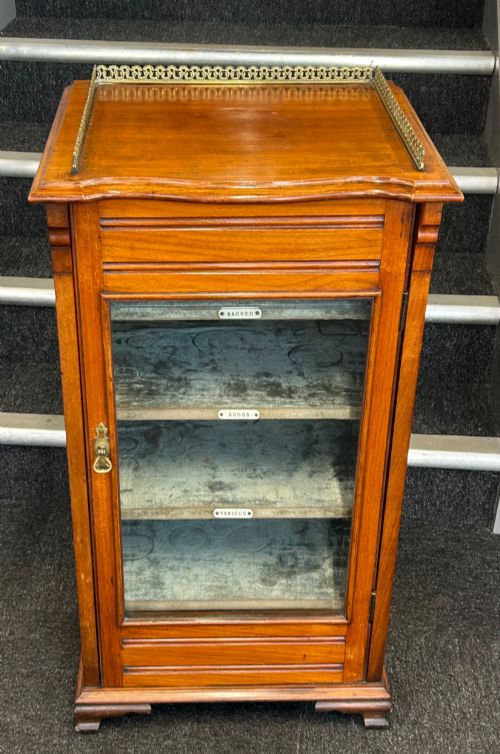
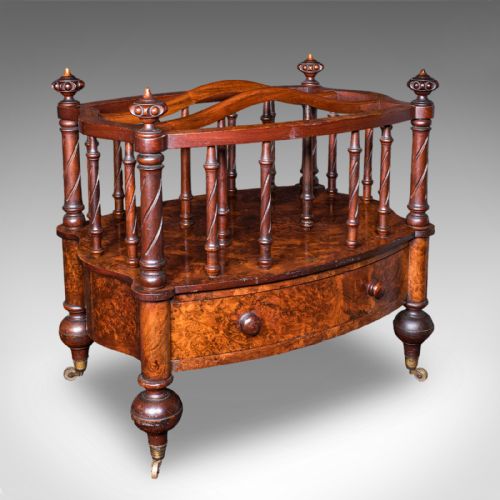
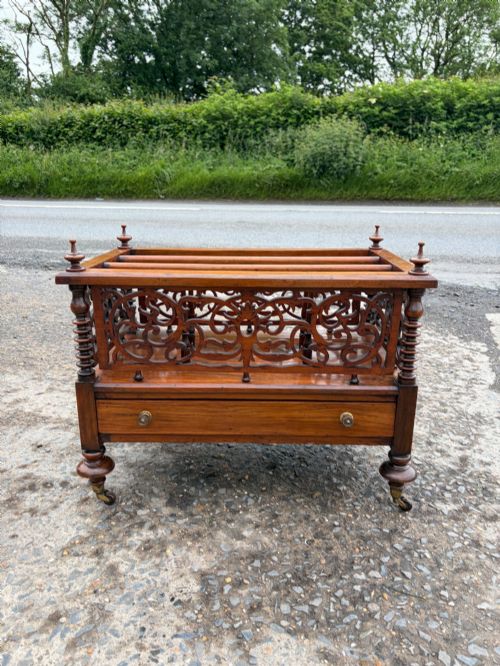
When searching for an antique walnut canterbury, a buyer encounters pieces designed for holding sheet music, folios and magazines in nineteenth-century interiors. These items commonly span Victorian and Edwardian periods, appearing in forms such as freestanding racks, music cabinets, occasional tables and reading stands.
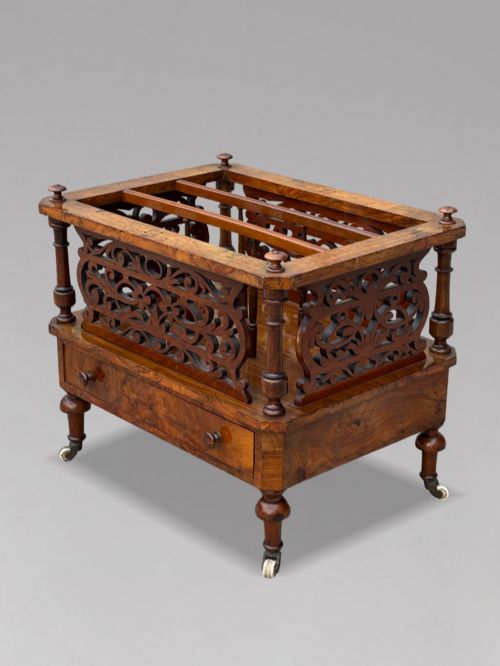
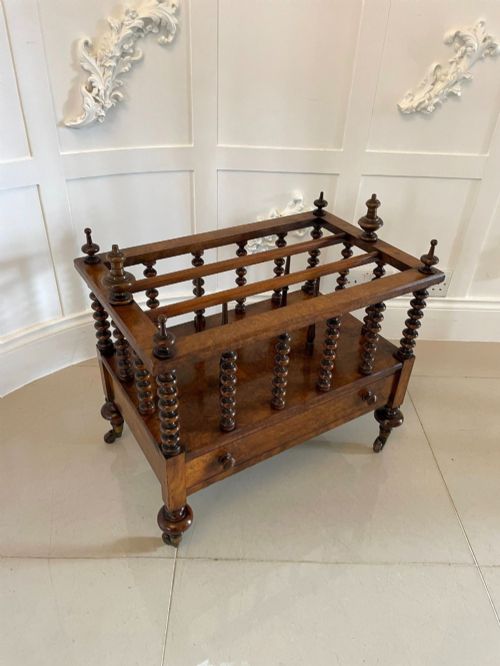
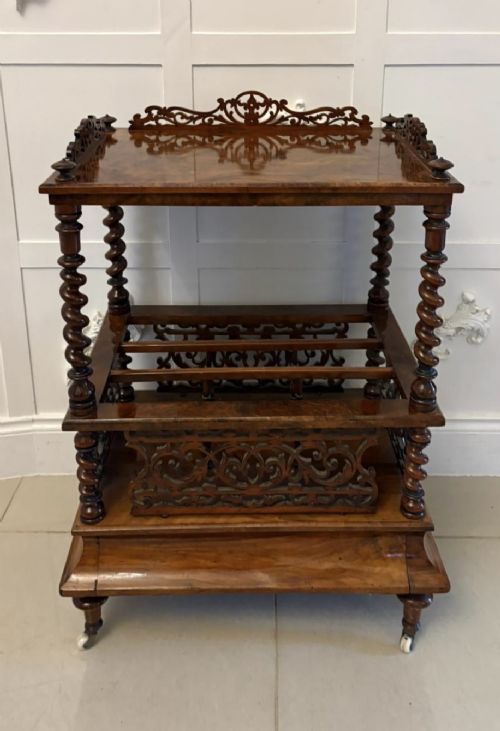
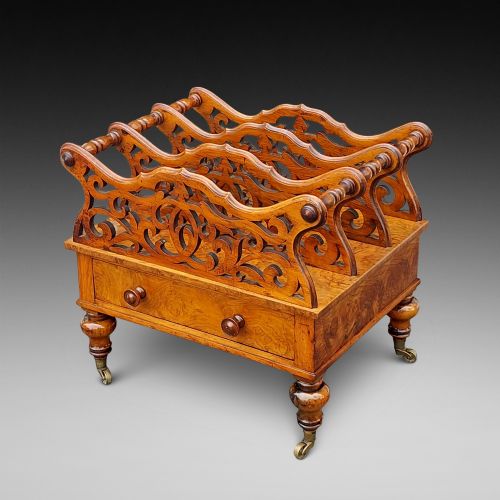
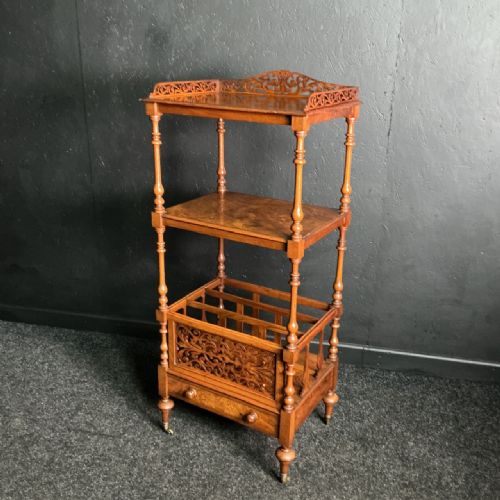
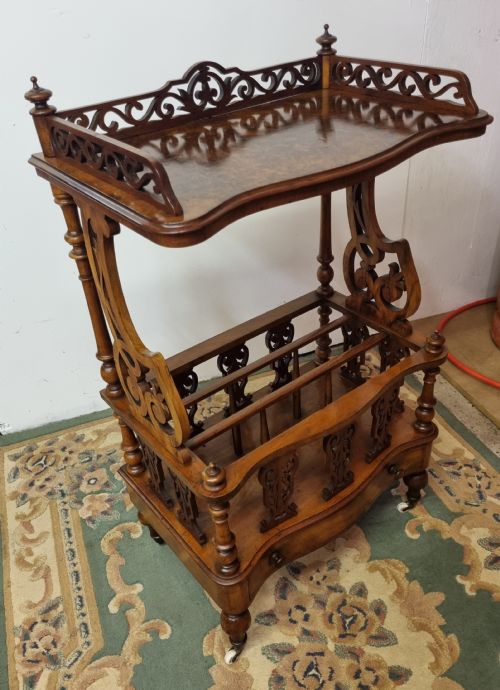
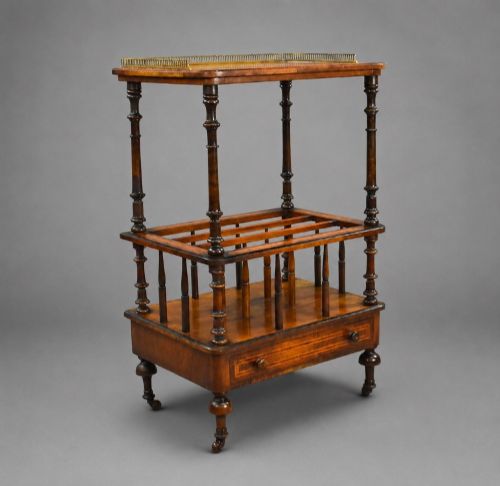
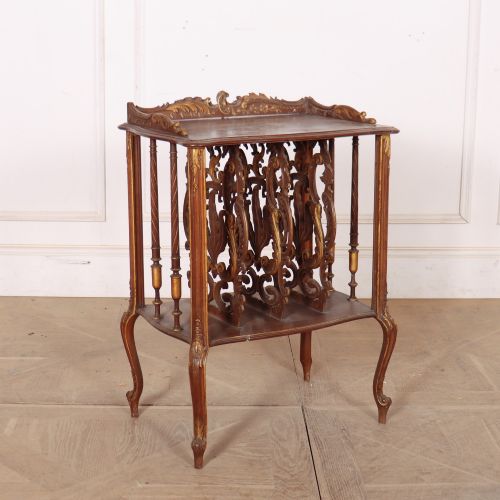
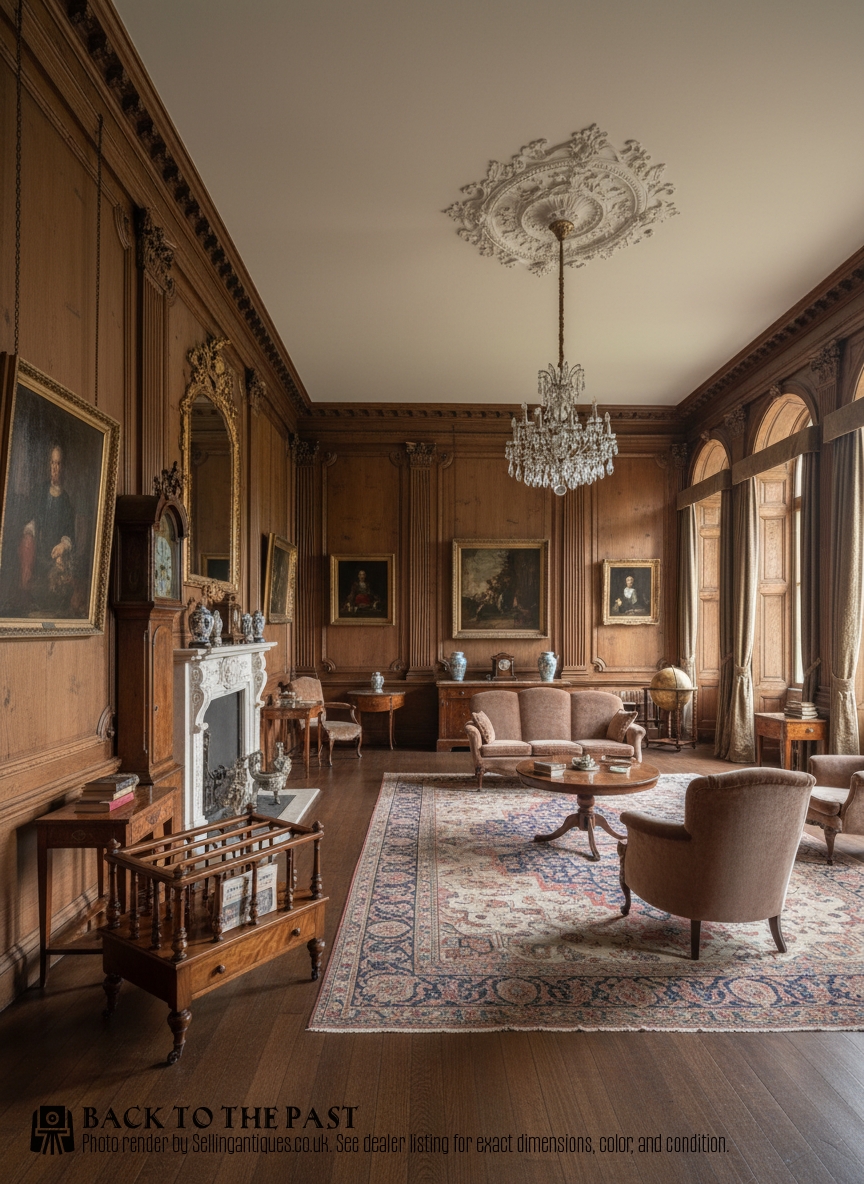
The version most frequently met on this page is the Victorian burr walnut or figured walnut canterbury, often featuring divisions for storage, turned supports, and sometimes a drawer below. Some variations include pierced fretwork, marquetry inlay, and combined functions as a music stand or book rest.
Earlier and later examples also surface, encompassing nineteenth-century magazine racks and slim Edwardian music cabinets. The overarching category includes formats with brass elements, wood inlay, and ebonised details alongside standard timber frames.
What varies in quality
The hierarchy of quality in these pieces rests upon the choice of timber and the complexity of its figure, with burr and figured walnut commanding greater visual depth than plain grain. Finer examples display intricate hand-worked elements such as pierced fretwork or marquetry inlay rather than simple plain panels.
Structural refinement also separates standard items from superior ones, visible in the precision of turned uprights, the smooth operation of fitted drawers, and the integration of functional additions like book rests and music stands.
Retail Price Guide 2026
Typical UK retail prices for walnut canterbury, calculated from the Sellingantiques database of over a million retail prices indexed since 2003. This retail price guide relies exclusively on Sellingantiques data; no external sources or auction records are used, so the figures do not describe the wider market.
Victorian musical households relied on these stands to keep piano scores from sliding onto the drawing room carpet.
A Lambs Of Manchester
The Antique Walnut Canterbury Glossary
- Burr walnut
- A timber harvested from walnut tree growths, producing swirling, highly figured grain patterns prized for decorative furniture panels.
- Canterbury
- A low, compartmentalised stand originally built for holding sheet music, folios and periodicals.
- Fretwork
- Ornamental woodwork pierced through with patterns, often seen on the vertical divisions of Victorian pieces.
- Marquetry
- Decorative veneer patterns formed by fitting small pieces of various woods into a background.
- Whatnot
- A piece of open shelving furniture with multiple tiers, occasionally combined with a canterbury form.
Frequently Asked Questions
What is an antique walnut canterbury used for?
These pieces served nineteenth-century drawing rooms as dedicated holders for sheet music, folios, and books. The vertical divisions kept scores organised and accessible near a piano or music stand.
Today, the compartments suit modern living rooms and studies for storing magazines, newspapers, and contemporary journals while adding period character to a space.
How do I date an antique walnut canterbury?
Dating relies on stylistic markers and timber choices recorded across Victorian and Edwardian periods. Pieces from around eighteen-sixty frequently showcase burr walnut veneer, turned supports, and elaborate fretwork.
Later Edwardian examples tend toward slim music cabinets, while mid-nineteenth-century items often incorporate marquetry inlay and lower drawers.
Are all canterburys fitted with drawers?
Not all pieces include storage drawers beneath the main compartments. Many designs consist purely of open slatted or partitioned racks supported on legs with castors.
Examples equipped with a base drawer generally date from the mid-Victorian era, offering extra space for small accessories related to reading or music.
How should I care for walnut furniture?
Walnut surfaces require protection from direct sunlight and excessive heat fluctuations to prevent the burr veneers from drying out or splitting. Gentle dusting with a dry cloth maintains the finish.
Occasional application of appropriate furniture wax preserves the natural lustre of the timber without building up heavy residues over the decorative grain.