

Antique Wall Mounting Cabinet
An antique wall mounting cabinet lifts storage off the floor to display porcelain, books, or spirits while anchoring a room with period timber.
Antique Wall Mounting Cabinet
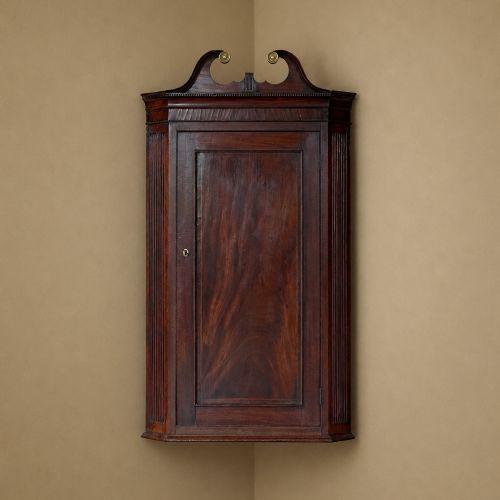
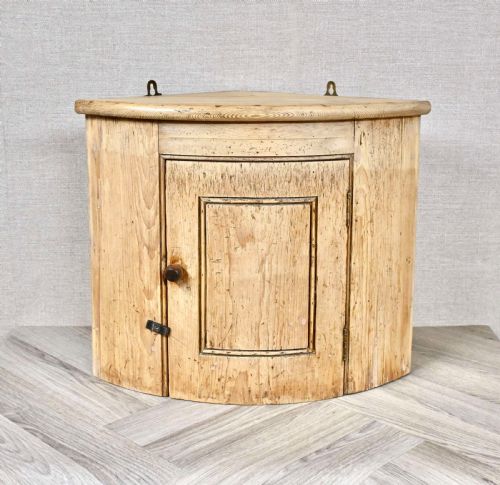
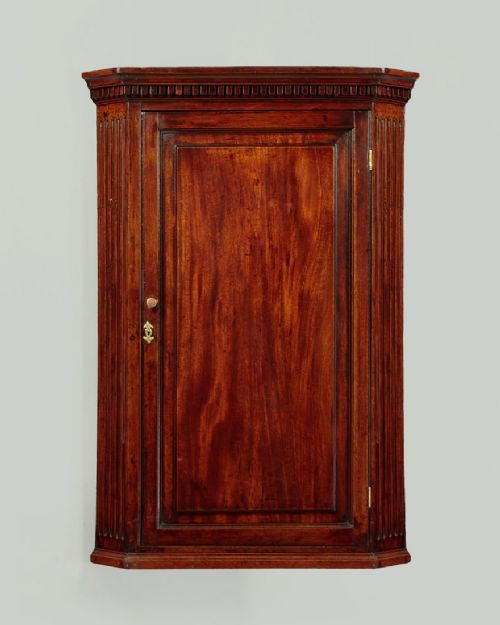
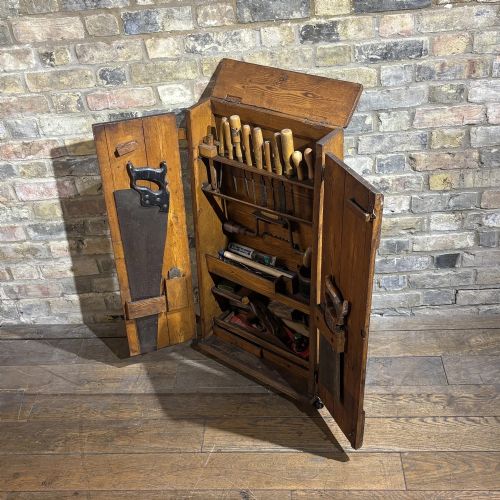
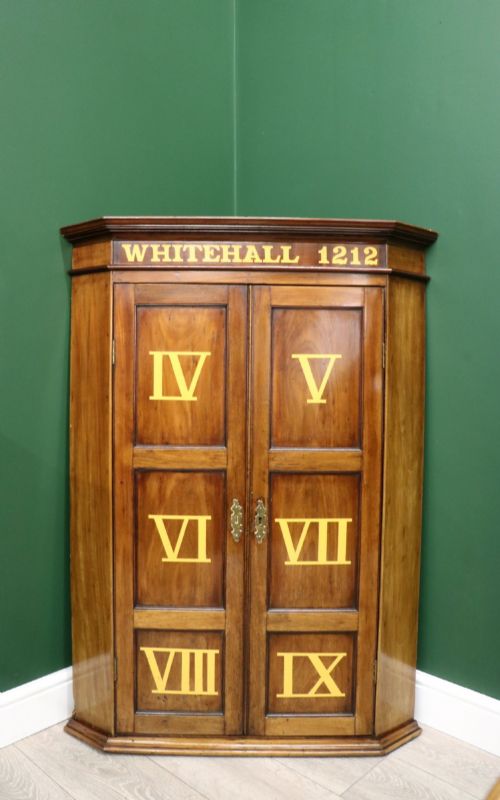
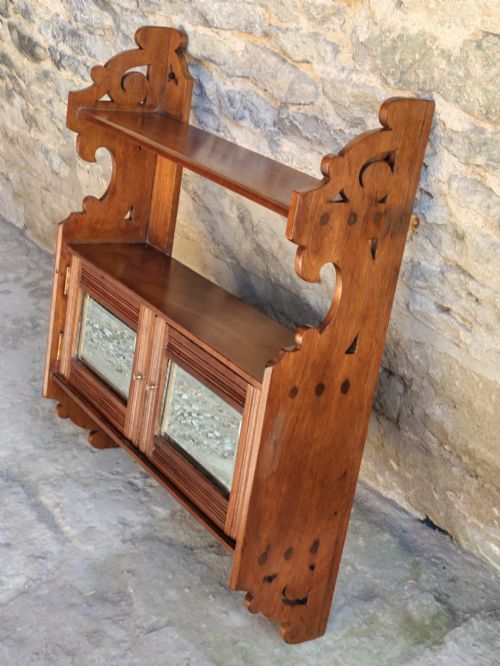
When you search for an antique wall mounting cabinet, you encounter hanging cupboards, corner cupboards, and wall shelves built to utilise vertical space without crowding a room. The pieces recorded here span centuries from the 1700s through the Edwardian era, showing how domestic storage evolved from heavy timber foodstuffs boxes into glazed display furniture.
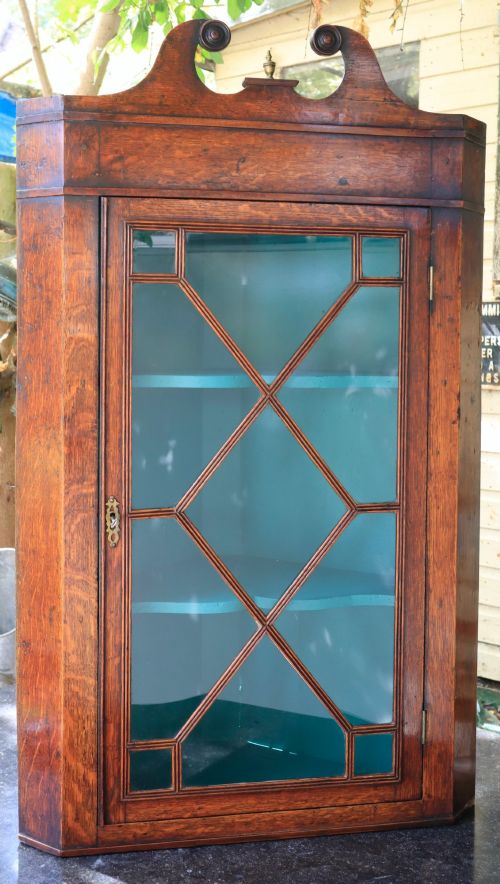
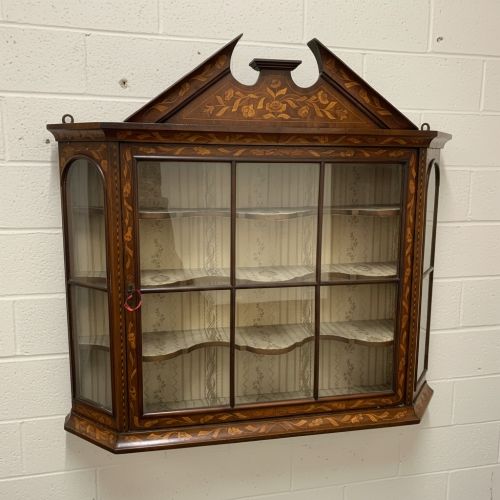
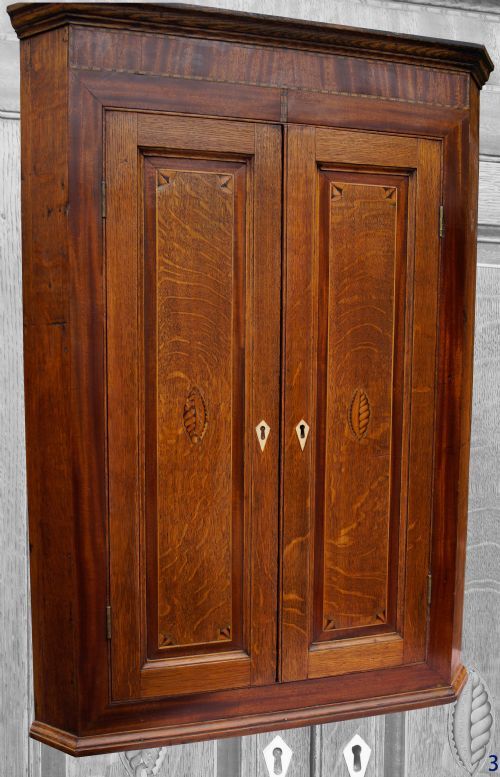
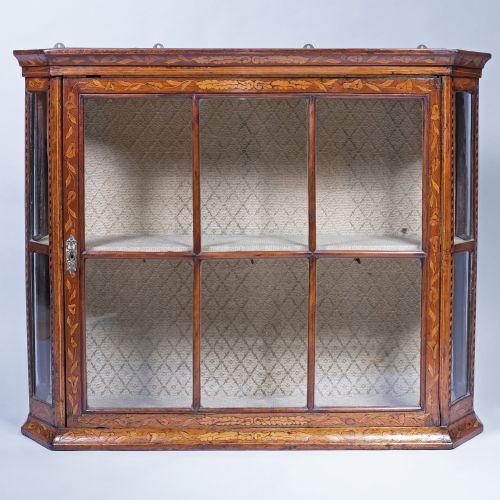
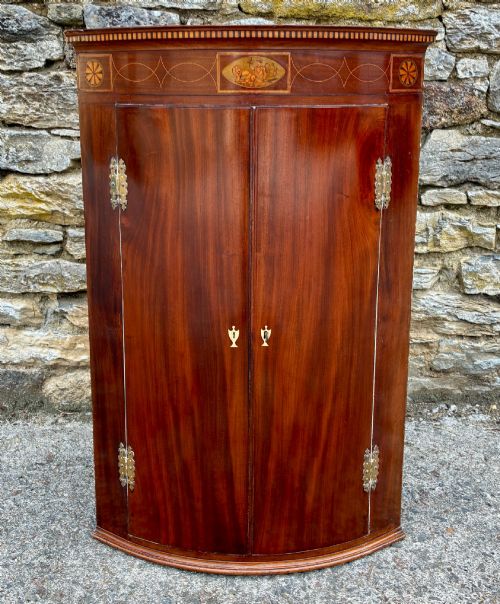
You are most likely to meet mahogany and oak corner cabinets originating from the Georgian period, often featuring bow fronts or glazed doors designed to house precious ceramics or glassware. These range from simple pine workshop boxes to elaborate Dutch marquetry and George III pieces with broken arch pediments.
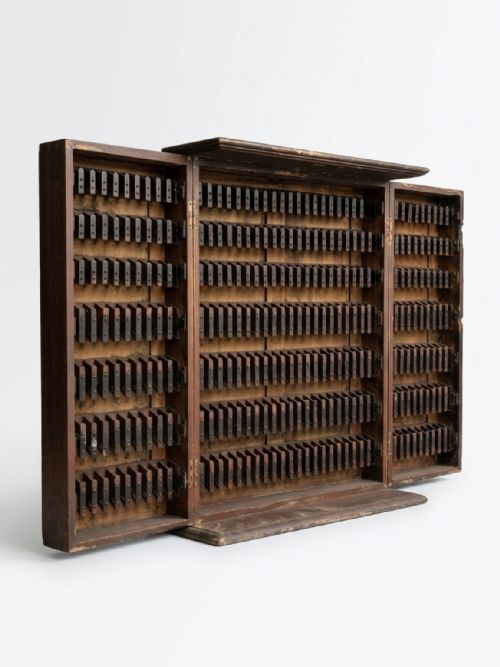
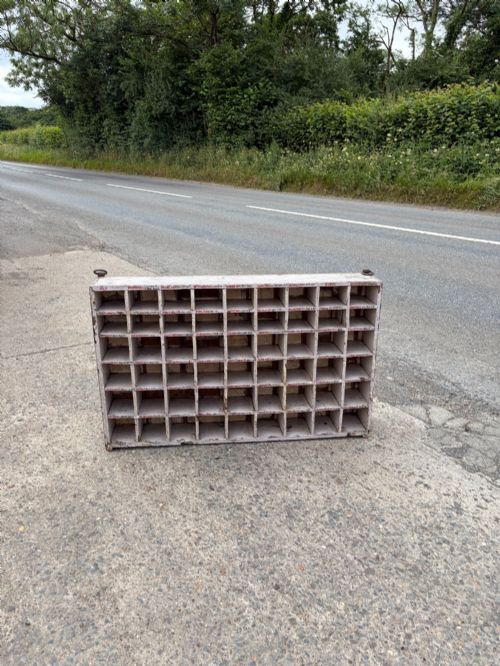
The selection also includes specialist forms such as railway ticket cupboards, kitchen knife hanging boxes, and taxidermy mounts set into wall cabinets. Each object reflects the specific domestic or commercial need of its period, whether for shaving mirrors in bathrooms or pigeon holes for correspondence.
Construction and Materials
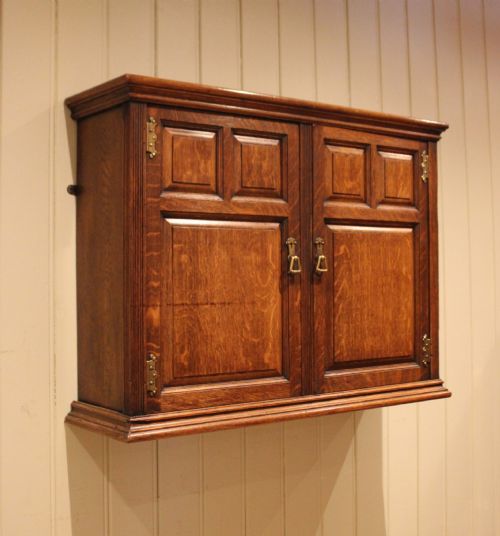
Cabinet makers relied predominantly on dense hardwoods like mahogany and oak, supplemented by walnut, pine, and chestnut depending on the regional source and date of manufacture. These timbers were joined using traditional methods to withstand the tension of wall mounting, often reinforced with brass hinges and escutcheons.
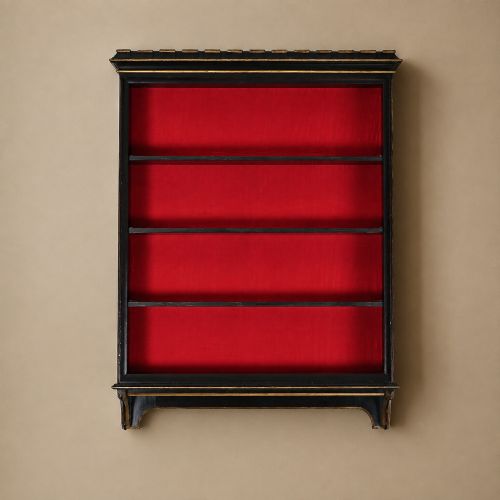
Surface decoration varied from simple painted finishes and pokerwork to complex marquetry inlay and ebonised details. Glazed doors utilised individual glass panes held in wooden bars, while interiors frequently incorporated shaped shelves to accommodate specific utilitarian or decorative items.
A Victorian crocodile taxidermy mount waits among the timber cupboards to supervise your hallway.
Judging Quality in Hanging Cabinets
Quality rests in the choice of timber figure, such as burr walnut or well-grained mahogany, and the crispness of carved details like pediments and inlay. Finer examples display meticulous dovetailing and original brass hardware that has aged harmoniously with the wood.
Structural integrity dictates longevity, separating sturdy eighteenth-century joinery from later alterations or weakened hanging points. The balance of proportion, particularly in corner units and bow-fronted designs, defines the visual success of the piece.
George Edmund Street
The Antique Wall Mounting Cabinet Glossary
- Bow Front
- A convex curved cabinet front popular in Georgian and later designs. This shape softens room corners and maximises internal storage capacity.
- Marquetry
- Decorative patterns formed by inserting pieces of contrasting veneer into wood panels. Artisans used this technique to create floral or geometric motifs on continental and English furniture.
- Broken Arch Pediment
- An architectural top moulding divided centrally with an open space, often housing a finial or urn. This feature signals a piece of high status from the Georgian period.
- Ebonised
- Wood treated with a chemical stain or finish to imitate ebony. This dark, formal treatment appeared frequently on Victorian revival pieces.
- Pigeon Holes
- A series of small compartments arranged together for sorting letters and documents. They appear in wall-mounted units designed for office or domestic administration.
Antique Wall Mounting Cabinet: Frequently Asked Questions
How do I hang a heavy antique wall cabinet safely?
Secure the cabinet directly into wall studs using appropriate brackets suited to the weight of the hardwood body.
Verify that the historical hanging loops or internal fixing points remain structurally sound before loading the shelves with ceramics or glassware.
Where were corner cabinets placed in period homes?
Corner cupboards hung at eye level or above shoulder height in parlours, dining rooms, and bedrooms to utilise dead room space.
Their triangular footprint allowed them to tuck neatly into room angles while keeping everyday items within easy reach.
How do I date an oak wall cupboard?
Examine the timber grain, construction marks, and hardware style, noting that eighteenth-century pieces often display hand-cut dovetails and pegged joints.
Later Victorian and Edwardian examples introduce machine-sawn backing boards and standardised brass screws.
Can these cabinets support heavy books?
Check the thickness of the shelves and the strength of their internal supports before storing dense volumes.
While specialised wall bookcases handle heavy loads, many older hanging cupboards suit lighter display pieces like porcelain and small ornaments.