
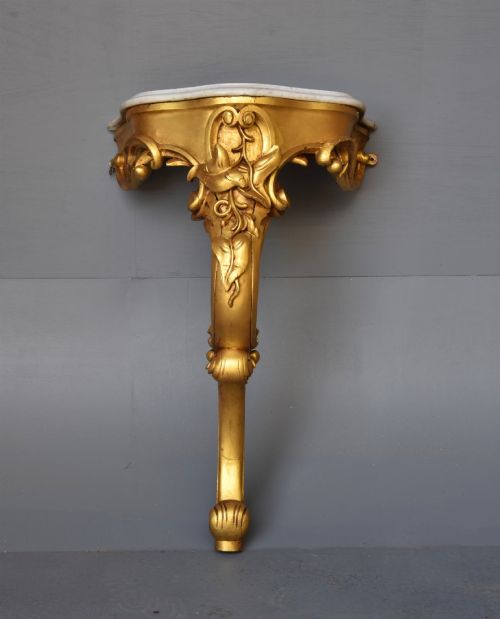
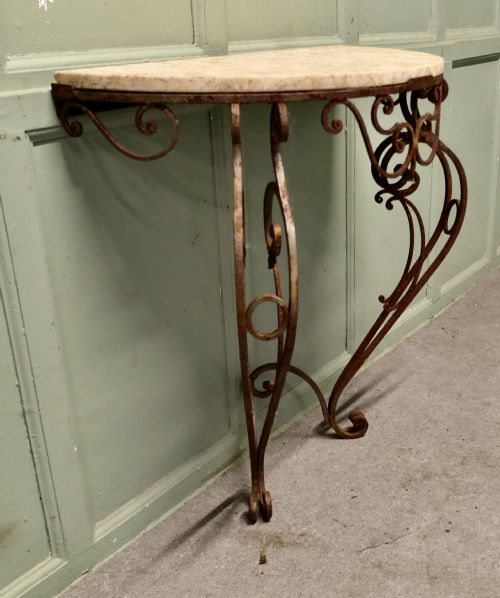
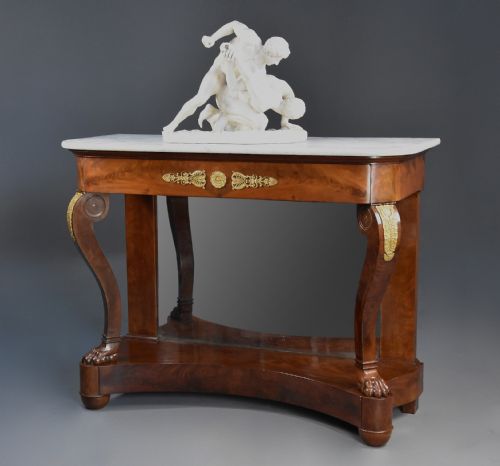
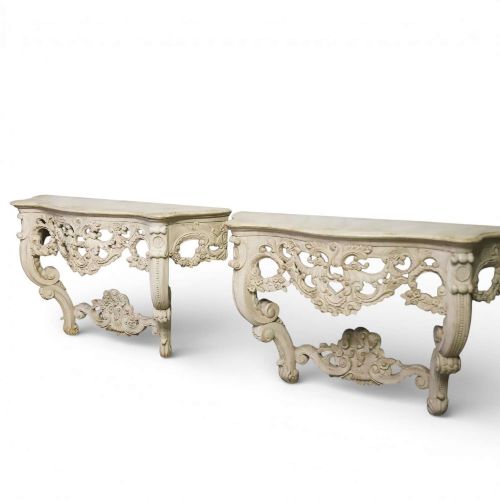
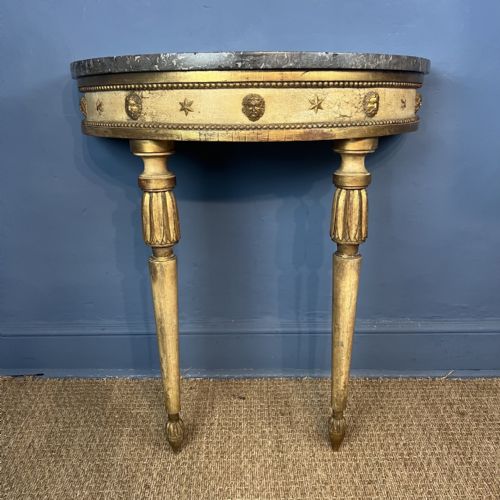
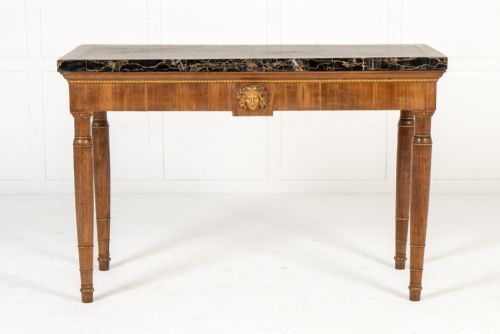


Antique Wall Mounted Table
An antique wall mounted table brings architectural presence to a hallway or drawing room, anchoring the space with stone tops and carved timber frames.
Antique Wall Mounted Table
When you search for an antique wall mounted table, you encounter console tables, wall consoles, and pier tables designed to anchor against a vertical surface.
The selections span the eighteenth century, the regency era, and the nineteenth century, alongside later twentieth-century interpretations from the nineteen thirties.
French and Italian workshops dominate these pieces, bringing rococo revival, empire, and neoclassical styles into domestic interiors.
Materials and Construction
Carved wood frames in mahogany, walnut, and giltwood provide the structural support, frequently enhanced by gesso, ormolu, and painted finishes.
Tops are executed in marble or fossil stone, bearing the natural weight and coolness characteristic of stone surfaces paired with timber bases.
Italian and French regional designs define the stylistic range, incorporating marble tops and wrought iron structures.
Craft and Finish
Depth of carving in the wood and gesso separates standard joinery from pieces with intricate acanthus leaves, scrollwork, and parcel-gilding.
The integration of the marble top with the console frame dictates the visual harmony, alongside the preservation of original painted or gilded surfaces.
The Antique Wall Mounted Table Glossary
- Console Table
- A table designed to be fixed against a wall, frequently supported by ornamental brackets or legs at the front.
- Giltwood
- Timber coated with a thin layer of gold leaf over a prepared base, common in decorative furniture frames.
- Gesso
- A plaster-like mixture applied to wood surfaces as a smooth base for painting or gilding.
- Ormolu
- Gilded bronze mounts applied to furniture for decorative accent, typical of empire and neoclassical designs.
- Pier Table
- A table designed to stand against the wall between two windows, often paired with a matching wall mirror.
Antique Wall Mounted Table: Frequently Asked Questions
How do I secure a wall mounted table?
These tables require proper anchoring into solid masonry or wall studs due to the heavy weight of their marble tops. Professional installation ensures the console remains stable against the vertical surface.
Because many examples rely on wall support alongside front legs, checking the fixing points prevents structural strain on the historical timber frame.
Were all console tables originally wall mounted?
Many historical console tables were built to be secured directly to the wall to guarantee stability, particularly those with a single pair of front legs. Others stand independently but use wall ties for security.
Examining the rear edge and frame construction reveals whether a piece required wall fixing or simply sat flush against the plaster.
How do I clean a marble top?
Use a soft, damp cloth with neutral soap to wipe the marble surface, avoiding acidic cleaners that etch the polished stone. Dry the top thoroughly after washing.
Historical marble often shows natural fissures and patination that should be preserved rather than aggressively polished away.
What is the difference between a console and a pier table?
A console table fixes to the wall for support, whereas a pier table specifically stands in the architectural space between two windows. Both forms overlap significantly in nineteenth-century design.
Reviewing the proportions and mirror pairings helps identify whether a specific piece functioned as a pier table in a formal drawing room.