


Antique Wall Display Case
These antique wall display case pieces bring order to small treasures, framing miniature collections and curiosities against the wall where light catches the glass.
Antique Wall Display Case
An antique wall display case mounts directly to the wall, holding everything from delicate glassware to maritime dioramas and taxidermy. These pieces span centuries of domestic and shop use, preserving objects in glazed cabinets, corner cupboards, and open wall shelves.
The versions most often met on this page date from the Georgian, Victorian, and Edwardian eras. They appear in mahogany, oak, and pine, frequently featuring glazed doors or mirrored interiors designed to maximise the light falling on the contents.
How they were made
Cabinet makers relied primarily on timbers such as mahogany, oak, walnut, and pine, often jointed tightly to support the weight of wall mounting. Glass panels were hand-glazed into wooden doors, while brass hinges, locks, and keys secured the contents.
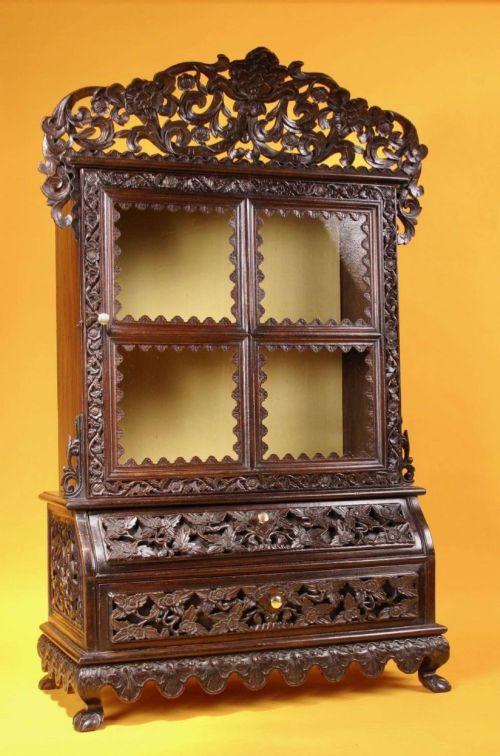
Surface treatments varied from polished wood grains to painted finishes and carved fretwork details. Interiors sometimes incorporated fabric linings, mirrored backs, or plaster elements to enhance the visual depth of the display.
Listings feature wall display cases spanning the Georgian, Victorian, and Edwardian periods, constructed in mahogany, oak, walnut, and pine.
What varies in quality
The standard of timber selection and cabinet joining defines the upper tier of these pieces. Fine grain choices like figured mahogany or walnut, paired with crisp hand-carved fretwork and original glass, mark out superior craftsmanship from utilitarian workshop output.
Proportion and intact original hardware also dictate distinction. Cases retaining their matching brass locks, working keys, and unblemished mirrored or fabric-lined interiors demonstrate greater care in their original commission and survival.
J. Cooper & Sons·W.F. Homer London·Siegel
The Antique Wall Display Case Glossary
- Corner cabinet
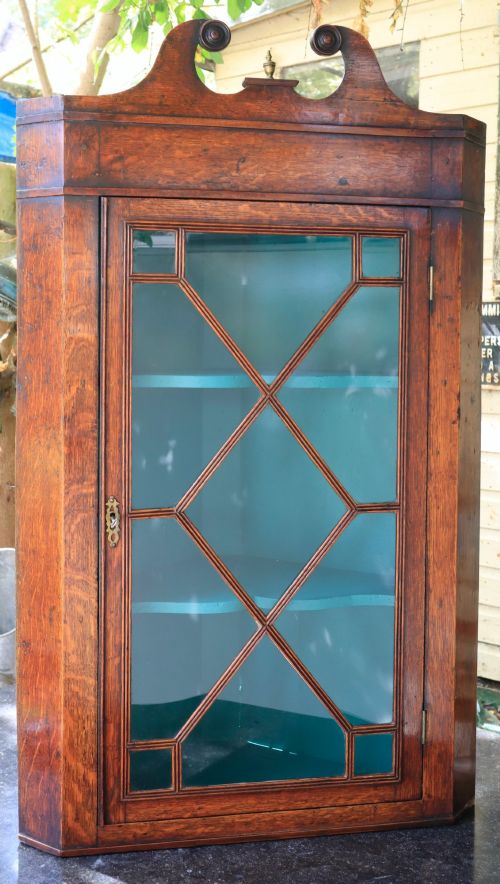
- A triangular form designed to fit snugly into the corner of a room, saving floor space while offering display shelving behind a glazed door.
- Diorama
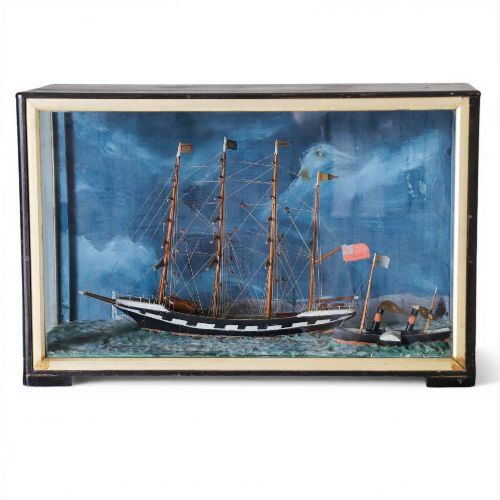
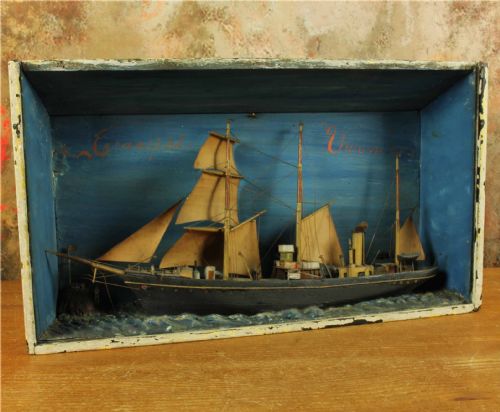
- A three-dimensional scene, often featuring model ships or taxidermy, enclosed within a glazed box or wall case to create a sense of perspective.
- Vitreen
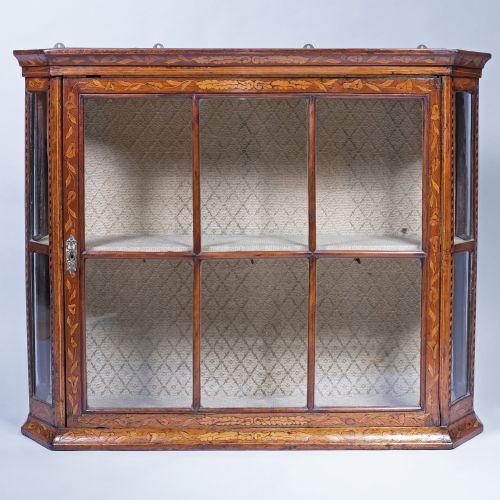
- A glass-fronted cabinet or wall hanging display case intended for the presentation of precious objects and small curiosities.
- Fretwork
- Openwork ornamentation carved in wood, commonly seen in decorative borders or friezes on display shelves and bookcases.
- Whatnot
- A piece of furniture consisting of a set of open shelves for displaying articles, frequently adapted for wall hanging.
Antique Wall Display Case: Frequently Asked Questions
How do I hang a heavy antique wall cabinet safely?
Wall-mounted cabinets require sturdy fixings suited to the weight of the timber and glass. Securing the piece directly into wall studs or masonry using appropriate brackets ensures the structure bears the load safely without pulling away from the plaster.
Distributing the weight evenly and checking the integrity of the original hanging points on the back of the cabinet prevents strain on antique joints.
Were these cases meant for homes or shops?
These cabinets served both domestic interiors and commercial premises. Finer mahogany and walnut corner cupboards were built for Georgian and Victorian parlours to display porcelain and glassware.
Sturdier oak and mirrored examples originated in Edwardian shops or offices, where they acted as wall-hanging vitrines to present goods or keep ledgers and keys secure.
Can I adjust the shelves inside an antique wall case?
Most antique wall display cases feature fixed wooden or grooved shelving rather than modern adjustable tracks. The internal layout was determined by the maker to suit specific domestic objects or shop goods of the period.
Forcing modifications to the interior risks damaging the original timber housing and historical integrity of the cabinet.